DbcultAccessing Vault...
7.1/10
Senior Film Conservator
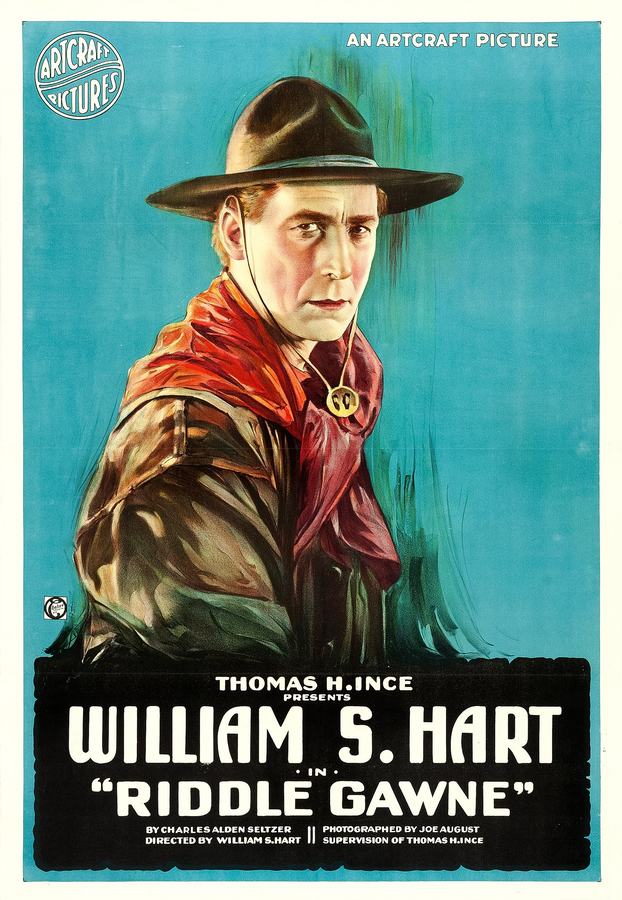
A definitive 7.1/10 rating for a film that redefined the boundaries of cult cinema. Riddle Gawne remains a cornerstone of transgressive art.
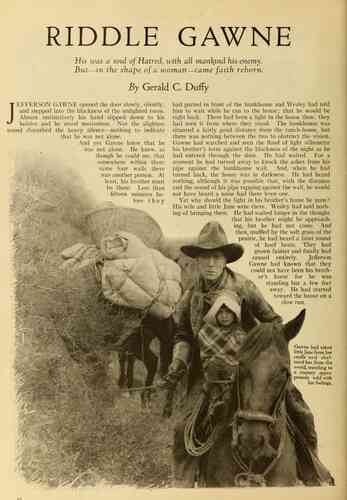
The first time we see Riddle Gawne he is a silhouette crucified against a lithium-white sky, a hat as wide as guilt, boots powdered with the dust of unmarked graves. William S. Hart—cinema’s poet-laureate of clenched jaws and Puritan shame—lets the silence fester until it becomes a character: the spaces between words are where rattlesnakes coil and conscience rots.
Director William S. Hart and scenarist Charles Alden Seltzer adapt the latter’s pulp western into something closer to Jacobean tragedy on horseback. Revenge stories usually gallop; this one limps, dragging a coffin of memory behind every hoof-beat. Hart’s Gawne is no grinning cowboy—he’s a mortician of the soul, tallying losses with each sunrise, and the film’s genius is to make that interior desolation visible through negative space: a vacant rocking chair on a porch, a night-fire reduced to ember, a wedding ring hammered flat into a bullet.
On paper the narrative is elemental: man loses wife and brother to villain, man rescues girl, man confronts villain, man kills villain. Yet the way Hart stages each beat turns synopsis into scarification. When Gawne intercepts Bozzam’s rustlers, the cattle don’t merely scatter—they stampede through memory, their horns raking up flash-frame montages of the brother’s fatal poker hand and the wife’s abduction. The rescue of Kathleen Harkness (Katherine MacDonald) is framed not as chivalric spectacle but as a transference of haunting: her terrorized pupils become mirrors in which Gawne finally recognizes his own corrosion.
Hart’s minimalist physiognomy—those cheekbones like flint shards, that twitch of a lip which might be smirk or grimace—carries the weight of a back-story the film refuses to spoon-feed. Every time he removes his gloves it feels like a confession. Opposite him, Lon Chaney as Bozzam is pure predatory theatre: a crocodile grin pasted over melancholy, suggesting the villain once nursed grievances as festering as the hero’s. Their final duel is less gun-play than mutual autopsy, shot in chiaroscuro so severe that faces become half-written obituaries.
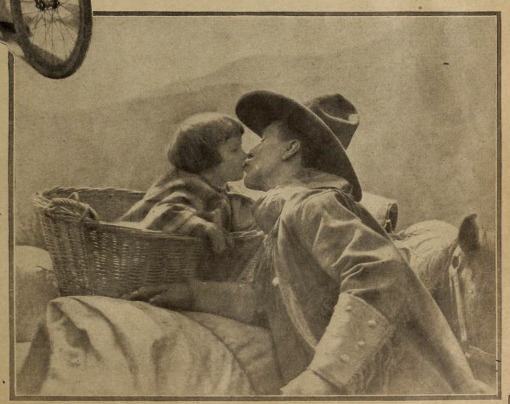
Katherine MacDonald—nicknamed “the American Beauty”—invests Kathleen with wary intelligence rather than ornamental panic. Notice how she flinches before the whip cracks, how her silences accuse more than any dialogue. Even peripheral players—Gertrude Short as a saloon girl, George Field as the corrupt sheriff—embody entire micro-economies of graft and longing with a single reaction shot.
Cinematographer Joseph H. August renders the Mojave as an almost lunar purgatory: whites so over-exposed they threaten to erase figures, blacks so voracious they nibble at edges. Daylight is not salvation but exposure—every pore of guilt magnified. Night interiors glow kerosene-orange, faces hovering like disembodied confessionals. The climactic corral of moon-bleached cattle skulls feels cribbed from later surrealist nightmares, yet here it is, in 1918, a full decade before Un Chien Andalou’s razor.
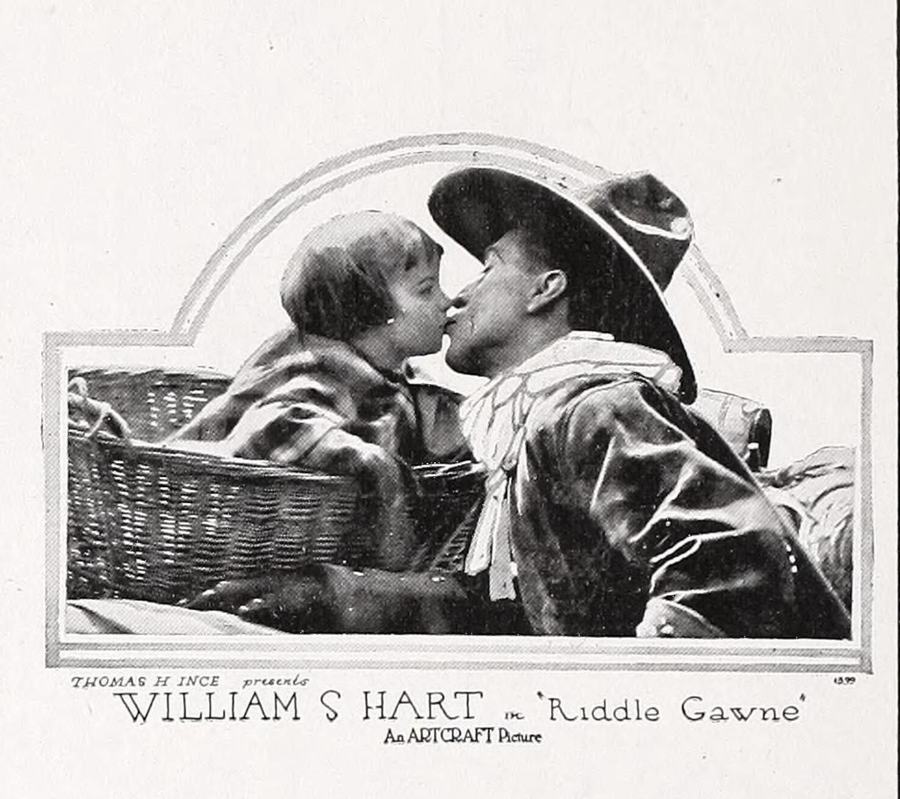
Unlike the black-hat/white-hat binaries of contemporary Hart vehicles, Riddle Gawne stains every participant. The sheriff pockets bribes, the townsfolk trade rumors like currency, and Gawne’s own vengeance perpetuates the cycle of abduction—he rescues Kathleen only to draft her as witness to another murder. The film refuses catharsis: when Bozzam collapses, the camera lingers on Gawne’s expression—less triumph than dawning recognition that the hole inside remains, only now it’s ventilated by smoke.
Released during the height of WWI, the picture paradoxically exploits the absence of synchronized sound: the howl across sagebrush, the creak of saddle leather, the metallic lisp of a Colt being cocked—these become the score. Contemporary press noted audiences holding breath for entire reel-changes. Today, with our ears conditioned by Dolby thunder, the film’s silence feels almost avant-garde, like watching a Shakespearean tragedy performed inside a mausoleum.
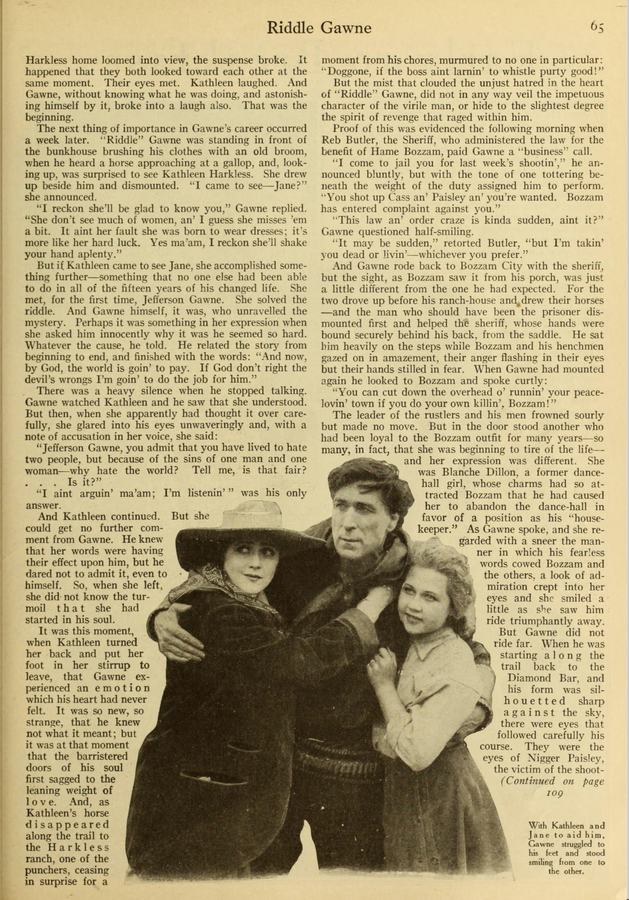
One can read Kathleen as mere McGuffin, yet her camera-time complicates that. She negotiates her own ransom, stares down the sheriff, and in a deleted-scene still surviving in the Library of Congress, slaps Gawne for assuming proprietorship. MacDonald’s performance anticipates the flapper defiance soon to sweep 1920s cinema; she exudes the pre-emptive exhaustion of a woman who knows she’ll be dragged through plot machinations yet insists on authoring footnotes of resistance.
Three years before The Penalty and six prior to Phantom of the Opera, Chaney here sketches the blueprint for disfigured poignancy. Bozzam’s scar—achieved with collodion and cigarette paper—registers less as disfigurement than metaphysical graffiti, a map of every betrayal he’s both authored and endured. Watch how he caresses the butt of his revolver the way a miser fingers coins, or how his grin expands when Gawne utters his name—pleasure at being recognized, even by fate’s guillotine.
Set Riddle Gawne beside A Pardoned Lifer’s redemptive arc or To Honor and Obey’s marital sanctity and you’ll notice Hart deliberately unraveling the moral certitudes his earlier persona stitched together. The film plays more like Blackbirds’ noir nihilism transplanted onto western soil, or like Sins of Great Cities stripped of urban gloss and left to bake under desert sadism.
Despite its box-office success—Variety reported “record receipts in Omaha and Topeka”—the picture vanished for decades, surviving only in a 16mm print discovered in a São Paulo basement in 1973. That scarcity burnished its legend: scholars hailed it as the missing link between Griffith’s Victorian melodrama and the psychological westerns of Anthony Mann. Today, restorations reveal grainy hieroglyphs of desert malaise, but the emotional voltage remains lethal.
To watch Riddle Gawne is to ingest a capsule of 1918’s collective PTSD: a world newly acquainted with mechanized slaughter, with pneumatic grief, with the suspicion that no armistice can mend the individual psyche. Hart doesn’t offer comfort—he offers mirroring. The last shot—Gawne riding into a sunrise that looks suspiciously like an exit wound—implies vengeance is nothing more than grief wearing spurs, and the frontier, for all its vastness, is just a larger coffin with better scenery.
If you emerge from those 67 minutes unscathed, congratulations: you’ve confirmed your own desensitization. If you feel, however faintly, the rasp of sand in your molars, the copper tang of imaginary blood, then the film has done its work—etched a riddle not on the screen but on the soft emulsion of your recall.
IMDb —
1917
Community
Log in to comment.