DbcultAccessing Vault...
6.3/10
Senior Film Conservator
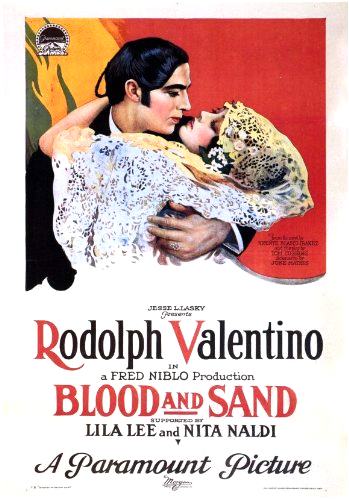
A definitive 6.3/10 rating for a film that redefined the boundaries of cult cinema. Blood and Sand remains a cornerstone of transgressive art.
Valentino’s silhouette against the sand-splattered screen is a chiaroscuro of hubris and hunger. Fred Niblo’s Blood and Sand—adapted from Blasco Ibáñez’s bestseller—doesn’t merely chronicle a matador’s rise and ruin; it inscribes a fever chart of masculinity in the silent era, where every gesture is magnified by pantomime and orchestral swell. The film’s very title drips with chromatic contradiction: sacramental sangre versus the granular passage of time. One step deeper and you’re ankle-deep in Andalusian myth, where honor is measured in centimeters of horn and the crowd’s roar is a narcotic more potent than absinthe.
Unlike the urban flappers populating The Shimmy Gym or the domestic farce of Tillie Wakes Up, Juan Gallardo’s battlefield is circular, sun-drenched, and fatal. From the first frame, cinematographer Alfred Gilks bathes Seville in ochre and burnt umber, as though the city itself were a canvas waiting for the hero’s crimson brushstroke. The montage of young Juan sneaking into corrals to practice passes with a tattered muleta is cut like a kinetic poem: hooves thud, dust plumes, and a church bell tolls off-screen—time’s referee warning us that glory is a stopwatch.
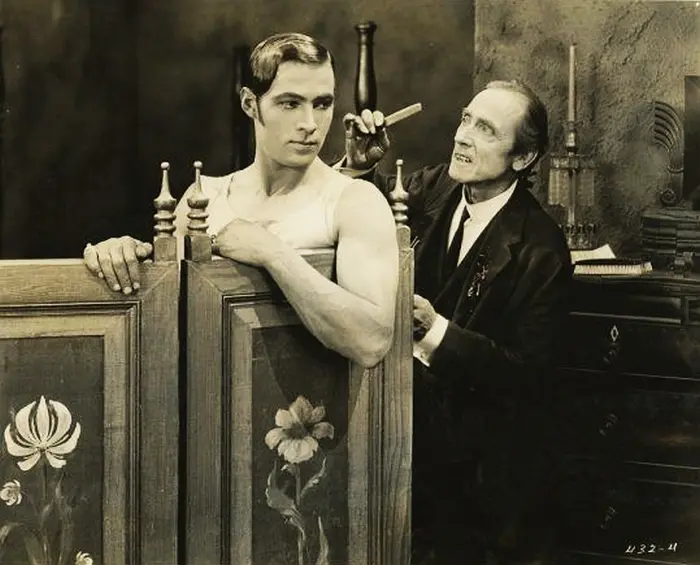
Rudolph Valentino’s studio-constructed exoticism reached its apotheosis here. He isn’t just acting; he’s manifesting a persona the public had already embroidered with fantasies of sheiks and Latin lovers. Notice how he enters a drawing-room scene: shoulders angled like a cape, eyelids half-mast, hips arrested mid-pivot as if perpetually poised to either kiss or kill. Every cigarette he lights is a sacrament; every flick of the wrist quotes the verónica he’ll later perform in the bullring. The camera adores the gradations of his pomaded hair, the patent-leather sheen of his sideburns, the way white silk shirts cling—an early example of costume as erotic mise-en-scène.
“To see Valentino’s Juan is to witness a man discovering, with horror, that the crowd’s love is a loan, not a gift, and the interest rate is blood.”
Nita Naldi’s aristocratic seductress slinks into the narrative like a panther that’s read Theda Bara’s playbook. Her introductory shot—a slow iris-in on kohl-rimmed eyes, black lace fan fluttering—announces a villainess forged in the crucible of melodrama. Yet the film grants her glimmers of depth: she studies Juan with the connoisseurship of a collector appraising a rare breed, and when she murmurs, “You smell of sand and glory,” the line crackles with sadistic tenderness. Their affair is staged in cavernous palaces where shadows pool like spilled wine; a single close-up of her hand gliding along a velvet settee tells us the seduction is already consummated in her mind.
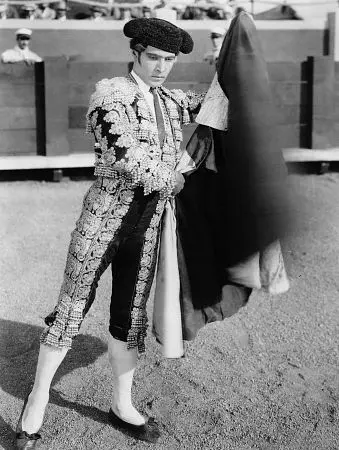
Lila Lee’s Carmen is deliberately framed in opposition: sun-lit doorways, mantilla-draped innocence, a voiceless piety that makes her eventual grief all the more piercing. The screenplay (by June Mathis, Hollywood’s highest-paid woman writer at the time) sutures the marital rupture to class anxiety: Carmen embodies the pueblo, Doña Sol the decadent aristocracy. Juan’s betrayal, then, is not just adultery—it’s a social transgression, a whiplash against his own origin story.
Watch how Niblo alternates subjective point-of-view inside the bullring: the bull’s forehead fills the frame, horns jutting like baroque crescents; cut to Juan’s eyes narrowed in concentration; then a vertiginous overhead shot as sand erupts. The sequence is edited with percussive intensity that anticipates Eisensteinian montage, yet remains tethered to Hollywood spatial coherence. When the inevitable goring occurs, intertitles withhold graphic detail, but the aftermath—a crimson stain soaking through brocade—lands harder than any gore-porn modern cinema can conjure. The Production Code was still a decade away, yet the film intuits that suggestion outstrips revelation.
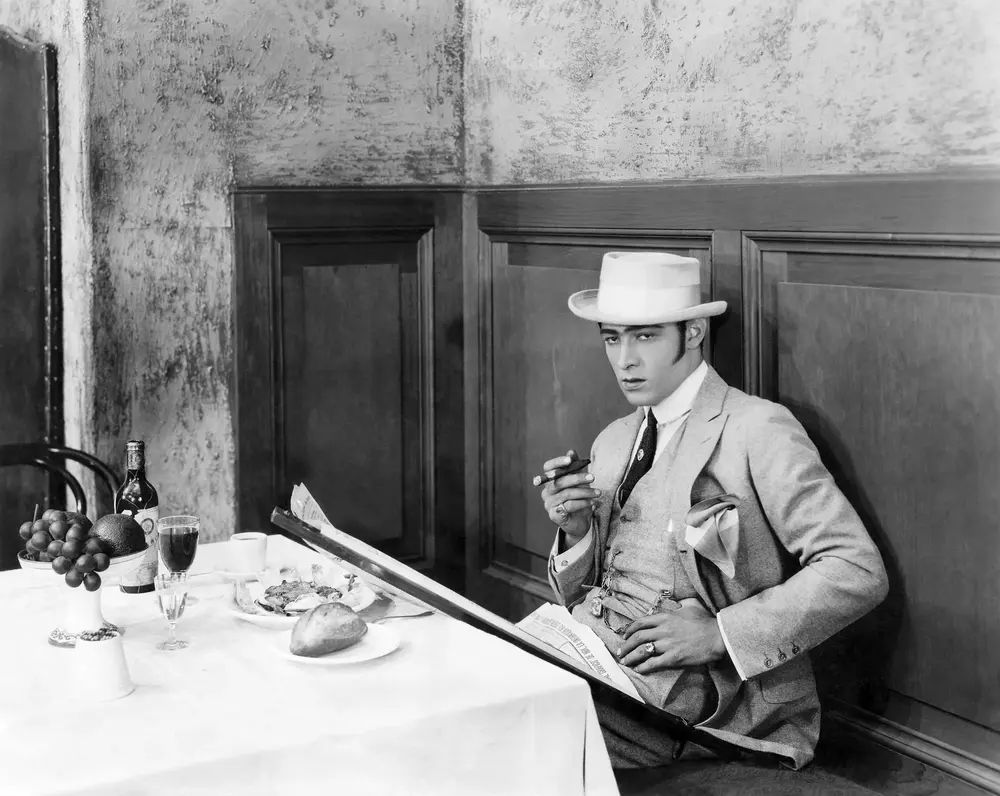
Contemporary audiences experienced Blood and Sand with live house orchestras performing a commissioned score that fused pasodoble rhythms with Wagnerian crescendos. Restored prints today often pair with newly composed scores, yet the original cue sheets survive: woodwinds flutter like capes, brass snarls like bulls, violins weep for Carmen. The absence of spoken dialogue paradoxically amplifies sensuality; every breathy intertitle reads like a whisper in a confessional.
Put this film beside Playthings (1929), a late-silent psychodrama that flirts with sound, and you’ll appreciate how Blood and Sand crystallizes the medium’s visual zenith. Dialogue wouldn’t enhance the operatic tragedy; words might vulgarize the ritual. The film’s artistry lies in its ability to communicate lust, envy, and existential dread through posture, lighting, and the glint of sequins under carbon-arc lamps.
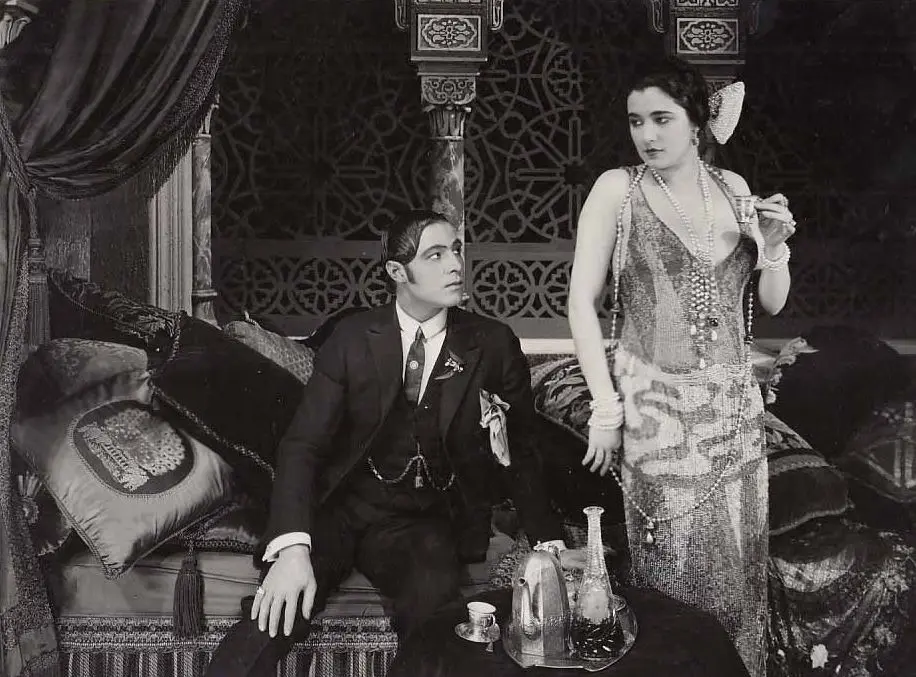
Revisionist critics brand Juan an emblem of toxic machismo, yet Valentino’s performance complicates the indictment. His eyes betray terror when the crowd chants “¡Valiente!”; he’s a prisoner of spectacle, shackled by his own myth. Doña Sol may weaponize sexuality, but the film indicts a culture that commodifies bodies—male and female—for ritualized slaughter. In that sense, Blood and Sand anticipates the feminist subtexts of A Waiting Maid, though packaged as 1920s pop.
Future bullfighting cinema—La Terra Trema, Talk to Her, even The Sun Also Rises—owes a debt to this prototype. The crimson sash that Juan passes to Carmen reappears in countless homages, a visual shorthand for doomed passion. When Madonna donned a matador jacket in her 1990s tours, she was riffing on Valentino’s iconography, knowingly or not.
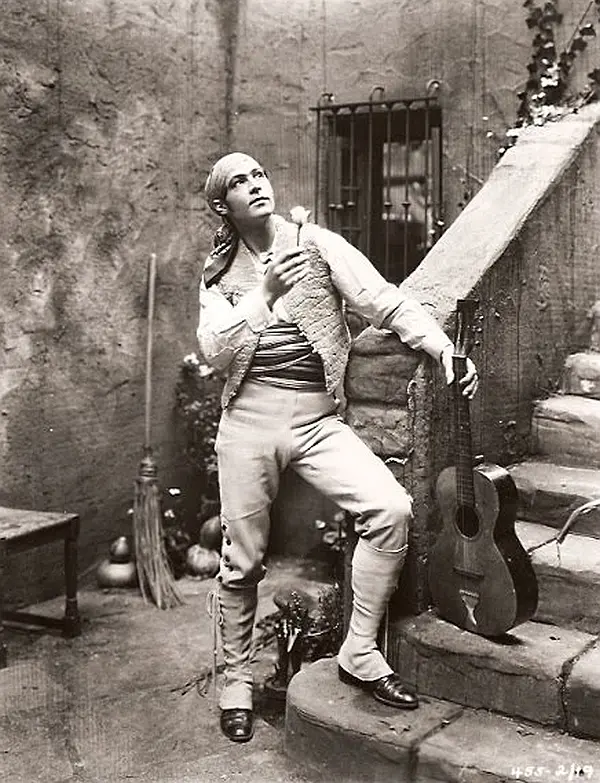
“If cinema is a dream, then Blood and Sand is the fever dream where Eros and Thanatos tango in the dust.”
Multiple restorations exist: a sepia-tinted 1990 MOMA print, a 2002 digital 4K by the Cinemateca de Madrid, and a Blu-ray with可选的 orchestral track by the Brussels Philharmonic. Each reveals different gradations of day-for-night cinematography; the glints on Valentino’s sequins shift from silver to molten gold. Archivists restored the original tints—amber for interiors, turquoise for Seville nocturnes, carnation-pink for carnival scenes—heightening the chromatic allegory.
Modern viewers jittery about intertitles should approach it like binge-watching a graphic novel: let the tableaux seep. The pacing is deliberate, not sluggish; every tableau contains visual Easter eggs—posters of Juan’s triumphs, Virgin Mary icons, the gradual replacement of rosaries with cufflinks—charting moral erosion. At 80 minutes, it’s shorter than most Netflix pilots, yet it lingers like a perfume you can’t scrub off.
Contrast this with Brother Against Brother, where fraternal conflict drives tragedy, or the Austro-Hungarian melancholy of Europa postlagernd. In Blood and Sand, the enemy is internal: the protagonist’s appetite for adoration. External foes—rival toreros, creditors, the press—are mere accelerants.
Upon release, the film grossed $1.2 million domestically—astronomical for 1922. Theater owners reported fainting spells, particularly during the goring sequence; one Chicago exhibitor installed smelling-salt stations. Valentino’s popularity ballooned so large that a Chicago Tribune editorial decried him as effeminate, sparking the infamous “Pink Powder Puff” scandal to which Valentino challenged the writer to a duel. The publicity only fed ticket sales, proving that outrage and allure are adjacent impulses.
Blood and Sand endures because it understands spectacle as both narcotic and mirror. We still queue for public rituals—sports, politics, social media—begging for validation, then act shocked when the beast pivots. Juan’s final breath, wrapped in sand-specked silk, is cinema’s earliest warning that when you commodify your own legend, the price is always blood.
Sources: Library of Congress Valentino Papers, 1922 Exhibitors Herald, Kevin Brownlow’s The Parade’s Gone By, personal viewing of 4K restoration.
IMDb 7.2
1934
Community
Log in to comment.