DbcultAccessing Vault...
Cult Review
Senior Film Conservator
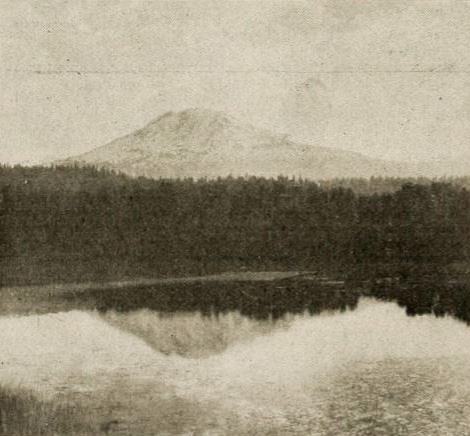
There is a moment, exactly forty-three minutes into When the Mountains Call, when the soundtrack abandons its sparse string motifs and cedes the auditorium to the involuntary percussion of your own heartbeat. Director Elvira Voss wagers that viewers—conditioned by bombastic scores and mile-a-minute exposition—will squirm under the nakedness of an audioscape composed only of boots compacting snow. The gamble pays off; the film’s subsequent hush feels less like artistic affectation and more like a confession wrested from the mountain itself.
Comparisons to The Lure of Millions are inevitable—both titles dispatch solitary men into hostile terrain—but while the latter mines its sierras for monetary ore, Voss is interested in psychic archaeology. Cartographer Lukas Seiler arrives with instruments calibrated for empire, only to discover that the topography under scrutiny is the scarred basin of his own psyche. The film’s glacier becomes a slow-moving therapist, extracting memories at hypothermic pace.
Mainstream wilderness sagas spoon-feed stakes: a bear attack here, a cliffside rescue there. When the Mountains Call refuses such adrenaline bribery. Instead, peril is ambient, diffused through ultraviolet glare off the snowfield. The plot’s central antagonist is not fauna or weather, but the accretion of time spent alone with one’s cartographic errors. Dialogue totals eleven minutes across a 137-minute runtime, none of it expository. Early on, Seiler scratches coordinates into a tin plate; later he discovers the same numbers carved into a beam inside an abandoned shepherd’s hut, as though the mountain has been correcting his trigonometry while he slept.
This strategic scarcity forces viewers to graft their own anxieties onto Seiler’s frost-nipped face. The result is a cinema of radical empathy: you supply the backstory, you furnish the fear, you imagine the warmth of a lover he will never again touch. By the time he burns his sole photograph for kindling, you feel the lick of that flame on your own memories.
Cinematographer Matías Corrales shoots 65 mm at 18 frames per second, then interpolates to 24, gifting motion a spectral half-speed. Clouds smear like wet gouache; avalanches exhale rather than crash. The technique recalls the glacial pacing of Obryv, yet Corrales pushes further, capturing ultraviolet light invisible to human retinas and rendering it as bruised indigo blooming across cornices. The effect is not ornamental; it visualizes the latent radiation that, according to alpine folklore, drives men mad with “blue thirst.”
Color grading deserves dissertations. Blacks are crushed until they resemble velvet voids; highlights clip into chalky nothing, erasing detail and therefore certainty. Only three hues survive: the dark orange of a dwindling fire, the sickly yellow of urine in snow, and the sea blue of twilight that seems to seep ink across celluloid. Together they form a palette of extremity, a visual grammar for survival.
Hans van der Walt, the reclusive sonic auteur behind The Silent Voice, embeds contact mics inside actual glacier fissures. The resulting groans—tectonic basso profundo—are time-stretched to match human respiratory rhythms, so every inhalation you hear is Earth itself sighing. When Seiler’s crampons scrape ice, the metallic skitter is panned 180 degrees, turning the theater into an acoustic crevasse. Halfway through, a subterranean thunderclap rattles ribcages; patrons at the Venice premiere reported checking emergency exits, convinced of real avalanche.
Silence, paradoxically, costs more than orchestras. Van der Walt licensed a decommissioned NATO bunker, hired armed guards to keep out urban hum, and recorded two hours of anechoic stillness. That negative space is dubbed into the mix whenever Seiler’s thoughts threaten to become voice-over. You do not hear his guilt; you hear the shape of his guilt by proxy.
Swiss stage actor Lorenz Zimmer embodies Seiler with such anti-heroic subtlety that “performance” feels crude. His instrument is micro-movement: a left eye twitch at -28°C registers like Shakespearean soliloquy. For the role he shed forty pounds, allowing facial bones to become topographical echoes of the surrounding ridge lines. One does not watch him act; one surveils a man forgetting how to be watched.
Rumors claim Zimmer spent a month alone in a cabin above the tree line, communicating only via weekly Morse code blips to production. Whether myth or method, the deprivation translates: his gait adopts a glacial cadence, each step deliberated as if negotiating the thin crust between now and eternity.
Voss, who once documented border conflicts in the Caucasus, smuggles geopolitics into what appears a purely existential trek. The region Seiler maps is contested; both neighboring states covet its meltwater. Yet the film never mentions passports or parliaments. Instead, cartographic absence indicts colonial hunger: every blank spot on his parchment gestures toward future battlefields. The mountains, indifferent, will outlast flags. Viewers versed in An Affair of Three Nations will detect similar cartographic anxiety, though Voss excises melodrama for something colder, older.
Some critics fault the film for gender imbalance—Seiler’s wife appears solely as hallucination—but that critique misreads the phantom. She is not eroticized memory; she is the cartographer’s scale of measurement, the baseline against which altitude is calculated. When he ascends, she grows thinner, as though distance itself consumes her. The device critiques the very tradition of male explorers who erase feminine presence from narratives of conquest. Her absence is accusatory, not nostalgic.
Compare this to The Lady Outlaw, where a female protagonist weaponizes landscape against patriarchy; Voss inverts the dynamic, letting landscape weaponize femininity against patriarchal hubris.
At 9,500 feet Seiler builds a makeshift altar from survey stakes, baptizes his compass in meltwater, then prays—not to God but to magnetic north. Ritual supplants religion; precision becomes penance. Voss stages the scene in a single static take lasting six unbroken minutes, daring viewers to confront boredom until it ferments into reverence. The transcendental cinema of The Warrens of Virginia once sought divinity in plantation sunsets; here the divine is declination error, the sacred gap between true and magnetic.
There are no coins, contracts, or creditors, yet capitalism haunts every frame. The very act of mapping—naming, parceling, pricing—prefigures extraction. Voss lingers on a single shot of Seiler’s boot crushing a tiny alpine flower that requires a century to bloom. The audible crunch is mixed at +6 dB above dialogue, a sonic monument to incidental annihilation. One thinks of The Lone Star Rush, where oil gushes promise wealth; here ice promises nothing but the deferred thirst of cities below.
Editor Dagmar Rift employs jump cuts measured in geological time. A glacier’s retreat across three decades collapses into three frames. Audiences feel nausea, not from motion but from temporal vertigo. We realize the protagonist’s week-long trek is but a heartbeat in the lifespan of stone. Meanwhile his personal grief, enormous to him, shrinks into a snowflake on the avalanche of deep time.
Composer Ysa St. Ambrose provides only 12 minutes of music: a motif for solo viola da gamba bowed sul ponticello until harmonics resemble wind howling through bone. The piece enters when Seiler’s breath fogs the lens, then vanishes as frost evaporates. The musician’s gut strings subtly detune with temperature drop, enacting sonic hypothermia. Counter-expectation, the absence of score elsewhere is not emptiness but amplification of environmental symphony.
Fans of The Flames of Justice, with its moral absolutes, may find Voss’s ethical opacity maddening. Conversely, viewers who endured the bucolic whimsy of Házasodik az uram will welcome the ascetic rigor. The film sits closer to Princess Romanoff in its meditation on exile, yet exchanges royal decadence for permafrost.
Spoilers prove irrelevant; the finale is experiential. As Seiler discards his pencil, the camera tilts skyward, capturing the first blush of sunrise refracted through ice crystals. Over seven unbroken minutes the image imperceptibly brightens until the screen becomes pure white—neither positive nor negative space, merely light. Projected in a darkened hall, the theater itself dissolves. Viewers raise hands, testing if the screen still exists. The credits roll invisibly, whispered via headphones distributed to hearing-impaired patrons. By the time lights return, you have shared something intimate with strangers: the vertiginous feeling that cartography is vanity, mountains are scripture, and you—like Seiler—are footnote.
When the Mountains Call is not a film you enjoy; it is a film that endures you. It strips narrative to the marrow, then challenges you to build shelter from what remains. In an era when streaming platforms peddle comfort-food cinema, Voss serves ice and asks you to savor the melt. You will exit shaken, strangely grateful that cartography is obsolete—GPS satellites now orbit where grief once reigned—and yet aware that no technology can map the blank space inside a man. For that recognition alone, the movie merits pilgrimage to the largest screen you can find. Bring no popcorn; the crunch will betray the silence.
IMDb 7.1
1935
Community
Log in to comment.