DbcultAccessing Vault...
Cult Review
Senior Film Conservator
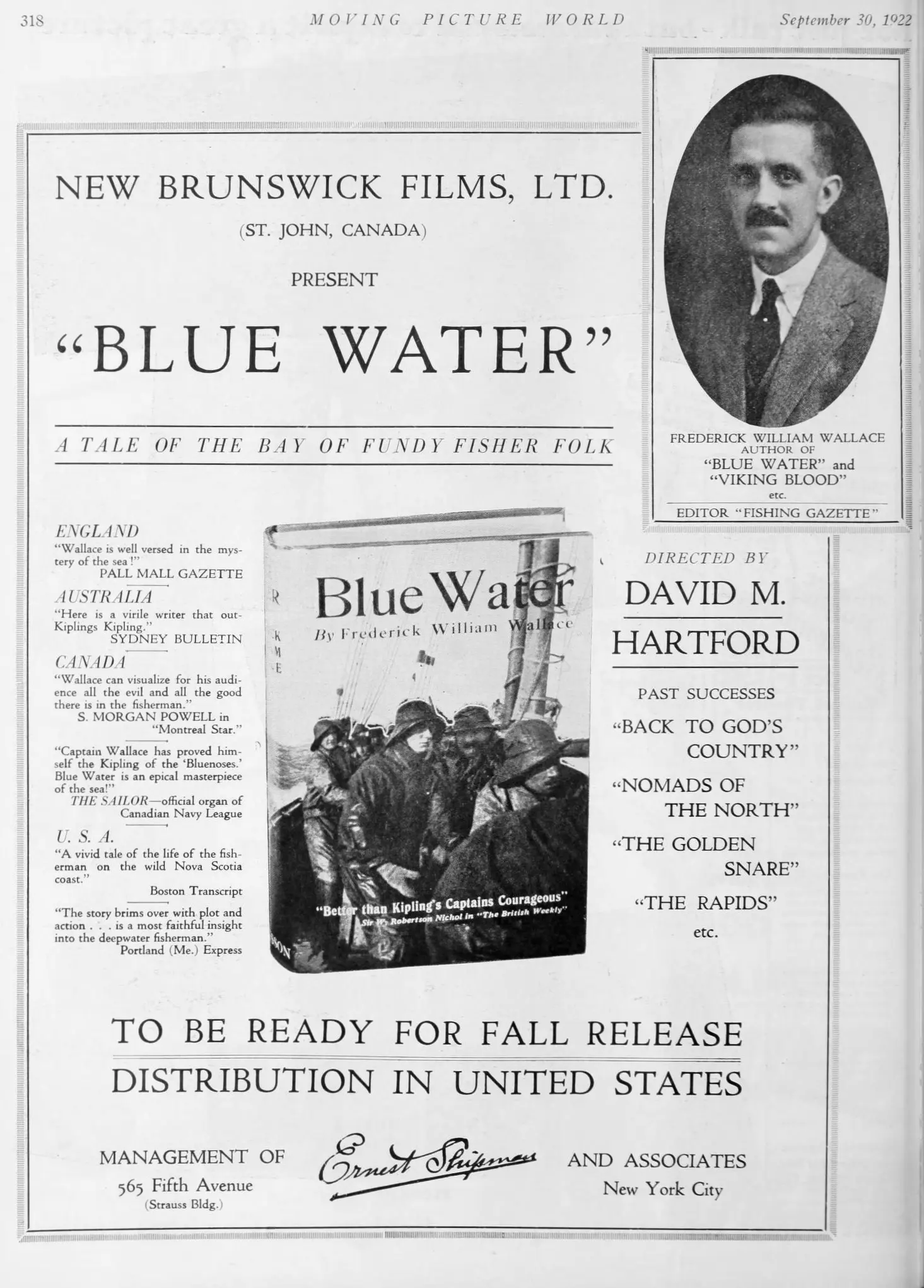
The cinematic tapestry of "Blue Water" emerges from the mists of time, a compelling and often heart-wrenching meditation on the human spirit's resilience in the face of nature's indifference and love's cruel impermanence. This film, a potent evocation of early 20th-century drama, plunges us into the stark, breathtaking, yet utterly merciless world of the Bay of Fundy. It is here, amidst the planet's highest tides and the relentless call of the sea, that we encounter a narrative woven with threads of deep affection, arduous labor, and profound sorrow. The film’s power lies not just in its dramatic crests and troughs, but in its quiet, persistent portrayal of lives lived on the edge, where every dawn brings both promise and peril.
At its core, "Blue Water" is a testament to the enduring human capacity for love, even when shadowed by the specter of loss. The story, masterfully conceived by Frederick William Wallace and Faith Green, eschews overt melodrama in favor of a more nuanced, deeply felt exploration of tragedy. They strip away the extraneous, focusing on the raw emotional landscape of a fisherman whose life, like the tides he navigates, is subject to forces beyond his control. Their script, while perhaps brief by modern standards, possesses an elemental strength, allowing the visual storytelling and the actors' expressions to carry the overwhelming weight of the narrative. This approach, characteristic of its era, imbues the film with a timeless quality, making its emotional beats resonate even today.
The protagonist, a fisherman embodied with stoic grace by Louis Darclay, is a man defined by the sea. His hands, weathered by saltwater and sun, speak volumes of his arduous existence, yet his eyes hold a tenderness reserved for his sweetheart. Darclay delivers a performance that is both understated and immensely powerful, portraying a quiet strength that is gradually eroded by the relentless tides of fate. His love story with his sweetheart, brought to life with captivating vulnerability by Norma Shearer and further enriched by Jane Thomas in a pivotal role (perhaps as a sister or confidante, adding another layer of communal grief), forms the emotional anchor of the film. Their connection is palpable, a beacon of warmth against the stark, cold backdrop of their lives. It's a romance born of shared hardship and mutual understanding, a bond forged in the crucible of a demanding environment. The naturalistic portrayal of their affection makes the subsequent tragedy all the more devastating.
The narrative’s central heartbreak unfolds not in a grand, theatrical gesture, but with the quiet, crushing inevitability of a ship disappearing over the horizon. While our fisherman is at sea, grappling with the daily perils of his profession, his sweetheart is lost to him. The film artfully leaves the exact nature of this loss somewhat open to interpretation, allowing the audience to project their own fears and sorrows onto the canvas. Was it an accident on land? An illness that swept through the community? The beauty of the writing by Wallace and Green is that the specific mechanics of her disappearance matter less than the profound, unyielding void it creates. This ambiguity enhances the universal applicability of the story, transforming a specific tragedy into an archetype of human suffering. The sea, often a metaphor for life's journey, here becomes a symbol of separation, a vast expanse that keeps him from her, even as the true disaster strikes on the solid ground he yearns to return to.
The supporting cast, including the reliable John Webb Dillion, Harlan Knight, and Pierre Gendron, contributes significantly to the film’s rich texture, portraying the close-knit community that defines life in a fishing village. Their presence underscores the communal nature of both joy and sorrow, providing a backdrop against which the individual tragedy of Darclay's character is amplified. These aren't just background figures; they are the collective conscience and support system, reflecting the shared struggles and small triumphs of their isolated world. Their performances, often conveyed through subtle gestures and empathetic glances, paint a vivid picture of a society bound by shared experiences and the omnipresent threat of the ocean.
Cinematically, "Blue Water" is a marvel of visual storytelling, especially considering the technical limitations of its production era. The Bay of Fundy itself becomes a character, its dramatic landscapes and volatile waters serving as a constant reminder of nature's untamed power. The cinematography captures the raw beauty of the region—the crashing waves, the expansive skies, the rugged coastlines—imbuing the film with a sense of awe and foreboding. The visual metaphors are plentiful: the ebb and flow of the tides mirroring the protagonist's emotional state, the vastness of the ocean reflecting the emptiness in his heart. The use of natural light and location shooting brings an authenticity that many studio-bound productions of the time often lacked, grounding the emotional drama in a tangible, visceral reality.
Comparing "Blue Water" to other films of its period reveals its unique strengths. While films like The Little Minister might explore romance with a pastoral charm, "Blue Water" grounds its affection in a grittier, more perilous reality. The starkness of its setting and the unforgiving nature of its central conflict draw parallels with the raw emotional landscape of Salvation Nell, where hardship defines existence and love struggles to survive amidst poverty and despair. Unlike the more adventurous, grand-scale maritime tales such as The Mutiny of the Elsinore, which focuses on external conflict and high-seas drama, "Blue Water" turns its gaze inward, exploring the profound internal mutiny of a soul adrift in grief. The tragedy here is not one of betrayal or epic struggle, but of an intimate, personal loss, a quiet devastation that resonates with a universal ache. Even in comparison to more lighthearted or urban-centric narratives like New York Luck or the theatrical flair of Diane of the Follies, "Blue Water" stands apart for its unwavering commitment to depicting the unvarnished truth of life and loss in a challenging environment. It shares a thematic kinship with films that explore the depths of human emotion in constrained circumstances, such as The Marionettes, but with a distinctly North American maritime flavor that feels both authentic and singular. The film's ability to extract such profound emotion from a seemingly simple premise is a testament to the collaborative genius of its creators and performers, making it a compelling study in early cinematic realism.
The thematic resonance of "Blue Water" extends far beyond its initial viewing. It’s a film that lingers, prompting reflection on the fragility of human happiness, the arbitrary nature of fate, and the enduring power of memory. The fisherman’s subsequent journey, marked by an almost unbearable solitude, becomes a metaphor for the human condition itself—a constant navigation through the unpredictable currents of life, forever shaped by the losses we carry. His struggle is not just against the elements, but against the crushing weight of absence, a silent battle waged within the confines of his own heart. The film doesn't offer easy answers or saccharine resolutions; instead, it presents a mirror to the often-harsh realities of existence, inviting us to contemplate our own vulnerabilities and strengths.
In an era that sometimes favored spectacle or overt moralizing, "Blue Water" distinguished itself through its raw emotional honesty. It’s a film that understands the language of grief and portrays it with an authenticity that transcends the limitations of its period. The performances, particularly that of Louis Darclay, are etched with a profound sense of realism, conveying complex emotions without the need for extensive dialogue, a hallmark of powerful early cinema. The subtle shifts in his demeanor, the haunted look in his eyes, all contribute to a portrayal of a man irrevocably altered by sorrow. Norma Shearer, even in a role that is tragically cut short, leaves an indelible impression, her presence a vibrant memory that fuels the protagonist's despair and the audience's empathy.
Ultimately, "Blue Water" is more than just a period drama; it’s a timeless exploration of love, loss, and the unyielding power of the natural world. It reminds us that even in the most desolate corners of existence, the human heart finds ways to endure, to remember, and to carry on, albeit forever scarred. The film serves as a poignant reminder of the sacrifices made by those who live off the sea, and the profound personal costs exacted by a life intertwined with its unpredictable rhythms. Its legacy lies in its ability to evoke deep empathy and provoke contemplation, securing its place as a significant, albeit perhaps underappreciated, piece of cinematic heritage. For those seeking a film that delves into the profound depths of human emotion with quiet dignity and unflinching honesty, "Blue Water" remains a compelling and essential viewing experience, a true jewel from the annals of early filmmaking.

IMDb 5.9
1930
Community
Log in to comment.