DbcultAccessing Vault...
Cult Review
Senior Film Conservator
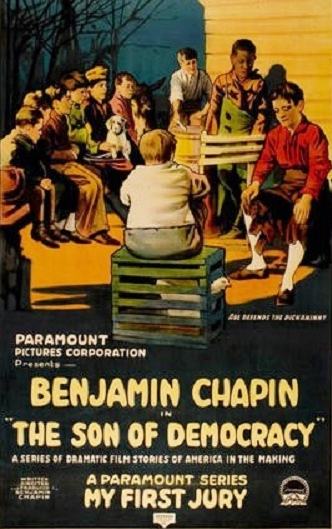
In the annals of early American cinema, certain films stand not merely as historical artifacts but as foundational myths, encapsulating nascent national ideals through the lens of emerging art. 'My First Jury', a silent film that casts a spotlight on the boyhood of Abraham Lincoln, is precisely one such cinematic curio. It offers more than just a biographical sketch; it presents a profound, albeit simplified, portrayal of the very genesis of Lincoln's unwavering commitment to justice and due process. This isn't just a story about a boy; it's a parable about the birth of an ideology that would come to define a nation's highest aspirations. The film, starring Benjamin Chapin, who was renowned for his Lincoln impersonations, transports us to a time when the lines between frontier justice and formal jurisprudence were often blurred, and the seeds of American legal principles were being sown in the most unexpected of places.
The narrative of My First Jury is deceptively simple, yet rich in symbolic resonance. We are introduced to a youthful Abraham Lincoln, far from the hallowed halls of power, instead navigating the rustic complexities of frontier life. The central conflict erupts with the alleged theft of a white rooster by a young Black boy named Jim. This incident, seemingly trivial on the surface, quickly escalates into a stark confrontation between impulsive mob rule and the nascent stirrings of structured justice. Jim, captured with the pilfered fowl, faces the immediate, visceral wrath of an indignant crowd of youths, ready to mete out their own brand of rough justice. It is at this critical juncture that young Abe steps forward, not with physical intervention, but with the power of an idea. His proposal: a fair trial by jury, a radical concept in the face of summary judgment, setting the stage for a dramatic exposition of his inherent moral compass.
Chapin’s portrayal of Lincoln, even in his youth, is imbued with a quiet gravitas, a sense of inherent fairness that transcends the simplicity of the plot. He doesn’t preach; he merely suggests, yet his suggestion carries the weight of future statesmanship. The film captures the raw energy of the chase and the palpable fear of Jim, juxtaposed with the burgeoning ethical framework that Lincoln champions. This contrast is vital, highlighting the precarious balance between impulsive human nature and the reasoned application of law. While the film’s brevity and the conventions of silent cinema necessarily limit character depth, the essence of Lincoln’s character – his empathy, his logical mind, and his unwavering belief in fairness – shines through with remarkable clarity. The narrative, stripped to its bare essentials, becomes a powerful testament to the origins of a guiding philosophy.
At its heart, My First Jury is a profound exploration of justice. It’s a foundational text, cinematic or otherwise, on the importance of due process over the capricious whims of the crowd. Lincoln's intervention is not just a clever trick; it’s a principled stand against vigilantism, a clear articulation that even the humblest among us, accused of the most minor transgression, deserves the protection of an impartial system. This theme resonates powerfully, serving as a reminder that the rule of law, however imperfect, is a bulwark against chaos and prejudice. One might draw parallels to the social commentaries found in films like Germinal; or, The Toll of Labor, which, though focusing on labor disputes, similarly grappled with the injustices faced by marginalized communities and the urgent need for systemic fairness against overwhelming power structures.
The racial dynamics, while handled with the sensibilities of its era, cannot be overlooked. The description of Jim as a "funny little black boy" immediately situates the film within a historical context laden with racial stereotypes and societal inequalities. Lincoln's defense of Jim, therefore, takes on an even greater significance. It elevates the conflict beyond a simple theft to a nascent confrontation with racial prejudice. In a society where the rights and humanity of Black individuals were routinely denied, Lincoln's insistence on a fair trial for Jim, regardless of the perceived triviality of the crime, is a radical act of empathy and justice. It foreshadows his later, monumental efforts to dismantle slavery and champion civil rights, even if the film itself doesn't explicitly delve into these deeper implications. It provides a lens through which to examine the gradual, often painful, evolution of American ideals of equality. This aspect connects to a broader cinematic tradition of exploring social justice, albeit often through the problematic filters of their respective times, echoing the struggles depicted in films like The Stolen Paradise, which often highlighted class and social disparities, or Her Right to Live, which tackled the constraints placed upon women, all films wrestling with the concept of an individual’s place and rights within a larger, often unjust, society.
The film also subtly critiques mob mentality. The angry youths, driven by immediate indignation rather than reasoned thought, represent the dangerous allure of collective emotion unchecked by ethical consideration. Lincoln's calm, measured proposal stands in stark contrast to this chaotic energy, illustrating the power of rational discourse in defusing volatile situations. This theme remains perpetually relevant, cautioning against the dangers of hasty judgment and the erosion of individual rights in the face of popular outrage. The very act of proposing a jury trial, a collective decision-making body, is itself a fascinating counterpoint to the 'mob,' suggesting that structured group deliberation is the antidote to unbridled collective passion. It's a delicate dance between the will of the people and the protection of the individual, a tension that forms the very bedrock of democratic governance.
As an early silent film, My First Jury operates within the technical and narrative constraints of its time. The filmmaking techniques are rudimentary by modern standards, relying heavily on expressive acting, intertitles to convey dialogue and exposition, and relatively static camera work. Yet, within these limitations, the film manages to convey its powerful message effectively. The performances, particularly Chapin’s, are central to its success. His physical resemblance to Lincoln, coupled with his studied mannerisms, lends an authenticity that was highly valued in early biographical films. This approach to historical portrayal can be seen in other contemporary works, such as The Life of General Villa, which similarly blended documentary-style realism with dramatized sequences, utilizing actual historical figures or convincing impersonators to lend weight to their narratives. The emphasis was often on capturing the spirit, if not always the granular detail, of historical events and personalities.
The visual storytelling, while lacking the sophisticated editing and cinematography of later eras, nonetheless communicates the urgency of the chase and the tension of the confrontation. The use of close-ups, though perhaps sparingly, would have been impactful in conveying the emotional states of the characters, particularly Jim's fear and Lincoln's thoughtful determination. The rustic settings further ground the narrative in a believable frontier environment, enhancing the film's historical texture. The film's relatively unknown writers are less important than the compelling concept, which likely drew from popular lore and existing portrayals of Lincoln's early life, solidifying a particular mythos around his character long before extensive historical scholarship could fully disentangle fact from legend.
The very act of creating a film about Lincoln's childhood trial reflects a broader cultural fascination with the origins of great men. Audiences of the early 20th century were eager to see the formative moments that shaped national heroes, and films like this served to reinforce idealized versions of their character. This biographical impulse was a significant trend, with films often seeking to establish moral precedents and inspirational narratives, shaping public perception of historical figures. This type of narrative, focusing on a singular act of moral courage, provided a clear, digestible lesson for audiences, contrasting sharply with more complex psychological dramas of the era, such as The Bells, which delved into the tormented conscience of a murderer. My First Jury, by contrast, paints a picture of unwavering moral clarity.
Though a relic of early cinema, the themes explored in My First Jury possess an enduring relevance. The tension between popular sentiment and legal principle, the struggle against prejudice, and the fundamental importance of a fair hearing remain cornerstones of democratic society. In an age where digital mobs can form instantly and public opinion often precedes due process, Lincoln’s childhood stand for a jury trial serves as a powerful, timeless reminder of the fragility and necessity of justice. It underscores that the commitment to fairness must be cultivated, defended, and reasserted in every generation, beginning with the foundational principles that even a child, destined for greatness, could instinctively grasp.
The film, despite its technical simplicity and the historical distance, offers a compelling glimpse into the moral architecture of one of America's most revered figures. It’s a testament to the idea that true leadership isn't always about grand gestures on a national stage, but often begins with quiet acts of principle in moments of local conflict. My First Jury is more than just a historical footnote; it is a cinematic origin story, illuminating the very essence of Lincoln's character and his profound, early commitment to the ideals that would eventually guide a fractured nation toward a more perfect union. Its simple narrative belies a profound philosophical depth, making it a valuable subject for reflection on the roots of American justice and the enduring power of moral conviction.
IMDb 4.9
1934
Community
Log in to comment.