DbcultAccessing Vault...
6.5/10
Senior Film Conservator
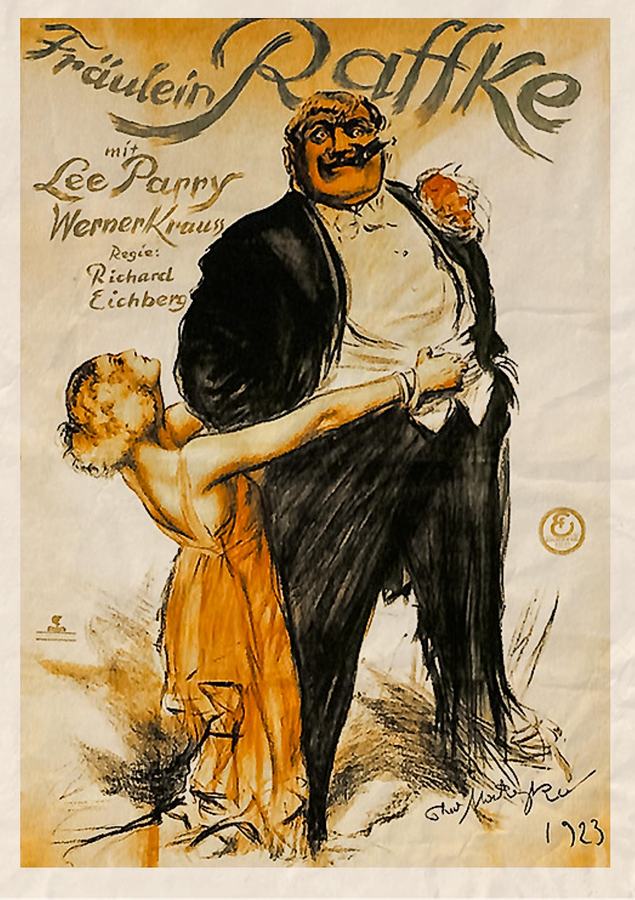
A definitive 6.5/10 rating for a film that redefined the boundaries of cult cinema. Fräulein Raffke remains a cornerstone of transgressive art.
In the annals of German silent cinema, a period pulsating with artistic innovation and profound social commentary, certain films emerge as crucial historical documents, not merely as entertainment. Helmuth Orthmann and Hans Behrendt’s 1923 masterpiece, Fräulein Raffke, stands as an incisive, often biting, testament to the societal upheaval gripping the Weimar Republic. Released amidst the hyperinflation crisis, a time when fortunes were made and lost overnight, and traditional class structures crumbled under the weight of economic volatility, this film offers a fascinating, albeit sobering, glimpse into the anxieties and aspirations of an era defined by its frenetic pace of change.
It is a narrative steeped in the burgeoning conflict between the established, albeit often impoverished, aristocracy and the audacious, newly minted industrialist class. The film does not merely present this clash; it dissects it with a surgeon's precision, laying bare the hypocrisy, desperation, and moral compromise that underpinned the pursuit of status in a rapidly modernizing society. Through its compelling characterizations and escalating dramatic tension, Fräulein Raffke transcends a simple plot to become a profound cultural artifact, resonating with themes that, remarkably, retain their pertinence a century later.
At the heart of this social tapestry is Emil Raffke, brought to vivid, often grotesque, life by the incomparable Werner Krauss. Krauss, a titan of German Expressionist cinema, renowned for his chameleonic ability to embody characters ranging from the monstrous to the pathetic, here crafts a portrait of the nouveau riche industrialist that is both pitiable and repulsive. Raffke is not merely wealthy; he is ostentatiously, almost defiantly, so. His arrogance is a shield, a clumsy attempt to mask the deep-seated insecurity of one who has gained immense material wealth but lacks the inherited prestige of the old guard. Krauss imbues Raffke with a bombastic physicality, a puffed-up self-importance that speaks volumes without a single uttered word.
His every gesture, from the way he brandishes his cigar to the dismissive wave of his hand, broadcasts a man intoxicated by his own newfound power, yet simultaneously desperate for acceptance within circles that inherently disdain his kind. The film shrewdly positions Raffke's wealth as both his greatest asset and his most significant vulnerability. His seaside holiday, ostensibly a leisurely escape, quickly transforms into a stage for social maneuvering, a desperate attempt to parlay his industrial might into aristocratic legitimacy. Krauss's performance is a masterclass in silent acting, conveying the character's internal conflict and external bluster with an exquisite balance that makes Raffke a truly unforgettable figure. His portrayal captures the essence of a particular socio-economic phenomenon of the Weimar era, where the rapid accumulation of wealth often outpaced the development of social graces or genuine cultural integration. This dynamic, a recurring motif in cinematic portrayals of class mobility, finds a particularly potent expression in Krauss's Raffke, echoing the satirical bite seen in later works that critique similar social pretensions.
Caught in the crosscurrents of her father's grand designs is Lilli Raffke, portrayed with a delicate blend of innocence and burgeoning defiance by Lee Parry. Lilli is, in many respects, a tragic figure, a commodity in her father's elaborate scheme for social climbing. Her father sees her not as an individual with her own desires and aspirations, but as a vessel through which he can inject his family into the hallowed halls of nobility. The arrival of the young Baron Von Geldern (Hans Albers) at the seaside resort immediately triggers Raffke's avaricious imagination, setting in motion a chain of events designed to culminate in a strategic, rather than romantic, union.
Parry’s performance is nuanced, revealing Lilli’s internal struggle between filial duty and personal autonomy. While her father orchestrates her future, Lilli has already taken a decisive, clandestine step towards carving out her own destiny: a secret marriage to another young man. This act of rebellion, concealed beneath a veneer of compliance, serves as the narrative's ticking time bomb. It is a powerful symbol of the younger generation's quiet resistance against the rigid social expectations imposed by their elders, a theme explored with varying degrees of success in films across different cultures, such as the familial pressures depicted in Mother Love and the Law. The eventual revelation of this secret marriage is not merely a plot twist; it is the cataclysmic event that shatters the fragile façade of the Raffke family, exposing the deep fissures beneath their carefully constructed image of prosperity and respectability. Parry masterfully conveys Lilli's evolving emotional landscape, from timid obedience to desperate resolve, culminating in the inevitable, heartbreaking confrontation.
Opposite Krauss and Parry is Hans Albers as Baron Von Geldern, a character who embodies the decaying grandeur of the German aristocracy. Albers, a future star of German sound cinema, here showcases his early talent for portraying charming rogues. The Baron is handsome, charismatic, and carries the undeniable air of inherited status, but beneath this polished exterior lies a man in dire financial straits. His relationship with a dancer, who has evidently bailed him out of previous predicaments, underscores his precarious position, hinting at a life of dissipation and mounting debt.
Von Geldern's interest in Lilli is purely transactional; he sees her not as a romantic prospect, but as a conduit to the Raffke fortune, a means to shore up his crumbling finances and maintain his aristocratic lifestyle. Albers portrays this cynical opportunism with a suave detachment, never quite allowing the audience to fully despise the Baron, yet never permitting genuine sympathy either. His performance captures the moral ambiguity of a class struggling to adapt to a new economic reality, where inherited titles held less sway than industrial capital. This portrayal of a financially desperate aristocrat, willing to trade status for wealth, provides a stark counterpoint to Raffke's ambition, illuminating the reciprocal nature of their societal bargain. The film expertly demonstrates how both sides, the old money and the new, are equally compromised in their pursuit of what the other possesses, a societal critique that echoes in the transactional relationships seen in films like The Third String.
The central thematic thrust of Fräulein Raffke lies in its meticulous exploration of the clash between old and new money, a conflict exacerbated by the tumultuous economic climate of the Weimar Republic. Raffke's desire to marry his daughter into nobility is not merely a personal whim; it represents a broader societal longing for legitimacy and acceptance among the newly wealthy, who, despite their riches, often felt excluded from established social circles. Conversely, the Baron's willingness to marry for money highlights the desperation of an aristocracy struggling to maintain its position in a world that no longer valued titles above capital.
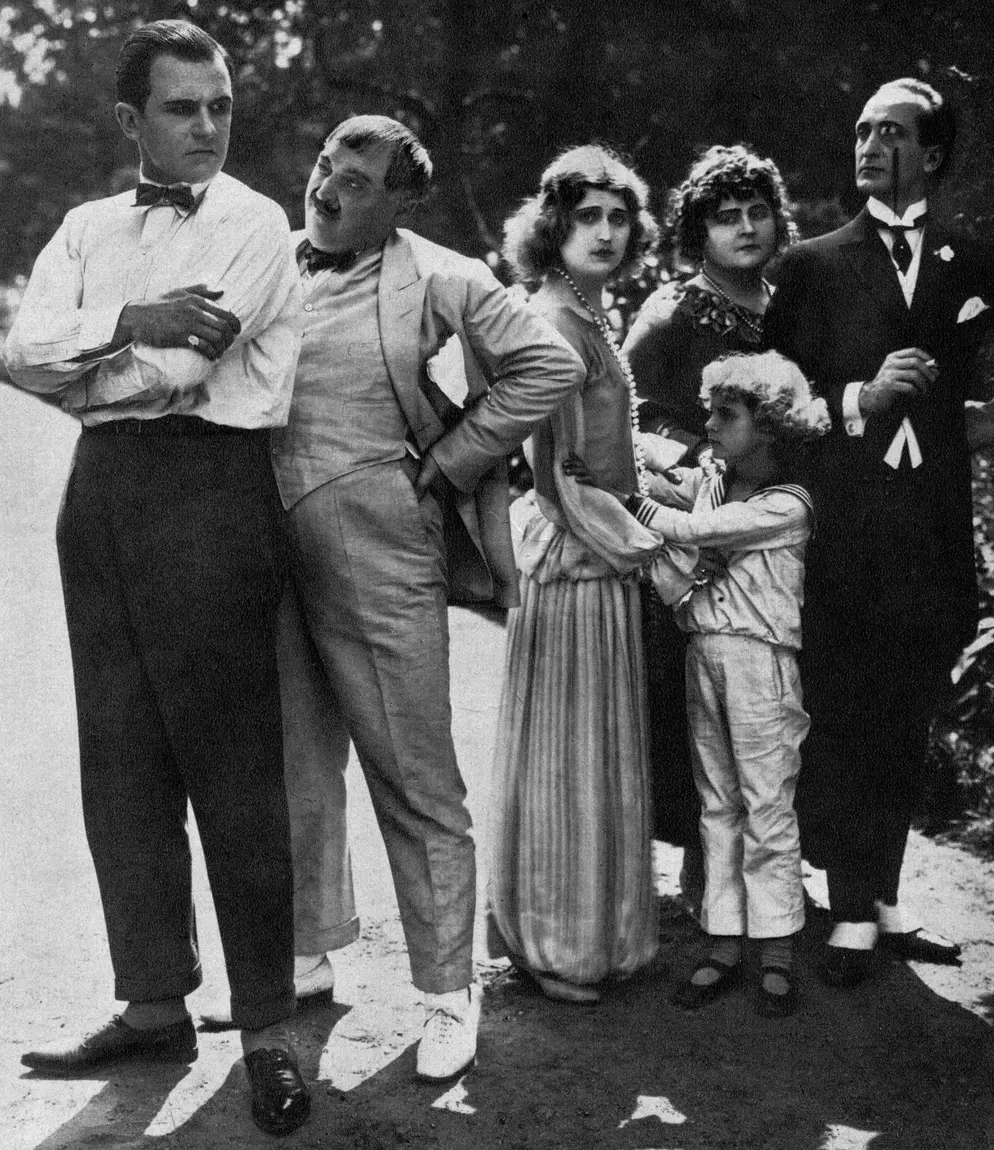
The film deftly illustrates the transactional nature of these relationships, where love and genuine affection are secondary, if not entirely absent. This cynical view of marriage as a social contract, rather than an emotional bond, is a potent critique of the era’s materialistic values. The deception inherent in both Raffke's social maneuvering and Lilli's secret marriage creates a precarious house of cards, destined to collapse. The dramatic events that unfold are not arbitrary; they are the inevitable consequences of lives built on artifice and hidden truths. The film skillfully builds suspense as the audience anticipates the moment of revelation, a narrative technique that keeps the viewer engrossed in the unfolding tragedy.
The breakdown of the family, catalyzed by Lilli's secret, is portrayed with a raw emotional intensity that underscores the devastating impact of societal pressures on individual lives. It’s a compelling study of how external aspirations can corrupt internal dynamics, leading to irreparable damage. In this sense, the film shares a spiritual kinship with works that explore the fragility of familial bonds under duress, such as the poignant narratives found in The Bronze Bell, albeit with a distinctly German post-war lens.
Under the direction of Hans Behrendt, Fräulein Raffke is a masterclass in silent film aesthetics. Behrendt, along with co-writer Helmuth Orthmann, crafts a narrative that relies heavily on visual storytelling, a hallmark of the era. The cinematography, though perhaps not as overtly expressionistic as some of its contemporaries, effectively conveys the mood and tension of each scene. The use of mise-en-scène, from the opulent settings of the Raffke household to the more understated elegance of the Baron's world, subtly reinforces the class distinctions central to the plot.
Intertitles are employed judiciously, providing necessary exposition without interrupting the flow of the visual narrative. The performances, particularly from Krauss, Parry, and Albers, are finely tuned to the demands of silent acting, relying on exaggerated gestures, facial expressions, and body language to communicate complex emotions and motivations. The film's pacing is deliberate, allowing the tension to build organically, culminating in the dramatic denouement. Behrendt's direction ensures that the audience remains fully immersed in the characters' plights, despite the absence of spoken dialogue. This meticulous attention to visual detail and dramatic timing elevates the film beyond mere melodrama, establishing it as a significant contribution to German silent cinema.
While the central trio commands the screen, the supporting cast provides crucial texture to the film's rich tapestry. Performers like Loni Nest, Lydia Potechina, Vivian Gibson, Heinrich Peer, Harry Hardt, and Max Grünberg, though often in smaller roles, contribute significantly to the film’s atmosphere and social commentary. Their presence helps populate the world of the Raffkes and Von Gelderns, adding layers of authenticity to the various social strata depicted. Whether portraying the Baron's dancer, the Raffke family's social circle, or other figures encountered along the way, these actors round out the narrative, making the societal pressures and interactions feel tangible and real.
Their collective performances underscore the pervasive nature of the film's themes, demonstrating that the struggle for status and the consequences of deception were not confined solely to the main protagonists but were endemic to the broader societal fabric. Even fleeting appearances are imbued with character, contributing to the overall sense of a society in flux, grappling with new norms and lingering traditions. This ensemble work, often overlooked in the shadow of the leading figures, is vital for creating a fully realized cinematic world, much like the intricate supporting roles that define the atmosphere in Tingeltangel or the nuanced characterizations in Il medico delle pazze.
Fräulein Raffke is more than just a historical curiosity; it is a film that speaks to timeless human experiences. Its exploration of social climbing, the corrupting influence of wealth, familial conflict, and the search for authentic identity remains profoundly relevant. The film’s critique of a society obsessed with appearances and status, often at the expense of genuine human connection, continues to resonate in contemporary contexts.
The dramatic events that unfold, born from secrets and societal pressures, offer a cautionary tale about the fragility of happiness when built upon deceit. As a product of the Weimar Republic, it provides invaluable insight into the socio-economic anxieties of the period, reflecting the rapid shifts that characterized post-World War I Germany. Its narrative complexity and the stellar performances from its lead actors cement its place as a significant work within German silent cinema, a period rich with daring artistic expression and profound social commentary. Much like the moral quandaries explored in Thou Art the Man or the reckless abandon found in Dangerous Curve Ahead, Fräulein Raffke delves into the consequences of human choices within a structured, yet volatile, society.
The film serves as a potent reminder that while the specific trappings of class and wealth may change, the fundamental human desires for acceptance, security, and love, and the often-destructive means employed to achieve them, remain constant. Its legacy lies not just in its artistic merit, but in its capacity to provoke thought and reflection on the enduring complexities of human nature and societal structures. Re-discovering Fräulein Raffke today is to engage with a vital piece of cinematic history, a film that, despite its silent nature, speaks volumes about a world in transition and the universal struggles within it.
IMDb —
1925
Community
Log in to comment.