DbcultAccessing Vault...
6.9/10
Senior Film Conservator
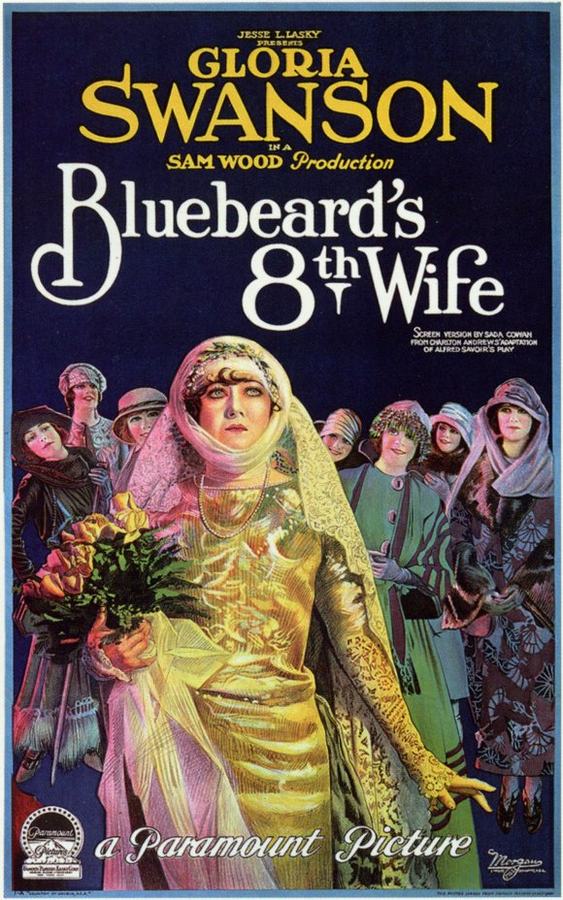
A definitive 6.9/10 rating for a film that redefined the boundaries of cult cinema. Bluebeard's 8th Wife remains a cornerstone of transgressive art.
In the pantheon of silent cinema, few figures command the screen with the visceral, almost architectural presence of Gloria Swanson. In the 1923 iteration of Bluebeard's 8th Wife, directed with a deft, rhythmic precision by Sam Wood, Swanson transcends the mere role of a protagonist to become a conduit for the era’s anxieties regarding gender, capital, and the eroding foundations of European nobility. The film, adapted from the irreverent stage play by Alfred Savoir, serves as a searing indictment of the marriage market, wrapped in the shimmering velvet of a high-society comedy.
The narrative premise—a French aristocrat’s daughter marrying a multi-divorced American millionaire—might seem, at a cursory glance, like standard fare for the period. However, the screenplay by Sada Cowan and Charlton Andrews injects a potent dose of mercurial defiance into the proceedings. Unlike the more traditional melodramatic turns seen in films like Love and the Woman, this production leans into the absurdity of its central conceit with a modern, almost avant-garde sensibility.
The film introduces us to Mona de Briac (Swanson) at the nexus of a familial crisis. Her father, the Marquis de Briac, is a relic of a dying world, possessing titles but devoid of the liquid assets required to maintain them. Enter John Brandon, portrayed by Huntley Gordon with a blend of rugged American entitlement and underlying insecurity. Brandon is the quintessential 'New World' conqueror, a man who believes that everything—from steel mills to human affection—carries a definitive price tag.
The inciting incident, the discovery of Brandon’s seven previous wives, is handled not with tearful histrionics, but with a chilling realization of objectification. Mona realizes she is not a partner, but a serial acquisition. This realization shifts the film from a romance into a tactical maneuvering exercise. The psychological depth here is significantly more nuanced than the straightforward morality found in The Price of Fame. Mona’s decision to force a divorce through sheer obstinance and financial extortion is a radical act of agency for 1923.
Sam Wood, often overshadowed by the more flamboyant auteurs of the silent era, demonstrates a remarkable grasp of spatial dynamics in Bluebeard's 8th Wife. The interiors are cavernous, designed to dwarf the characters and emphasize the isolation inherent in their wealth. The use of lighting to accentuate Swanson’s expressive eyes—her primary tool of communication—is nothing short of masterly. One cannot help but compare the visual polish here to the grittier, more grounded aesthetic of Kick In, where Swanson played a vastly different role, yet maintained that same magnetic luminosity.
The cinematography captures the frantic energy of the 1920s, a period of transition where the Victorian ghosts were being exorcised by the jazz age’s hedonism. The costumes, an essential component of any Swanson vehicle, act as armor. Every silk wrap and feathered headpiece signifies Mona’s escalating status from a desperate daughter to a formidable adversary. This visual storytelling is far more sophisticated than the procedural nature of Neal of the Navy or the didactic tone of The Instructor.
While Swanson is the indisputable sun around which the film orbits, the supporting cast provides essential gravitational pull. Huntley Gordon’s Brandon is a fascinating study in masculine fragility. He is a man accustomed to being obeyed, yet he finds himself utterly perplexed by a woman who refuses to be bought—or rather, a woman who understands her value so well she makes herself unaffordable. Their chemistry is combustible, fueled by a mutual recognition of each other’s ruthlessness.
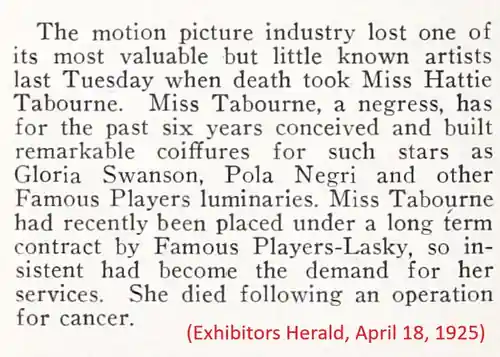
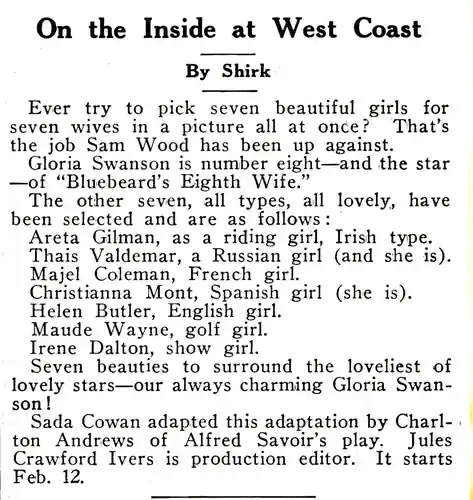
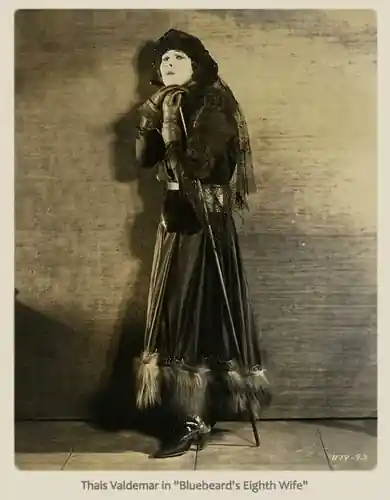
The presence of Robert Agnew and the various 'wives' in flashbacks or mentions adds a layer of gothic dread to the comedy, a nod to the original Bluebeard folk tale that the film cleverly subverts. This isn't a horror film like The Cambric Mask, but it flirts with the idea of the domestic sphere as a site of peril. The bit parts, including early appearances by actors like Julie Bishop (then Irene Dalton), flesh out a world of vapid socialites and opportunistic hangers-on, creating a microcosm of a society obsessed with appearances, a theme also explored in Clothes.
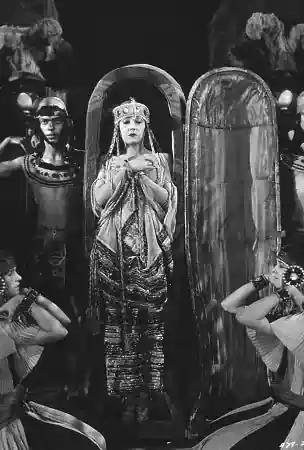
The writing by Sada Cowan and Charlton Andrews deserves significant praise for its refusal to settle for easy sentimentality. The dialogue (conveyed through intertitles) is sharp, peppered with a Gallic wit that survives the Atlantic crossing. They manage to balance the farcical elements of the 'divorce plot' with a genuine critique of how women were treated as fungible assets in high-society mergers. This film feels like a precursor to the screwball comedies of the 1930s, possessing a cynical edge that films like A Manhattan Knight lacked in their pursuit of genre conventions.
The pacing is relentless. Once the central conflict is established, the film moves with the velocity of a locomotive, mirroring Brandon’s own industrialist background. There is a sense of inevitability to their reconciliation, yet the film makes the characters earn it. It isn't a surrender; it's a negotiated peace. This complexity elevates it above the more simplistic romantic resolutions seen in The Reclamation or The Plunderer.
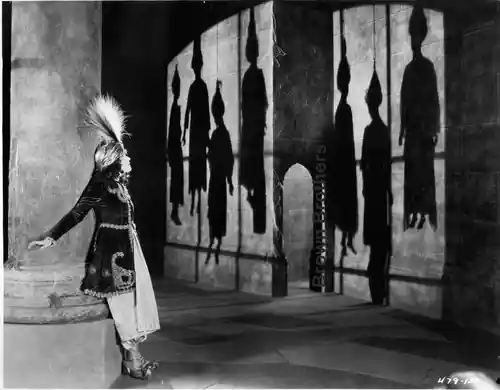
Released in a year that saw the industry grappling with its own identity, Bluebeard's 8th Wife stands as a testament to the sophistication of the Paramount machine. It avoids the overt propaganda of Why America Will Win, choosing instead to focus on the internal contradictions of the American character—its generosity versus its greed, its progressiveness versus its possessiveness.
The film also benefits from the technical advancements of the early 20s. The set design is not merely decorative but functional, reflecting the emotional state of the characters. When Mona is feeling trapped, the architecture seems to close in; when she takes command, the framing opens up. This level of intentionality is what separates a masterpiece from a mere 'flicker,' a distinction that is clear when comparing this to episodic works like Beatrice Fairfax.
Ultimately, Bluebeard's 8th Wife is a film about the reclamation of the self. Mona de Briac begins as a pawn and ends as a player. Gloria Swanson’s performance remains one of the most vital of her career, capturing a woman who is simultaneously vulnerable and indomitable. The film’s exploration of the 'battle of the sexes' is devoid of the saccharine coating often found in silent romances, offering instead a gritty, sparkling, and thoroughly entertaining look at the economics of the heart.
While some of the cultural tropes may feel like artifacts of a bygone era, the core conflict—the struggle for autonomy within a relationship—remains strikingly relevant. It is a more mature work than The Life of a Jackeroo and carries more narrative weight than The Last Chapter. For those seeking to understand the alchemy that made Gloria Swanson a global icon, and for those who appreciate cinema that bites as much as it charms, this film is an essential text. It is a vivid reminder that even in the silent era, the loudest voices were often those that spoke through a defiant glance and a perfectly timed stratagem.
IMDb —
1916
Community
Log in to comment.