DbcultAccessing Vault...
Cult Review
Senior Film Conservator
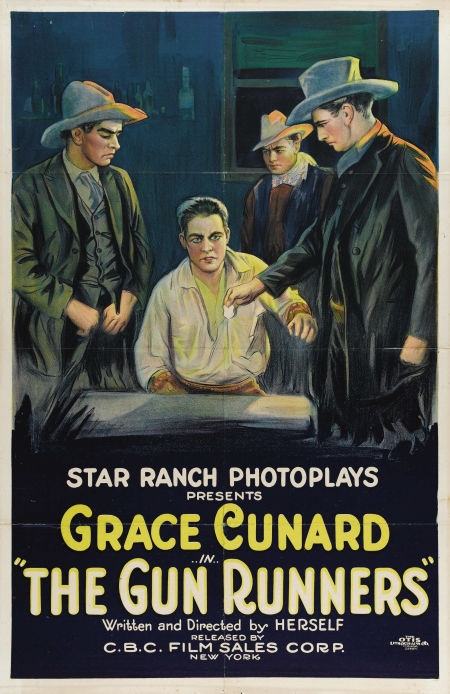
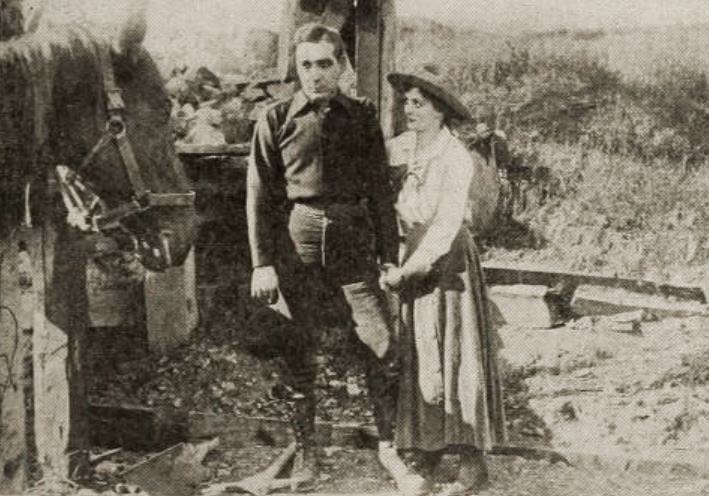
Picture a nickelodeon in 1914: wood-plank floors sticky with sarsaparilla, projector clattering like a Maxim gun, and a Texas Ranger’s silhouette suddenly flickering across a bed-sheet screen—The Gun Runners bursts alive in a storm of monochrome dust. Produced, written by, and starring Grace Cunard (who moonlights here as the iron-willed heroine), the one-reel western survives only in frayed archival fragments, yet its pulse feels oddly contemporary: identity theft by badge, infiltration as performance art, gendered agency galloping ahead of suffrage headlines.
Because nitrate deterioration has chewed the edges, every surviving foot becomes archaeological treasure. What remains is a 14-minute masterclass in narrative compression. Director C. Edward Hatton (also the film’s poker-faced Ranger) shoots confrontations in depth: foreground barrels, midground faces, background horizons that shimmer like overheated iron, so that each frame resembles a dime-novel cover pressed between glass. The camera rarely dollies, yet the world seems to swagger.
The storyline reads like a spy fable grafted onto a campfire myth. Our Ranger sheds his legally ordained skin, appropriates the braggadocio of a captured henchman, and strides into the smugglers’ den. It’s Donnie Brasco in spurs, minus wiretaps and with a century less postmodern cynicism. When the gang unmasks him, the reversal is swift: hero becomes sacrificial offering, wrists bound with reata, fate pencilled in carrion shorthand. Salvation arrives not via cavalry cliché but via the ranger’s unofficial ally—a woman whose resolve ricochets louder than any Winchester.
In an era when screen acting often meant grandiloquent semaphore, Hatton underplays; his jawline speaks prairie law while his eyes telegraph wary calculation. Cunard, opposite him, weaponizes a different economy: her smiles arrive stingily, her glances arrive like subpoenas. Together they re-choreograph the gendered rescue trope—she is neither hapless schoolmarm nor femme fatale, but a strategist who counts bullets and heartbeats in the same ledger.
Cinematographer Frances Parks (unheralded name, take a bow) bathes nocturnal campfire scenes in umber pools; highlights catch pistol barrels so that metal gleams like predatory fangs. Daylight exteriors smack of high-contrast orthochromatics—clouds billow nuclear-white while shadows sink into inkwell black, a chiaroscuro more Rembrandt than Republic. The climactic horseback charge is staged in long shot so that riders become punctuation marks across a parchment plain—each hoof-beat a comma, each rifle crack an exclamation.
While other westerns of the period—say The Tiger's Cub—treated heroines as ornamental peril, The Gun Runners positions Cunard’s character as co-author of salvation. She orchestrates the relay of intel, commands the posse, and ultimately dictates narrative velocity. Scholars tracing proto-feminist arcs in silent action cinema often overlook this short; its reclamation feels like finding a Louise Bryant byline in a yellowed newspaper stack.
No original score survives, inviting modern curators to improvise. A restoration I attended in Austin paired the reel with twelve-bar slide-guitar riffs that bent blue notes into Morricone-like howls. Result: every cut acquired a staccato heartbeat; the Ranger’s solitary trek felt less like territorial duty and more like existential penance. If you curate micro-festivals, consider minor-key banjo—it adds brimstone to prairie justice.
Stack it beside The Sex Lure’s urban melodrama or How Could You, Jean?’s drawing-room farce and you’ll see how The Gun Runners weaponizes velocity. Where The Fugitive (1916) later mythologizes the lone rebel, this 1914 prototype treats legality itself as permeable—an idea Hollywood wouldn’t mainstream until film noir. Even Destiny (1921)’s expressionist fatalism owes a sly debt to the notion that identity papers can be as flammable as dried brush.
The sole extant 35 mm print languished for decades in a Parisian basement, mislabeled as "Bandits du Texas". Nitrate deterioration claimed the intertitles; bilingual reconstructions rely on Library of Congress paper records. Digitization at 4K reveals hairline scratches like lightning across night sky—choose to embrace them; they whisper historical authenticity. Current DCP available via Festival du Film de Vincennes and select cinematheques stateside.
Trade papers of 1914 praised its "breathless dash" but sniffed at the heroine’s improbable riding prowess—sexist cant disguised as critical rigor. Modern retrospectives invert that bias, celebrating Cunard’s double-duty as scribe and star. On Letterboxd’s silent-western niche the film enjoys a 3.9/5 average, buoyed by cine-club rediscoveries. Expect that number to climb once Milestone or Kino streams a restored scan.
In an age of deep-fakes and burner identities, a yarn about forged credentials resonates like a telegram from our own digital psyche. The Ranger’s self-erasure anticipates every avatar we craft; the gang’s communal paranoia mirrors today’s burner-phone underworlds. Cunard’s narrative thus feels less antiquated than prophetic—a century-old lens refracting twenty-first-century anxieties.
Fragile, flawed, flickering—yet ferociously modern, The Gun Runners is the cinematic equivalent of a recovered Colt .45: weathered stock, pitted barrel, but pull the trigger and the damn thing still fires. Let its bullet whistle through your assumptions about silent westerns; let Grace Cunard’s proto-feminist gauntlet smack your sensibilities awake. Then ride home humming a twelve-bar lament for every forgotten reel that never got its due.
IMDb 3.9
1926
Community
Log in to comment.