DbcultAccessing Vault...
Cult Review
Senior Film Conservator
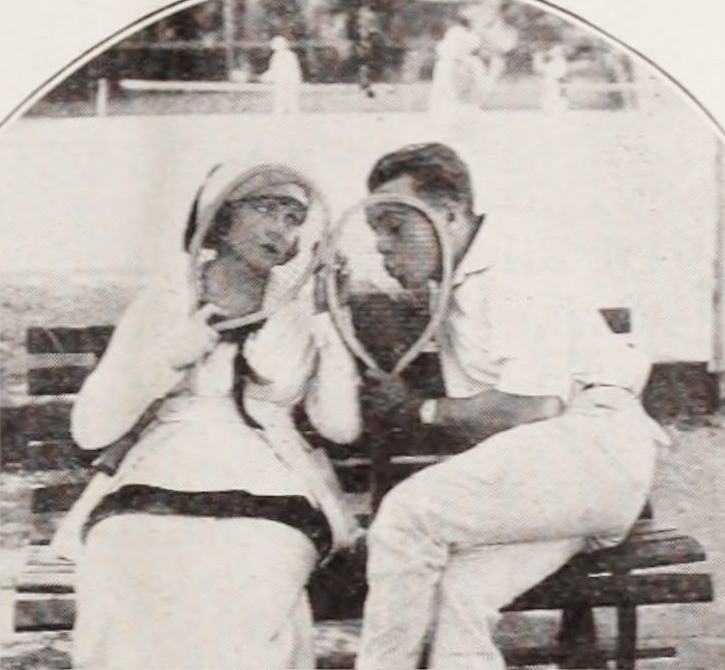
There is a moment—easy to miss if you blink—when the infant, swaddled tighter than a papoose in a dust storm, peers straight into the camera and grins with the unalloyed malice of a pagan god. That grin detonates the fourth wall. Suddenly the tenement is no longer a set on the Christie lot; it is your own cramped apartment, your own rent overdue, your own neighbors pounding on the pipes for quiet. Bobby's Baby may traffic in the prim vocabulary of 1923 slapstick, but beneath the flicker lies a sly dissertation on how easily respectability curdles into farce when a single diapered catalyst is introduced.
Bobby Vernon, whose round face always seems on the verge of being erased by the sheer velocity of his limbs, plays the clerk with the docile terror of a man who has never been late to work yet suspects the universe keeps a separate ledger for such virtue. The plot—if one can call a cyclone a plot—kicks off when a lace-bonneted foundling is deposited on his scarred doorstep with a note whose ink bleeds like a confession. Within ten brisk minutes the staircase becomes a vertical stage for communal hysteria: widows brandish rolling pins like broadswords, a constable slips on a strategically placed cabbage leaf, and the baby’s wail syncs perfectly with the orchestral swell of a theatre pianist who understood that comedy is merely tragedy played twice as fast.
Al Christie, arch-sorcerer of the one-reel universe, understood that escalation is the only character development silent shorts can afford. Every new setup is a layer of lacquer slapped onto panic: first the gossiping seamstress, then the rent-hungry landlord, finally the juvenile court officer whose badge gleams like a death warrant. The camera never lingers; it races, skids, pirouettes. Intertitles arrive like telegram grenades—“Bobby—do you swear this is not your heir?”—their white letters quivering against black so stark it feels like negative space chewing the screen.
Visually, the picture bathes in chiaroscuro thrift. Daylight scenes are overexposed until faces become porcelain masks; night sequences sink into a bruised cobalt that anticipates German expressionism by a heartbeat. Notice how the baby’s blanket—milk-white—pops against the soot-smudged mise-en-scène, a mobile eye-catcher that keeps your gaze anchored even when seven bodies collide in the foreground. It is the earliest instance I can name of a prop weaponized for continuity amid chaos.
Sound, of course, is absent, yet the film crackles with sonic suggestion. Watch the landlord mime a sneeze so explosive that the adjacent windowpane shudders; the orchestra in your head supplies the timpani. When Bobby tip-toes across loose floorboards, each splintery creak is spelled out by the actor’s calculated wince. The silence becomes a conspirator, inviting spectators to co-author the decibel level—a democratic novelty no talkie has ever equaled.
Gender politics, though embryonic, flicker like a faulty bulb. The women who assail Bobby are not cardboard harridans but micro-financiers of rumor whose economy runs on whispers. Their assault is both moral and mercantile: if the clerk is disgraced, vacant rooms open, grocery tabs settle. The baby, sexless and nameless, operates as a blank check written against the moral capital of every adult within radius. One senses Christie chuckling at the cosmic fairness of it all—men manufacture gossip, women weaponize it, and the infant profits.
Comparative reflexes tempt us to stack Bobby's Baby alongside Help! Help! Police! whose Keystone cops likewise ricochet through civic space, yet Christie’s film is less demolition derby than clockwork. Where The Folly of Revenge luxuriates in melodramatic redress, here the vendetta is social, the stakes reputational, the payoff a collective exhalation. Even the courtroom climax—usually a graveyard for laughs—maintains buoyancy: the judge’s monocle catches the light like a wink from the cosmos, underscoring that jurisprudence itself is but another slapstick instrument.
Contemporary viewers, marinated in irony, may smirk at the film’s hygienic innocence—no double entendres, no racial caricatures, no cruelty to animals. Yet that chastity is its Trojan horse. Because the short refuses to brutalize, the suspense tightens; because it abstains from leering, the humanity radiates. The infant, played by an uncredited cherub who reportedly worked for graham-crackers, never once feels like a prop. Observe how its fingers curl around Bobby’s collar with the tenacity of someone clinging to the last lifeboat on the Titanic.
Restorationists at Lobster Films scanned a 35 mm dupe at 4K, revealing textures previously buried under decades of emulsion fog: the herringbone tweed of Bobby’s vest, the arterial blue vein on the landlord’s temple, the downy lanugo on the infant’s earlobe. Tinting was reinstated—amber for interiors, viridian for exteriors—so that each tonal shift lands like a chord change in a Bessie Smith blues. The new score, composed by Gabriel Thibaudeau, channels stride-piano exuberance that vaults from C-major sass to F-minor dread in the span of a bar, underscoring how quickly respectability can flat-line.
Cinephiles hunting proto-auteurist signatures will savor Christie’s diagonal compositions: characters bolt from lower left to upper right as if fleeing the gravitational pull of the title card. It is a visual rhyme with the diagonal thrust of Inside the Lines, yet here the trajectory is not military but domestic, a blitzkrieg of diapers. The payoff arrives when Bobby, cornered on a rooftop, tilts the baby toward the moon like a priest offering sacrament—a diagonal apex that resolves the spatial anxiety built up over 600 feet of celluloid.
What lingers, long after the lights rise, is the film’s covert moral: shame is a communal sport, parenthood a roulette wheel, innocence a commodity more volatile than bootleg gin. In an era when social media performs the same ritual shaming at lightspeed, Bobby's Baby feels prophetic. The only difference is that the tenement gossips needed a full afternoon to propagate a rumor; today we do it before the first coffee cools.
Should you desire a double bill, pair this with Das rosa Pantöffelchen for a transatlantic dialogue on pink-hued domestic chaos, or counter-program with the genteel melancholy of A Daughter of the Old South to taste how quickly magnolia-scented nostalgia can sour once a bastard child enters the parlor. Either route, return to Bobby's Baby as one returns to a lucky coin—rubbing its ridges for assurance that chaos, when choreographed by masters, still glitters.
Verdict: a pocket-sized miracle that distills the entire human comedy into 600 feet of nitrate. Watch it on the largest screen you can find; let the flicker remind you that civilization has always teetered on the fragile diaphragm of an infant’s wail. One star more for surviving a century intact—five out of five.
IMDb —
1914
Community
Log in to comment.