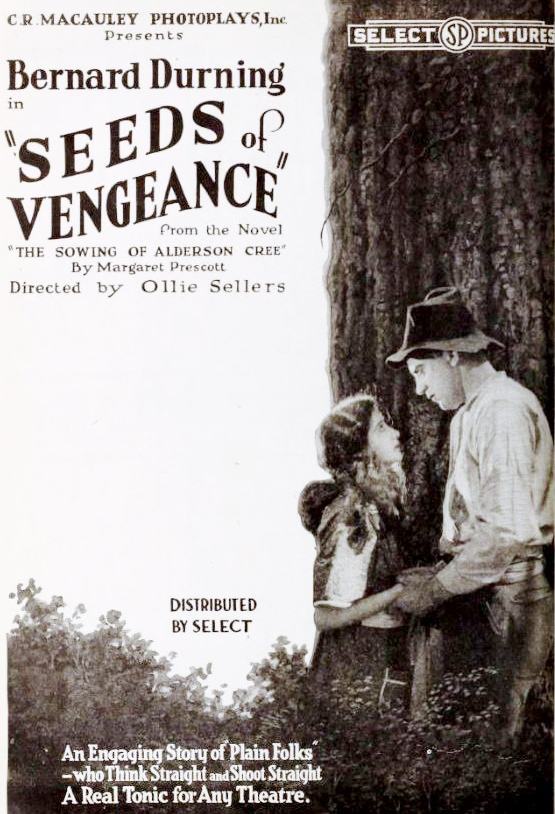
The silent era of cinema frequently grappled with the intersection of primitive justice and the emerging modern conscience, but few films capture the claustrophobic inevitability of the vendetta quite like Seeds of Vengeance (1920). Directed with a keen eye for the rugged aesthetics of the American wilderness, this work transcends the typical 'mountain melodrama' to become a haunting meditation on the weight of the spoken word and the lethality of silence.
The Topography of Trauma
In the opening sequences, the West Virginian landscape is not merely a backdrop but an active antagonist. The mountains are depicted as silent witnesses to a cycle of violence that predates the characters themselves. When Alderson Cree is ambushed, the cinematography emphasizes the isolation of the frontier—a place where the law of the land is often superseded by the law of the bloodline. Unlike the more nautical struggles found in Hearts of Oak, the conflict here is rooted in the very soil, a literal and metaphorical planting of 'seeds' that can only yield a harvest of sorrow.
The performance of Bernard J. Durning as David Cree provides a fascinating study in suppressed agency. David is a character defined by a ghost. His childhood is truncated by a deathbed oath, a trope common in early cinema but executed here with a particular grimness. The film brilliantly explores how a promise, once uttered, takes on a life of its own, independent of the person who made it. Even when Alderson tries to retract the command, the 'seed' has already been sown in the fertile, traumatized mind of a child.
The Machiavellian Silence of Martha Ryerson
Perhaps the most intellectually stimulating aspect of the film is the character of Martha Ryerson, portrayed with a nuanced blend of desperation and cold calculation by Evelyn Selbie. Martha represents a departure from the one-dimensional heroines of the period. By choosing not to reveal Alderson’s recantation, she weaponizes David’s sense of duty to achieve her own liberation. Her silence is a violent act, one that mirrors the physical ambush that started the cycle. It is a sophisticated narrative choice by writers Margaret Prescott Montague and Sada Cowan, suggesting that the women in this world, though physically marginalized, are the primary architects of its moral destiny.
This complexity invites comparison to the heavy moral atmospheres of The Sign of the Cross, where faith and duty collide. However, in Seeds of Vengeance, there is no divine intervention—only the cold, hard reality of human choice and its cascading consequences. The film suggests that the most dangerous lies are the ones we tell by saying nothing at all.
A Comparative Glance at the Genre
While films like Jack Chanty lean into the adventure of the wilderness, Seeds of Vengeance remains firmly rooted in the psychological toll of frontier life. There is a kinship here with Redenzione, as both films deal with the agonizing process of shedding one's past. Yet, David Cree’s path is uniquely tragic because his 'redemption' is constantly thwarted by the societal expectations of his kin. His mother, the matriarch of the Cree clan, functions as the high priestess of the vendetta, reminding us that the domestic sphere can be just as lethal as the battlefield.
Cinematographic Tension and the Return of the Repressed
As the narrative jumps forward in time, the film adopts a more lyrical quality. The adult David, now played with a stoic vulnerability, believes he has escaped his father’s shadow. His engagement to Mary Reddin (Pauline Starke) represents a hope for a civilized future, away from the blood-soaked traditions of the past. The visual language during these scenes is softer, more expansive, contrasting sharply with the jagged, high-contrast shots of the mountain peaks where the final reckoning must occur.
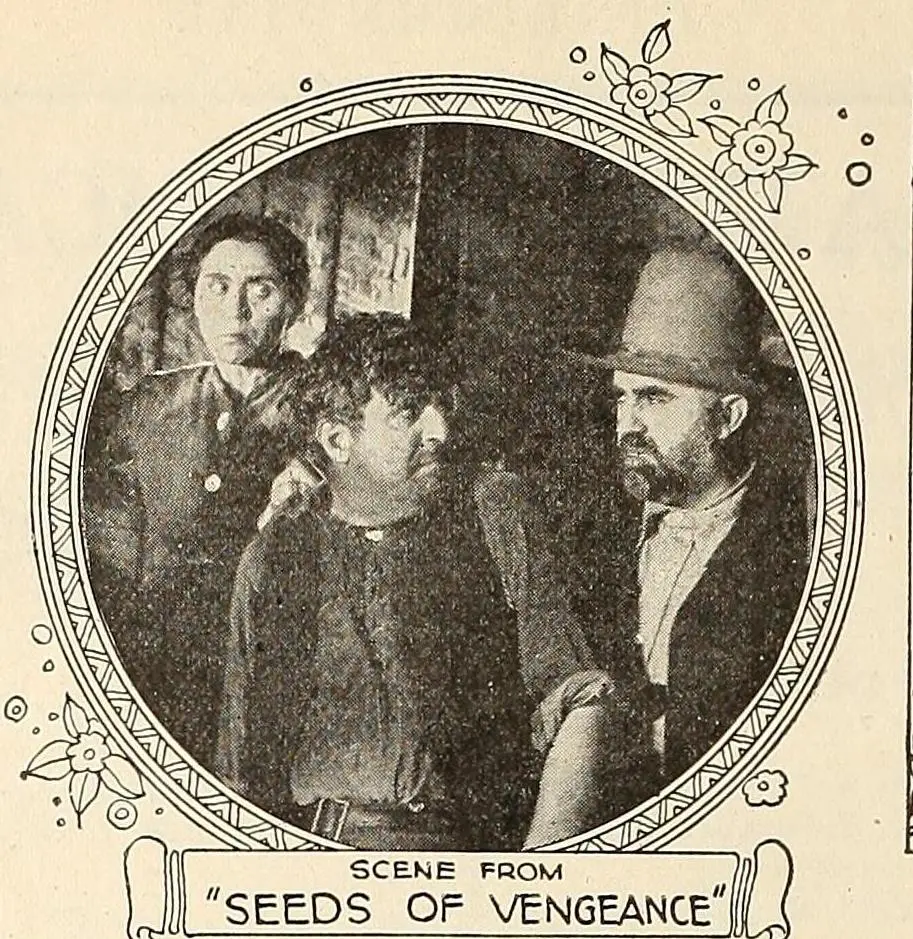
The return of Kip Ryerson (Jack Curtis) is handled with the dread of a horror film. He is a specter, a walking reminder that the past is never truly buried. His presence in the town acts as a catalyst, dissolving the thin veneer of civilization that the characters have tried to build. This theme of the 'return of the repressed' is a staple of Gothic literature, and its application here to the Appalachian setting creates a uniquely American form of the genre—one that would later influence the 'Southern Gothic' movement in both literature and film.
"The tragedy of David Cree is not that he fails to keep his promise, but that the promise itself is a parasite that consumes his capacity for a peaceful life."
The Climax: Gravity as Divine Judgment
The final confrontation on the mountain cliff is a masterpiece of silent film staging. The physicality of the struggle between David and Kip is visceral, stripped of any romanticism. It is a clumsy, desperate brawl that reflects the ugly reality of their shared history. When Kip falls to his death, it isn't portrayed as a heroic victory for David, but rather as the inevitable conclusion of a physics problem—the momentum of vengeance finally meeting the resistance of the earth.
Mary’s arrival, bearing the truth that could have saved David’s soul, is a cruel stroke of irony. It heightens the pathos of the ending, suggesting that while the 'seeds' have finally stopped growing, the garden they leave behind is scorched and barren. The film avoids the easy resolution found in contemporary works like Puppy Love or the whimsical nature of Tobin's Palm. Instead, it chooses a path of stark realism that feels surprisingly modern.
Technical Merit and Historical Context
The collaborative efforts of the cast and crew deserve immense credit. The screenplay by Montague and Cowan avoids the overly florid title cards that often plagued silent dramas, allowing the visual storytelling to carry the emotional weight. The editing, particularly during the cross-cutting between Mary’s frantic ride and the fight on the cliff, creates a level of suspense that rivals the best work of D.W. Griffith, yet without the heavy-handed moralizing.
Comparing this to the international landscape of 1920, such as the Hungarian epic Bánk bán or the French impressionism of Rose-France, Seeds of Vengeance stands out for its raw, unadorned power. It doesn't hide behind stylistic flourishes; it presents its tragedy with the blunt force of a mountain storm. It shares a certain thematic DNA with El hombre de acero in its exploration of masculine duty and the physical toll of labor and conflict.
The Legacy of the Vengeance Cycle
As we look back on Seeds of Vengeance from a century's distance, its relevance remains undimmed. It asks fundamental questions about the nature of justice: Can a wrong ever be truly righted through further violence? Is the individual ever truly free from the expectations of their tribe? The film doesn't offer easy answers. It merely shows us the cost of the questions.
In the pantheon of early 20th-century cinema, this film occupies a space alongside other works that explored the darker corners of the human psyche, such as The Painted World or the societal critiques of Old Dad. It is a film that demands to be seen not just as a historical curiosity, but as a vibrant, breathing piece of art that understands the tragic rhythm of the human heart.
To watch Seeds of Vengeance is to witness the birth of a specific kind of American storytelling—one where the landscape is as scarred as the people who inhabit it, and where the past is a shadow that no amount of sunlight can fully dissipate. It is a harrowing, essential viewing for anyone interested in the evolution of narrative film and the enduring power of the Appalachian mythos.