DbcultAccessing Vault...
6.7/10
Senior Film Conservator
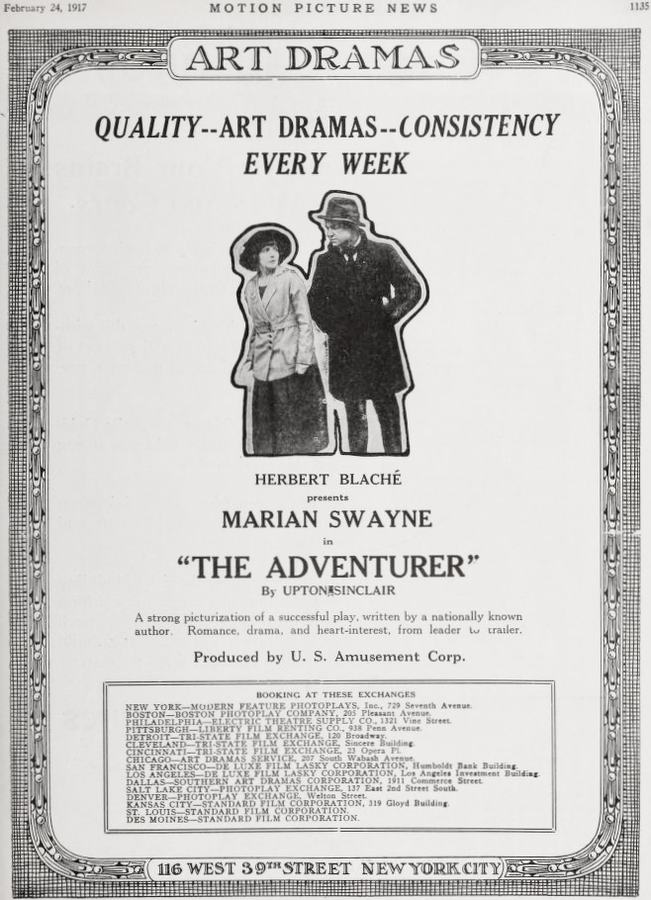
A definitive 6.7/10 rating for a film that redefined the boundaries of cult cinema. The Adventurer remains a cornerstone of transgressive art.
In the pantheon of early American cinema, few works capture the jagged edges of the burgeoning metropolis with the same searing honesty as The Adventurer (1917). This isn't merely a flickering relic of the silent era; it is a pulsating, socio-political document that feels remarkably prescient in our contemporary age of widening class disparages. While many films of the period opted for the escapism of pastoral romances or the slapstick of the nickelodeon, this production delves headlong into the muck of a 'crooked city.' It presents a world where the architecture itself seems to lean inward, suffocating the virtuous under the weight of institutionalized greed. The protagonist, portrayed with a haunting vulnerability by Ethel Stanard, serves as our moral compass in a landscape where the magnetic north has been shattered by the hammers of industry and the whispers of backroom deals.
The presence of Upton Sinclair among the writing credits is not a mere footnote; it is the film’s very marrow. Sinclair, fresh from the seismic impact of The Jungle, brings a visceral realism to the screenplay that differentiates it from contemporaries like After Sundown. Where other films might treat poverty as a sentimental backdrop, Sinclair and his collaborators—McCloskey, West, and Chandlee—treat it as a structural failure. The 'crookedness' of the city isn't just a collection of bad actors; it is a systemic contagion. This thematic depth elevates the film beyond the standard 'damsel in distress' tropes found in Tess of the Storm Country. Here, the struggle is not just for survival, but for the preservation of one’s humanity in a machine designed to grind it into dust.
Ethel Stanard delivers a performance that defies the histrionics often associated with 1910s acting. Her restraint is her greatest weapon. In a city of crooks, her stillness becomes a form of protest. Opposite her, Pell Trenton portrays the supposed millionaire’s son with a mercurial energy. Is he a victim of his own privilege, or a wolf in sheep's clothing? The ambiguity of his character provides the film's most compelling tension. This dynamic reminds me of the moral complexities explored in Forgiven; or, the Jack of Diamonds, though The Adventurer grounds its stakes in a much more tangible reality. The supporting cast, including the formidable Charles Halton and Marian Swayne, flesh out a rogue's gallery that feels lived-in and dangerously authentic.
Visually, the film utilizes light and shadow to articulate the internal conflicts of its characters. The 'crooked city' is depicted through high-contrast cinematography that anticipates the noir movement by decades. There is a specific sequence—a clandestine meeting in a dimly lit tenement—that rivals the atmospheric dread found in A Venetian Night, yet it trades the operatic for the gritty. The camera doesn't just observe; it eavesdrops. The set design emphasizes the disparity between the opulent mansions of the elite and the cramped, claustrophobic quarters of the working class, a visual dichotomy that Sinclair surely championed. Unlike the more traditional framing of Miss Peasant, the composition here feels restless, mirroring the protagonist's own anxiety.
The heart of the film lies in the protagonist's attempt to reform a single individual. This micro-focus on a singular soul within a macro-hellscape is a brilliant narrative choice. It asks the viewer: can one person truly make a difference when the entire foundation is rotten? This question is also central to The Honor of Mary Blake, but The Adventurer offers a grimmer, more cynical answer. The 'reformation' is not a clean, Hollywood ending; it is a messy, painful process of unlearning the survival instincts that the city has forced upon its inhabitants. It highlights the psychological toll of poverty, much like the European sensibilities of Leben heisst kämpfen.
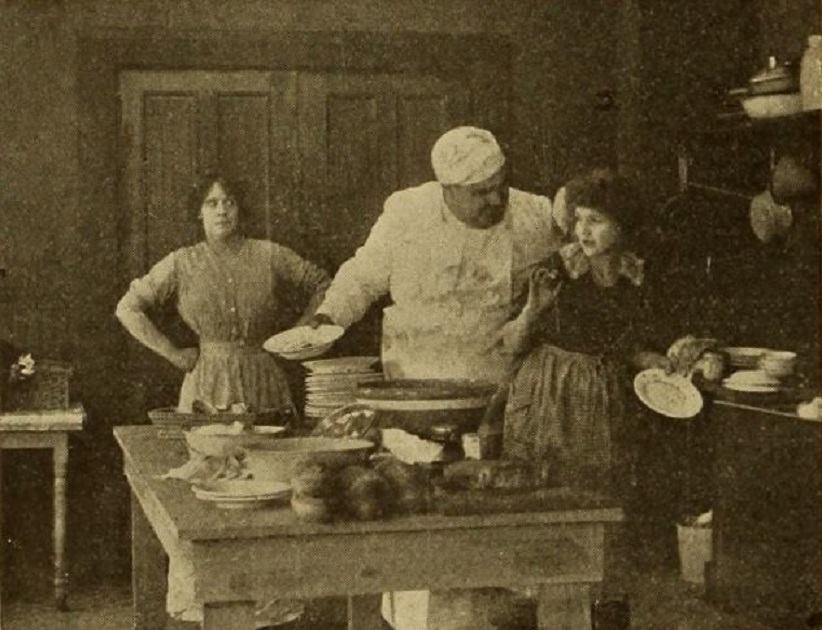
When we look at the broader landscape of 1917, films like Revelj or On the Level offered various takes on honor and duty, but The Adventurer stands apart for its sheer audacity in depicting the 'crookedness' of the American Dream. It doesn't shy away from the fact that sometimes, the 'crooks' are the ones in tailored suits, a theme echoed in The Plunderer. The film’s pacing is deliberate, allowing the audience to soak in the atmosphere of despair before offering the slim, shimmering hope of the protagonist’s mission. It’s a masterclass in tension, building toward a climax that feels both inevitable and surprising.
The editorial rhythm of the film is surprisingly modern. The intertitles are used sparingly, allowing the visual storytelling to carry the emotional weight. This reliance on the image reminds me of the best moments in Samson, though the subject matter here is far more grounded. The way the director uses the city streets as a character—winding, confusing, and full of dead ends—perfectly encapsulates the protagonist's internal struggle. It’s a far cry from the more static presentations of A Vida do Barão do Rio Branco. Every frame in The Adventurer is packed with detail, from the grime on the windows to the desperate expressions of the extras in the background, creating a world that feels entirely lived-in.
Ultimately, the film asks us to consider the price of honesty. In a world that rewards the ruthless, what is the value of a clean conscience? This philosophical inquiry is what keeps the film relevant today. While Cameo Kirby might offer a more romanticized view of the rogue, The Adventurer is interested in the grit beneath the fingernails. It shares a certain DNA with According to Law, particularly in its critique of how justice is often a commodity bought and sold. The film doesn't provide easy answers, and its refusal to do so is its greatest strength. It acknowledges that while one person can be reformed, the 'crooked city' remains, waiting for its next victim.
Revisiting The Adventurer is a reminder of the power of silent cinema to communicate complex social truths without a single spoken word. It is a testament to the vision of its creators, who saw the medium not just as entertainment, but as a mirror to hold up to society's most uncomfortable aspects. The film’s exploration of the human condition, trapped between the desire for purity and the necessity of survival, is as potent now as it was in 1917. It avoids the clinical detachment of Urteil des Arztes and instead opts for a deeply personal, empathetic approach. For anyone interested in the intersection of cinema and social justice, this film is essential viewing. It is a haunting, beautiful, and ultimately challenging piece of art that deserves a prominent place in the history of film.
As the final iris out fades to black, the viewer is left with a sense of lingering unease—a hallmark of great art. The girl's journey through the crooked city is our own journey through the complexities of the modern world. We are all adventurers in a sense, trying to maintain our integrity in a world that often demands its sacrifice. Through its masterful blend of Sinclair’s social conscience and Stanard’s luminous performance, The Adventurer remains a beacon of silent era brilliance, a flickering light in the dark alleys of history that still manages to illuminate the present.
IMDb 6.2
1930
Community
Log in to comment.