DbcultAccessing Vault...
Cult Review
Senior Film Conservator
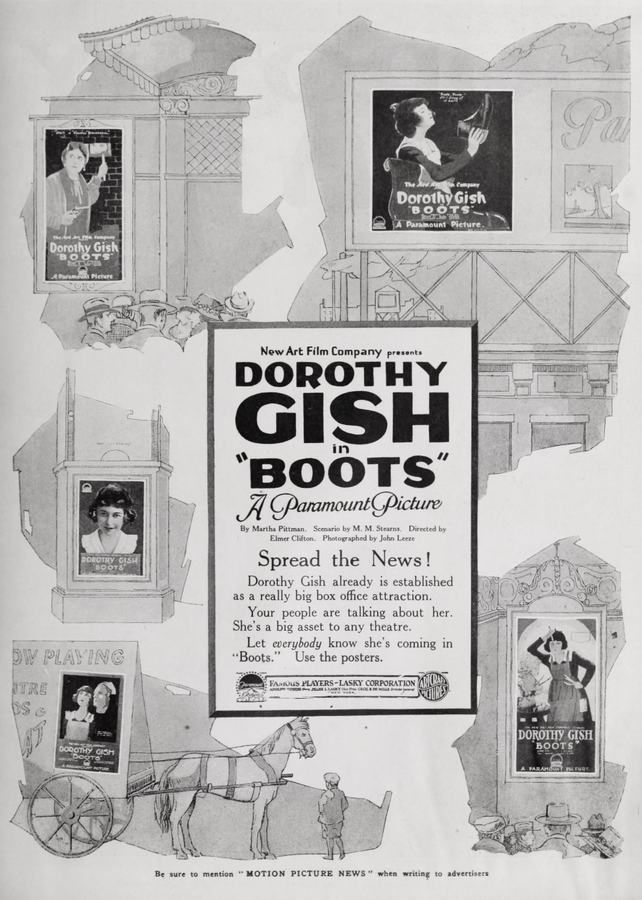
Stepping back into the flickering glow of early cinema, one often encounters narratives that, despite their age, resonate with an unexpected vitality. Such is the case with Boots, a 1919 silent film that, at first glance, might appear to be a simple tale of a servant girl, but quickly unfurls into a charmingly intricate tapestry of romantic idealism, social commentary, and surprisingly prescient political intrigue. Directed with a deft hand and anchored by the luminous presence of Dorothy Gish, the film offers a delightful escape into a bygone era, proving that even a century later, a well-told story, especially one with a plucky heroine, retains its magnetic pull.
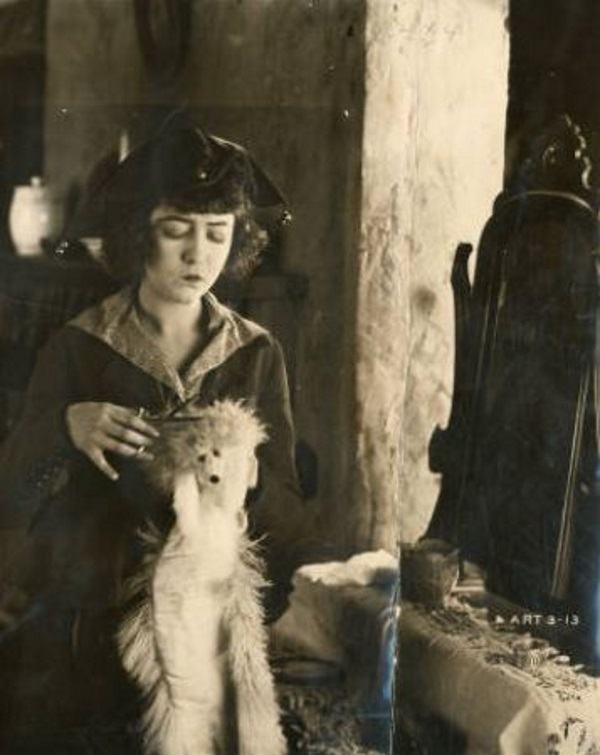
At its heart, Boots is a character study, albeit one painted with the broad, expressive strokes typical of silent film. Our protagonist, simply named Boots (portrayed with an effervescent charm by Dorothy Gish), is a young woman whose existence is defined by the relentless drudgery of polishing shoes in a bustling English inn. Her hands, perpetually stained with polish, belie a soul that soars far beyond the confines of her humble station. Boots is an incurable romantic, a connoisseur of the sensational, whose inner life is a vibrant kaleidoscope of melodramatic stories culled from cheap novels and serials. These tales of daring adventure and passionate love affairs are not mere distractions; they are the very oxygen of her spirit, fueling her imagination and offering a stark, glittering contrast to the mundane reality of her daily grind. Gish, with her expressive eyes and nuanced gestures, perfectly captures this duality, portraying a character who is both utterly grounded in her circumstances and perpetually adrift in a world of her own making. It’s a performance that echoes the quiet strength and imaginative spirit found in other silent heroines, perhaps even hinting at the aspirational qualities seen in films like Daddy-Long-Legs, where a young woman transcends her origins through sheer force of will and a rich inner life.
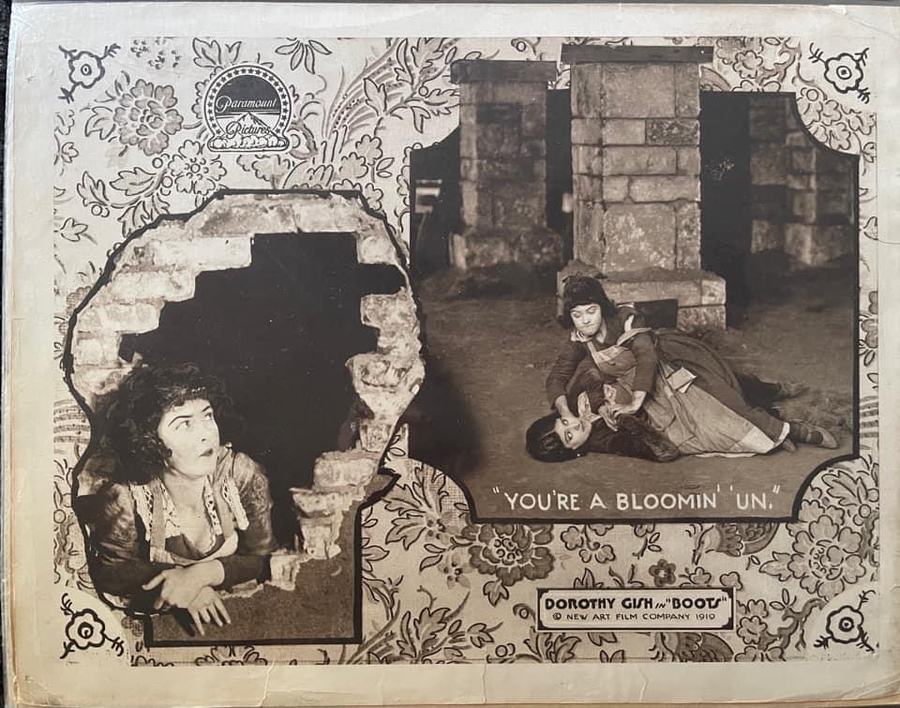
The brilliance of the screenplay, penned by the collaborative efforts of Stanner E.V. Taylor, Martha W. Pittman, and M.M. Stearns, lies in its ability to seamlessly weave this romantic escapism into a narrative of genuine peril. The film doesn't merely present Boots's fantasies; it uses them as a springboard for her eventual heroic actions. Her addiction to dramatic narratives isn't a flaw but a crucible, preparing her for the moment when reality itself demands a theatrical response. This structural ingenuity prevents the film from devolving into mere sentimentality, instead injecting it with a dynamic tension between the imagined and the real. The writers understand that a character’s internal world can be just as compelling, if not more so, than their external circumstances, particularly when those circumstances are about to be upended by something as globally significant as a Bolshevik plot.
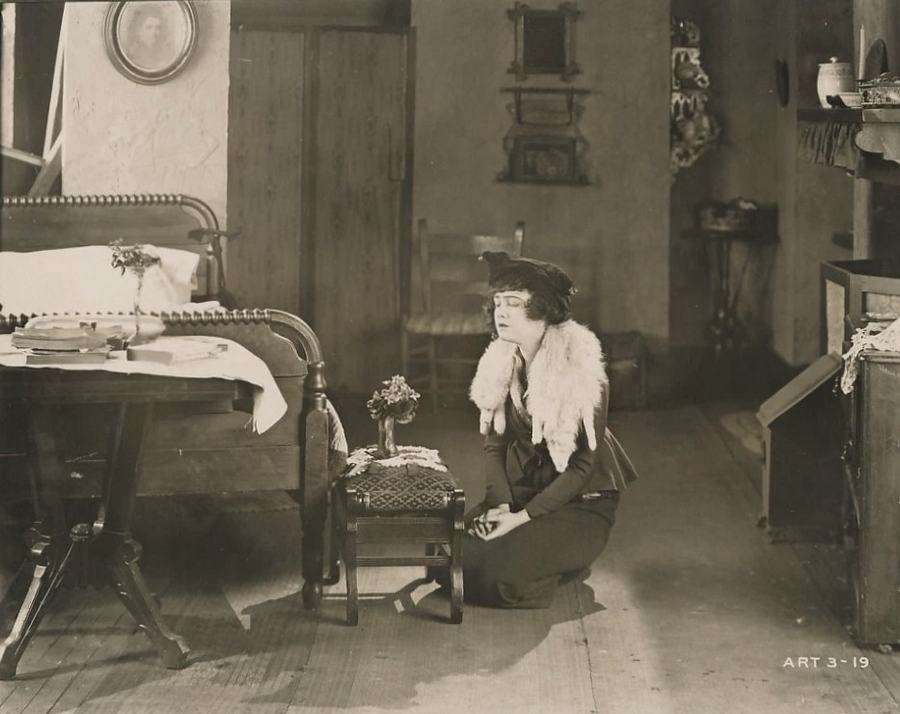
The plot itself is a fascinating historical artifact, reflecting the anxieties of the post-World War I era. The discovery of a Bolshevik conspiracy to assassinate a government official thrusts Boots from her world of fictional villains into a genuinely dangerous encounter with real-world political extremism. This transition is handled with a commendable blend of urgency and charm. Boots doesn't become a super-spy overnight; rather, her actions are a direct consequence of her romantic conditioning. She approaches the real-life conspiracy with the same earnestness and belief in dramatic justice that she applies to her stories. This unique perspective allows the film to treat a serious subject with a lightness of touch, without ever trivializing the danger. It's a delicate balance, one that many films struggle to achieve, but Boots navigates it with remarkable grace. The film’s audacity in blending a humble, almost Dickensian setting with high-stakes political intrigue is a testament to its creative ambition, distinguishing it from more straightforward melodramas of the period like The Dawn of a Tomorrow, which, while powerful, often remained more firmly rooted in social realism.
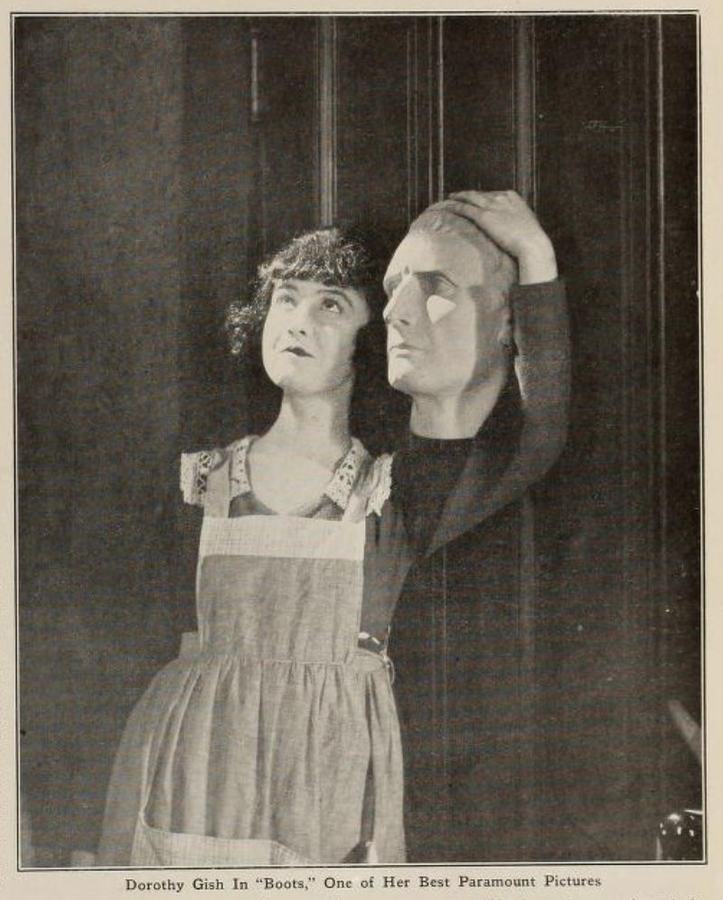
The supporting cast contributes significantly to the film's texture. Raymond Cannon, as Boots’s romantic interest, provides a grounding presence, his earnestness a perfect foil to Gish’s whimsical spirit. Richard Barthelmess, even in a role that might seem secondary, brings a certain gravitas, his performances always imbued with a compelling naturalism that elevates every scene he inhabits. Kate Toncray, Edward Peil Sr., and Fontaine La Rue round out an ensemble that, through subtle expressions and well-timed gestures, paints a vivid picture of the inn’s microcosm and the larger world it represents. Each character, however minor, serves to either highlight Boots’s exceptional nature or to propel the plot forward, ensuring that the narrative never loses momentum. This ensemble work, a hallmark of well-crafted silent cinema, ensures that the audience remains invested not just in Boots’s journey but in the fate of those around her.
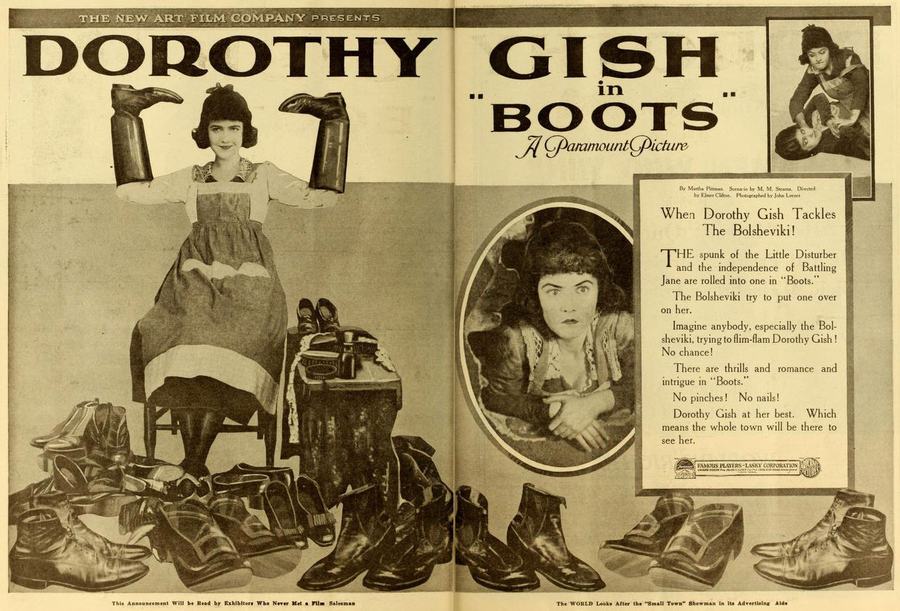
The direction, while uncredited to a single individual in some records, demonstrates a keen understanding of visual storytelling. The camera work, though constrained by the technology of the era, is effective in conveying emotion and advancing the plot without relying heavily on intertitles. The use of close-ups to capture Gish’s reactions, or wider shots to establish the grimy realism of the inn, creates a coherent and engaging visual language. The pacing, crucial in a silent film, maintains a brisk tempo, ensuring that the audience is swept along by Boots’s discoveries and her subsequent heroic endeavors. There’s a commendable economy of storytelling, where every frame and every gesture contributes meaningfully to the overall narrative, a quality that speaks to the craftsmanship inherent in many films of this period.
What truly elevates Boots beyond a mere historical curiosity is its thematic depth. It explores the enduring power of imagination, the human tendency to seek adventure and meaning even in the most mundane circumstances, and the surprising ways in which ordinary individuals can rise to extraordinary challenges. Boots’s journey is not just about foiling a plot; it’s about self-discovery, about finding her own agency and proving that the heroines of her stories are not so different from herself. The film subtly argues that the dreams we cultivate, the narratives we embrace, can indeed shape our reality, empowering us to confront even the most daunting obstacles. This theme of an unexpected hero emerging from humble beginnings can also be observed in films like The Toilers, which similarly celebrates the resilience and latent heroism within the working class.
The depiction of the Bolshevik plot, while a product of its time and likely influenced by contemporary political anxieties, serves as an effective narrative device rather than a deep dive into political ideology. It provides the necessary external conflict to catalyze Boots’s internal transformation. The film doesn't aim for complex political analysis; its goal is to entertain and to celebrate the spirit of its protagonist. In this regard, it succeeds admirably, using the backdrop of international intrigue to magnify the personal stakes for Boots. The choice of such a contemporary and potent threat, however, grounds the film in a specific historical moment, adding an intriguing layer of realism to its otherwise romanticized world. This blending of personal drama with broader political currents, even if simplified, gives Boots a resonance that extends beyond its immediate narrative, hinting at the tumultuous global landscape of the early 20th century.
One cannot discuss Boots without circling back to Dorothy Gish’s performance. Her ability to convey complex emotions and character arcs without spoken dialogue is a masterclass in silent acting. She imbues Boots with an infectious optimism, a vulnerability that makes her relatable, and a burgeoning courage that makes her inspiring. Her transformation from a wide-eyed dreamer to a resourceful agent of justice is utterly believable, a testament to her skill and the sympathetic portrayal crafted by the writers. It is her magnetism that carries the film, making us root for this unassuming servant girl as she tackles a threat far grander than her daily chores. Her expressive face alone tells a thousand stories, from the quiet joy of a cherished novel to the sudden terror of discovering a dark secret, and finally, the steely resolve of a woman determined to do what is right. This central performance is a vibrant example of why silent cinema, when done well, can be so profoundly moving and utterly captivating.
The aesthetic of the film, with its period costumes and meticulously recreated inn setting, transports the viewer directly into early 20th-century England. The attention to detail in the production design, while perhaps not as lavish as some of the grander epics of the era, effectively creates a believable world for Boots to inhabit. The contrast between the dingy reality of her work environment and the vibrant, almost cinematic quality of her inner world is visually striking. This careful construction of atmosphere contributes significantly to the film’s overall impact, making Boots’s eventual foray into espionage feel all the more dramatic and consequential. It's a world that feels lived-in, authentic, and ripe for the kind of unexpected adventure that unfolds.
In conclusion, Boots stands as a charming and surprisingly robust example of silent cinema’s enduring appeal. It’s a film that celebrates the power of individual agency, the resilience of the human spirit, and the transformative potential of a vivid imagination. Dorothy Gish delivers a memorable performance, anchoring a narrative that deftly balances lighthearted romance with serious intrigue. The collaborative efforts of the writers craft a story that is both engaging and thought-provoking, while the direction ensures that every moment resonates. For those seeking a glimpse into the past that still feels remarkably fresh and relevant, Boots offers a compelling journey, proving that even the most unassuming of heroes can rise to meet the greatest of challenges. It's a delightful cinematic experience that reminds us that sometimes, the most extraordinary adventures begin with the quietest of dreams. The film, in its own understated way, contributes to the rich tapestry of early filmmaking, offering a unique blend of genres that captivates and entertains, much like the serialized stories Boots herself so dearly cherished.
IMDb —
1919
Community
Log in to comment.