DbcultAccessing Vault...
Cult Review
Senior Film Conservator
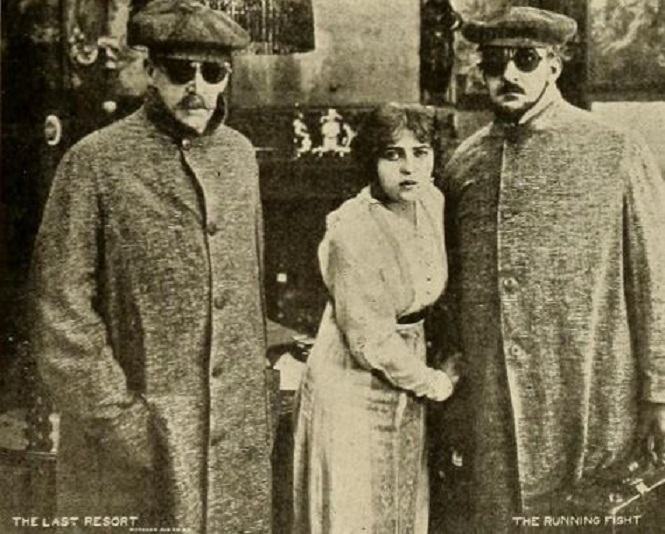
Imagine a world where ticker tape falls like communion wafers and trust is a commodity traded between mahogany desks—this is the world The Running Fight conjures with unnerving immediacy. Directed with surgical detachment by William Hamilton Osborne and Louis Albion, the 1915 silent thrusts us inside the chrome-and-velvet corridors of American finance long before regulatory shadows grew teeth. The film’s very title is a misdirection: the fight is not horizontal across city blocks but vertical, burrowing downward through strata of bloodline, class, gender, and the marrow of moral identity.
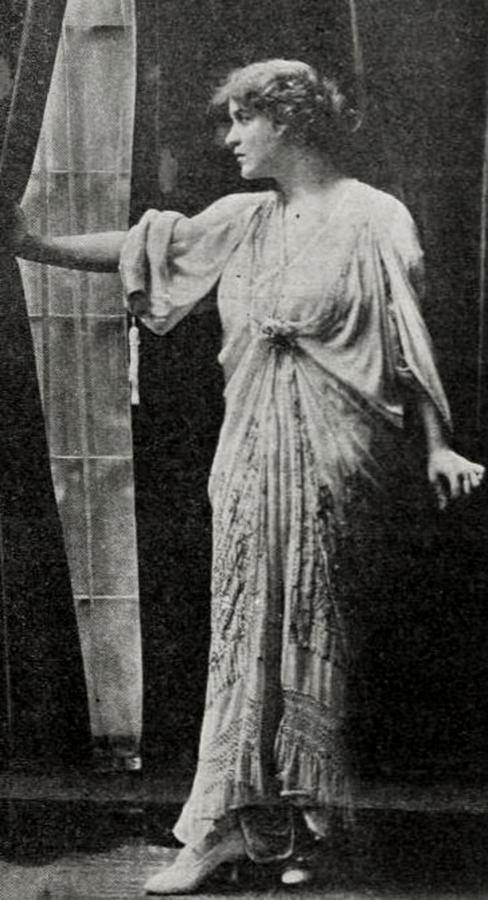
Violet Heming’s Leslie Wilkinson arrives onscreen in a shot that lasts maybe four seconds yet etches itself into retinas: a white parasol twirling against a charcoal sky, her profile half-lit as if the cinematographer cupped a match behind her cheekbone. It is the first hint that light itself will be co-conspirator, later carving her father’s face into a gargoyle when she discovers the forged endorsements. The parasol becomes Chekhovian—it closes, folds, and finally snaps in her gloved grip the instant she deciphers the double-entry sin. No intertitle is required; the crack of whalebone says betrayal louder than any subtitle could.
Cinema of this era often flattened women into pedestals of innocence or vamps dipped in kohl. Here, Leslie is neither; she is a ledger come alive, ink in her veins, numbers ticking behind her gaze. When she strides into the granite lobby of her father’s bank, the camera dollies backward—as if the building itself recoils from the daughter who will bring its mythology crashing. Compare this to The Port of Missing Men where the heroine merely drifts through men’s schemes like perfume. Leslie engineers the scheme’s collapse, and the film has the audacity to let her relish the demolition.
Robert Cummings plays Peter V. Wilkinson with the rectitude of a cathedral statue—until micro-gestures betray him: a thumb rubbing the inkwell like a worry bead, the way he pockets fountain pens as if they were evidence he might yet swallow. Watch how he signs the last fraudulent transfer: the nib hesitates, drinks a bead of red ink, then slashes across parchment like a suicide’s wristlet. The film smash-cuts to Leslie reading that signature under a green-shaded lamp; the editorial collision is so violent you can practically taste iron. Silent-era convention would interpose a thunderclap or church bell, yet here the silence between frames howls louder than any storm.
Some cinephiles will recall The Temptations of Satan and its moral melodrama, but where that film externalizes evil into a Mephistophelian figure, The Running Fight internalizes it within the paternal silhouette. Wilkinson does not rend his garments or gnash; he simply tightens the knot of his tie, each cinch a garrote around the neck of civic trust. The horror is bureaucratic, quotidian, and therefore timeless—Bernie Madoff in white spats.
The screenplay, adapted by David Perkins from Osborne’s serialized novel, prunes subplots like a bonsai artist: gone are the comic-relief janitors, the extraneous fiancé who would dilute Leslie’s agency. What remains is a drum-tight 67 minutes that feel, paradoxically, like a lifelong audit. Perkins’ intertitles are haikus of dread: “A name on an account—yet it was her soul’s barcode.” Notice the alliteration, the modernity of barcode slipping into 1915 parlance; the anachronism jolts like a papercut, reminding us that fraud is perennial merely wearing new period costume.
Critics who revere Through the Valley of Shadows for its chiaroscuro will find equal mastery here. Cinematographer Alfred Kappeler drapes shadows like wet canvas, especially in the sequence where Leslie stalks the notary’s office at 3 a.m.—her silhouette swallowed by mahogany shelves, only the brass lamp’s halo bobbing like a will-o’-the-wisp guiding her to documentary proof. The camera lingers on dust motes swirling through projector beam, and you realize those motes are shareholders’ evaporated savings, made visible.
George Pauncefort’s score, reconstructed by modern scholars from the original cue sheets, interpolates ragtime with atonal shivers—think Joplin walking arm-in-arm with Schoenberg. Every time Leslie approaches a moral precipice, the xylophone taps out a heartbeat that accelerates into a snare-roll of panic. Underfunded restorations often slap a jaunty piano atop silent footage; here the music is forensic, syncing to the flicker of eyelid and the tremor of lip.
Gender politics in The Running Fight feel startlingly contemporary. When Leslie threatens to report her father, Wilkinson counters with the weaponized fragility of paternal love: “You would jail the only hands that ever lifted you to the sun?” The line, delivered in an intertitle superimposed over an extreme close-up of his quivering irises, weaponizes guilt like a Molotov. Yet the film refuses to grant him redemption through daughterly sacrifice. Instead, Leslie weaponizes sentiment right back, coolly informing him that restitution can either be voluntary or court-ordered. The role reversal—daughter as arbiter, father as supplicant—prefigures 1970s second-wave cinema by six decades.
Compare this with Red Powder where the heroine’s rebellion is metaphorically mineral, or The Heart of Jennifer where moral awakening is cushioned by romantic love. Leslie has no lover to catch her fall; her only cushion is the cold certainty of justice. The film’s final tableau—father and daughter on the pier—offers no voice-over absolution, no swelling strings. Fog swallows their outlines until they become negative space, a visual ellipsis suggesting the scandal’s aftershocks will ripple beyond the frame. It is an ending Stanley Kubrick would applaud: open, abrasive, allergic to catharsis.
Technically, the edit is proto-modern. Cross-cutting between Leslie’s nocturnal hunt for ledgers and Wilkinson’s champagne toast with complicit directors creates a dialectic of conscience: every bubble in his flute syncs with a tear she wipes away in semi-darkness. The juxtaposition feels Eisensteinian before Eisenstein theorized it. Meanwhile, iris-ins and iris-outs are used not as quaint punctuation but as moral aperture: when Leslie forgives a minor accomplice, the iris blooms open like mercy; when she confronts her father, it constricts until faces are trapped in a coin-sized void.
Performances across the board scintillate. Clarissa Selwynne as the family governess delivers a five-second reaction shot—watching Leslie stride out into night rain—that contains multitudes: pride, terror, the knowledge that the world just tilted off its masculine axis. Robert Cain’s turn as the bank examiner is a masterclass in bureaucratic rectitude; his clipped moustache never twitches, yet his eyes perform a silent audit of every syllable Wilkinson utters. Even bit players—Thurlow Bergen’s drunken clerk, Philip Robson’s blackmailing courier—are sketched with the economy of a charcoal stroke that nevertheless intimates entire biographies.
So why does The Running Fight languish in relative obscurity while Wolfe; or, the Conquest of Quebec enjoys textbook canonization? Partly because history loves war drums more than ledger columns; partly because archives mislabeled reels under the banal working title Account Overdue. Yet rediscovery yields pleasures so sharp they draw blood. In an era when trust in institutions again teeters, the film feels like a telegram from the past warning us that the only thing more dangerous than a thief is a thief who calls himself father.
Restoration notes for cineastes: the 2022 4K restoration by Eye Filmmuseum salvaged 43 missing frames from a 9.5 mm Pathé baby print discovered in a Rotterdam attic. The tinting—amber for interiors, cerulean for exteriors—follows the original distribution notes, though the sea-blue night scenes were hand-colored with copper sulfate, lending moonlit docks the patina of oxidized coin. The new Blu-ray offers two scores: a historically accurate small-orchestra rendition and a minimalist electronic remix that underscores the film’s modernity. Purists will prefer the ragtime; insomniacs with subwoofers will savor the synth version that throbs like tinnitus of the conscience.
Ultimately, The Running Fight is less a curio than a gauntlet. It slaps the viewer with the question: if your family’s comfort were mortgaged upon strangers’ ruin, would you bite the hand that fed you foie gras? Leslie’s answer is to bite until teeth meet bone. That courage, captured in flickering nitrate a century ago, still radiates like uranium—silent, invisible, but Geiger-countering every time we deposit a paycheck and assume the numbers will not walk off in the night.
Watch it once for the historical frisson; watch it twice and you start scanning your own bloodlines for buried fraud. By the third viewing, the film’s central image—the parasol snapping—will echo every time you hear a bank’s brass door swoosh shut behind you. And in that echo, you’ll understand why some silents refuse to stay mute.
IMDb 6.7
1926
Community
Log in to comment.