DbcultAccessing Vault...
6.1/10
Senior Film Conservator
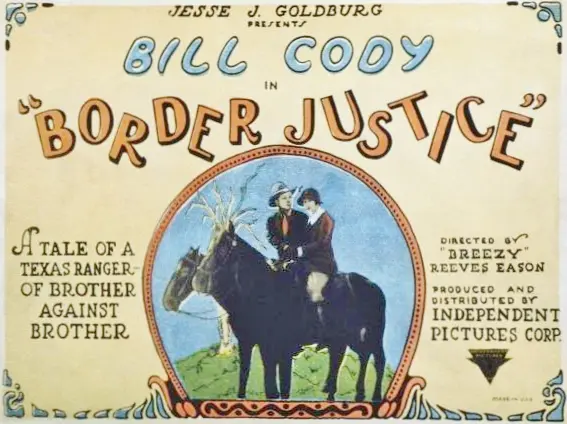
A definitive 6.1/10 rating for a film that redefined the boundaries of cult cinema. Border Justice remains a cornerstone of transgressive art.
The silent Western genre, often dismissed by modern audiences as a simplistic parade of white hats and black hats, frequently harbored depths of psychological complexity that rival the noir sensibilities of the 1940s. Border Justice, directed with a keen eye for spatial tension, stands as a seminal example of this thematic maturity. It is not merely a chronicle of law enforcement; it is a visceral exploration of the fragility of institutional integrity and the agonizing weight of kinship. In the center of this maelstrom is Joe Wellard, portrayed by Bill Cody with a stoicism that masks a fracturing psyche. Unlike the more flamboyant heroes of the era, Cody’s Wellard is a man defined by his constraints—the constraints of the law, the constraints of blood, and the constraints of a heart tethered to a woman whose father has sold his soul to the highest bidder.
The narrative architecture of Border Justice is built upon the classic Cain and Abel motif, yet it complicates this ancient trope by placing the conflict within the rigid framework of the Texas Rangers. When Joe pursues Phillip Gerard, he isn't just hunting a criminal; he is hunting a shadow of himself. The revelation that Gerard is his brother, Phillip, serves as a catalyst for a profound existential crisis. This isn't the sanitized conflict seen in films like The Honor of His House, where duty often triumphs with a clean conscience. Instead, the struggle on the cliffside is messy, desperate, and haunting. The cinematography here utilizes the natural desolation of the landscape to mirror Joe’s internal isolation. When Phillip falls, the silence of the film becomes deafening, leaving the audience to grapple with the perceived fratricide along with the protagonist.
What distinguishes this film from its contemporaries, such as The City of Masks, is its unflinching look at the economic pressures that facilitate corruption. Captain Robert Maitland is not a villain in the traditional sense; he is a man hollowed out by the American dream. His desire to provide a superior life for his daughter, Mary, leads him into a Faustian bargain with Angus Bland. This subplot elevates the film from a standard oater to a biting critique of social mobility and the costs of class aspiration. Maitland is a tragic figure, a lawman who has traded his badge for his daughter’s tuition, creating a moral vacuum that the antagonist, Bland, is all too happy to fill.
The character of Mary, played with a luminous but grounded energy by Nola Luxford, is more than a mere damsel in distress. She represents the innocent beneficiary of a corrupt system, an irony that Joe must navigate as he seeks to dismantle Bland’s empire. Their romance is shadowed by the knowledge that Joe’s quest for justice will inevitably destroy Mary’s father. This creates a tension that is palpable in every frame they share. The film eschews the lightheartedness found in Be a Little Sport, opting instead for a somber, almost elegiac tone as Joe resigns his post. His transition from a state-sanctioned agent of the law to a rogue vigilante is a pivotal moment in Western cinema, prefiguring the anti-heroes of the later revisionist era.
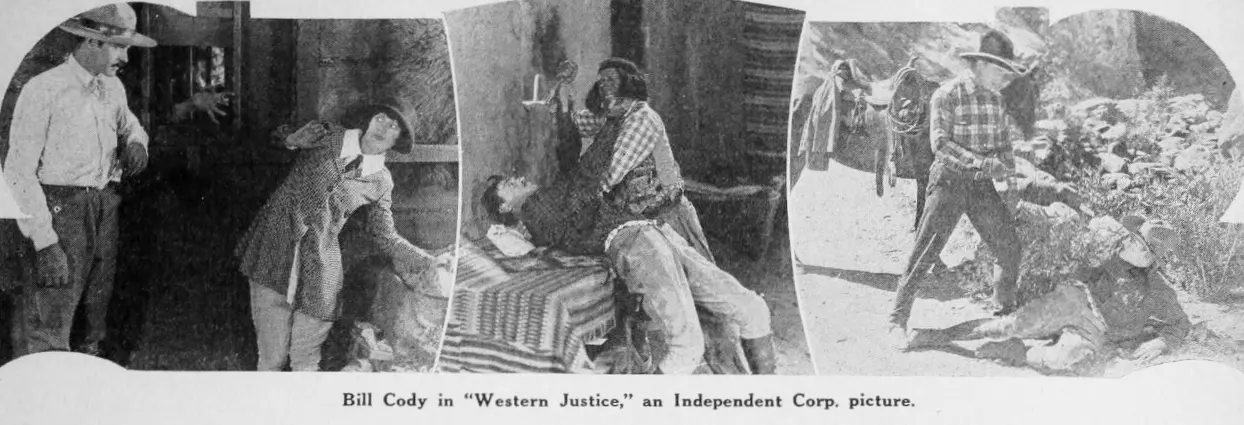
The Resurrection of the Outlaw: The second act of the film shifts the focus to the rugged borderlands, where the physical journey mirrors Joe’s descent into a world without rules. The discovery that Phillip survived the fall is a masterstroke of narrative subversion. It offers Joe a chance at redemption, but it also necessitates a re-evaluation of his brother’s criminality. Is Phillip a victim of circumstance, or a willing participant in the chaos? The film doesn't provide easy answers, preferring to linger in the gray areas of frontier morality. This ambiguity is reminiscent of the complex character studies in Der Mann ohne Namen - 1. Der Millionendieb, where the line between hero and rogue is perpetually blurred.
William Berke’s writing deserves significant praise for its economy and impact. In an era where title cards could often be overly verbose or distractingly poetic, Berke’s dialogue is sharp and purposeful. He understands that in the West, silence is a commodity. The confrontation between Joe and Angus Bland is not just a battle of bullets, but a clash of philosophies. Bland represents the predatory capitalism of the frontier—unregulated, violent, and devoid of empathy. Joe, conversely, represents a new kind of justice: one that is personal, messy, and ultimately grounded in a reconstructed sense of honor. The pacing of the final rescue mission is relentless, utilizing cross-cutting techniques that were sophisticated for 1924, keeping the viewer in a state of perpetual agitation.
Technically, the film utilizes its locations with an almost documentary-like precision. The dust seems to leap off the screen, and the harsh sunlight creates deep, expressionistic shadows that emphasize the characters' inner turmoil. This visual style is a far cry from the more polished, artificial sets of films like Queens Are Trumps. In Border Justice, the environment is an antagonist in its own right—an unforgiving expanse that swallows the weak and hardens the strong. The use of the Mexican border as a threshold between order and anarchy is handled with a nuance that avoids the xenophobic caricatures common in the period.
As we reflect on the legacy of this work, it is impossible not to compare its thematic weight to The Torch Bearer. Both films grapple with the idea of legacy and the burden of the previous generation’s sins. Joe Wellard must carry the weight of his brother’s shame and his mentor’s betrayal, yet he emerges not as a broken man, but as one forged in the fire of disillusionment. The final resolution, while providing the requisite catharsis of a Western climax, leaves a lingering sense of melancholy. The law has been upheld, but the cost has been the total dismantling of Joe’s world.
In conclusion, Border Justice is a towering achievement of the silent era. It transcends its genre trappings to deliver a poignant meditation on the nature of loyalty and the corrosive power of debt. Bill Cody’s performance is a masterclass in understated intensity, and William Berke’s script provides a blueprint for the psychological Westerns that would follow decades later. For the cinephile seeking a film that challenges the intellect while satisfying the craving for frontier action, this is an essential piece of cinematic history. It reminds us that justice is rarely a straight line; more often, it is a jagged path through the mountains, fraught with the ghosts of our own making and the harsh light of the Texan sun.
IMDb 5.9
1921
Community
Log in to comment.