DbcultAccessing Vault...
Cult Review
Senior Film Conservator
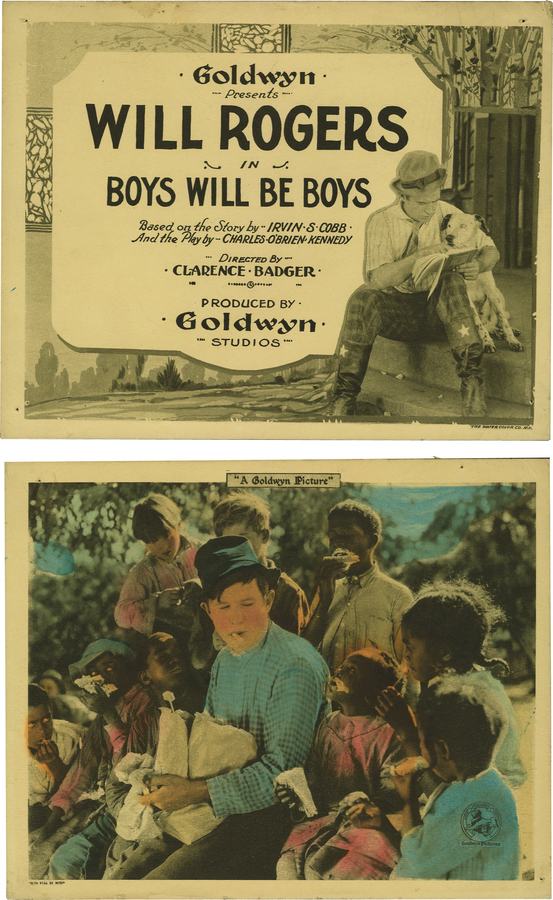
In the annals of pre-Code cinema, few narratives dissect the human psyche with the surgical precision of Boys Will Be Boys, a 1924 feature that transforms a rags-to-riches arch into a cautionary tale of existential futility. Directed with unflinching rigor by Edfrid A. Bingham, the film traces the vertiginous trajectory of its protagonist—a nameless Everyman shaped by the squalor of urban poverty—whose sudden windfall becomes less a triumph than a tragicomedy of manners. The filmmakers, drawing from Irvin S. Cobb’s acerbic source material, craft a world where wealth functions as both a mirror and a mask, reflecting the protagonist’s inner void while allowing him to curate a facade of sophistication.
At its core, Boys Will Be Boys operates as a deconstruction of the American Dream, rendered in the stark chiaroscuro of silent film aesthetics. The protagonist’s transition from destitution to affluence—triggered by a fluke lottery win—is not celebrated but dissected with clinical detachment. Unlike the buoyant escapism of Vagabond Luck, this narrative rejects easy moralizing. Instead, it posits that material abundance, when unmoored from authentic human connection, devolves into performative decadence. The film’s infamous 'Masquerade of Solitude' sequence—a glittering ballroom scene where the protagonist dances with shadows—epitomizes this existential malaise, its visual poetry underscoring the hollowness of his hedonism.
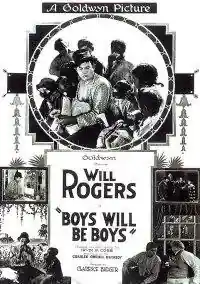
Charles Mason’s performance as the protagonist is a masterclass in physical comedy and existential pathos. His exaggerated gestures—flinging coins to beggars only to watch the money vanish into the void, or donning a top hat as if it could transmute his identity—evoke the tragicomedy of a man grasping at meaning in a world that has offered him neither purpose nor guidance. The supporting cast, particularly May Hopkins as a disillusioned love interest and Will Rogers as a cynical confidant, provide nuanced counterpoints to the protagonist’s unraveling psyche, their interactions layered with subtextual irony.
Bingham’s direction employs a visual lexicon that mirrors the film’s thematic concerns. Rapid cuts during moments of ecstasy contrast with lingering close-ups during periods of introspection, creating a rhythmic dissonance that unsettles the viewer. The use of negative space—particularly in scenes where the protagonist stands isolated against backdrops of grandeur—visually reinforces his emotional disconnection. In one striking sequence, a banquet table laden with gilded dishes is shown from a low-angle shot, the camera tilting up to reveal the protagonist’s face reflected in the polished silverware, a grotesque reminder of his vanity.

The film’s score, though lost to time, is presumed to have featured a dissonant blend of waltz rhythms and atonal motifs, a sonic metaphor for the clash between societal expectations and personal disintegration. This auditory tension is echoed in the set design: Art Deco splendor coexists with Art Nouveau decay, the conflicting styles symbolizing the protagonist’s fractured identity.
Boys Will Be Boys occupies a unique position in the silent film canon, existing at the intersection of social realism and absurdist satire. Its critique of consumerism prefigures the moral quandaries explored in later works like The Scarlet Letter, though here the focus is not on puritanical judgment but on the corrosive nature of unchecked ambition. The film’s treatment of wealth as a destabilizing force also resonates with the darker themes in Day Dreams, particularly in scenes where the protagonist’s fantasies clash with reality.
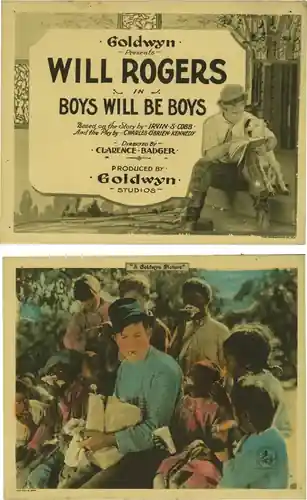
What distinguishes Boys Will Be Boys from its contemporaries is its refusal to offer redemption arcs. Unlike One-Thing-at-a-Time O'Day, which resolves conflicts through pragmatic compromise, this film’s protagonist remains trapped in his cycle of excess, his final moments captured in a haunting close-up that suggests both resignation and unresolved yearning. This narrative choice, while bleak, elevates the film beyond mere entertainment into the realm of philosophical inquiry about human nature.
Though often overshadowed by more technically ambitious works of the era, Boys Will Be Boys has gained cult status among film scholars for its prescient examination of wealth and identity. Its themes of materialism as a substitute for emotional nourishment find eerie resonance in modern society, where social media personas often mirror the protagonist’s curated extravagance. The film’s unflinching portrayal of addiction to excess also anticipates the substance abuse narratives of the 1950s, albeit through a more metaphorical lens.

Burton Halbert’s cinematography, particularly the use of deep focus in key moments, remains a technical marvel. In one sequence, the camera holds on a banquet table as the protagonist slowly disintegrates in the background—a visual metaphor for the corrosive nature of his choices. These techniques, combined with the script’s sharp dialogue (conveyed through intertitles that double as poetic commentary), ensure the film’s enduring relevance as both art and artifact.
In conclusion, Boys Will Be Boys stands as a testament to the power of cinema to interrogate the human condition. Its unflinching dissection of wealth, identity, and existential futility transcends its era, offering a mirror to audiences across generations. For those seeking a film that marries technical mastery with philosophical depth, this 1924 gem remains an essential viewing, its warnings about the perils of excess as urgent today as they were nearly a century ago.
IMDb 6.8
1935
Community
Log in to comment.