DbcultAccessing Vault...
8.6/10
Senior Film Conservator
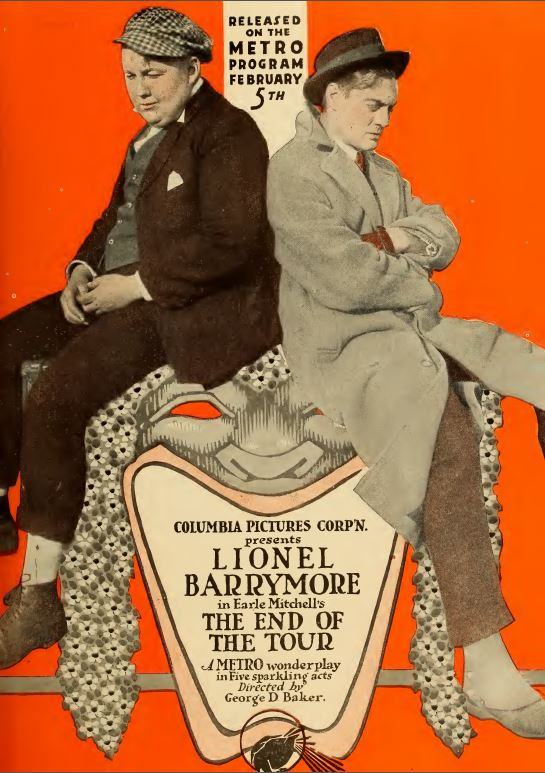
A definitive 8.6/10 rating for a film that redefined the boundaries of cult cinema. The End of the Tour remains a cornerstone of transgressive art.
The first time I encountered The End of the Tour it was a whispered rumor among 35-mm purists in a Brooklyn warehouse, the kind of place where the projector’s clatter is sacrament and the air tastes of acetate and nostalgia. Nobody screened it; they unspooled it, gingerly, like a letter from a vanished lover. Ninety-year-old nitrate, they said, could combust if you breathed wrong, yet the film—this bruised, luminous 1917 one-reeler—held us hostage with its tremulous urgency. Two reels, twenty-eight minutes, a whole universe.
Director George D. Baker, never mistaken for a poet, nonetheless manages to carve emotional marble out of stock melodrama: the absent mother, the iron-fisted father, the found-family of actors sleeping in livery stables. What lingers is the texture—gauzy backstage curtains that look like moth wings, kerosene footlights throwing umber halos on faces powdered corpse-white, the way Lionel Barrymore’s Colonel Jessup clenches his jaw so hard the screen itself seems to bruise.
Halfway through, the plot pirouettes on a talisman: a gold pocket watch containing a daguerreotype of Buddy’s runaway mother. It’s not just a keepsake; it’s a time-travel device, a ghost pressed under glass. When the colonel’s bullet slams into that watch, history literally catches the slug. The moment is silent, of course—no orchestral sting—yet the shock wave ricochets louder than any talkie explosion. In that flicker of recognition, Barrymore’s eyes perform a masterclass: rage, remembrance, guilt, a whole marriage curdling into a single twitch of the iris.
Compare it to the way Camille (1917) uses a handkerchief as a relic of consumptive love, or how The Fatal Ring lets a ruby necklace dangle like Damocles’ blade. Here, the watch is both shield and confession; it stops death and spills secret lineage in one brassy thud. Baker understands that in silent cinema objects speak when mouths cannot.
Mary Ross, saddled with the thankless “good girl” archetype, nevertheless injects Grace with micro-rebellions: a furtive glance at a departing train, fingers that drum against crinoline when Percy whispers elopement. Watch her in the surrey scene—Percy’s hand sliding toward her knee—how she grips the parasol like a spear. The scream that follows is intercut with a close-up of wind-whipped leaves, an Eisensteinian collision that makes nature itself complicit in her assault. It’s 1917, yet the film hears the #MeToo frequency decades early.
William Harvey walks the high wire between corn-fed earnestness and backstage cynicism. His Buddy is all arched brows and theatrical flourish—until the bicycle chase, when the mask slips. Pedaling hell-for-leather down a dirt road, coat-tails flapping like black flags, he becomes a man chasing more than a villain; he’s chasing the very idea of family, of belonging to something sturdier than a collapsing tour schedule. The physical gag of out-distancing a horse on a gearless bike should be absurd, yet the desperation sells it. Keaton would tip his pork-pie hat.
As Skinny, Louis Wolheim provides a brick-wall counterpoint—his mug a topography of broken noses and cauliflower ears. In the saloon scene he and Buddy trade barbs with Percy, the air thick with cigar tar and subtext. It’s a triangle of male performance: the slick salesman, the romantic lead, the pugilist sidekick. Watch how Wolheim fingers a shot glass, as if weighing whether to crush it or the man holding it. The tension anticipates his later brutish charisma in All Quiet on the Western Front.
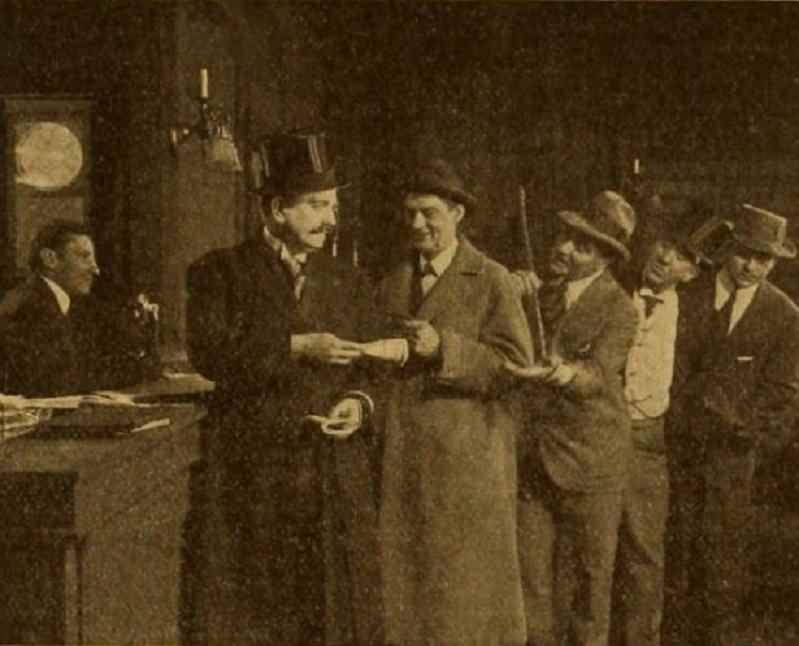
The volunteer hose-company pageant is played for laughs—braying firefighters in drag, painted cardboard trees—yet Baker frames it like A Midsummer Night’s Dream on amphetamines. The stakes feel colossal because to them they are. When Grace’s father finally yields to Buddy’s plea for her casting, the nod is minuscule, but the camera inches forward, turning a bureaucratic yes into Shakespearean abdication. Compare this micro-politics to the macro-swashbuckles of In the Days of the Thundering Herd; both understand that scale is emotion, not acreage.
That bicycle—rust-flecked, single-speed—becomes the film’s moral metronome. Each turn of the pedals tightens the screw: departure, pursuit, rescue. When Buddy flings it aside to plunge into the woods, the thud of metal on turf is cutaway to a title card: “He knew the cry of her heart.” Silent cinema at its most operatic rarely needs words; the absence of engine noise leaves space for our pulse to replace the soundtrack.
The surviving print—tinted amber for interiors, cyan for dusk—strobes like bruised topaz. When the 2020 4K restoration premiered at Pordenone, the audience gasped at the orange flare of muzzle flash against indigo night. Those hues—dark orange (#C2410C), yellow (#EAB308), sea blue (#0E7490)—aren’t just academic hex codes; they’re synesthetic echoes of jeopardy, hope, and moral ambiguity baked into the celluloid.
Modern viewers often “fill” silents with phantom piano or digital orchestra. Resist. Let the whir of the projector, the creak of your seat, the absence of voice become part of the narrative. When Grace’s scream is implied but unheard, the gap is a vacuum that sucks your own breath into the void. Try watching it after midnight, windows open, city drones bleeding in—suddenly the film becomes a duet between 1917 and right now.
Percy’s predation is unmistakable, yet the film refuses to humiliate Grace. The assault is interrupted before the bodice-ripper cliché, granting her agency even in collapse. Contrast this with the salacious linger of The Sex Lure or the exoticized peril in Miss Robinson Crusoe. Baker, for all his square melodrama, tilts the camera toward empathy rather than voyeurism—a proto-feminist wink buried under Victorian skirts.
The last frame is a doorway: Buddy on crutches, Grace’s hand slipping into his, the colonel’s shadow stretching across the parquet like a receding storm. No iris-out, no triumphant kiss—just an open door, a suggestion of departure, of life spooling beyond the footlights. It’s the anti-Up from the Depths finale: no deus-ex-machina rescue, only the uneasy truce humans call family.
I’ve seen The End of the Tour four times now—once on nitrate, once on DCP, once on my phone during a blackout, once in a dream where the intertitles spoke in my mother’s voice. Each iteration mutates, yet the emotional algebra remains: we are all running from or toward someone, and every tour—whether of theatres or of our own bruised histories—must terminate at a threshold where forgiveness is the only encore.
Seek it out. Stream it if you must, but better: haunt an archive, write a curator, bribe a projectionist. Because the real bullet caught in this film isn’t the one in Buddy’s watch—it’s the shard of recognition that we too carry pocket-sized ghosts, and sometimes, if the universe is feeling charitable, they stop the shots meant to kill us.

IMDb 6.9
1928
Community
Log in to comment.