DbcultAccessing Vault...
5.2/10
Senior Film Conservator
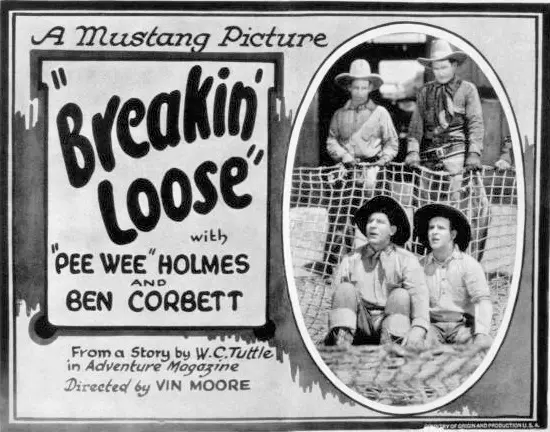
A definitive 5.2/10 rating for a film that redefined the boundaries of cult cinema. Breakin' Loose remains a cornerstone of transgressive art.
Does 'Breakin' Loose' still resonate in the cacophony of modern cinema? Short answer: yes, but with significant caveats. This 1923 silent comedy is a fascinating relic, a whirlwind of slapstick and contrived romance best suited for dedicated silent film enthusiasts and those curious about the genre's formative years.
It is decidedly not for viewers seeking polished storytelling, subtle humor, or contemporary pacing. Approach it as a historical artifact, and you might find its peculiar energy surprisingly engaging.
This film works because... it offers an unvarnished glimpse into the slapstick sensibilities and narrative inventiveness of the early 1920s. Its sheer, unbridled silliness, particularly in the chaotic circus sequence, is genuinely unique. The pet monkey, in particular, acts as an unexpected, scene-stealing catalyst for much of the later hijinks, proving that sometimes the best actors have fur.
This film fails because... its humor is often incredibly dated, relying on a brand of physical comedy and character caricature that can feel cruel or simply baffling to a contemporary audience. The plot, while inventive, frequently sacrifices coherence for escalating absurdity, leading to an uneven pace and a lack of emotional grounding. It's a film that prioritizes a rapid succession of gags over a cohesive narrative arc.
You should watch it if... you possess a profound appreciation for silent-era cinema, are interested in the evolution of comedic storytelling, or simply enjoy experiencing the bizarre and often charming oddities that have emerged from the annals of film history. It's a niche experience, but a rewarding one for the right viewer.
The narrative of 'Breakin' Loose' begins with Lucy Whittacker’s return from finishing school, an event that sets in motion a series of increasingly improbable events. Her accompanying teacher, despite Lucy’s pre-emptive warnings of her being a 'heart-breaker,' arrives as a rather unassuming figure, accompanied by a small, mischievous monkey. This initial subversion of expectation is one of the film’s more interesting, albeit underdeveloped, character beats.
Lucy’s father, Pa Whittacker, then dispatches Dirtyshirt Jones to escort the teacher through a bandit-ridden territory. This detail, ostensibly a source of peril, feels more like a flimsy excuse for the machinations that follow, a common trope in early cinema where plot points are often introduced with minimal setup or payoff.
Enter Magpie, a character consumed by jealousy. His elaborate scheme to separate Dirtyshirt and the teacher involves a rigged speaking tube, through which he impersonates an authority figure, ordering Dirtyshirt to abandon the 'homely' girl and leave Lucy behind. This moment, while central to the plot, highlights a problematic undercurrent of the film's humor, relying on the teacher's perceived lack of attractiveness as a punchline.
Magpie's timely 'rescue' of Lucy then propels them into a circus setting. Here, the film truly 'breaks loose' from any semblance of conventional storytelling. The teacher and Dirtyshirt unexpectedly reappear, but it’s the teacher’s pet monkey that truly steals the show, unleashing unparalleled pandemonium among the sideshow attractions.
The monkey’s antics escalate rapidly, leading to Magpie and Dirtyshirt being unceremoniously thrown onto the back of an elephant. What follows is a wild, uncontrolled ride through the circus grounds, a sequence that embodies the film's commitment to escalating, physical comedy. The ultimate resolution, involving the local fire department, is a classic example of a deus ex machina, characteristic of an era where narrative neatness often took a backseat to spectacle.
In 'Breakin' Loose,' the cast navigates the unique demands of silent film acting, where exaggerated expressions and physical comedy are paramount. Lottie Fletcher, as Lucy Whittacker, embodies the naive ingenue with a charming innocence. Her performance is largely reactive, serving as the fulcrum around which the male characters’ schemes and rivalries revolve. She delivers the wide-eyed wonder and occasional distress required of her role, without ever truly breaking free from the conventions of the era’s female archetypes.
Virginia Bradford, portraying the much-maligned teacher, is tasked with embodying the 'homely girl' trope. While the characterization itself is dated and uncomfortable by modern standards, Bradford commits to the role, conveying a sense of quiet dignity amidst the comedic indignities she suffers. Her expressions often communicate more subtle emotions than the broader physical gags surrounding her, offering a glimpse of potential depth that the script rarely explores.
Gilbert Holmes as Magpie and Jack Gavin as Dirtyshirt Jones deliver the requisite physical comedy. Holmes' Magpie is a conniving, jealous figure, whose exaggerated villainy is played for laughs. Gavin's Dirtyshirt is the bumbling sidekick, often the victim of circumstances or Magpie's trickery. Their performances are broad, designed to be understood without dialogue, and they largely succeed in conveying their characters' simple motivations through their actions.
However, the true standout performance, if one can call it that, comes from the unnamed pet monkey. Its unpredictable movements and genuine chaos it instigates are often the most genuinely funny and surprising elements of the film. It's an unconventional observation, but the monkey frequently feels like the most dynamic and influential 'character' on screen, inadvertently driving much of the plot's later absurdity.
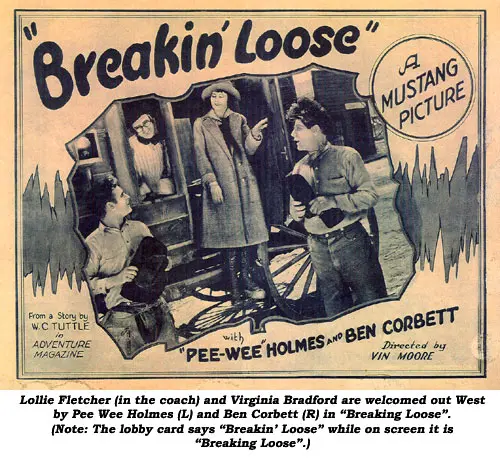
Directed by W.C. Tuttle, 'Breakin' Loose' showcases the practical, straightforward filmmaking typical of 1923. The direction is primarily functional, aiming to capture the unfolding action and ensure the comedic beats land, even if subtlety isn't a priority. Tuttle demonstrates a clear understanding of staging for silent comedy, utilizing wide shots to encompass physical gags and ensuring character reactions are visible.
The cinematography is rudimentary by today's standards, yet effective for its time. Shots are largely static, focusing on clear compositions that allow the audience to follow the rapid physical movements. There's a noticeable lack of complex camera work or dynamic editing that would become more prevalent in later silent films. Instead, the visual storytelling relies heavily on the actors' physicality and the clear delineation of space.
One particular moment that exemplifies Tuttle’s approach is the speaking tube ruse. The camera clearly frames Magpie’s hidden position and Dirtyshirt’s bewildered reactions, making the deception visually unambiguous. Similarly, the circus sequence, while chaotic, is choreographed to maximize the visual impact of the monkey’s antics and the ensuing elephant ride, even if the execution is technically unsophisticated.
The film’s visual language, while lacking the artistic flourishes of a Griffith or a Murnau, serves its comedic purpose. It’s a testament to the idea that sometimes, clarity and directness are more important than stylistic innovation, especially when the primary goal is to deliver laughs through physical action.
The pacing of 'Breakin' Loose' is, to put it mildly, wildly inconsistent. The initial setup, detailing Lucy’s return and the introduction of the teacher, feels somewhat leisurely, allowing for character introductions and the establishment of Magpie’s jealous intentions. However, once Magpie’s scheme is set in motion and the film shifts to the circus, the pacing accelerates dramatically, becoming a breathless rush of escalating chaos.
This shift can be jarring, moving from a more deliberate, almost melodramatic setup to pure, unadulterated slapstick. It’s a common characteristic of early comedies, where the narrative often serves as a mere framework to string together a series of gags, rather than a cohesive, steadily building story. The film struggles to maintain a consistent rhythm, lurching from one comedic set-piece to the next.
The tone is broadly comedic, heavily reliant on physical humor and the kind of broad caricatures that defined much of silent cinema. However, there’s an undercurrent of meanness, particularly in the treatment of Virginia Bradford’s teacher character, which can be uncomfortable for modern viewers. The humor often derives from her perceived unattractiveness and the schemes hatched against her, rather than from more universally appealing comedic situations.
While the film aims for lightheartedness, its reliance on such dated comedic tropes can make it feel less like a joyful romp and more like a historical document of what audiences once found amusing. It works. But it’s flawed. The film's energy is undeniable in its later acts, but the journey to get there is often uneven, demanding patience from its audience.
Is 'Breakin' Loose' a cinematic masterpiece? No. Is it an essential watch for casual filmgoers seeking modern entertainment? Probably not. However, for those with a keen interest in silent film history, it offers a peculiar charm. It’s a window into the broad humor and narrative eccentricities of the early 1920s. Its historical value often outweighs its entertainment value for many.
This film is best approached as a historical curiosity, a snapshot of comedic filmmaking from nearly a century ago. It will appeal to silent film scholars, enthusiasts of early slapstick, and anyone curious about the evolution of cinematic storytelling. If you can appreciate the unique challenges and conventions of the era, you’ll find something to engage with.
Conversely, if you expect the sophisticated humor, nuanced character development, or tight plotting of contemporary cinema, you will likely be disappointed. 'Breakin' Loose' is a product of its time, and its appeal is largely tied to understanding that context.
What makes 'Breakin' Loose' particularly intriguing, beyond its surface-level gags, is its almost casual acceptance of absurdity. The notion of a 'bandit-ridden territory' is introduced with such nonchalance that it feels less like a genuine threat and more like a convenient narrative device to facilitate Magpie's contrived heroism. This speaks volumes about the priorities of early comedic filmmaking: plot logic often took a distant second to the opportunity for a good chase or a clever ruse.
The film's treatment of the teacher as the 'homely girl' is another element that warrants closer examination. While intended as a comedic device, it underscores a problematic, yet pervasive, societal preoccupation with appearance, even in a lighthearted context. It's a reminder that humor, even a century ago, could be rooted in less-than-charming observations about human vanity and judgment. This aspect of the film, for me, is a major stumbling block to its enduring charm.
And then there's the monkey. It’s hard to overstate the impact of this creature, whose unscripted antics surely added an element of unpredictability to the filming process. The monkey doesn't just participate in the chaos; it often initiates it, acting as a true agent of narrative disruption. It's an unconventional observation, but the film's most compelling 'character' might very well be this primate, whose actions often overshadow the human performers.
The climax, with Magpie and Dirtyshirt riding an elephant and the subsequent fire department rescue, is a testament to the era's anything-goes approach to comedic resolution. It’s
IMDb —
1920
Community
Log in to comment.