DbcultAccessing Vault...
5/10
Senior Film Conservator
A definitive 5/10 rating for a film that redefined the boundaries of cult cinema. Nude Woman by Waterfall remains a cornerstone of transgressive art.
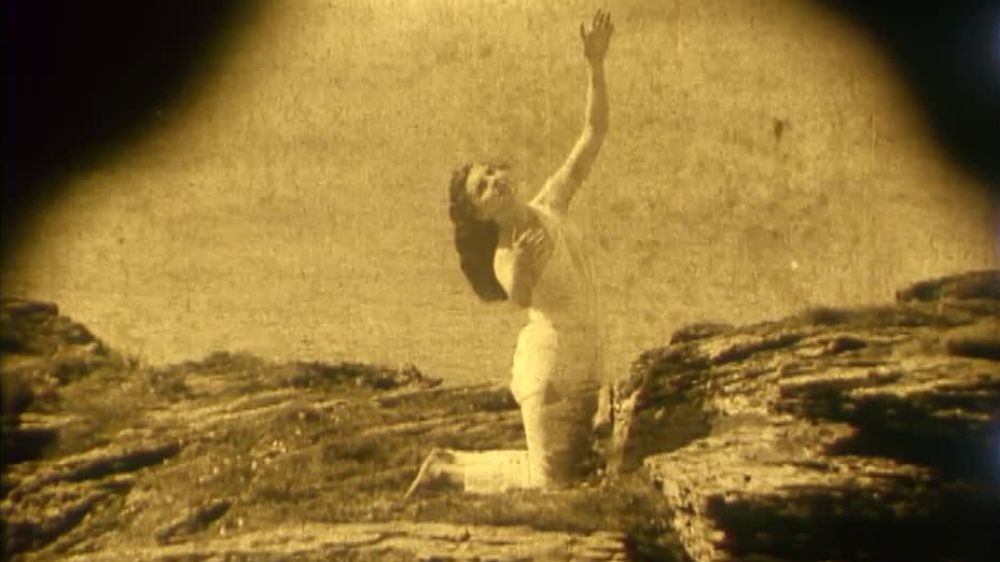
To witness Nude Woman by Waterfall is to step into a time machine that doesn't just travel through years, but through the very evolution of human perception. In an era when the cinematic world was largely defined by the stark contrasts of silver nitrate and shadow, Claude Friese-Greene was chasing a ghost: the spectrum. This brief, flickering vignette is not merely an exercise in early eroticism or naturalism; it is a battle cry against the binary of black and white. While films like The Man of Shame relied on the heavy lifting of dramatic performance within the grayscale, Friese-Greene sought to elevate the medium through the sheer alchemy of light. The result is a hauntingly beautiful artifact that feels more alive than many of its contemporaries precisely because it acknowledges the vibrancy of the physical world.
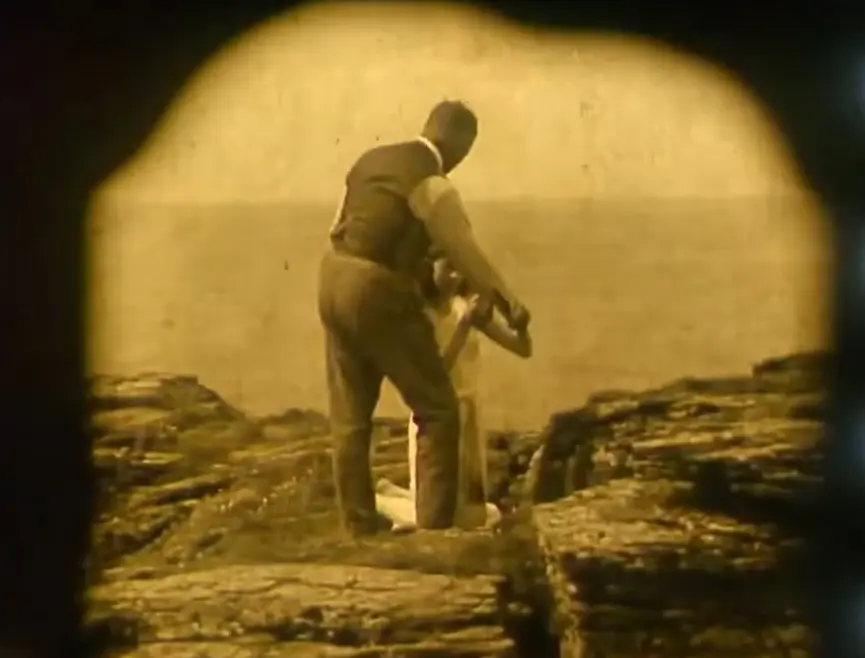
The technical lineage of this footage is steeped in both innovation and tragedy. Claude, the son of William Friese-Greene, was determined to perfect the Friese-Greene Natural Colour process, an additive system that alternated red and green filters. When we watch this film today, we see the 'fringing'—that ethereal vibration where the colors don't quite align during rapid movement. This technical quirk, rather than being a flaw, adds a layer of impressionistic beauty. The water doesn't just fall; it shimmers with a spectral halo. Unlike the static theatricality found in The Silent Woman, where the silence is a narrative weight, the silence in this waterfall sequence feels like a reverent hush. The camera remains stationary, a silent observer to the marriage of chemistry and nature. It’s a stark contrast to the kinetic, almost violent physicality seen in The Knockout, proving that even in the 1920s, cinema was already splitting into the divergent paths of visceral action and contemplative art.
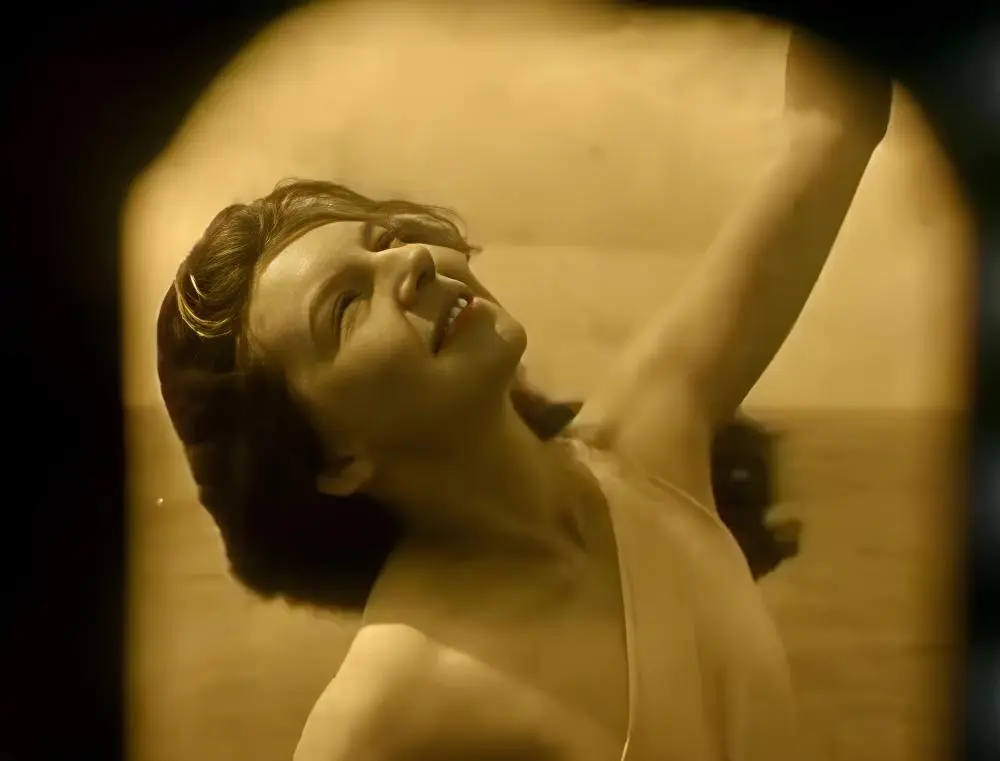
There is a profound vulnerability in the way the subject is framed. She is not a character in a melodrama like those in We'll Take Her Children in Amongst Our Own; she is a canvas. The skin tones, rendered through the flickering filters, possess a warmth that monochromatic film simply could not simulate. It challenges the viewer to look past the nudity and into the texture of the image itself. The grain of the film stock mingles with the spray of the waterfall, creating a tactile experience that anticipates the sensory cinema of the late 20th century. In many ways, Friese-Greene was doing for film what the Impressionists did for painting—capturing the 'fleeting moment' of light. This isn't the calculated scandal of Mürebbiye, but rather a scientific curiosity that accidentally stumbled into the realm of the sublime.
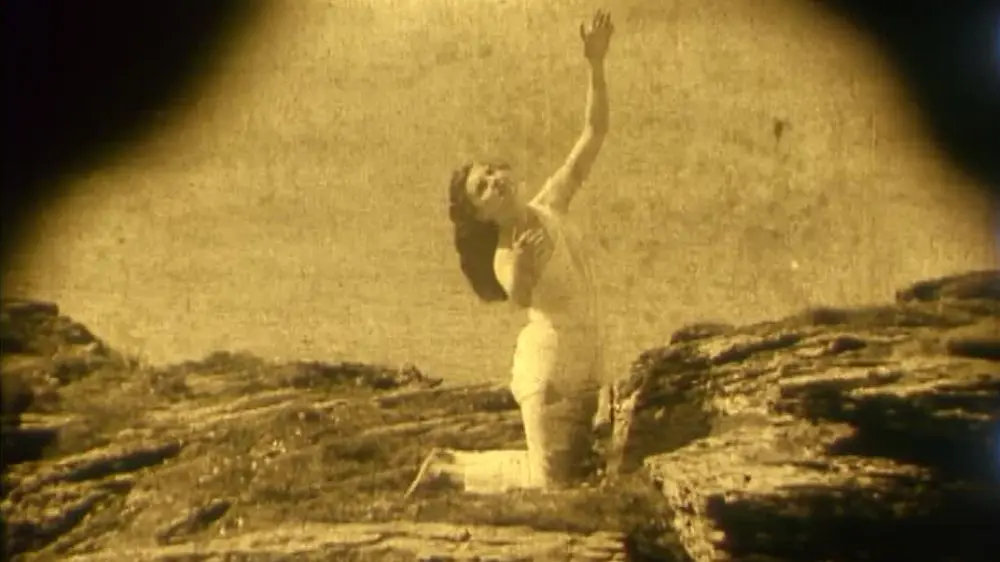
When placing this work alongside other films of the period, the differences are jarring. While Manden med Staalnerverne focused on the mechanical grit and the 'man of steel' nerves, Friese-Greene focused on the softness of the biological. There is no 'trap' here, unlike the domestic entanglements of The Divorce Trap or the marital complexities of Married Life. Instead, there is a total absence of social artifice. The woman by the waterfall exists outside of time, outside of the burgeoning jazz age, and certainly outside of the comedic farces like Hotel Paradiso. This film is a pure distillation of the 'gaze.' It is the cinematic equivalent of a deep breath. We see a similar attempt at capturing raw emotion in Smerch lyubovnyy, but even there, the narrative tends to swallow the visual experimentation. In Friese-Greene’s work, the visual experimentation is the narrative.
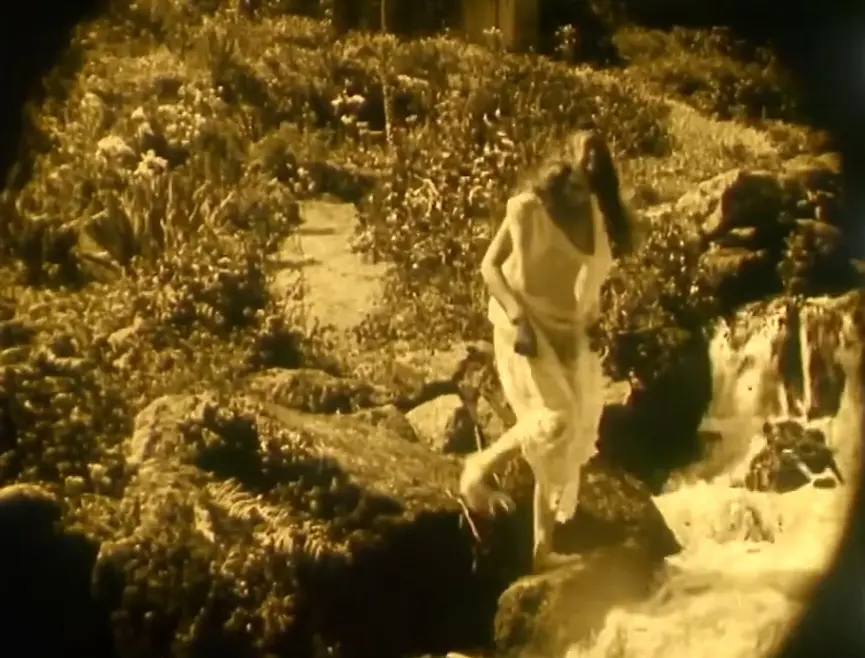
One cannot discuss this film without acknowledging the restoration efforts by the BFI. For decades, these colors were lost, existing only as strange, alternating frames of gray. The digital reconstruction of the Biocolour process has allowed us to see what Friese-Greene saw—or at least, what he dreamed of. It’s a different kind of ghost story than Shadows of Her Pest. Here, the 'ghost' is the color itself, returning from the dead to haunt our modern, high-definition sensibilities. The woman’s skin, the moss on the rocks, the cold spray—they all vibrate with a life that feels contemporary, yet tantalizingly out of reach. It reminds me of the isolation found in Out of the Drifts, where the environment is as much a character as the actors. But while that film uses the environment for conflict, Friese-Greene uses it for harmony.
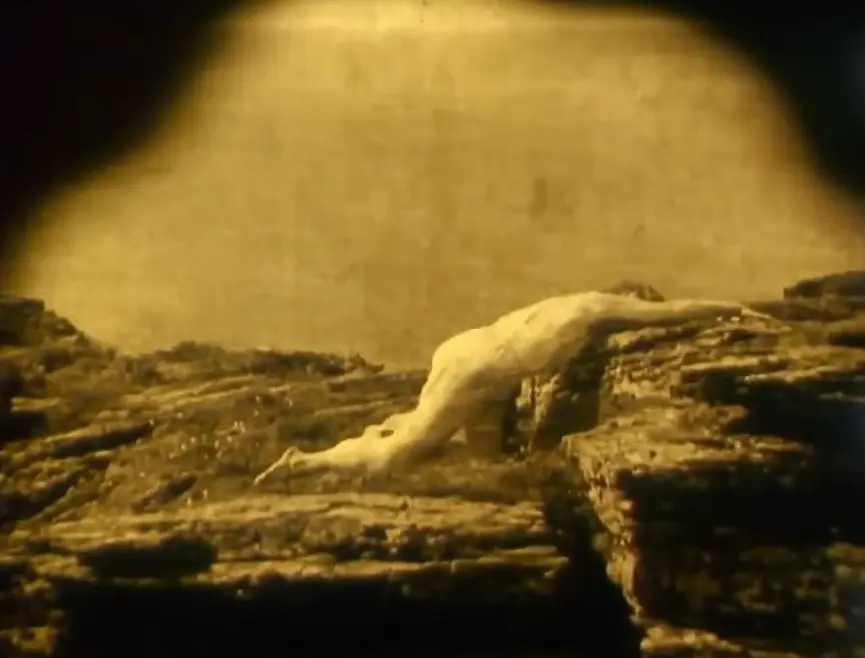
In the context of 1920s morality, a film titled Nude Woman by Waterfall might suggest a prurient interest. However, the actual viewing experience is remarkably clinical and artistic. There is no flirtation with the camera, no 'vamping' as one might see in Lola. The subject is integrated into the landscape, much like the characters in The Woman Michael Married are integrated into their social strata, but without the baggage of dialogue or plot. This film is an early ancestor of the 'slow cinema' movement, prioritizing the observation of existence over the progression of events. It is a radical departure from the 'berth' of traditional storytelling found in Berth Control. It asks the viewer to find meaning in the movement of a single drop of water or the subtle shift of a shoulder.
Ultimately, Claude Friese-Greene was a pioneer who died before he could see his vision fully realized in the three-strip Technicolor era. Yet, Nude Woman by Waterfall remains a vital piece of the puzzle. It is a reminder that cinema was always more than just 'moving pictures'; it was an attempt to capture the soul of the world in all its multi-hued glory. When we look back at the history of the medium, we often focus on the giants of narrative or the masters of suspense. But we must also save a place for the alchemists—the ones who stood by a waterfall with a hand-cranked camera and a dream of red and green, trying to prove that the world was too beautiful to be seen only in black and white. This film is a tiny, luminous window into that dream, a fragment of a future that Friese-Greene was building frame by frame, one chromatic flicker at a time. It stands as a testament to the fact that even the simplest image, when viewed through the lens of innovation, can become a timeless masterpiece of visual poetry.
Reviewer's Note: This film is best experienced as part of the 'The Open Road' collection, which showcases the full breadth of Friese-Greene's journey across Britain in the 1920s. To see these colors today is to participate in a century-old conversation about the nature of reality and its representation on screen.
IMDb —
1918
Community
Log in to comment.