DbcultAccessing Vault...
Cult Review
Senior Film Conservator
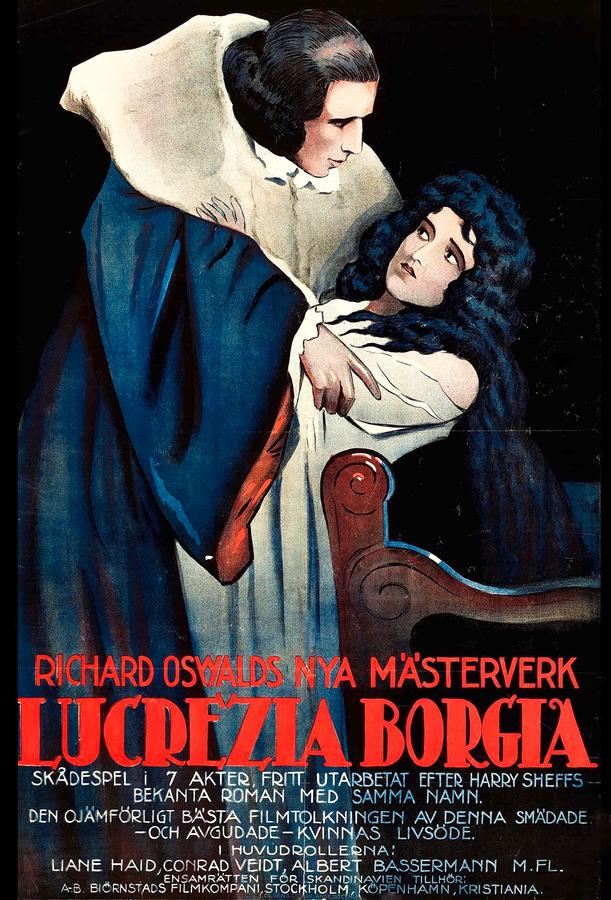
Helmut von Sternberg's 1922 cinematic tour de force, 'Bride of Vengeance', stands as a towering testament to the silent era's capacity for profound psychological drama and visual storytelling. More than a mere period piece, it is an intricate tapestry woven with threads of betrayal, societal decay, and the relentless pursuit of justice, or perhaps, simply, retribution. From its opening frames, the film plunges the viewer into a world where aristocratic privilege crumbles under the weight of insidious ambition, setting the stage for one of the most compelling and morally ambiguous revenge narratives ever committed to celluloid.
The film introduces us to Elena, portrayed with a mesmerizing intensity by Liane Haid, a woman whose life is irrevocably shattered by the Machiavellian machinations of Baron Valerius, brought to chilling life by the incomparable Conrad Veidt. Valerius is not merely a villain; he is a force of nature, a charismatic predator whose every calculated move aims at dismantling Elena's noble lineage. The initial sequence, depicting the gradual erosion of her family's fortune and reputation, is orchestrated with a masterful economy of visual exposition. Sternberg employs stark chiaroscuro lighting and meticulously composed tableaux to convey the creeping dread, the slow, agonizing descent into ruin. The public humiliation of Elena's father, culminating in his tragic suicide, is rendered with a heartbreaking poignancy that avoids melodrama, instead opting for a visceral sense of irreversible loss.
But it is the fate of Elena's younger sister, Isabella, embodied by the ethereal Ellen Richter, that truly ignites Elena's consuming quest. Isabella's seduction and subsequent abandonment by Valerius represent a violation not just of her person, but of the very innocence Elena had sought to protect. Richter's performance, though often subtle in its expressions, conveys a profound fragility that makes her character's descent into despair utterly devastating. Her shattered spirit becomes a spectral presence, haunting Elena's every waking moment and fueling her transformation from grieving daughter to an avenging angel. This narrative arc resonates with the thematic explorations found in films like Vengeance and the Girl, where personal tragedy similarly propels a protagonist into a dangerous, all-consuming mission, though 'Bride of Vengeance' delves deeper into the psychological cost of such an endeavor.
Liane Haid's portrayal of Elena is nothing short of a revelation. Her transformation from the demure, aristocratic daughter to the calculating, enigmatic 'bride' is a masterclass in silent acting. She communicates volumes with a glance, a subtle shift in posture, the almost imperceptible tightening of her jaw. Elena's decision to infiltrate Valerius's world by marrying him under false pretenses is the narrative's central conceit, and Haid carries it with an astounding conviction. She is not merely playing a part; she is living the lie, the simmering resentment beneath a veneer of charm and compliance. The audience is constantly aware of the volcano brewing beneath her serene exterior, making every interaction with Valerius crackle with unspoken tension. This intricate dance of deception and desire finds echoes in the complex female protagonists of films such as The Spanish Jade, where women navigate treacherous social landscapes with wit and cunning to achieve their aims.
Conrad Veidt, of course, is perfectly cast as Baron Valerius. His distinctive features and imposing presence lend themselves effortlessly to characters of ambiguous morality and sinister intent. Here, he is less a mustache-twirling villain and more a chillingly plausible architect of destruction. His charisma is undeniable, which makes his cruelty all the more unsettling. The film wisely allows Veidt to imbue Valerius with a certain seductive quality, making it believable that Elena would be able to ensnare him, even as she despises him. The scenes between Haid and Veidt are electrifying, a silent battle of wills played out in luxurious ballrooms and shadowy corridors. The visual language of their interactions – Valerius's predatory gaze, Elena's carefully masked reactions – speaks volumes without a single intertitle.
Von Sternberg's direction is characterized by an exquisite attention to detail and a profound understanding of the medium's expressive potential. The cinematography, often employing deep focus and dramatic angles, transforms the lavish sets into psychological landscapes. The opulent interiors of Valerius's estate, initially symbols of his power, gradually become a gilded cage for Elena and, ultimately, a stage for his downfall. The use of shadows is particularly noteworthy; they are not merely an absence of light but an active participant in the storytelling, obscuring motives, highlighting hidden emotions, and foreshadowing grim events. This visual mastery elevates the film beyond a simple melodrama, imbuing it with the gravitas of a Greek tragedy.
The costume design, too, plays a crucial role. Elena's initial modest attire gives way to the elaborate gowns befitting a baroness, each garment a symbol of her deeper infiltration and the increasing moral ambiguity of her mission. The contrast between her pristine white wedding gown and the dark, plotting heart beneath is a potent visual metaphor. The film's aesthetic aligns with the German Expressionist movement gaining traction at the time, particularly in its emphasis on distorted realities and heightened emotional states, though 'Bride of Vengeance' retains a more grounded, albeit dramatically intensified, realism. While not as overtly stylized as some contemporary Expressionist works, its thematic darkness and psychological depth are undeniably influenced by the movement.
At its core, 'Bride of Vengeance' is a searing exploration of the nature of revenge. Does it truly bring solace, or does it merely consume the avenger? Elena's journey is not presented as a clear-cut path to justice. Instead, the film deftly navigates the moral gray areas, hinting at the corrosive effect of her singular obsession. There are moments when Elena's humanity flickers through the hardened exterior, moments of doubt and vulnerability that prevent her from becoming a mere archetype. This nuanced portrayal elevates the film beyond simplistic narratives of good versus evil, inviting the audience to ponder the true cost of an eye for an eye.
The societal commentary embedded within the narrative is also remarkably prescient. The film implicitly critiques the unchecked power of the aristocracy and the vulnerability of the less privileged. Valerius's ability to manipulate legal and financial systems highlights a pervasive corruption that transcends individual villainy. Elena's struggle, therefore, becomes not just a personal one, but a symbolic battle against systemic injustice. This thematic resonance echoes in films like The Price of Innocence, which also explores the devastating consequences of unchecked power and social vulnerability, albeit through a different lens.
While perhaps not as widely known today as some of its German Expressionist contemporaries, 'Bride of Vengeance' holds a significant place in the history of silent cinema. Its sophisticated narrative structure, compelling performances, and masterful visual design demonstrate the artistic maturity of the medium in the early 1920s. The film's influence can be seen in subsequent revenge dramas, particularly those focusing on female protagonists driven by deep-seated grievances. It challenged audiences to confront uncomfortable truths about justice, morality, and the human capacity for both profound love and destructive hatred.
The intricate plotting, where every seemingly innocuous detail contributes to the larger scheme, showcases a narrative sophistication that rivals many contemporary thrillers. The climax, a breathtaking unraveling of Valerius's meticulously constructed world, is a testament to the power of slow-burn suspense. It avoids explosive violence, instead opting for the more devastating impact of psychological exposure and public disgrace. The final moments of the film leave the audience with a lingering sense of ambiguity, questioning whether Elena has truly found peace or merely exchanged one form of suffering for another. This refusal to offer easy answers is a hallmark of truly great cinema and ensures that Bride of Vengeance remains a topic of fascinating discussion for cinephiles.
In a broader cinematic context, the film's thematic depth and character complexity place it alongside other powerful dramas of the era that explored intense human emotions and societal ills. One might draw parallels to the visceral emotionality of The Blood of His Fathers, which also delves into the consuming nature of familial duty and vengeance, though 'Bride of Vengeance' frames its retribution within a more intricate social and psychological framework. The film's ability to communicate such complex ideas without dialogue is a profound achievement, relying instead on the nuanced performances of its lead actors, the evocative power of its cinematography, and the carefully crafted emotional beats.
Ultimately, 'Bride of Vengeance' is more than a historical curiosity; it is a timeless exploration of the human condition, a stark reminder of the devastating consequences of unchecked power and the morally ambiguous paths individuals might take in the pursuit of what they perceive as justice. It is a film that demands repeated viewings, each time revealing new layers of meaning and reinforcing its status as a vital piece of cinematic heritage. Von Sternberg, Haid, Veidt, and Richter collectively forged a work that continues to resonate, proving that the most powerful stories often need no words to be heard, only a keen eye and an open heart to absorb their profound message.
IMDb —
1919
Community
Log in to comment.