DbcultAccessing Vault...
5.8/10
Senior Film Conservator
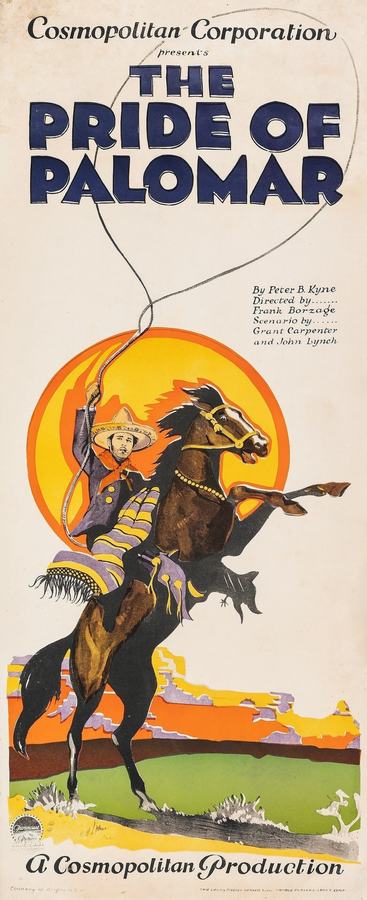
A definitive 5.8/10 rating for a film that redefined the boundaries of cult cinema. The Pride of Palomar remains a cornerstone of transgressive art.
The cinematic landscape of 1922 was a crucible of evolving visual languages, and within this ferment, The Pride of Palomar emerges as a remarkably sturdy, if ideologically complex, artifact. Directed with a keen eye for the sprawling vistas of the American West, the film transcends the mere trappings of a melodrama to become a poignant study of the 'returned soldier' trope. Unlike the more surrealist leanings of The Painted Soul, which focused on the internal fractures of the spirit, Palomar anchors its conflict in the tangible, dust-choked reality of property and bloodline.
The film opens with a sequence that feels almost supernatural: the return of a man from the dead. Percy Williams portrays Don Mike Farrell with a stoic grace that masks the profound trauma of the trenches. His arrival at the Farrell estate is not the triumphant fanfare one might expect, but a somber realization that the world moved on without him. The cinematography captures the hacienda not as a vibrant home, but as a crumbling monument to a fading era. This sense of architectural mourning is far more effective than the overt sentimentality found in The Waybacks.
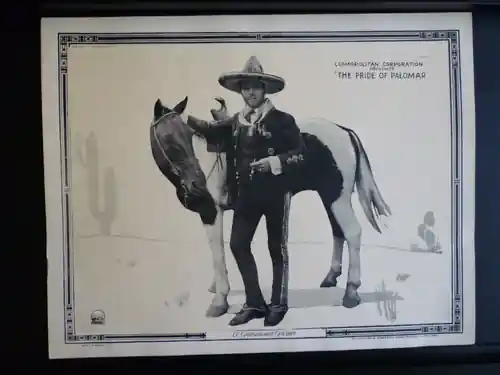
Farrell finds his father deceased and the land—the very soul of his identity—under the control of John Parker and the enigmatic Okada, played with a chilling, calculated precision by Warner Oland. Oland, long before his tenure as Charlie Chan, here embodies the 'Yellow Peril' anxieties that permeated Californian politics of the era. While modern viewers will rightfully find the racial subtext problematic, within the context of 1920s historiography, it provides a fascinating window into the xenophobic undercurrents of the American pastoral.
The use of natural light in The Pride of Palomar is nothing short of revolutionary for its time. The sun is not just a source of illumination but a character itself—harsh, unforgiving, and yet deeply romantic. The wide shots of the valley evoke a sense of scale that mimics the internal vastness of Farrell’s loss. Comparing this to the claustrophobic interiors of The Golden Chance, one appreciates the breathability of this production. The outdoor sequences possess a documentary-like quality, capturing a California that was rapidly disappearing under the weight of industrialization.
The editing rhythm, particularly during the high-stakes horse race that serves as the film’s climax, demonstrates a sophisticated understanding of tension. It lacks the frantic, experimental energy of Felix at the Fair, opting instead for a sustained, muscular build-up that honors the physical prowess of the animals and the desperation of the protagonist. This is a film that understands the weight of a moment, the gravity of a single hoofbeat hitting the parched earth.
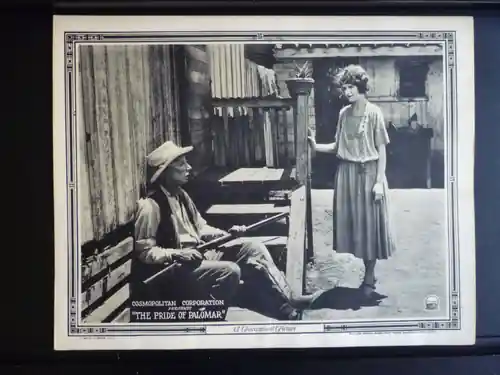
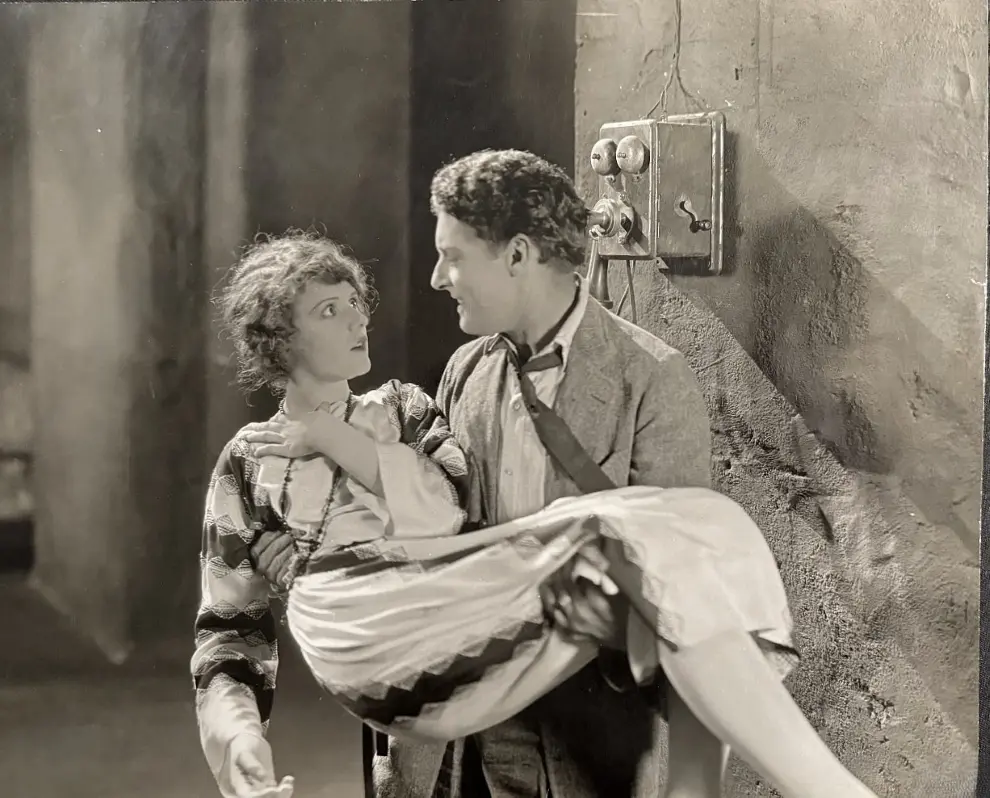
Marjorie Daw, as the daughter of the man who now holds the Farrell mortgage, provides the necessary emotional bridge. Her performance avoids the shrill histrionics common in silent cinema, offering instead a nuanced portrayal of a woman caught between filial loyalty and her burgeoning sense of justice. Her chemistry with Williams is understated, built on shared glances rather than grand gestures. This subtlety is a hallmark of the era’s better dramas, standing in stark contrast to the broader strokes of Wild Youth.
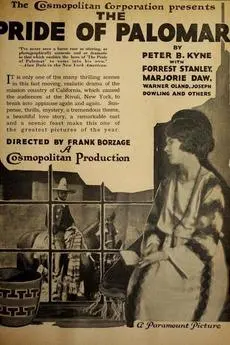
Warner Oland’s presence cannot be overstated. He brings a gravitas to the role of the antagonist that elevates the film above a simple 'good vs. evil' dichotomy. Even as the script demands he represent a threat to the Farrell legacy, Oland imbues the character with a quiet dignity and a sharp intellect. It is a performance that demands attention, much like the haunting presence in Memoria dell'altro, though grounded in a far more geopolitical reality.
At its core, The Pride of Palomar is a film about the transition of power. It depicts the shift from the caballeros and the old-world ranchos to the new-world financiers and developers. This theme of a world in flux is a recurring motif in post-war cinema, echoed in the more somber The End of the Road. Farrell represents the last vestige of a feudal honor code, attempting to survive in a world governed by contracts and capital. His struggle to raise the necessary funds to save the ranch is a microcosm of the larger economic anxieties of the early twenties.
The film also engages with the concept of the 'Great Reward'—not in the spiritual sense found in The Great Reward, but in the material reclamation of one’s birthright. The narrative suggests that the land is not merely an asset, but a living entity that requires a specific kind of stewardship—one that Farrell, by virtue of his bloodline, is uniquely qualified to provide. This romanticization of the 'man of the soil' is a powerful, if somewhat archaic, narrative engine.
The direction (often attributed to Frank Borzage in spirit if not always in the primary credit line, though the studio's hand is visible) emphasizes the interplay between the human figure and the environment. There is a specific shot—Farrell standing on a ridge overlooking the valley—that encapsulates the entire film's ethos. He is small against the landscape, yet his presence defines it. This visual hierarchy is a masterclass in silent storytelling, far more evocative than the didacticism found in The World Aflame.
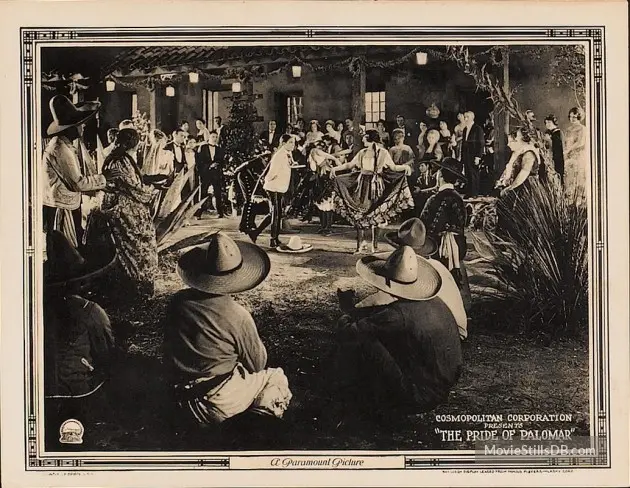
Furthermore, the production design deserves commendation. The hacienda is meticulously detailed, showcasing a blend of Spanish colonial architecture and the encroaching decay of neglect. The contrast between these dusty, shadowed halls and the bright, sterile offices of the city developers highlights the central conflict without needing a single intertitle. It is a visual shorthand that respects the intelligence of the audience, unlike the more heavy-handed approach of Fighting Mad.
While The Pride of Palomar is ostensibly a western or a romance, the shadow of the Great War looms large. Farrell’s status as a 'dead man' is more than just a plot device; it is a metaphor for the entire generation of men who returned from Europe to find their places filled and their contributions forgotten. In this regard, it shares a thematic DNA with Bei unseren Helden an der Somme, though it swaps the literal battlefield for the psychological one of civilian reintegration.
The film’s resolution, while satisfying the generic requirements of the era, leaves a lingering sense of melancholy. Yes, the ranch is saved, and the girl is won, but the innocence of the old Palomar is gone forever. The world has become a place of litigation and racial friction, a reality that cannot be undone by a single victory. This complexity prevents the film from being a mere relic and makes it a compelling piece of social history, akin to the observational depth of Les funérailles de Sir Wilfrid Laurier in its documentation of a passing era.
In the final analysis, The Pride of Palomar stands as a testament to the sophistication of the early 1920s studio system. It manages to balance high-stakes action with deep-seated cultural anxieties, all while maintaining a visual beauty that remains striking even a century later. It avoids the simplistic pitfalls of The Woman Game or the lighthearted escapism of Mikor a szölö érik, opting instead for a narrative that feels heavy with the weight of real-world consequences.
For the modern cinephile, the film offers a dual experience: a gripping drama of land and legacy, and a fascinating, if sometimes uncomfortable, look at the prejudices of the past. It is a work of significant lexical diversity in its visual language, speaking volumes through the tilt of a hat, the gallop of a horse, and the long, setting shadows over a California that no longer exists. To watch The Pride of Palomar is to witness the birth of the modern American mythos—a story of return, reclamation, and the enduring, sometimes painful, pride of place.
The film remains a vital touchstone for understanding the cinematic evolution of the 1920s, bridging the gap between the rough-and-tumble early silents and the polished, thematic complexity of the late silent era. Its restoration and continued study are essential for anyone seeking to understand the roots of the Californian identity in film.
IMDb 8.1
1921
Community
Log in to comment.