DbcultAccessing Vault...
Cult Review
Senior Film Conservator
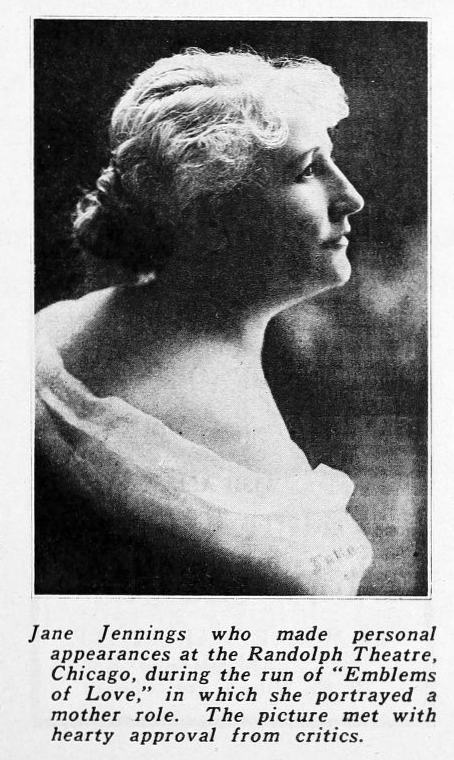
In the flickering chiaroscuro of the mid-1920s, cinema often oscillated between the decadent escapism of the jazz age and the stark, moralistic realism of a world still reeling from global upheaval. Emblems of Love sits uncomfortably, and perhaps intentionally, in the latter camp. It is a film that eschews the grand spectacles of the era for something far more terrifying: the quiet, rhythmic ticking of a clock counting down to an impoverished old age. While contemporaries might have sought the whimsical thrills of Felix Comes Back, this production plunges its audience into the visceral dread of the working class.
The narrative engine of this piece is fueled by the performance of Jane Jennings. As the mother, her face is a map of calculated worry. It is not the grand, operatic grief often found in silent melodramas like The Woman in the Case; rather, it is a persistent, low-level hum of anxiety. She represents a generation for whom the 'rainy day' isn't a metaphor, but a looming monsoon. The way she handles coins, the way she eyes the pantry—there is a mercenary quality to her survivalism that feels strikingly modern. She is a woman who has traded her present-tense happiness for a theoretical future security that may never feel like enough.
The central conflict arises not from an external antagonist, but from the divergent perceptions of reality within the household. Jane Thomas, playing the daughter, provides the perfect foil to Jennings' asceticism. To the mother, every penny saved is a brick in the wall against the poorhouse. To the daughter, every penny saved is a drop of blood squeezed from her own vitality. Thomas portrays her character with a jagged, embittered edge that suggests a soul starved of beauty. She views her parents' lifestyle not as noble sacrifice, but as a fetishization of poverty. This is not the romanticized struggle found in The Blue Lagoon; this is the gritty, unwashed reality of urban survival.
The tension between the two Janes—Jennings and Thomas—is palpable. It reflects a societal shift where the traditional Victorian values of thrift and endurance began to clash with the burgeoning consumerist desires of the younger generation. The daughter’s resentment is a precursor to the themes explored in The Forgotten Woman, where the domestic sphere becomes a battlefield of unmet expectations and economic claustrophobia. The father, played by Jack Drumier, acts as the silent engine of this misery, his aging frame a testament to the physical cost of their meager accumulation. He is a man who has been hollowed out by the very effort of staying upright.
The presence of Grace Cunard in the cast adds a layer of historical intrigue. Known largely for her work in serials, Cunard’s involvement here signifies a pivot toward more grounded, character-driven drama. Her performance, along with those of Charles Delaney and Bernard Siegel, rounds out a world that feels lived-in and weary. Siegel, in particular, brings a gravity to the screen that anchors the more melodramatic flourishes of the script. This isn't the lighthearted romp of Sweet Daddy or the comedic irony of The Tale of a Shirt. Every actor seems to understand they are participating in a funeral dirge for the American spirit.
One cannot help but compare the film's grim focus on financial ruin to The Income Tax Collector. While the latter approaches the subject of money with a satirical lens, Emblems of Love treats it as a terminal illness. The 'emblems' of the title are not tokens of romance, but the scars of frugality—the threadbare coats, the dimly lit rooms, the calloused hands. It is a film that asks: what is the cost of living if you are too afraid to live? It shares a thematic DNA with Has the World Gone Mad!, questioning the sanity of a culture obsessed with the bottom line at the expense of human connection.
Visually, the film utilizes the limitations of its budget to enhance its atmosphere. The interior sets are cramped, mirroring the psychological confinement of the characters. The lighting is often harsh, emphasizing the lines on the actors' faces—the physical manifestations of their 'penury.' There is a sequence involving the counting of savings that is shot with a reverence usually reserved for religious icons, a chilling commentary on the deification of the dollar. This visual austerity contrasts sharply with the more exotic locales of Barbary Sheep or the theatricality of The Masquerader.
The pacing is deliberate, almost agonizingly so. It forces the viewer to sit with the characters in their stagnation. Unlike the high-stakes drama of The Life Story of John Lee, where the threat is an executioner’s noose, the threat here is the slow, inevitable erosion of dignity. It is the horror of the mundane. The film’s refusal to provide easy catharsis or a sudden windfall for the family is its greatest strength. It remains committed to its bleak thesis until the final frame.
In the broader context of silent cinema, Emblems of Love serves as an important bridge to the social realism that would dominate the 1930s. It lacks the adventurous spirit of Damon and Pythias or the high-society intrigue of Love Insurance, but it possesses a raw honesty that those films often eschewed for the sake of entertainment. It is a precursor to the 'kitchen sink' dramas, focusing on the small, devastating failures of the home.
The film also touches upon the role of the state and the community in caring for the elderly—or the lack thereof. The mother’s fear of 'indigent old age' is a direct reflection of a pre-Social Security era where your only safety net was your own hoarding or the mercy of your children. The daughter’s bitterness, then, becomes a form of rebellion against being her parents' only insurance policy. This dynamic adds a layer of social commentary that makes the film feel remarkably prescient. It evokes the same sense of societal neglect found in The Policeman and the Baby, where the vulnerable are left to the whims of fate.
To watch Emblems of Love today is to witness a ghost story where the ghost is the future. It is a haunting, uncomfortable experience that refuses to offer the audience the comforts of a traditional hero's journey. The performances by Jennings and Thomas are nothing short of revelatory, capturing a specific kind of American neurosis that has never truly gone away. It stands alongside Pilgrims of the Night as a testament to the darker, more introspective corners of the silent era.
Ultimately, the film is a masterclass in atmospheric dread. It doesn't need monsters or villains; it only needs a bank book and a sense of impending time. For those interested in the evolution of domestic drama and the cinematic portrayal of the working class, Emblems of Love is an essential, if harrowing, watch. It reminds us that sometimes, the greatest struggle isn't for love or glory, but simply for the right to grow old without being discarded by a world that values only what you can produce.

IMDb —
1926
Community
Log in to comment.