DbcultAccessing Vault...
6/10
Senior Film Conservator
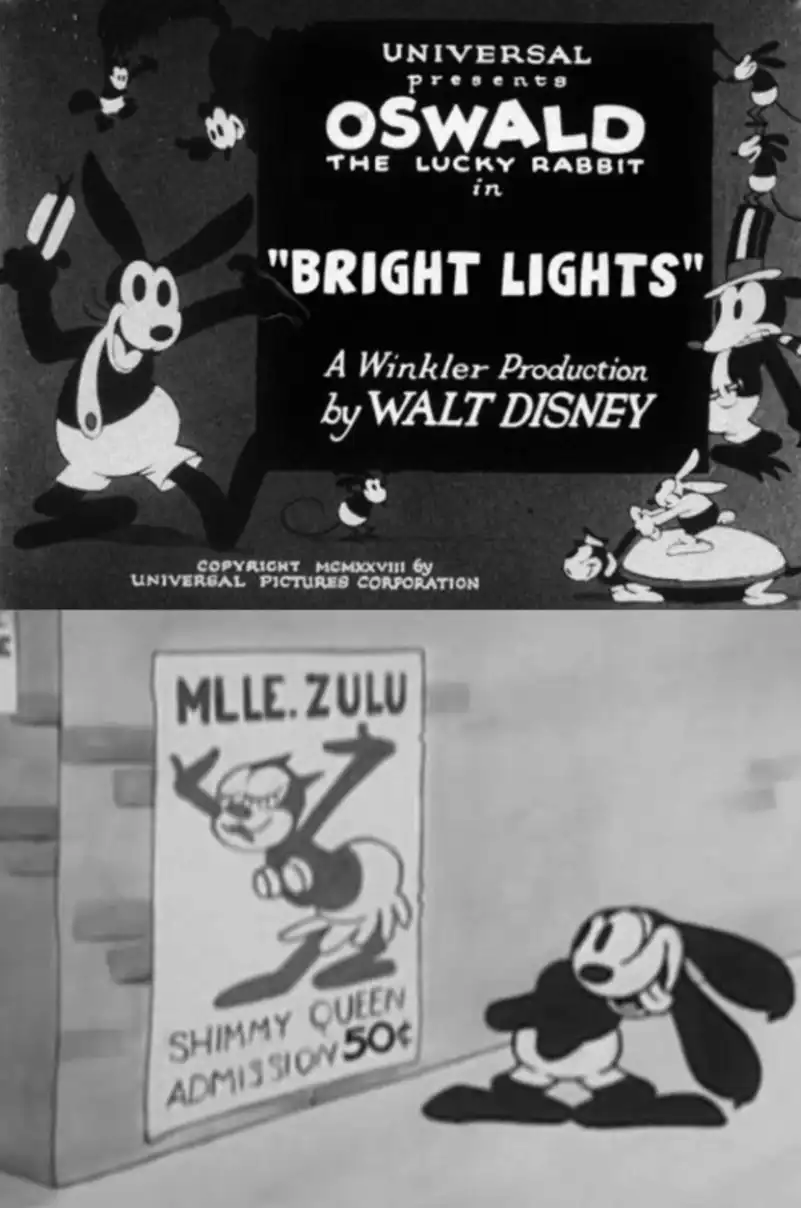
A definitive 6/10 rating for a film that redefined the boundaries of cult cinema. Bright Lights remains a cornerstone of transgressive art.
If you have five minutes and want to see where the Disney machine actually started—before it got all polished and corporate—you should watch Bright Lights. It’s worth it if you like seeing hand-drawn characters do things that feel slightly dangerous or mean-spirited. If you’re looking for a heartwarming story with a moral, you’re going to hate this. Oswald isn't a hero; he’s a desperate little guy who probably needs a restraining order.
The whole thing is basically one long chase sequence. Oswald wants to get into the theater to see 'Mademoiselle Zulu.' He doesn't have any money, so he tries to sneak in. That’s it. That’s the plot. It’s much more frantic than the stuff Disney was doing just a few years later. There’s a jittery, nervous energy to the lines. The backgrounds are mostly flat, gray washes, which makes Oswald stand out even more. He’s a black ink blot that never stops moving.
There is this one specific moment that I kept rewinding. Oswald tries to hide under a tall man’s trench coat to get past the bouncer. It’s a trope we’ve seen a million times, but the way his little rabbit feet keep losing sync with the man’s walking rhythm is genuinely funny. It’s a tiny piece of physical comedy that feels very human, despite the fact that it’s just a bunch of drawings from 1928. You can almost see the animators figuring out how weight works in a 2D space.
The bouncer is great, too. He’s just a massive wall of shadow. He doesn’t really have a face—just a jaw and a hat. Every time he catches Oswald, he doesn’t just push him; he launches him. There’s a great shot where Oswald gets kicked and he flies through the air in a perfect arc, landing in a pile of trash. The timing of the landing is just a fraction of a second faster than you expect, which makes the impact feel harder. It’s better slapstick than a lot of the live-action stuff from the same year, like A Crazy Night, which sometimes feels like it's waiting for the audience to catch up.
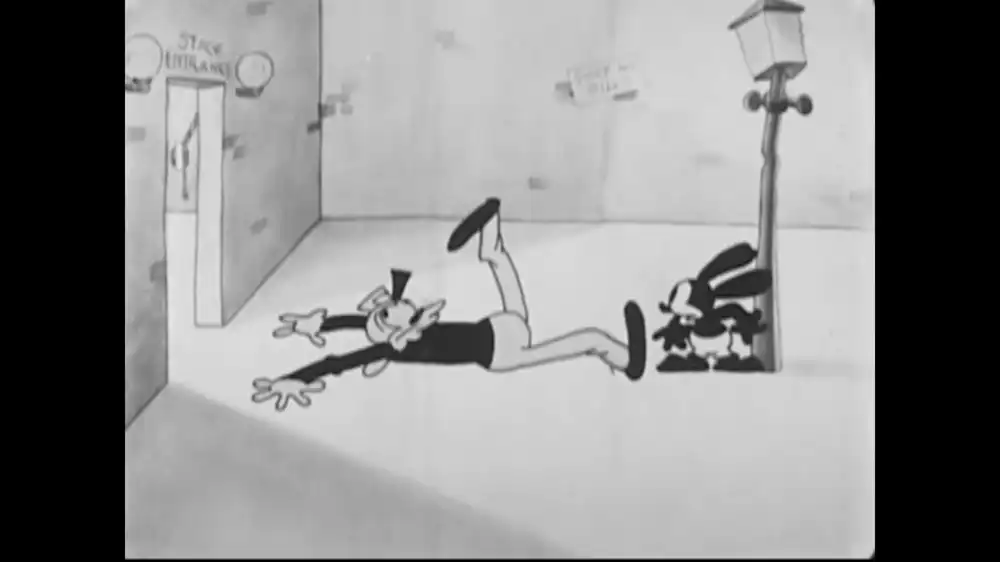
I have to talk about the dancer, Mademoiselle Zulu. The character design is... well, it's 1928. It’s a caricature that definitely wouldn’t fly today. But putting the racial tropes aside for a second, the way she moves is fascinatingly weird. She doesn’t really dance; she just vibrates. Her whole body shakes in this rhythmic, rubbery way. It’s hypnotic in a slightly unsettling way. The animators were clearly obsessed with the 'shimmy' and they went all in on the fluid, boneless motion of the era.
There’s a weird edit about halfway through. Oswald is trying to climb a wall, and then suddenly he’s inside a musical instrument. It feels like a scene might be missing, or maybe they just didn’t care about how he got from point A to point B. I like that, actually. It feels like a dream where you just accept the location changes without questioning them. It’s a lot more experimental than the rigid storytelling of something like Don't Weaken!, which tries a bit harder to make sense.
One thing I noticed is the crowd. The audience in the theater is just a sea of identical black circles with eyes. They all bounce in unison. It’s lazy animation, but it creates this eerie, hive-mind vibe that makes Oswald’s solo mission feel even more isolated. He’s the only thing in this world that has a distinct personality, and that personality is 'obsessed rabbit.'
The ending is incredibly abrupt. There’s no big 'happily ever after' or a lesson learned. Oswald gets what he wants, but in the most chaotic way possible, and then the screen just cuts to black. It feels like the cartoon just ran out of breath. It’s refreshing compared to modern movies that feel the need to wrap everything up in a neat little bow for twenty minutes. Here, you get the gag, you get the exit, and you’re done.
It’s not a masterpiece, but it’s a weird little window into a time when animation was still trying to find its feet. Oswald has a lot more edge than Mickey ever did. He’s a bit of a jerk, he’s impulsive, and he’s clearly driven by some very basic instincts. Watching him struggle against the bouncer feels like watching a real person deal with a bad day, just with more stretching limbs and fewer bones. If you’re interested in the history of the medium, or if you just want to see a rabbit get kicked into a trash can repeatedly, it’s a solid five minutes.
IMDb 6.4
1932
Community
Log in to comment.