DbcultAccessing Vault...
Cult Review
Senior Film Conservator
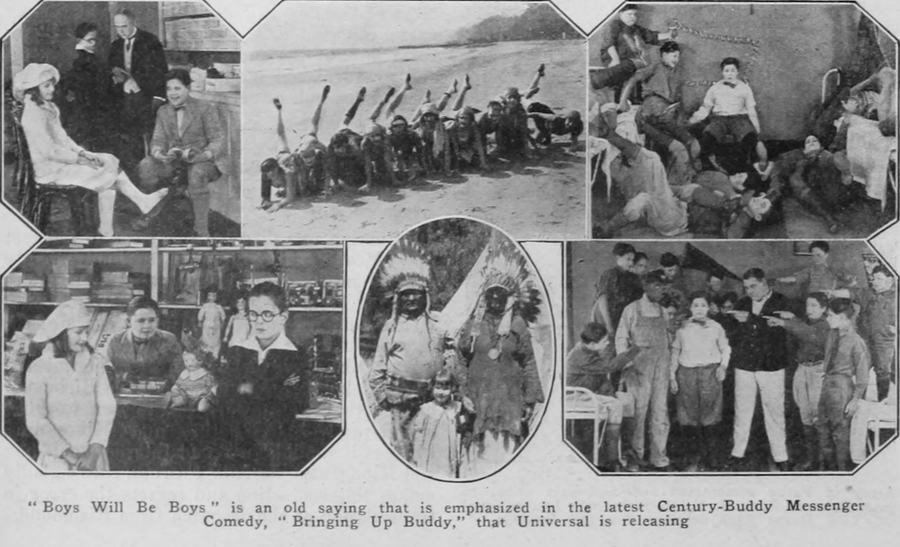
When the camera first frames the opulent drawing‑room of the newly‑rich Van Doren household, the viewer is immediately confronted with a tableau of gaudy chandeliers, ostentatious silk draperies, and a family whose wealth is as freshly minted as the smiles they wear. Dorothy Vernon, embodying the matriarch with a poise that borders on the theatrical, orchestrates every social gathering as if it were a performance, while Donald Hughes’ patriarch is a walking advertisement for the American Dream’s latest incarnation. Into this meticulously curated environment bursts Buddy, portrayed by the indefatigable Buddy Messinger, whose boundless energy and unapologetic curiosity serve as a foil to his parents’ calculated elegance. The film’s opening sequence, a masterclass in visual irony, juxtaposes Buddy’s reckless sprint across a marble hallway with the hushed whispers of aristocratic guests, establishing a tonal dichotomy that persists throughout.
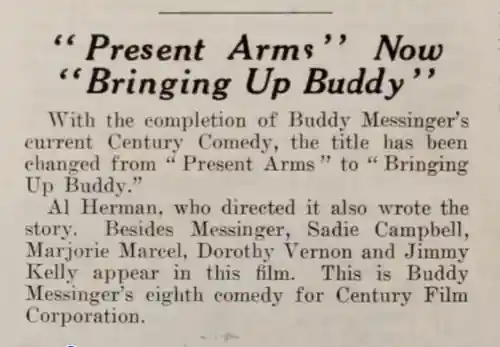
The Van Doren’s attempts to “civilize” Buddy are not merely comedic set‑pieces; they are an incisive commentary on the era’s class anxieties. Their decision to enroll him in a military school is portrayed with a blend of desperation and hubris, underscored by Marjorie Marcel’s subtle performance as the governess, whose whispered counsel hints at a deeper understanding of the boy’s innate nature. The screenplay, crafted by Albert Herman and Edward Ludwig, deftly balances slapstick with a satirical edge, allowing scenes such as Buddy’s ill‑fated attempt to commandeer the family’s vintage automobile to function both as laugh‑out‑loud moments and as a critique of the superficiality that pervades the Van Doren’s social aspirations.
The military academy, rendered in stark grayscale, stands in stark contrast to the Van Doren’s flamboyant world. Rudolf Friml Jr.’s portrayal of the stern headmaster is a study in rigidity, his clipped diction and iron‑clad discipline forming a foil to Buddy’s unbridled enthusiasm. Yet, the film never reduces the academy to a mere antagonist; instead, it presents the institution as a microcosm of societal order, a place where conformity is prized above individuality. Buddy’s escapades—most memorably the midnight raid on the mess hall’s prized turkey—are choreographed with a kinetic energy that feels almost balletic, each misstep a rebellion against the suffocating expectations imposed upon him.
After his expulsion, Buddy’s homecoming is filmed with a muted palette, emphasizing the emotional weight of his journey. The family’s reaction oscillates between embarrassment and reluctant admiration, a dynamic that culminates in a poignant scene where the patriarch, played by Donald Hughes, finally acknowledges the boy’s indomitable spirit. This moment, underscored by a subtle piano motif, transcends the film’s comedic veneer, offering a glimpse into a more nuanced exploration of parental expectations and the acceptance of one’s authentic self.
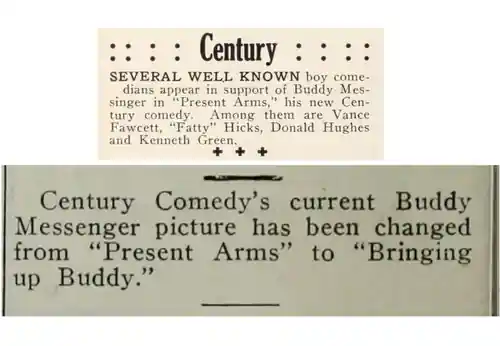
Buddy Messinger’s performance is a tour de force of physical comedy, his expressive face and elastic movements reminiscent of the silent era’s greatest clowns, yet infused with a modern sensibility that keeps the character relatable. Dorothy Vernon’s turn as the mother is layered; she oscillates between the veneer of high society and moments of genuine maternal concern, a duality that enriches the film’s emotional texture. Tommy Hicks, as the loyal family friend, provides a grounding presence, his understated humor offering a counterbalance to the more flamboyant characters.
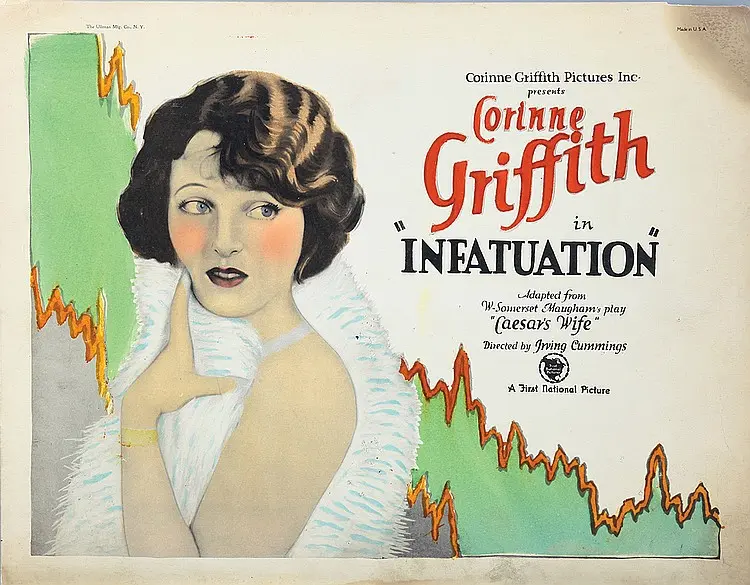
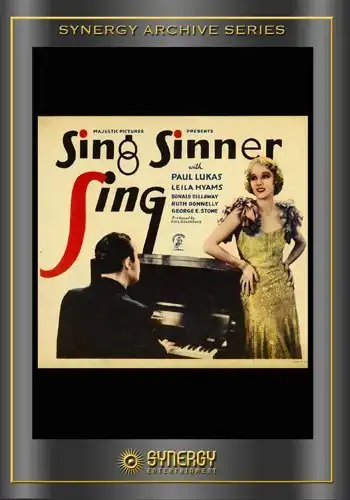
While The Shootin' Fool revels in the rugged individualism of the West, Bringing Up Buddy channels a similar rebellious spirit into the domestic sphere, highlighting how mischief can serve as a catalyst for societal critique. The film also shares thematic DNA with Little Orphant Annie, where youthful defiance confronts adult hypocrisy, albeit through a more whimsical lens. In contrast, The Pit delves into darker psychological terrain, underscoring the breadth of narrative possibilities within the same era.
Cinematographer Kenneth Green employs a fluid camera that follows Buddy’s every tumble, often employing low‑angle shots to amplify the boy’s larger‑than‑life presence. The use of chiaroscuro lighting in the academy scenes enhances the oppressive atmosphere, while the bright, saturated tones of the Van Doren’s mansion reflect their superficial glitter. The sound design, though restrained by the technological limits of the period, cleverly utilizes diegetic noises—clattering silverware, the thud of a misfired cannonball—to punctuate comedic beats. The film’s score, a jaunty orchestration, weaves leitmotifs that underscore Buddy’s mischievousness, providing an auditory thread that ties the narrative together.
The screenplay follows a classic three‑act structure, yet each act is infused with a rhythmic cadence that feels almost musical. The opening act establishes the familial tension, the middle act escalates the conflict through Buddy’s misadventures at the academy, and the final act resolves with a bittersweet reconciliation. The pacing never lags; even the quieter moments, such as the reflective dialogue between Buddy and the governess, are imbued with subtext that rewards attentive viewers. The film’s ability to sustain momentum while allowing characters to breathe is a testament to the writers’ craftsmanship.
Beyond its period charm, Bringing Up Buddy speaks to contemporary concerns about the pressures of social mobility and the cost of suppressing individuality. In an age where curated personas dominate social media, the Van Doren’s obsession with outward appearances feels eerily familiar. Buddy’s journey—embracing his quirks rather than conforming—offers a timeless lesson in authenticity. The film’s subtle advocacy for self‑acceptance resonates as strongly today as it did in the 1930s, positioning it as a work of enduring relevance.
Although not as widely cited as some of its contemporaries, Bringing Up Buddy has quietly influenced later comedies that explore the clash between youthful exuberance and rigid authority. Its narrative beats echo in later works such as Danger, Go Slow, where a protagonist’s reckless energy disrupts a staid environment. The film’s blend of slapstick and social satire paved the way for a sub‑genre that balances humor with critique, a lineage that can be traced through decades of cinematic history.
Bringing Up Buddy stands as a vibrant artifact of early 20th‑century cinema, marrying exuberant performance with incisive social commentary. Its visual palette, dynamic editing, and memorable characters coalesce into a cohesive whole that rewards repeated viewings. For scholars of film history, it offers a fertile case study in how comedy can function as a vehicle for cultural critique. For casual viewers, it provides a hearty dose of laughter and heart. In the pantheon of classic American comedies, it secures a modest yet significant niche, inviting audiences to celebrate the chaos that lies at the heart of genuine humanity.
IMDb —
1921
Community
Log in to comment.