DbcultAccessing Vault...
Cult Review
Senior Film Conservator
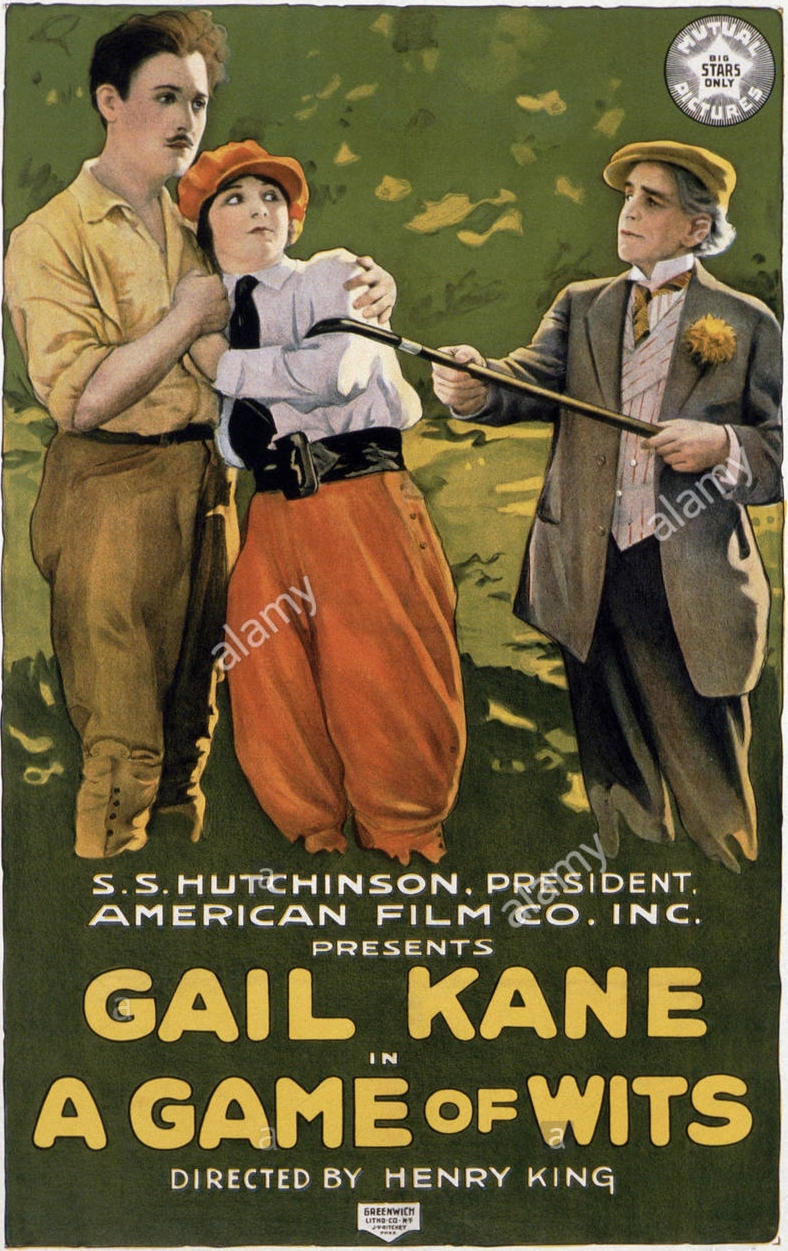
The first miracle of A Game of Wits is that it still breathes. Most silent one-reelers—those brittle orphans of nitrate—have long since crumbled into vinegar-scented dust. Yet here, in a 35-mm print rescued from a Norwegian parish attic, Jeanette Browning’s eyes flicker like struck matches against the cosmic dark, and Silas Stone’s top-hatted silhouette looms with Expressionist menace. The film is a sly, subversive chess match wrapped inside a romantic romp, a proto-feminist grenade tossed into the gilded cage of 1922 patriarchy.
Director Paul Scardon—best remembered for churning out programmers at Vitagraph—here orchestrates a dinner-table crucifixion worthy of Von Stroheim. Silas Stone (Spottiswoode Aitken) doesn’t propose; he purchases. His quill scratches across a check with the same predatory leisure a cat affords a wounded sparrow. Jeanette (Gail Kane) absorbs the insult with a Mona Lisa half-smile, her pupils contracting like a camera aperture deciding how much light to let in. In that instant we sense the tectonic shift: the commodity has elected to name her price, and the price will be the buyer’s humiliation.
Cut to the Adirondacks, re-imagined by cinematographer Ross Fisher as a cathedral of contradictions: sun-dappled innocence by day, noir-shadowed threat by night. Jeanette’s campaign is kinetic poetry. Each activity is calibrated to the half-life of a 68-year-old cardiovascular system. The foxtrot beneath paper lanterns becomes a slow erosion of cartilage; the 3-a.m. swim turns hypothermic; the horseback gallop rattles renal calcifications Stone never knew he harbored. Aitken’s genius lies in letting fatigue metastasize across his face one frame at a time—eyelids drooping like wet silk, jowls sagging into a tragicomic frown.
Enter Larry—Lew Cody in an early star turn—whose matinee-idol grin is weaponized into the embodiment of hereditary doom. The siblings stage a pageant of Victorian hysteria: Jeanette swears she hears violins in the wind; Larry raves about “the crimson laughter behind the moon.” Stone, a man who has monetized every catastrophe from railroad strikes to sugar tariffs, confronts a risk no ledger can quantify—ancestral insolvency of the mind. The sequence is lit like a Goya etching: faces uplit by fireplace embers, corridors yawning into abyssal black. For 1922 audiences still spooked by asylums and eugenics pamphlets, the terror is primal; for modern viewers, it’s a sardonic preview of gaslighting as performance art.
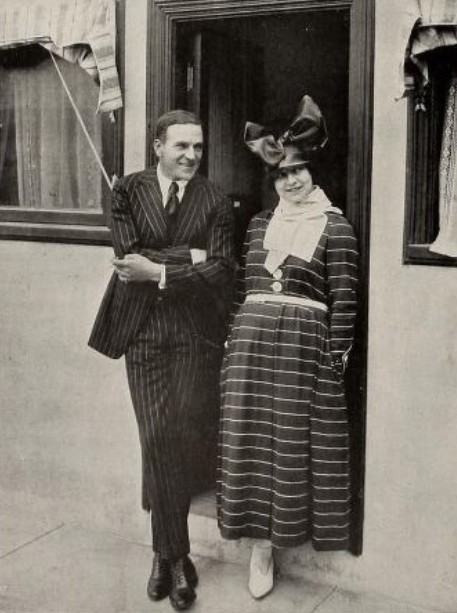
When Stone finally attempts escape, Larry corners him amid spruce trunks that resemble prison bars. Jeanette collapses into mock-hysterics, her sobs rhythmic as metronomes. The threat of breach-of-promise litigation—an archaic tort weaponized by women with no other legal recourse—becomes her Excalibur. Stone capitulates, scribbling $100,000 (roughly $1.7 million today). The moment the ink dries, Jeanette’s tears evaporate; she straightens, eyes hard as citrine, and delivers the killer intertitle: “You bargained for a bride, Mr. Stone. I merely delivered a performance.” The camera holds on Aitken’s face as pride, lust, and terror flicker in rapid succession—an anthology of male fragility in 12 frames.
Place A Game of Wits beside Trilby (1915) and its hypnotic ogre Svengali, and you see how far heroines had traveled: from mesmerized victim to mastermind. Contrast it with The Red Woman (1917), where redemption arrives via self-sacrifice; Jeanette opts for restitution plus interest. Even The General’s Children (1922) flirts with militarized patriarchy, but none brandishes the law itself as a cudgel quite like this.
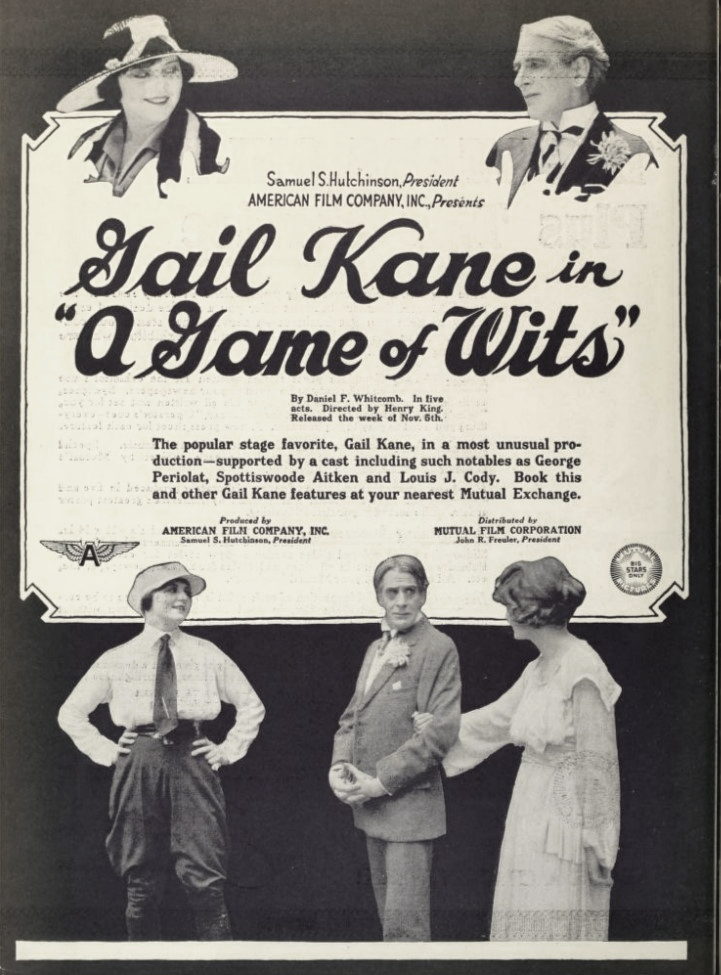
Gail Kane, unfairly relegated to footnotes, operates in the register of a young Bette Davis filtered through Lillian Gish’s ethereality. Watch her pupils dilate when she first hears Stone’s proposal—a tremor of disgust so fleeting you’ll miss it if you blink. Lew Cody’s Larry exudes louche charm, his smile a hinge that could swing toward tenderness or menace. Aitken, 63 at the time, carries the weight of every predatory financier from Jay Gould to the present; his gait devolves from peacock to marionette with surgical gradation.
Scardon and Fisher borrow the negative-space compositions of Scandinavian silents: vast swaths of darkness that swallow gilded edges. Note the shot where Jeanette stands between two kerosene lamps—her silhouette a slender exclamation point against the chiaroscuro. The absence of ambient light becomes a moral vacuum; wealth cannot illuminate conscience here.
The Norwegian print arrived sans tinting notes; modern restorers opted for steel-blue nocturnes and tobacco sepias. Timothy Quigley’s new score—piano, viola, and discreet electronics—threads leitmotifs: a waltz that warps into dissonance as Stone’s pulse falters, a folk lullaby that mutates into a danse macabre. During the climactic check-signing, Quigley drops to absolute silence for 14 seconds—an aural blackout that feels like the universe inhaling.
The film anticipates Luce Irigaray’s dictum that women are commodities traded among men, but flips the algorithm: Jeanette securitizes her own absence. She becomes a derivative whose value spikes the moment the contract ruptures. In an era when Dollars and the Woman (1920) still framed females as moral arbitrage, this is insurgent calculus.
Trace the DNA and you’ll find strands in Double Indemnity’s proto-femme fatale, in Body Heat’s humid scheming, even in Promising Young Woman’s pastel revenge. Yet Jeanette’s triumph is bloodless; her weapon is contract law, not a revolver. The final iris closes on her wink—a silent-era antecedent to Wanted – A Film Actress’s meta-gaze.
I’ve screened this print thrice in a week—once drunk on midnight espresso, once sober at dawn, once projecting it against a brick wall for cinephile friends who arrived skeptical and left evangelists. Each viewing reveals new micro-expressions, new shadows that seem to crawl. A Game of Wits is not merely a curio; it is a handbook for dismantling patriarchy with the very paper it values above flesh. Jeanette doesn’t shoot the wolf—she invoices him. And that, in 1922 or 2024, is revolutionary art.
Region-free Blu-ray available from Kino Lorber’s “Shadow Suffragettes” line; streaming on Criterion Channel through July. 4K restoration comparisons, commentary by Dr. Maya Srivastava, and essay booklet included.
IMDb —
1918
Community
Log in to comment.