DbcultAccessing Vault...
Cult Review
Senior Film Conservator
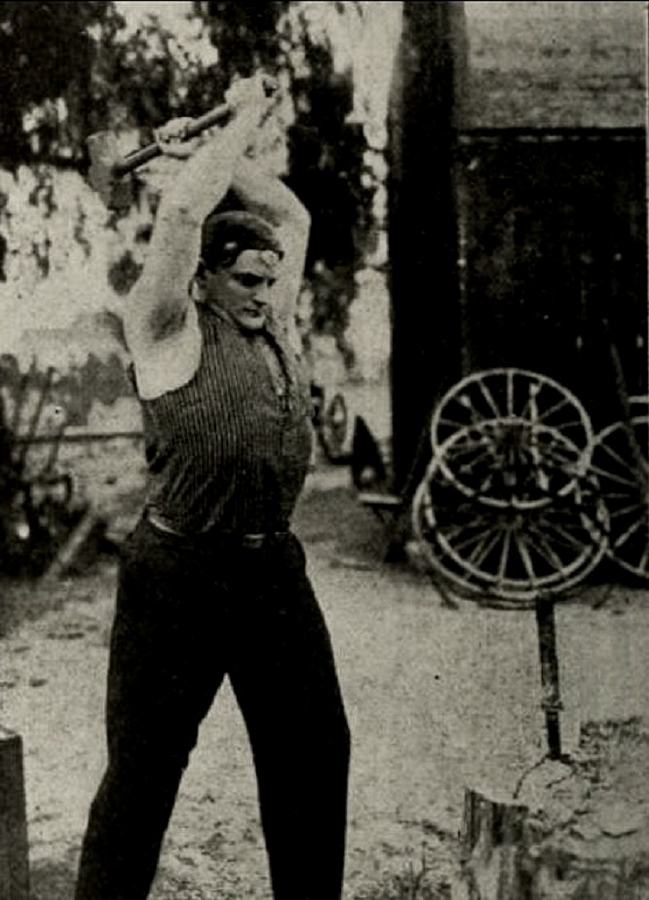
Stepping into the flickering glow of early cinema, one often encounters narratives that, despite their age and technical limitations, resonate with timeless human dilemmas. Her Shattered Idol, a compelling silent film featuring the remarkable Mae Marsh, is precisely such a creation. It’s a fascinating exploration of desire, societal expectation, and the often-disruptive power of raw, unvarnished attraction, all played out against the backdrop of a comparatively innocent, yet emotionally complex, era. The film, in its quiet intensity, delves into the internal turmoil of a young woman caught between two strikingly different archetypes of masculinity, offering a surprisingly nuanced commentary on what truly constitutes strength and desirability.
Our story introduces us to Mae Carter, a young woman of apparent privilege and refinement, living under the guardianship of the astute Colonel Aitken. She is, by all accounts, happily betrothed to Robert, the Colonel's nephew. Their relationship, as initially presented, embodies the quintessential Edwardian romance: polite, affectionate, and utterly conventional. Robert, while undoubtedly kind and devoted, possesses a certain genteel softness, a lack of overt ruggedness that, in the film’s subtle visual language, hints at a deeper thematic contrast to come. The initial scenes establish this comfortable equilibrium, a world of structured domesticity and predictable affection, where Mae’s playful teasing of Robert to secure her engagement ring feels like the most significant challenge to their bond. It’s a world where emotional ripples are gentle, and the path forward seems clear and unburdened by dramatic upheaval. Yet, beneath this placid surface, a nascent yearning for something more elemental, something less cultivated, lies dormant within Mae.
The catalyst for Mae’s profound shift arrives with a mundane, yet pivotal, incident. While out riding with Robert, Mae’s horse loses a shoe. What follows is a scene that, though simple in its execution, is loaded with symbolic weight. Mae, perhaps playfully, perhaps instinctively, calls upon Robert to exert his “masculine strength” to remove the troublesome shoe. Robert’s efforts, however well-intentioned, are futile. His repeated, unsuccessful attempts to wrench the shoe free underscore his physical inadequacy in this particular moment, highlighting a chink in the armor of his otherwise agreeable persona. The horse’s discomfort, and Robert’s inability to alleviate it, creates a subtle tension, a nascent disappointment in Mae. Their subsequent journey to a blacksmith’s shop is not merely a practical necessity; it is a pilgrimage to a new understanding of power. There, Mae encounters a man whose presence is a stark, almost primal contrast to Robert. This blacksmith, portrayed with an unrefined, powerful physicality, effortlessly jerks the shoe from the horse’s hoof with a single, decisive pull. This act, simple yet profound, ignites something within Mae. It is a moment of pure, unadulterated admiration, a recognition of a different kind of strength, one that is raw, effective, and undeniably compelling. The blacksmith, a figure of untamed vigor, becomes an immediate, electrifying focal point for Mae’s burgeoning desires, shattering her previous, more delicate, ideal of masculinity.
The blacksmith's potent display of strength reverberates deep within Mae’s psyche, manifesting in a vivid and strikingly anachronistic dream. This sequence is a stroke of narrative genius, allowing the film to explore Mae’s subconscious desires without explicit dialogue. She dreams of herself as a cave woman, a primal figure tethered to Robert, who appears as a less-than-heroic caveman. Their idyllic (if primitive) repast of shrubs is violently interrupted by a giant, aggressive caveman, intent on carrying Mae off. It is in this moment of dire peril that a rescuer appears, a figure of immense power and courage, who, in a twist that illuminates Mae’s burgeoning desires, proves to be none other than the blacksmith. This dream is not merely a flight of fancy; it is a profound revelation of Mae’s innermost yearnings, a subconscious longing for a protector, a primal force that she perceives Robert lacks. The dream sequence, reminiscent of other early films that used allegorical or fantastical elements to convey psychological states, like perhaps some of the more dramatic sequences in Satyavan Savitri, serves as a pivotal turning point. It legitimizes, within Mae's own mind, her sudden, overwhelming attraction to the blacksmith, transforming a fleeting admiration into a compelling, romantic ideal.
Awakening from this potent dream, Mae is compelled to action. Her visit to the blacksmith’s shop, ostensibly innocent, culminates in her taking a snapshot of him – a bold, almost provocative act that publicly signals her new infatuation. Robert’s distress at this development is palpable, a clear indication that the comfortable equilibrium of their engagement has been irrevocably disrupted. Mae, emboldened by her dream and the blacksmith's raw magnetism, makes the drastic decision to break off her engagement with Robert. This is a significant move for a woman in that era, a defiance of societal norms and familial expectations, underscored by her willingness to elope with the blacksmith. Her actions speak volumes about the power of this newfound attraction, suggesting a yearning for authenticity and passion that she believes Robert cannot provide. It’s a moment of radical self-assertion, albeit one driven by a potentially fleeting, idealized vision of her new love interest. One might draw parallels to the spirited independence seen in characters from films like The Heroine from Derna, though Mae's journey is rooted more in romantic awakening than political rebellion.
Enter Colonel Aitken, a character whose wisdom and experience provide a much-needed anchor in this tempestuous romantic drama. Having dealt with the complexities of human nature, particularly “feminine ways,” throughout his life, the Colonel understands that superficial charm or raw strength alone cannot sustain a relationship. He concocts a brilliant scheme: to invite Mae and the blacksmith to live at his house for a month, under the pretense of giving his consent to their marriage if their love endures this domestic trial. This ingenious plan is a masterclass in psychological manipulation, designed to expose the true nature of their compatibility beyond the initial spark of attraction. It’s a test of wills, of personalities, and of the practicalities of shared life. The Colonel’s foresight is a crucial element, preventing a potentially disastrous elopement and offering Mae a chance to truly understand the man she believes she loves. His method, while seemingly restrictive, is ultimately liberating, providing Mae with the necessary space and context for genuine self-discovery.
The Colonel’s plan unfolds with a predictable, yet dramatically satisfying, trajectory. Mae, still under the thrall of her idealized blacksmith, hosts an engagement party. However, it is during this social gathering, in the confines of a refined domestic setting, that the blacksmith's true character begins to emerge. His conduct, likely boorish and ill-suited to the polite society of the Colonel’s home, serves as a stark contrast to Robert’s gentle demeanor. The very qualities that initially attracted Mae—his raw, untamed nature—now appear as crude and unpolished. The blacksmith’s lack of social graces, his inability to navigate the nuances of sophisticated interaction, thoroughly disgusts Mae. Her “shattered idol” is not merely a metaphor; it is a literal collapse of her romanticized vision. The chasm between her fantasy and the reality of the blacksmith’s personality becomes painfully clear. This disillusionment is swift and decisive; she breaks off her engagement, realizing the impossibility of a match between them. This pivotal moment underscores the film’s commentary on the superficiality of physical attraction when unsupported by deeper compatibility. It’s a poignant lesson in discerning true character, a theme that resonates even in more modern narratives of romantic entanglement.
With her idol shattered and her romantic illusions dispelled, Mae returns to the familiar comfort and unwavering devotion of Robert. The Colonel, ever the pragmatist and orchestrator, swiftly arranges their marriage for the very next day, eager to restore order and ensure Mae's future stability. This return to the conventional path might seem like a retreat for Mae, a surrender to societal expectations after her brief flirtation with rebellion. However, the narrative suggests it’s also a rediscovery of genuine affection and a recognition of Robert’s steadfast virtues, which, though less flashy, prove more enduring. Just as the preparations for the wedding commence, the blacksmith, consumed by a jealous rage and unable to accept his rejection, re-enters the scene with explosive force. Learning of the impending marriage, he stages a dramatic and audacious abduction, stealing Mae from the very threshold of her wedding. This sudden, violent act plunges the narrative into a thrilling chase, transforming the romantic drama into a tense action sequence. The blacksmith’s desperate plan is to spirit Mae away to a neighboring town and marry her himself, a testament to his possessive nature and his inability to let go. This dramatic turn echoes the high-stakes pursuits found in films like Fantômas: The False Magistrate or the more rugged adventures of Robbery Under Arms, injecting a pulse-pounding urgency into the final act.
The abduction sequence is a whirlwind of “hair-breadth escapades,” a desperate flight from justice and convention. The blacksmith, driven by a primal, almost animalistic desire to possess Mae, navigates a series of perilous situations. This segment of the film would have relied heavily on visual dynamism and rapid editing, characteristic of early cinema’s attempts to convey excitement and suspense. The climax of this frantic chase arrives with a sudden, unexpected twist: the blacksmith and Mae find themselves trapped in treacherous quicksand. This moment of extreme vulnerability strips away all pretense; the blacksmith’s raw strength, once his defining attribute, is useless against the insidious grip of nature. It is here that Robert, Mae’s discarded fiancé, reappears, not as a rival, but as a rescuer. His intervention, pulling the blacksmith from the quicksand, is a profound act of compassion and heroism, redefining what true strength means. It’s not merely physical prowess, but moral fortitude and selflessness. This act of grace, saving his rival, demonstrates Robert’s superior character and ultimately solidifies his claim to Mae. It’s a powerful narrative device, ensuring that the film’s resolution is earned not through brute force, but through a demonstration of genuine goodness and unwavering love.
With the blacksmith rescued and his possessive grip broken, the path is finally clear for Mae and Robert. The wedding takes place, a culmination of Mae’s tumultuous journey of self-discovery and the reaffirmation of enduring, conventional love. The film’s conclusion, while perhaps appearing traditional, is imbued with a deeper meaning through Mae’s experiences. She has grappled with idealized visions, confronted harsh realities, and ultimately chosen a path informed by wisdom and genuine compatibility, rather than fleeting infatuation. The ending, therefore, feels less like a surrender and more like a conscious choice, a testament to the growth of her character. The narrative of Her Shattered Idol, though outwardly a romantic drama, subtly explores themes of societal expectations, the nature of attraction, and the journey from youthful fantasy to mature understanding. It’s a testament to the power of early filmmaking to convey complex emotional landscapes through visual storytelling, a characteristic shared by other contemplative silent films like Evangeline, which often explored moral and emotional dilemmas with similar depth.
The performances in Her Shattered Idol are central to its lasting appeal, particularly that of Mae Marsh. Marsh, known for her expressive, often delicate portrayals, brings a captivating vulnerability and nuanced emotionality to Mae Carter. Her ability to convey Mae's initial contentment, her sudden infatuation, her disillusionment, and her eventual mature understanding, all without the aid of spoken dialogue, is a testament to her skill. Through subtle gestures, facial expressions, and body language, she makes Mae’s internal struggle palpable, allowing the audience to empathize with her tumultuous journey. Robert Harron, as Robert, embodies the gentle, steadfast fiancé, his quiet dignity serving as a crucial foil to the blacksmith’s more flamboyant masculinity. Elmo Lincoln, as the blacksmith, delivers a performance built on raw physicality and intensity, perfectly capturing the primal allure that initially captivates Mae. His portrayal is less about nuance and more about embodying a forceful, almost elemental presence. Even Jennie Lee and Spottiswoode Aitken, as the supportive and wise Colonel Aitken, contribute significantly, providing the necessary gravitas and moral compass for the narrative. The direction, likely focused on clear visual storytelling and strong character blocking, ensures that the emotional beats of the story are consistently conveyed, a hallmark of effective silent film direction.
From a historical perspective, Her Shattered Idol offers a fascinating glimpse into the social dynamics and romantic ideals of its time. The film’s exploration of a woman's agency in choosing a partner, even when challenging societal norms, reflects nascent shifts in cultural attitudes, albeit within the constraints of the era. Ella Carter Woods’s writing crafts a narrative that, while ostensibly simple, delves into universal themes of love, disillusionment, and the search for compatibility. The film’s reliance on visual metaphor, such as the horse’s shoe incident or the dream sequence, demonstrates the creative ingenuity of silent era filmmakers in conveying complex ideas without dialogue. Its narrative structure, moving from domestic tranquility to dramatic abduction and ultimately to a more settled resolution, showcases a sophisticated understanding of dramatic pacing. While perhaps not as overtly spectacular as some of its contemporaries like Der Tunnel with its grand scale, or as intensely focused on social critique as films like Dope, Her Shattered Idol carves its own niche as a deeply human story. It remains a compelling piece of cinematic history, inviting modern viewers to appreciate the artistry and emotional depth that defined the silent film era. It reminds us that the fundamental questions of the heart, the eternal dance between attraction and compatibility, have been explored on screen for over a century, captivating audiences then as they do now. The film stands as a testament to the enduring power of storytelling, proving that even without words, the human heart's complexities can be eloquently rendered.
IMDb —
1935
Community
Log in to comment.