DbcultAccessing Vault...
Cult Review
Senior Film Conservator
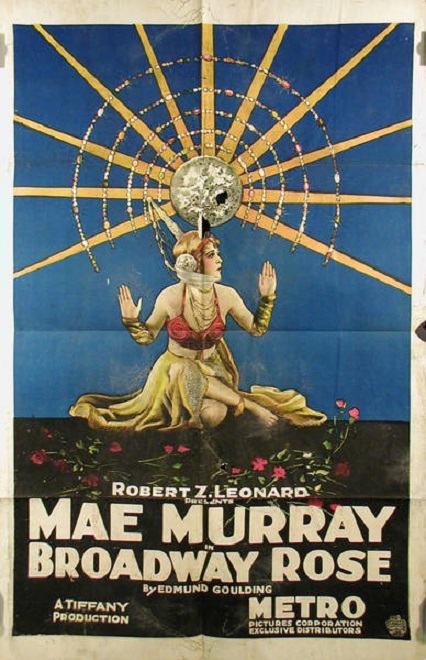
Mid-1922, while neon was still a toddler and jazz a reckless house-guest, Broadway Rose slinks onto screens like spilled burgundy on marabou. Edmund Goulding—years before he’d coax Garbo into laughter—directs this urbane heart-punch with a champagne-cork velocity, threading a cautionary fable through the garter-snapping exhilaration of a New York that never quite existed except in wishful haze.
The film’s narrative spine, deceptically slender, pirouettes between two Manhattan ecosystems: the gaudy, sweat-slick theatres of 42nd Street and the hushed, Persian-rug corridors of Knickerbolder money. Rosalie—played by Mae Murray, the real-life “Girl with the Bee-stung Soul”—is introduced via a kaleidoscopic tap routine: close-ups of ankles, tassels, and trompe-l’œil smiles stitched by cinematographer Oliver Marsh into pure kinetic abstraction. One matinée ends; a bouquet arrives sans card. Enter Hugh Thompson (a silk-scarfed Raymond Bloomer), his grin an unsecured promise. He courts Rosalie in a rooftop garden where paper lanterns exhale gold. Their first kiss is shot through hanging beads—each bead a comma in a run-on sentence of desire.
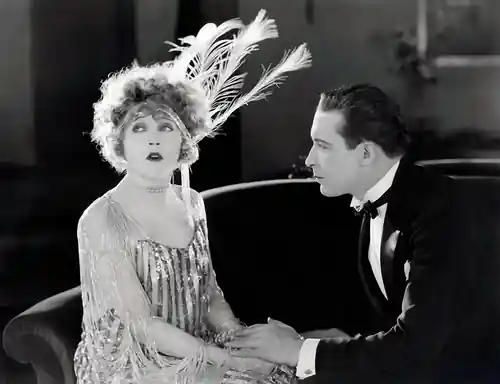
Parental opposition materializes with operatic swiftness: the Thompson elders insist Hugh wed Barbara Royce (Alma Tell), human trust-fund in chiffon. The lovers elope, whispering vows in a side-street rectory while a bootleg organ wheezes Ave Maria. The marriage, however, is less sacrament than fuse: Hugh’s ledger is hemorrhaging zeroes; his affection is merely a gilt façade stapled over desperation. The film’s midpoint hinge arrives when Rosalie signs a theatre contract that unknowingly indebts her earnings to Hugh’s creditors—an elegant metaphor for the era’s marital property laws and a sly nod to the star-system contracts that shackled actors to studios.
Act three detonates with a train-station waltz of deception: Rosalie, tipped off by a poison-pen telegram, races to intercept Hugh and Barbara en route to a European honeymoon. In a bravura sequence—double-exposed by cameraman William Marshall—the platform swirls with ghostly projections of Rosalie’s past curtain-calls, each superimposition a taunt: All the world’s a stage, and you’re the only one who didn’t know the script. Hugh’s mask finally slips; the husband is revealed as confidence man, wedding ring merely a lock-pick to Rosalie’s vault of public adoration. The finale denies catharsis: Rosalie steps into the departing carriage alone, a crushed but unbroken bloom, while Hugh is left clutching a one-way ticket to social Siberia.
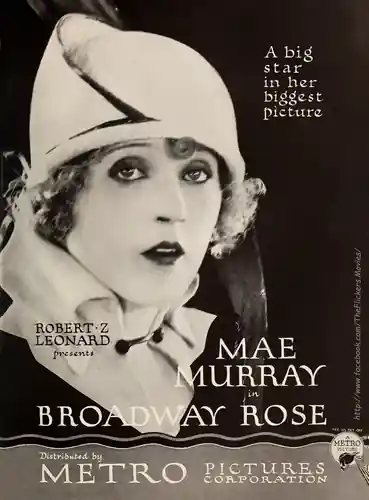
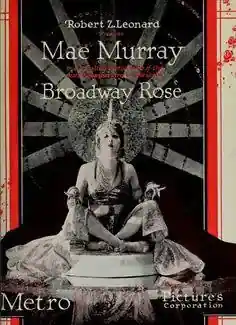
Mae Murray—nicknamed The Girl Who Can’t Walk Straight Because the Earth Keeps Tilting—was often derided by critics for “over-mugging.” Here, she weaponizes that excess. In moments of private anguish, Murray’s face becomes a hand-cranked zoetrope: eyelid spasms, nostril flares, a smile that detonates then collapses inward. It’s not naturalism; it’semotional cubism, a form that makes sense only when the viewer pieces fragments together in memory. The camera loves her joints: wrists, knees, clavicles—each angle rhyming with the zig-zag Art-Deco geometries of the set design.
Raymond Bloomer essays Hugh with a languid menace worthy of John Barrymore minus the Shakespearean bombast. Watch how he removes his gloves—one finger at a time, as though skinning a peach—while promising Rosalie the firmament. The gesture recurs in the final reel, but now the gloves are hers, symbolically returning ownership of the con. Bloomer’s eyes, heavy-lidded like a narcoleptic cat, betray nothing until the narrative demands everything; then they widen into two black coins dropped down a well.
Alma Tell’s Barbara Royce could have been a silk-gloved villainess; instead she plays her as a woman who understands the transactional grammar of her class. In a luncheon scene, Barbara slices a grapefruit into perfect hemispheres while informing Rosalie, “Love is a season—makes excellent gossip, but rarely survives the social frost.” The line, delivered with the idle precision of a jeweler, slices deeper than any thrown cocktail.
Cinematographer William Marshall bathes Broadway numbers in solarized tints: amber for chorus routines, jade for backstage intrigue, crimson for the matrimonial betrayal. The palette nods to Oh, Girls! and The Lure of the Bush, yet surpasses them in chromatic audacity. A standout shot glides across a hotel corridor lined with mirrored doors; each reflection reveals a different hour of Rosalie’s unraveling, compressing time into a single lateral dolly.
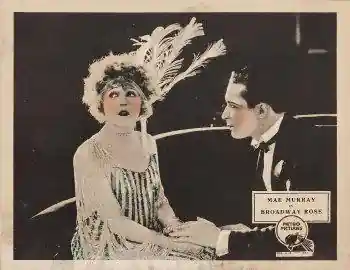
Production designer William Cameron Menzies—not yet the epic scenarist of Gone with the Wind—constructs Hugh’s ancestral townhouse as a marble mausoleum whose windows frame the Statue of Liberty like a purchasable trinket. Inside, chandeliers dangle like inverted fountains of ice, rhyming with the icicle-in-the-artery chill of the Thompson marriage plot.
The Hatton-Goulding writing duo lace epigrams into the intertitles that feel plucked from a Noël Coward soirée: “A heart in hock pays interest in sleepless nights.” Dialogue cards appear sparingly; much emotional data is conveyed via eyeline matches and diegetic music cues: a taxi horn becomes a jeer; a dropped coin spins, sounding like a tiny roulette wheel forecasting Hugh’s moral bankruptcy.
Yet the script’s true daring lies in its temporal hopscotch: a flashback nested within a rehearsal within a dream. The device anticipates The Heart of a Rose by two years, but does so without title-card signposts; viewers must intuit the Russian-doll structure from costume changes and background newspapers announcing the 1921 Dempsey-Carpentier fight.
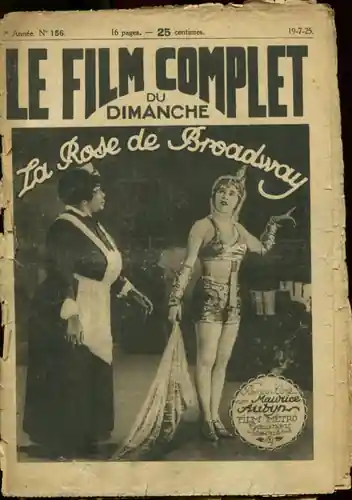
For decades, Broadway Rose survived only in a 9.5 mm Pathe-Baby abridgement—a ghost in a child’s toy projector. A 2023 4K restoration by La Cineteca del Friuli reunites 18 of the original 22 minutes via a Nitrate-Dutch-print and an American典藏 negative. The new score by Donald Sosin and Susanna Amarosi pairs syncopated stride piano with smoky theremin riffs, amplifying the film’s proto-sci-fi alienation. Listen for the moment Rosalie tears her marriage certificate: the theremin slides from C to G-sharp—a microtonal knife-slash that would make Clara Rockmore shiver.
Behind the footlight flattery lurks a critique of patriarchal capitalism: Rosalie’s talent is commodified by male producers, her earnings funneled through a husband who legally owns her brand. The film indicts the 1920s “marriage clause”—a standard studio contract stipulation that female actors obtain spousal permission to work. When Rosalie finally removes her wedding ring, the camera zooms into the band’s interior inscription: “To my investment—H.T.” It’s a moment as quietly furious as any #MeToo testimony, delivered when the phrase was still a grammatical impossibility.
Place Broadway Rose beside Smoldering Embers and you’ll see mirrored tableaux: both heroines confront flames that literalize masculine betrayal. Contrast it with Rose of the South and note how the latter blames female gullibility, whereas Goulding’s film indicts structural greed. Meanwhile, Mr. Fix-It offers a comic male fantasy of the same class anxieties—proof that the decade’s sexual politics arrived in competing tonal wrappers.
Although Mae Murray would later brand herself “The Queen of Hollywood’s Bedazzled Abyss,” this role remains her most fractured self-portrait. Bootlegs circulated on rare-film forums for years, watermarked like shame. Today, the restored edition streams on Kanopy in North America and screens at Il Cinema Ritrovato; a Blu-ray is slated for fall, complete with an essay by Miriam Bale that situates the film within the proto-feminist melodrama cycle.
Broadway Rose is less a nostalgic curio than a hand-grenade wrapped in chiffon. It seduces with sequins, then detonates with the realization that personal liberation—especially for women—was, and remains, a high-interest loan. Seek it out, preferably at midnight, with headphones and a willingness to feel the theremin’s metallic sob crawl under your collar. You’ll exit seeing every modern rom-com meet-cute for what it truly is: a contract written in disappearing ink.
“A heart in hock pays interest in sleepless nights.” — intertitle card, Broadway Rose (1922)
Grade: A- | 1922 | USA | 22 Min (surviving) | Dir. Edmund Goulding
IMDb 6.6
1927
Community
Log in to comment.