DbcultAccessing Vault...
Cult Review
Senior Film Conservator
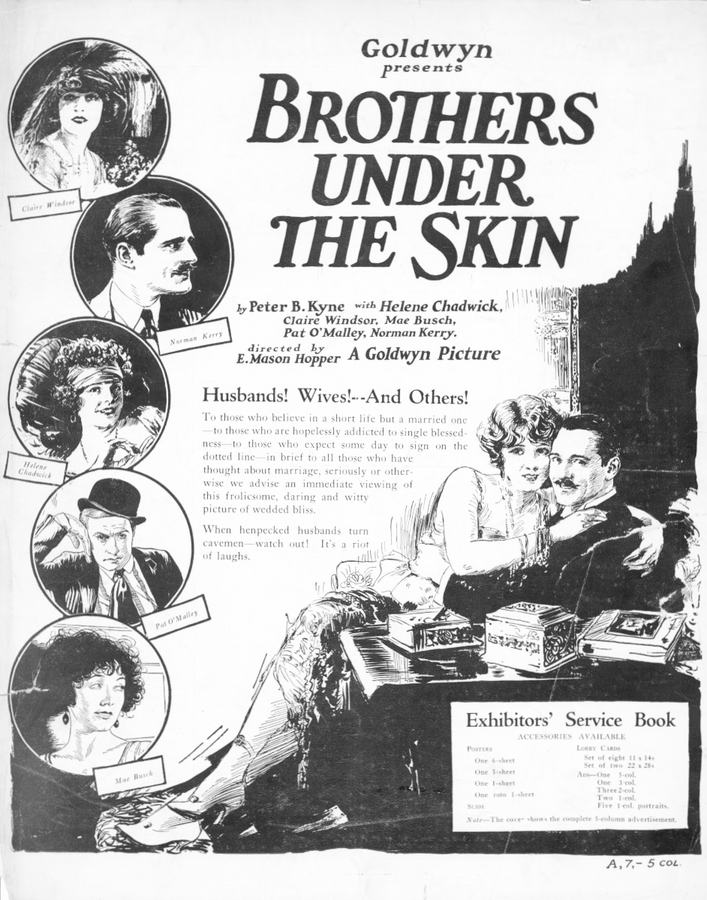
The silent era, a period often romanticized for its grand gestures and melodramatic narratives, frequently served as a profound mirror to the societal anxieties and burgeoning complexities of its time. Among these cinematic reflections, ‘Brothers Under the Skin’ emerges as a compelling, albeit less frequently discussed, example of how early cinema tackled the intricate, often suffocating, dynamics of marital life. Released in 1923, this picture, penned by the insightful Peter B. Kyne, delves into a theme that remains remarkably resonant even a century later: the silent struggle for agency within a marriage, particularly when one partner’s spendthrift tendencies and emotional manipulation threaten to dismantle the other’s very sense of self. It’s a narrative that eschews the bombast of epic tales for the quieter, yet no less devastating, drama unfolding behind closed doors.
At the heart of this poignant exploration are two men, ostensibly separated by corporate hierarchy but intrinsically linked by their shared domestic plights. Newton Craddock, portrayed with a nuanced blend of timidity and simmering resentment by William Haines, is a shipping clerk whose daily grind is compounded by the incessant demands of his wife. She is a woman whose jealousy curdles every interaction and whose lavish expenditures consistently outpace his modest earnings, leaving him perpetually adrift in a sea of financial and emotional debt. On the other side of the spectrum is Thomas Kirkland, the company’s Vice President, brought to life by the dependable Pat O’Malley. Kirkland, despite his elevated status and presumably greater financial resources, finds himself ensnared in an almost identical marital trap. His wife, a character whose extravagance is as boundless as her possessiveness, drains his wealth and spirit with equal fervor. This parallel construction of their predicaments immediately establishes the film's central thesis: that the pressures of domestic tyranny are not exclusive to any social stratum, but rather a universal human experience that transcends economic standing.
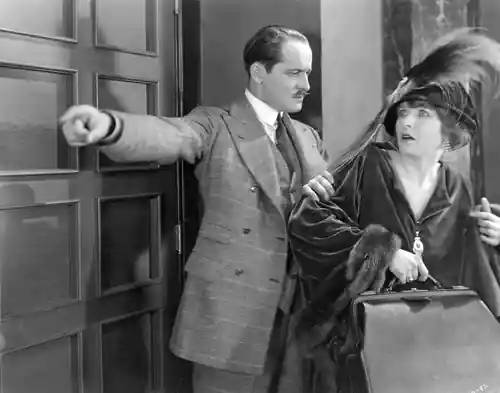
The narrative’s pivotal moment, an encounter laden with profound psychological implications, occurs when Craddock is dispatched to Kirkland’s stately home to deliver an urgent letter. It is here, amidst the trappings of affluence, that Newton becomes an unwitting voyeur to a raw, unvarnished marital confrontation. He witnesses Kirkland, pushed to the brink of his endurance, finally challenging his wife's insatiable materialism and her emotional stranglehold. This scene, devoid of dialogue but rich in visual intensity and the expressive power of silent film acting, is a masterclass in non-verbal storytelling. The silent screams, the exasperated gestures, the palpable tension – all conspire to create a moment of profound revelation for Newton. For a man who has long suffered in silence, this glimpse of another’s rebellion acts as a potent catalyst, a mirror reflecting his own unarticulated desires for liberation. It is a moment of epiphanic awakening, suggesting that courage, much like fear, can be contagious.
The film then shifts its focus to Craddock's internal turmoil. Inspired by Kirkland’s audacious stand, Newton grapples with the daunting prospect of confronting his own wife. The question that hangs heavy in the air, and indeed forms the dramatic core of the latter half of the film, is whether this newfound conviction will translate into decisive action. Will he, emboldened by another man’s defiance, find the gumption to challenge the established order of his own home, or will the ingrained habits of submission and the fear of escalating conflict ultimately render him inert? This psychological tension is brilliantly sustained, allowing William Haines to showcase his considerable acting prowess, conveying a character teetering on the precipice of a life-altering decision through subtle facial expressions and body language. His performance is a testament to the power of silent acting, capable of communicating complex emotional landscapes without uttering a single word.
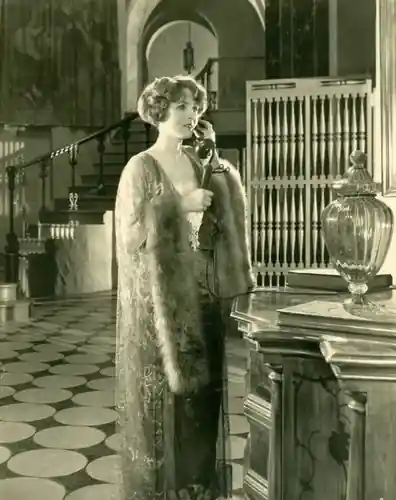
The portrayal of the wives in ‘Brothers Under the Skin’ is equally significant. Mae Busch, Helene Chadwick, and Claire Windsor, while each bringing their distinct screen presence, collectively embody a societal critique of the era’s burgeoning consumerism and the restrictive gender roles that often entrapped both men and women. Their characters are not merely one-dimensional antagonists but rather products of a society that perhaps encouraged women’s dependence on their husbands’ incomes while simultaneously offering limited avenues for personal fulfillment outside the domestic sphere. Their jealousy and materialism, while destructive, can also be viewed through the lens of their own societal constraints, adding layers of complexity to the narrative. The film, therefore, transcends a simple 'battle of the sexes' to become a more nuanced commentary on the pressures exerted by an evolving social landscape.
In terms of cinematic craft, ‘Brothers Under the Skin’ employs the prevailing techniques of the silent era with considerable skill. The use of intertitles is judicious, serving to advance the plot and reveal character motivations without over-explaining. The cinematography, while perhaps not groundbreaking for its time, effectively captures the contrasting environments of the cramped Craddock residence and the more expansive, yet equally stifling, Kirkland household. The director (though not explicitly named in the provided information, the film’s execution speaks volumes) demonstrates a keen understanding of visual storytelling, relying on close-ups to emphasize emotional states and wider shots to establish the social context. The pacing is deliberate, allowing the psychological drama to unfold organically, drawing the audience deeper into the characters’ predicaments.

Comparing ‘Brothers Under the Skin’ to other films of its period or those exploring similar themes offers valuable context. One might draw parallels to films like ‘The Coquette’, which also delves into the complexities of female agency and societal expectations, albeit from a different angle of romantic entanglement. While ‘The Coquette’ focuses on a woman navigating her choices in love and marriage, ‘Brothers Under the Skin’ places the male perspective of marital subjugation front and center. Similarly, the thematic undercurrents of introspection and emotional strife could find a distant echo in a film like ‘The Mirror’, which, depending on its specific narrative, might explore the self-reflection sparked by external events. However, the direct focus on financial and emotional control within marriage, and the subsequent ripple effect of one man's rebellion inspiring another, gives ‘Brothers Under the Skin’ a unique flavor.
The film’s exploration of male frustration and the societal pressures on men to provide, even at the cost of their personal happiness, is particularly noteworthy. In an era often characterized by the flapper and burgeoning female independence, ‘Brothers Under the Skin’ offers a counter-narrative, highlighting the constraints and emotional burdens placed upon men. This perspective, often overlooked in broader discussions of the Roaring Twenties, provides a crucial insight into the period’s multifaceted social dynamics. The silent film medium, with its reliance on exaggerated expressions and physical comedy or drama, was uniquely suited to convey these internal struggles, allowing the audience to project their own understanding onto the characters’ unspoken emotions. William Haines, in particular, masters this art, making Newton Craddock’s quiet desperation and eventual flicker of hope profoundly relatable.
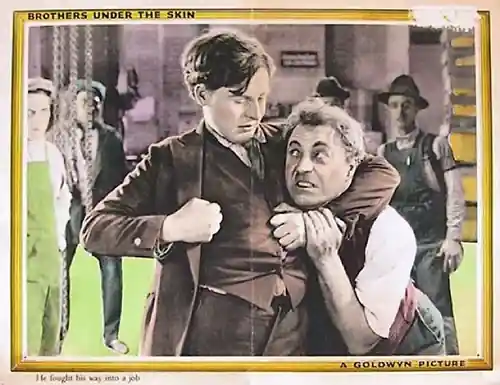
The film also subtly critiques the very notion of 'success' and 'happiness' in the early 20th century. Both Craddock and Kirkland, despite their different professional standings, are equally unhappy in their domestic lives. This suggests that material wealth alone is insufficient to guarantee contentment, especially when personal autonomy is compromised within the most intimate of relationships. The 'skin' in the title, therefore, refers not just to their shared gender, but to the shared vulnerability and the common human experience of being trapped by circumstances, whether self-imposed or societally enforced. It’s a powerful metaphor for the universal struggles that bind individuals, irrespective of their external fortunes.
The enduring legacy of ‘Brothers Under the Skin’ lies not in its groundbreaking technical innovation, but in its unflinching, honest portrayal of a timeless human dilemma. It serves as a potent reminder that the silent era was far from simplistic; it was a period of rich, complex storytelling that dared to probe the depths of human psychology and social structures. The film's ability to evoke empathy for its characters, particularly Craddock, and to place the audience squarely within his internal struggle, speaks volumes about its narrative strength and the performances that underpin it. For those interested in the evolution of cinematic storytelling, the social commentary embedded within early films, and the nuanced performances of silent screen stars, ‘Brothers Under the Skin’ offers a valuable and thought-provoking experience.
The film’s climax, without revealing specific plot points, hinges on Craddock’s ultimate decision. Does he succumb to fear and maintain the status quo, or does he seize the opportunity for self-emancipation, inspired by Kirkland’s example? This ambiguity, or the resolution provided, would have resonated deeply with contemporary audiences grappling with similar issues in their own lives. The film acts as a kind of social barometer, reflecting the anxieties of men caught between traditional expectations of masculinity and the evolving realities of modern marriage. It’s a testament to the power of observation, demonstrating how a single, unexpected moment can ignite a revolution within an individual’s soul. The quiet courage required to reclaim one's life, even from a loved one, is the film's most profound message.
In an era where films like ‘Wolves of the Street’ might have focused on external, grander struggles of crime and societal corruption, ‘Brothers Under the Skin’ grounds its drama in the intensely personal, the silent battles waged within the confines of a home. This shift in focus, from the public sphere to the private, allows for a more intimate and perhaps more universally relatable narrative. It reminds us that sometimes the greatest acts of bravery occur not on battlefields or in boardrooms, but in the quiet resolve to stand up for oneself against the very people one is supposed to cherish. The film, therefore, remains a compelling artifact, not just of silent cinema, but of a timeless human predicament, beautifully articulated through the expressive power of its cast and narrative.
IMDb 6
1926
Community
Log in to comment.