DbcultAccessing Vault...
5.4/10
Senior Film Conservator
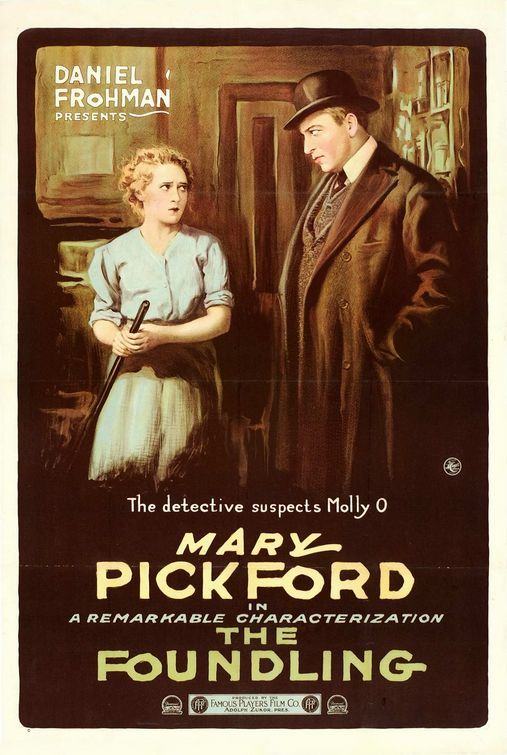
A definitive 5.4/10 rating for a film that redefined the boundaries of cult cinema. The Foundling remains a cornerstone of transgressive art.
The year 1916 remains a watershed epoch in the maturation of the cinematic medium, a period when the primitive visual grammar of the nickelodeon era began to coalesce into the sophisticated narrative structures we recognize today. At the vanguard of this evolution stood Mary Pickford, an actress whose luminosity was matched only by her burgeoning prowess as a producer and creative force. In The Foundling, we witness a confluence of talent that defines the silent era's emotional zenith. Directed by John B. O'Brien and penned by the incomparable Frances Marion, the film serves as a quintessential vessel for Pickford’s 'Little Mary' persona—a character study that balances ethereal vulnerability with an indomitable will to survive.
One cannot dissect the efficacy of this film without acknowledging the narrative scaffolding provided by Frances Marion. Marion, who would go on to become one of the most influential screenwriters in Hollywood history, imbues the story with a rhythmic cadence that transcends the limitations of intertitles. The script avoids the mawkish sentimentality that plagued many of its contemporaries, opting instead for a gritty realism in its depiction of Molly’s life as a domestic laborer. This grounded approach provides a stark contrast to the romanticized world of David King’s art studio, creating a thematic friction between the idealized aesthetics of the upper class and the tactile suffering of the dispossessed.
The structural integrity of the plot relies on a series of dramatic ironies that keep the audience in a state of perpetual anticipation. While the viewer is privy to the matron's duplicity, Molly remains oblivious to her true heritage, a tension that mirrors the suspense found in other 1916 productions like The Truth About Helen. Marion’s ability to weave these threads of deception into a cohesive emotional journey ensures that the film remains engaging even to a modern audience accustomed to more frenetic pacing.
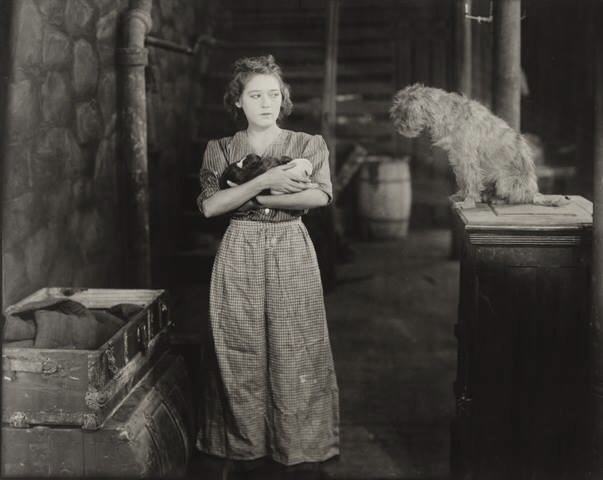
Mary Pickford’s performance in The Foundling is nothing short of revelatory. In an era where many actors relied on broad, theatrical gestures to convey emotion, Pickford utilized a more subtle, internalised technique. Her eyes, often described as the most expressive in cinema, capture a spectrum of grief, hope, and defiance. When Molly is subjected to the indignities of the boarding house, Pickford’s physicality changes; her shoulders slump under the weight of her station, yet there is a persistent spark in her gaze that suggests a spirit unbroken by her environment. This duality is what made Pickford a global icon—the ability to represent the 'everyman' (or everywoman) in their most wretched state while maintaining a divine aura of resilience.
Comparing her work here to the more stylized performances in Macbeth from the same year, one notices a distinct shift toward naturalism. Pickford was not merely playing a role; she was inhabiting a social condition. Her chemistry with Edward Martindel, who portrays the guilt-ridden David King, is palpable even across the decades. Martindel provides a sturdy, if somewhat detached, foil to Pickford’s kinetic energy, representing the oblivious privilege that both creates and attempts to solve the protagonist's plight.
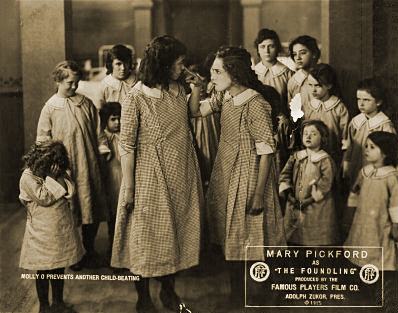
The visual language of The Foundling is characterized by its effective use of light and shadow to delineate moral and social boundaries. The orphanage and the boarding house are rendered in flat, utilitarian tones, emphasizing the claustrophobia of Molly’s existence. In contrast, the scenes involving the wealthy elite are bathed in a softer, more diffused light, suggesting a world of insulation and artifice. This use of visual metaphor is reminiscent of the atmospheric tension found in Through Dante's Flames, where the environment serves as an extension of the character’s internal struggle.
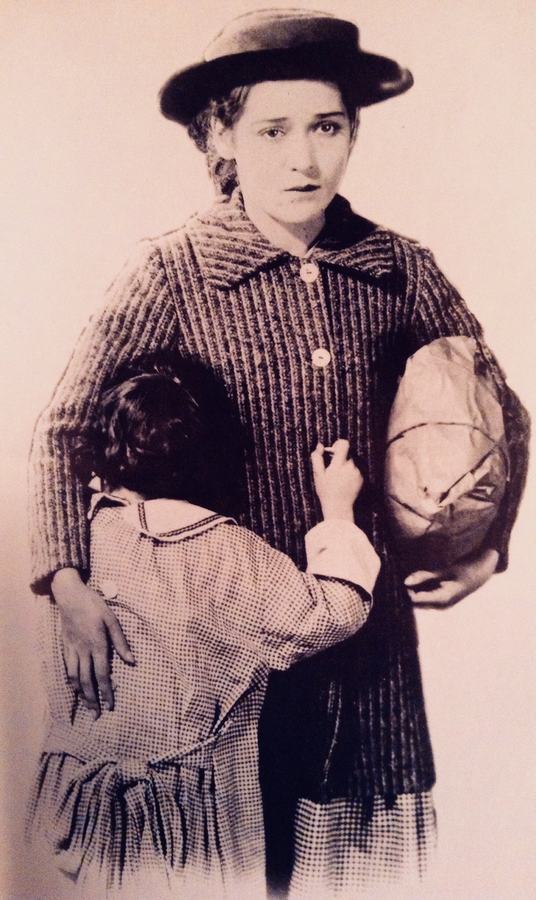
The cinematography also excels in its use of close-ups—a technique that was still being refined in 1916. By bringing the camera into Molly’s personal space, O'Brien forces the audience to confront her humanity. We are not merely observers of her tragedy; we are participants in it. This intimacy is a far cry from the more detached, stage-like compositions seen in The Rival Actresses, highlighting The Foundling’s role in pushing the boundaries of filmic intimacy.
While the film features a clear villain in the form of the orphanage mistress, the narrative suggests a broader critique of societal structures. The matron’s decision to pass off her niece as Molly is born of a desperate desire for upward mobility—a survival instinct warped by greed. This complexity elevates the film above a simple morality play. It echoes the themes of social climbing and moral compromise explored in The Price and The Ring and the Man, where the pursuit of wealth often necessitates the abandonment of one's soul.
The boarding house mistress, played with a chilling austerity by Maggie Weston, represents the immediate, physical threat to Molly’s well-being. Her cruelty is not flamboyant but rather systemic—a byproduct of a society that views children as commodities. This aspect of the film provides a haunting realism that anchors the more melodramatic elements of the plot. It is this intersection of social commentary and emotional drama that allows The Foundling to resonate with the same intensity as a contemporary social realist film.
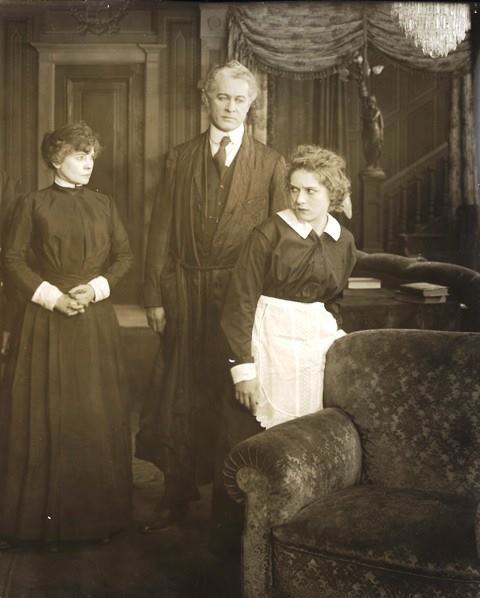
It is essential to note that the version of The Foundling we discuss today is actually a re-filmed version. The original 1915 production was famously destroyed in a fire at the Famous Players studio—a catastrophic event that could have consigned this story to the annals of lost cinema. However, the determination to remake the film in 1916 speaks to the perceived value of the project and the star power of Pickford. This historical footnote adds a layer of 'survival' to the film’s own legacy, mirroring Molly’s own journey through the flames of adversity, much like the characters in The Sacrifice of Pauline.
The reconstruction of the film allowed for a more polished final product, benefiting from the rapid advancements in filmmaking technology that occurred between 1915 and 1916. The result is a work that feels remarkably assured, possessing a visual clarity and narrative focus that many films of the era lacked. It stands as a testament to the resilience of the art form itself, surviving near-extinction to become a cornerstone of silent cinema.
When placed alongside other works of the era, The Foundling distinguishes itself through its psychological depth. While Satan Sanderson explored themes of redemption through a more religious lens, The Foundling finds its grace in the secular bonds of human empathy. It lacks the overt political machinations of The Adventures of Lieutenant Petrosino, yet its stakes feel equally high because they are rooted in the survival of the individual spirit.
Furthermore, the film’s exploration of identity and the 'imposter' trope invites comparisons to Severo Torelli and The Three Black Trumps. However, where those films often focused on the external consequences of such deceptions, The Foundling remains laser-focused on the emotional cost. The tragedy is not just that a father is being lied to, but that a daughter is being denied her existence. This human-centric approach is what prevents the film from feeling like a mere period piece; it is a universal story of the need to belong.
John B. O'Brien’s direction is characterized by a restrained elegance. He understands that in a Mary Pickford film, the primary objective is to facilitate her connection with the audience. His blocking is purposeful, often placing Molly in the center of the frame, surrounded by the looming figures of her oppressors. This visual isolation emphasizes her vulnerability. The editing, though primitive by modern standards, shows a sophisticated understanding of cross-cutting to build tension, particularly during the film’s climax where the truth about Molly’s identity begins to surface.
The film also makes excellent use of locations, moving from the opulent interiors of the King estate to the dilapidated streets where Molly labors. This geographical contrast serves as a physical manifestation of the class divide, a theme also prevalent in Strathmore and The Crippled Hand. O'Brien’s ability to capture the texture of these environments—the dust in the boarding house, the cold marble of the orphanage—adds a sensory layer to the viewing experience that was often missing in the more stage-bound productions of the time.
In the final analysis, The Foundling is more than just a historical curiosity or a vehicle for a silent film star. It is a deeply moving exploration of the human condition, articulated through the burgeoning language of cinema. It addresses themes of abandonment, social injustice, and the search for identity with a sophistication that remains impressive over a century later. The collaboration between Pickford and Marion proved to be one of the most fruitful in the history of the medium, and this film stands as a prime example of their collective genius.
For those interested in the evolution of narrative film, The Foundling is essential viewing. It provides a bridge between the simplistic melodramas of the early 1910s and the epic, character-driven masterpieces of the 1920s. It reminds us that while the technology of filmmaking may change, the core of a great story—the struggle for love and recognition in an indifferent world—remains constant. Whether compared to the revenge narratives of Hämnaren or the romantic entanglements of Loves and Adventures in the Life of Shakespeare, The Foundling carves out its own unique space as a work of profound empathy and enduring visual power.
A definitive triumph of the silent era, preserved for the ages.
IMDb 6.5
1932
Community
Log in to comment.