DbcultAccessing Vault...
Cult Review
Senior Film Conservator
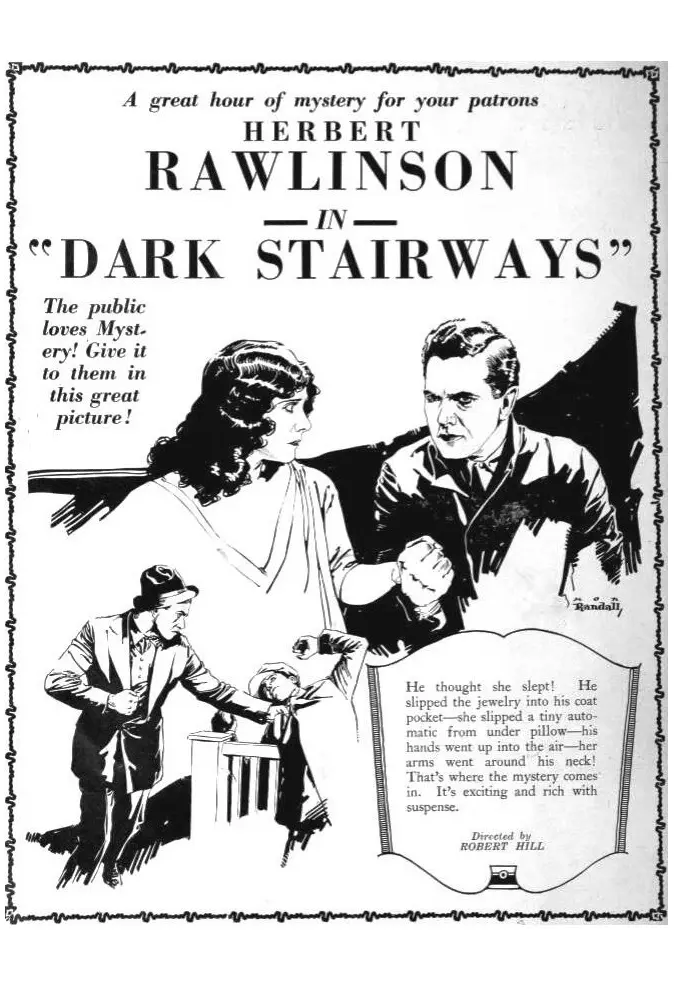
Ah, the timeless allure of a good old-fashioned frame-up! There's something inherently captivating about watching an innocent individual, pushed to the brink, fight tooth and nail against a system designed to crush them. Such is the compelling premise of Dark Stairways, a film that doesn't just invite you into its world but drags you headfirst into a swirling vortex of suspicion, betrayal, and a desperate quest for truth. It’s a narrative that resonates deeply, tapping into our primal fears of injustice and our innate desire for wrongs to be righted. From the very first scene, the film establishes a palpable sense of unease, a simmering tension that never truly dissipates until the final, satisfying revelation.
Our protagonist, Sheldon Polk, portrayed with a compelling blend of naiveté and burgeoning resolve by one of the film's key actors, is initially a man of privilege, albeit one with a strong sense of duty. His father, a banker of repute, dispatches him on a seemingly straightforward task: to deliver a substantial sum to Frank Farnsworth, a businessman whose dealings are, even then, shrouded in a faint mist of ambiguity. This initial setup is crucial; it paints a picture of a world where trust is paramount, yet inherently fragile. The very act of carrying such a large sum of money, a physical manifestation of trust and capital, immediately imbues the mission with a quiet tension, a foreshadowing of the disaster to come. The city itself, with its looming shadows and anonymous thoroughfares, becomes an almost sentient character, a silent accomplice to the unfolding drama.
The pivotal moment arrives with brutal efficiency. Sheldon, on his dutiful errand, is ambushed. The money vanishes, and he is left battered and bewildered, a victim of a calculated criminal act. What follows, however, is the true tragedy. Instead of sympathy or understanding, Sheldon finds himself entangled in a web of circumstantial evidence so cunningly spun that it points directly to him as the perpetrator. The police, perhaps swayed by an easy narrative or manipulated by unseen forces, swiftly move to arrest him. The trial, a grim spectacle of misdirection and half-truths, culminates in a wrongful conviction. Sheldon, the banker's son, is stripped of his freedom, his reputation, and his future, cast into the unforgiving maw of the penitentiary system. This rapid descent from respected scion to condemned criminal is handled with a stark realism that leaves a lasting impression, highlighting the fragility of justice when confronted with meticulously crafted deception.
But the cruel hand of fate isn't done with Sheldon yet. While he languishes in prison, wrestling with the bitter taste of injustice, another devastating blow strikes: his father is murdered. This act transforms Sheldon's quest from mere vindication into a burning crusade for vengeance. The murder of his father is not just a plot point; it's the catalyst that ignites a fire within Sheldon, transforming him from a bewildered victim into a determined, relentless pursuer of truth. The stakes are ratcheted up exponentially, and the narrative shifts from a tale of wrongful conviction to a full-blown noir thriller, where the protagonist must navigate a treacherous underworld to reclaim his life and honor his family's memory.
His escape from prison isn't just an act of defiance; it's a symbolic re-entry into a world that has wronged him, a world he now intends to turn upside down in his pursuit of justice. The film excels in portraying the sheer desperation and resourcefulness of an escaped convict. Every shadow becomes a potential hiding place, every stranger a potential threat or an unlikely ally. Sheldon must constantly be one step ahead, not just of the law, but of the shadowy figures who orchestrated his downfall and murdered his father. This aspect of the film, the cat-and-mouse game, is where the direction truly shines, building suspense with every close call and every near miss.
The writing by Gordon Rigby and Marion Orth is particularly adept at weaving a complex tapestry of clues and red herrings, keeping the audience guessing until the very end. They craft a narrative that, while adhering to certain genre conventions, manages to inject fresh energy into the familiar trope of the framed man seeking justice. The dialogue, terse and impactful, serves to propel the plot forward while also revealing the inner turmoil of the characters. There's a certain elegance in how the writers manage to maintain a brisk pace without sacrificing depth, ensuring that each revelation feels earned and impactful. The intricate plotting ensures that the audience remains invested, piecing together the puzzle alongside Sheldon.
The cast, a vibrant ensemble of character actors, breathes life into this dark tale. Bonnie Hill, with her understated charm, often provides a much-needed anchor in the turbulent waters of Sheldon's journey, her presence offering moments of solace amidst the chaos. Robert Homans, a stalwart presence, brings a gravitas to his role, subtly conveying layers of experience and perhaps even weariness. Hayden Stevenson, Emmett King, and Lola Todd each contribute to the rich tapestry of supporting characters, their performances adding texture and credibility to the film's world. Gloria Roy and Betsy Ann Hisle, though perhaps in smaller roles, leave their mark, embodying the various facets of society that Sheldon encounters on his perilous path. Herbert Rawlinson and Walter Perry, seasoned professionals, deliver performances that are both nuanced and impactful, often hinting at hidden motives or unseen connections. Kathleen O'Connor, Ruth Dwyer, and Tom McGuire round out this impressive roster, each contributing to the film's overall authenticity and dramatic weight. It's a testament to the direction that such a diverse cast works so harmoniously, each actor understanding their role in the larger narrative and delivering performances that serve the story rather than overshadowing it.
One of the film's strengths lies in its ability to paint a comprehensive picture of a society riddled with both overt criminality and insidious corruption. The characters Sheldon encounters are not merely plot devices; they are individuals with their own motivations, fears, and secrets. From the hardened criminals he meets in prison to the seemingly respectable citizens he encounters on the outside, each interaction peels back another layer of the intricate conspiracy against him. This meticulous character development, even for minor roles, elevates Dark Stairways beyond a simple whodunit into a more profound exploration of human nature under duress.
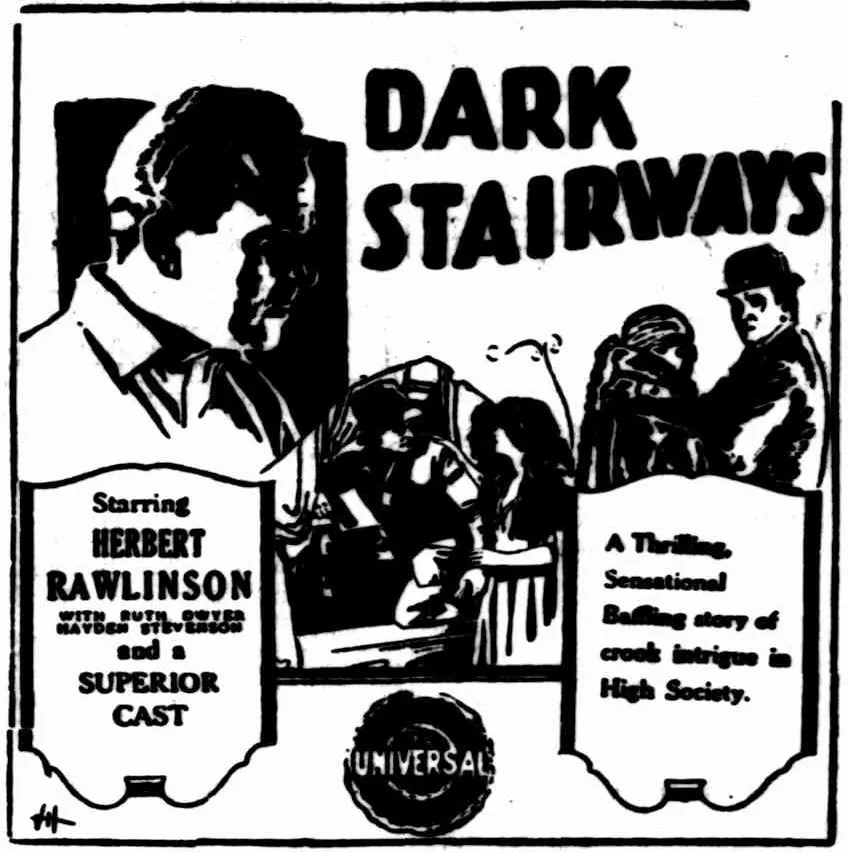
The central theme of injustice is explored with a poignant intensity. Sheldon’s struggle is not just against the criminals who framed him, but against the very concept of a compromised justice system. His conviction, based on flimsy circumstantial evidence, serves as a stark reminder of how easily an individual can be crushed by the weight of a biased narrative. This theme resonates strongly, inviting viewers to ponder the nature of truth and the often-elusive pursuit of fairness. In a way, it echoes the feeling of being trapped and fighting against overwhelming odds, a sentiment that might be subtly evoked by films like A Prisoner in the Harem, albeit in vastly different contexts of confinement.
Beyond injustice, Dark Stairways delves into the corrosive power of betrayal. The film subtly suggests that the architects of Sheldon’s downfall are not distant, faceless entities, but individuals who likely operated within his father's sphere, perhaps even trusted associates. This personal dimension of betrayal adds a layer of emotional complexity to the narrative, making Sheldon’s quest not just about clearing his name, but about confronting the shattering of trust. The film masterfully builds this sense of insidious treachery, making every new face a potential suspect, every friendly gesture a possible trap. The sense of an unseen hand pulling strings, manipulating events from the shadows, creates an atmosphere of pervasive paranoia that is truly gripping.
The film also subtly explores the concept of identity. Sheldon, once a respectable member of society, is forced to shed that identity to become an escaped convict, a fugitive. This transformation is not merely superficial; it’s a profound shift in his understanding of himself and his place in the world. He learns to survive on the fringes, to observe, to adapt, and to fight. This journey of self-discovery, born out of adversity, is one of the most compelling aspects of his character arc. His metamorphosis from privileged youth to hardened truth-seeker is portrayed with a nuanced understanding of human resilience.
Visually, Dark Stairways lives up to its name. The cinematography effectively utilizes shadows and stark contrasts to create a quintessential noir atmosphere. The dimly lit alleys, the smoky interiors, the desperate faces caught in fleeting moments of light – all contribute to a sense of impending doom and moral ambiguity. The camera work is often dynamic, following Sheldon through winding streets and cramped hideouts, placing the audience squarely in his shoes. This immersive visual style enhances the feeling of urgency and danger, making every step of Sheldon's journey feel precarious. The use of close-ups during moments of intense emotional turmoil effectively conveys the characters' inner struggles, drawing the viewer deeper into their plight.
The pacing of the film is meticulously controlled. It starts with a relatively measured introduction, establishing the characters and their world, before accelerating into a relentless pursuit. The moments of quiet contemplation are strategically placed, offering brief respites before the next surge of action or revelation. This ebb and flow keeps the audience engaged, preventing any sense of narrative fatigue. The film doesn't rely on cheap thrills but rather builds its suspense through clever plotting and character development, a quality that separates it from more pedestrian thrillers. The narrative structure, with its twists and turns, keeps the audience on the edge of their seat, much like the unfolding mystery in a film such as The Door Between, where hidden truths are slowly, painstakingly revealed.
While Dark Stairways might not always feature in the pantheon of universally recognized classics, its craftsmanship and storytelling prowess are undeniable. It's a film that deserves to be rediscovered, appreciated for its tight script, compelling performances, and atmospheric direction. It stands as a testament to the enduring power of the noir genre, proving that a well-told story of crime, injustice, and redemption can transcend its era and continue to captivate new audiences. The film's ability to maintain a high level of tension throughout, while also delivering a satisfying resolution, is a testament to the skill of its creators.
The core narrative – a man fighting for his name against overwhelming odds – is a universal one, ensuring the film's continued relevance. It explores themes that remain pertinent today: the fallibility of the legal system, the corrupting influence of power, and the resilience of the human spirit in the face of adversity. Sheldon’s journey, one of literal and metaphorical escape, is a powerful reminder that even in the darkest of circumstances, the pursuit of truth and justice remains a vital, often life-affirming, endeavor. There's a certain raw energy to his flight, a fight for survival that could almost be titled Trompe-la-Mort, or 'cheating death,' given the sheer peril he faces.
In conclusion, Dark Stairways is more than just a crime drama; it's a meticulously constructed psychological thriller that delves into the depths of human despair and the heights of human determination. It's a film that grabs you from the outset and refuses to let go, leaving you pondering the intricacies of its plot long after the credits roll. For aficionados of classic cinema, especially those with a penchant for noir and tales of righteous vengeance, this film is an absolute must-see. It's a journey into the shadows, but one illuminated by the unwavering light of a man's quest for truth. The intricate plotting by Gordon Rigby and Marion Orth ensures that every twist and turn feels earned, culminating in a resolution that is both cathartic and profoundly satisfying. It’s a compelling piece of filmmaking that deserves its place in the discussion of enduring genre works.
IMDb 7.1
1926
Community
Log in to comment.