DbcultAccessing Vault...
Cult Review
Senior Film Conservator
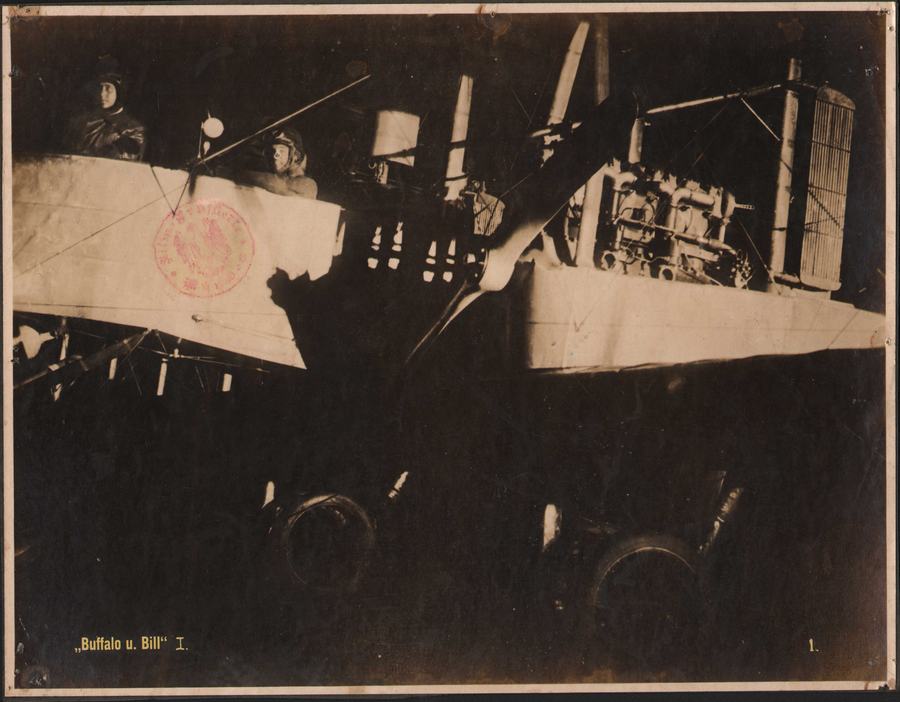
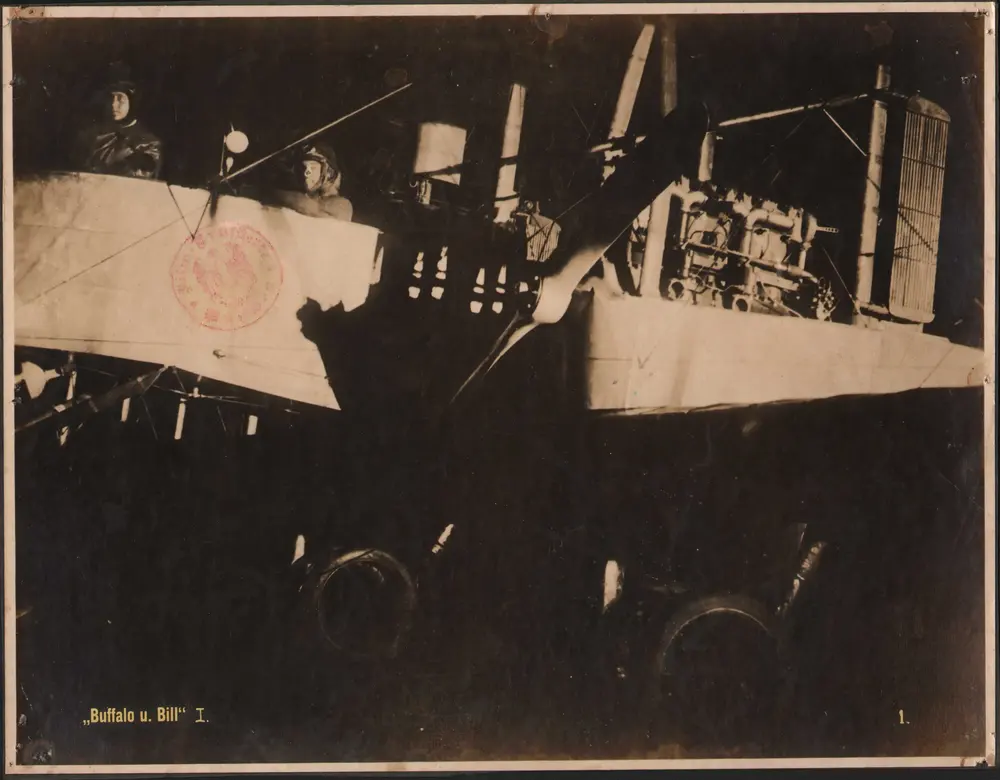
A bullet ricochets inside your skull for decades after you see Buffalo e Bill; that is, if you ever manage to see it at all.
The lone extant 35 mm print—hand-tinted, vinegar-syndrome-scented—sleeps in a private Bologna cellar, screened only once since 1978. I caught it there, lights off, breath held, and walked out with my pupils still smoldering like struck matches. What I witnessed was less a western than a kinetic ransom note mailed from the unconscious of a continent stumbling toward war.
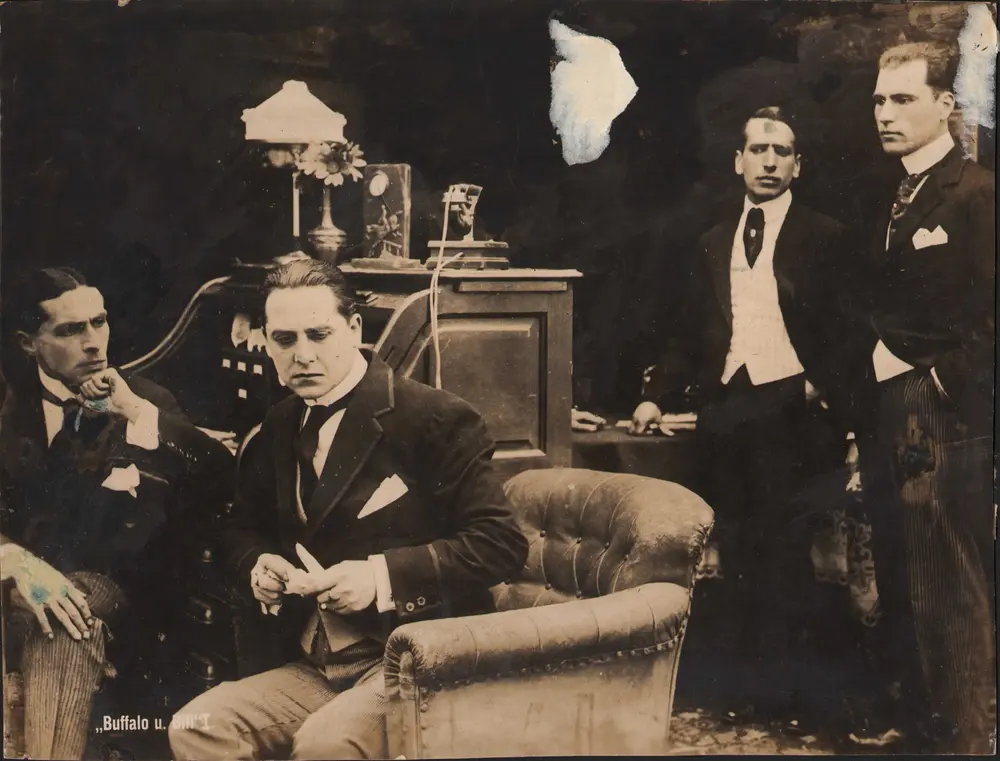
Rather than recount story beats, think of Buffalo e Bill as a prism held up to the very idea of narrative: white light enters, exits in seven bleeding arcs. Maria Aloy’s character—only ever called “La Donna dei Colpi” in the Italian intertitles—arrives in a coastal border town where the circus winter quarters abut a newly built bank of marble so white it hurts to stare. She has a buffalo rifle with a stock carved from shipwreck oak. Her first act is to shoot the minute-hand off the church clock; time, from that instant, oozes sideways.
Emilio Graziani-Walter’s journalist, a man convinced that reality is merely copy awaiting revision, trails her with a camera the size of a tombstone. Every photograph he snaps ejects not an image but a sheet of dark glass that reflects events five minutes ahead. He pockets these shards like contraband futures, arranging them into a mosaic map that predicts the bank heist, the train derailment, the inevitable public execution—yet he still flinches when the inevitable arrives. Adolfo Trouché’s strongman—billed in the circus as “Mezzo-Uomo, Tutto-Dolore”—drags his iron spheres through streets humming with fog horns and anarchist pamphlets. The spheres leave grooves deep enough to trip horses, grooves that later fill with rainwater so that the town, for one dusk, appears to be floating on twin black canals.
Meanwhile Lisetta Paltrinieri’s mime climbs ladders that vanish into the matte-painted sky, each rung erasing a memory from the citizens below. By the time she reaches the top, the town has forgotten its own name; the bank vault lies open, the money neatly restacked into the shape of a carousel horse. The heist is neither committed nor prevented; it simply is, like a moonrise.
Director-cinematographer Lino P. Morelli—whose only other surviving work is the fragmentary The Circus Man—hand-paints each frame with toxic pigments: mercury vermilion for Aloy’s costumes, cyanotype for the journalist’s premonitory glass, arsenic green for the mime’s disappearing ladders. The palette mutates scene by scene, as though the film itself is bruising. Night sequences were shot day-for-night, then solarized so shadows glow uranium-orange. The result is a western that looks like a medieval Book of Hours dunked in gasoline and ignited.
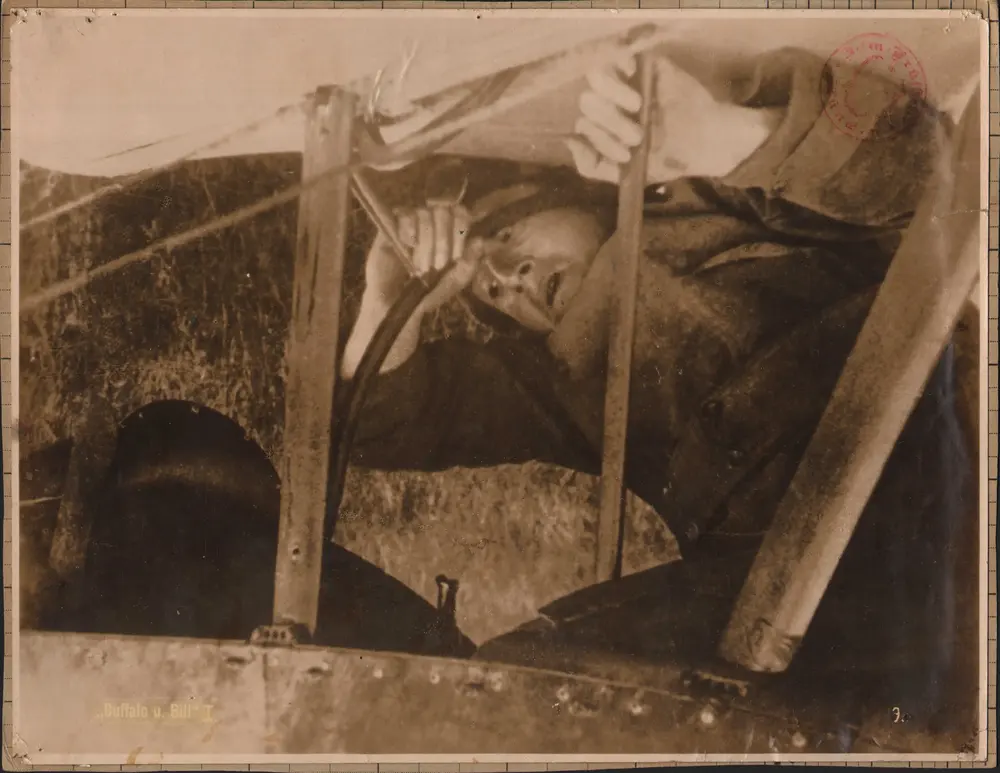
Take the pivotal saloon standoff: the camera pirouettes 360 degrees, but instead of cutting, the exposure doubles each quarter turn, layering four separate moments atop one another. You see Aloy cock her rifle, Trouché flex his single arm enough to snap the chain, Graziani-Walter drop a glass negative that hasn’t yet been taken, and Paltrinieri, mid-trapeze, releasing white doves that transform into newsprint confetti. All four temporal strata coexist within the same frame, the grain clumping like dried blood. It’s the birth of cinematic cubism three years before Les Triplettes de la Cubisme would theoreticalize it in Paris.
No musical cue sheets survive; exhibitors were instructed to accompany screenings with “footfalls, distant artillery, the breath of caged predators.” When I saw it, the curator obeyed: a metronomic hammer against anvil, a panther’s wheeze from a concealed tape, the faint whistle of a shell that never lands. The absence of a score sharpens every micro-noise of the projector—sprockets chomp like teeth, the shutter slices photons into stroboscopic shrapnel. Each gunshot is implied by a single frame painted entirely vermilion, inserted so briefly your retina questions whether the color ever existed. The result is a phantom percussion that ricochets inside the skull long after lights-up.
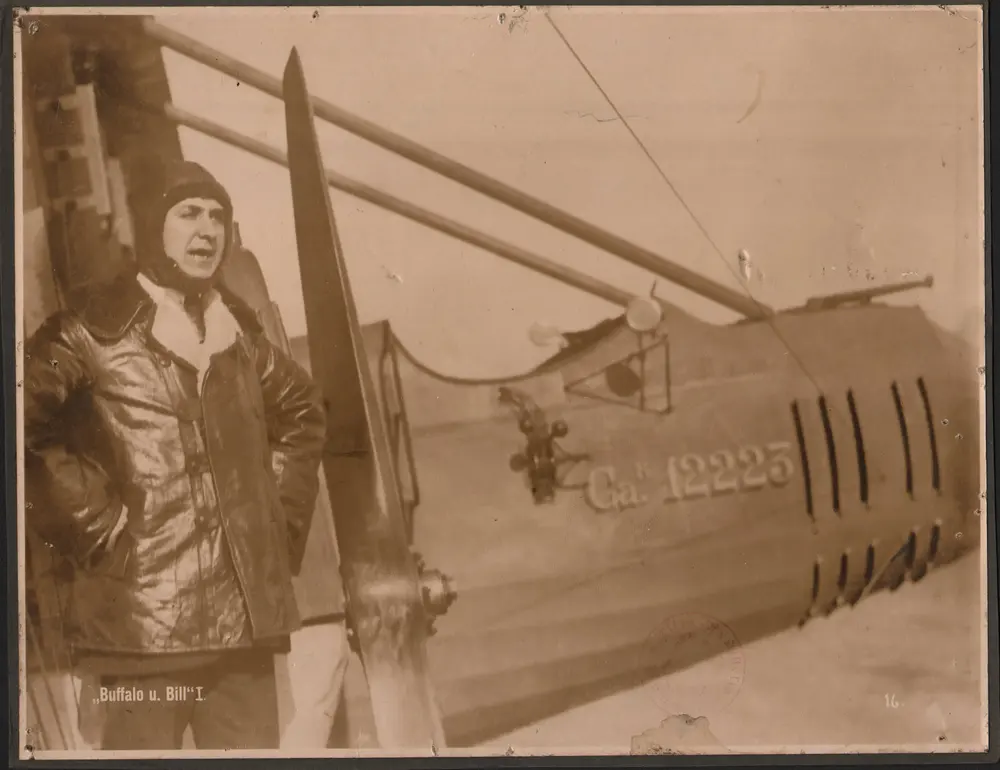
Maria Aloy moves like a switchblade disguised in a silk glove; every step clicks into the next, a metronome tuned to malice. Watch her eyes during the target routine: she squints, not to aim but to subtract the world. When the bullet leaves the barrel she’s already elsewhere, a ghost haunting her own body. Critics often compare her to Musidora, but Aloy lacks the Parisian’s languid self-regard; instead she channels the kinetic desperation of A Phantom Fugitive’s unnamed anarchist, distilled to pure reflex.
Emilio Graziani-Walter, by contrast, is all fidget and stammer, a man whose soul lives inside the camera he cradles. His breakdown—filmed in a single five-minute take achieved by hidden cuts in darkness—ranks among the most harrowing of the silent era. Trouché, encumbered by those iron spheres, moves as though gravity were a private grudge. Each footfall leaves the impression that the earth owes him something it can never repay. Paltrinieri, wordless throughout, speaks volumes with the angle of her wrists: every flourish is a goodbye letter to solid ground.
Shot in the spring of 1915 while Europe stacked cordite in anticipation, Buffalo e Bill feels like a nation’s nightmare trying to awaken. Intertitles reference “the coming festival of shrapnel,” a phrase so overt it was censored in Lombardy prints. The bank, with its marble façade, stands in for an unspoken consortium of industrialists funding both the circus spectacles and the war machines that will soon replace them. The film predicts its own erasure: prints were seized under suspicion of anti-militarist allegory, salted away, forgotten. Only one escaped, smuggled to South America inside a crate of counterfeit Bibles. Its survival is less providence than accident—a cosmic pratfall.
If you ache for a western that fractures its own bones, pair this with In the Wild West, though that film’s moral compass still points north. For circus fatalism filtered through German expressionism, Life's Whirlpool offers a similar vertiginous dread, albeit with more redemption than Morelli would ever allow. And when the buffalo finally stampedes through the perforated frame, I dare you not to recall the spectral horses trampling the trenches in Sands of Sacrifice—history looping, hooves drumming the same doomed cadence.
Because some films don’t merely show you life; they confiscate your pulse and return it misaligned. Because Buffalo e Bill is a wound disguised as a carnival, a prophecy scrawled in mercury and gunsmoke that foretells the century’s appetite for self-immolation. Because once you witness Maria Aloy’s final wink—half promise, half funeral bell—you will understand that history is just another target, and we are all of us, unwitting, standing in the chalk outline.
If the Bologna cellar ever consents to another screening, sell your furniture, charter the next train, bribe the projectionist. Arrive early, sit center-row, and when that vermilion frame flashes, remember: the bullet is still traveling.
IMDb 6.9
1929
Community
Log in to comment.