DbcultAccessing Vault...
Cult Review
Senior Film Conservator
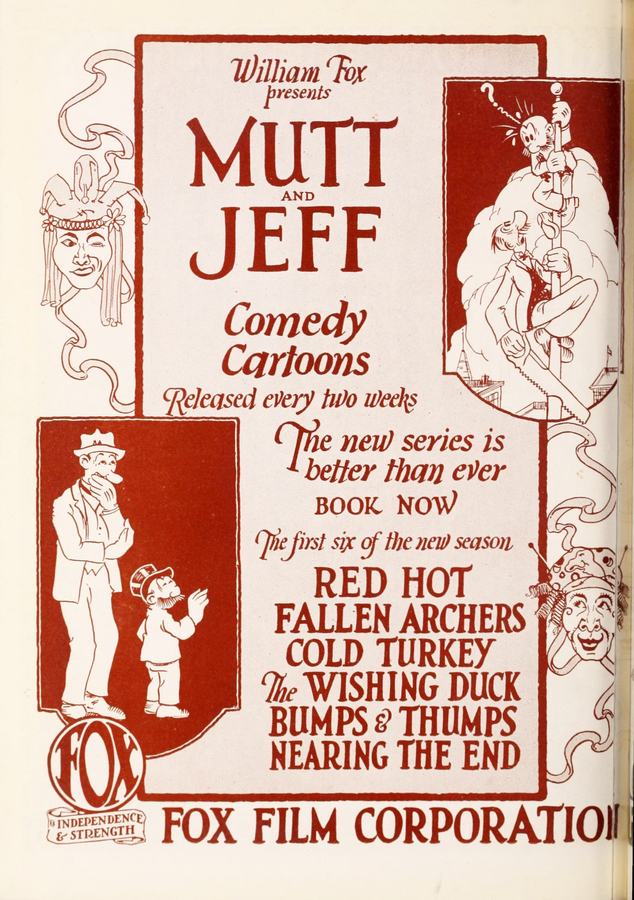
Alright, film fanatics and connoisseurs of classic cinema, let's talk about a forgotten gem that, despite its brevity and the passage of time, continues to echo with a delightful cacophony of guffaws and gasps: Bud Fisher's 'Bumps and Thumps'. For those unfamiliar with the name, Bud Fisher was a pioneering force, best known for his 'Mutt and Jeff' comic strip, which transitioned seamlessly into early animation and live-action shorts. 'Bumps and Thumps' stands as a testament to his unique comedic vision, a short-form masterclass in physical comedy that predates and, in many ways, foreshadows the larger-than-life antics of silent-era titans. It's a film that demands to be seen not just as a historical artifact, but as a vibrant, living piece of comedic art.
The narrative, simple yet profoundly effective, centers on Percival "Percy" Putter, a character brought to life with an infectious, almost manic optimism by Fisher himself. Percy is an inventor, a dreamer, and, crucially, a magnet for mishap. His latest creation, an automated picnic basket designed to win the affections of the elegant Miss Penelope Featherbottom, becomes the central prop in a symphony of escalating chaos. The plot, if one can call such a delightful series of unfortunate events a 'plot' in the traditional sense, is merely a vehicle for Fisher's unparalleled physical prowess and his uncanny ability to orchestrate comedic pandemonium. The journey from Percy's ramshackle workshop to the serene picnic grounds transforms into an epic odyssey, a veritable gauntlet of slapstick that leaves both the town and the audience breathless with laughter.
What immediately strikes you about 'Bumps and Thumps' is its relentless pace. From the moment Percy's contraption lurches into action, there's hardly a pause for breath. The film is a masterclass in comedic escalation. A minor snag, like the basket veering off course, quickly spirals into a full-blown civic crisis. We witness the basket, with an almost sentient defiance, careening down a hill, narrowly missing a startled pedestrian, only to then collide with a lamppost, sending a shower of sparks and a cascade of fruit onto an unsuspecting fruit vendor. Percy's attempts to intervene, far from mitigating the disaster, invariably amplify it. He becomes entangled in a laundry line, transforming into a human projectile that inadvertently bowls over a baker delivering a fresh batch of pies. The visual gag here is exquisite: the slow-motion collapse of the pies, the baker's bewildered expression, and Percy's wide-eyed, helpless flailing. It’s a moment that could easily fit into a Chaplin or Keaton film, yet it possesses a distinct Fisherian charm.
The genius of Fisher's performance lies in his commitment to the absurdity. He doesn't just react to the chaos; he becomes an integral, often instigating, part of it. His facial expressions, even within the limitations of early film technology, are wonderfully articulate. The shift from hopeful anticipation to wide-eyed terror, then to a grim determination, is a journey in itself. He embodies the spirit of the eternal underdog, the well-meaning individual whose best intentions pave a road to delightful disaster. This unwavering commitment to character, even amidst the most ludicrous scenarios, is what elevates 'Bumps and Thumps' beyond mere sight gags and into the realm of enduring comedy.
Comparing 'Bumps and Thumps' to other films of its era, one can appreciate its unique flavor. While a film like Elmo, the Mighty might showcase a different kind of physical bravado, or Everybody's Business might delve into more intricate social commentary, 'Bumps and Thumps' remains steadfastly dedicated to pure, unadulterated physical comedy. It doesn't aspire to grand narratives or profound statements; its ambition is simply to make you laugh, and in this, it succeeds spectacularly. The film's charm lies in its unpretentious joy, its celebration of the ridiculous. It's a reminder that sometimes, the most complex human emotions can be conveyed through a well-timed pratfall or a perfectly executed collision.
The direction, handled by Fisher himself, demonstrates an intuitive understanding of comedic timing for the screen. The camera, while largely static by modern standards, is positioned to capture the full scope of the unfolding mayhem. There's a particular sequence where Percy, attempting to retrieve his runaway basket, finds himself scrambling up a rickety scaffolding. The ensuing collapse, a cascade of planks and ropes, is filmed with a keen eye for visual impact, creating a sense of genuine peril that immediately pivots back to humor as Percy dangles precariously, only to land in a pile of soft hay. This quick shift from tension to relief, punctuated by a visual punchline, is a hallmark of effective slapstick, and Fisher executes it with aplomb.
The film's aesthetic, while simple, is effective. The use of practical effects for the various 'bumps' and 'thumps' is commendable, especially considering the nascent stage of cinema. The way the automated basket seems to develop a personality of its own, almost an antagonist, through its erratic movements, is a credit to the clever staging and perhaps some rudimentary special effects. The bustling town square, filled with extras reacting in various states of confusion and alarm, adds to the sense of a world genuinely disrupted by Percy's antics. It's a testament to the early filmmakers' ability to create a believable, if chaotic, reality with limited resources.
Beyond the surface-level gags, 'Bumps and Thumps' offers a subtle commentary on human resilience and the sheer absurdity of ambition. Percy Putter, despite his constant failures, never gives up. His relentless pursuit of the picnic basket, and by extension, Penelope's affection, is a poignant, if hilarious, portrayal of the human spirit. He embodies the idea that even when life throws every conceivable obstacle in your path, a determined (if clumsy) individual can still find a way, even if that way involves inadvertently flattening half the town. This underlying current of perseverance gives the film a surprising depth, elevating it from mere spectacle to a more resonant, albeit still comedic, experience.
Consider the broader context of silent cinema. While films like The Danger Signal might have aimed for thrilling suspense, or La fiaccola umana for dramatic intensity, 'Bumps and Thumps' carved its niche in the burgeoning field of comedic shorts. It's a foundational piece, demonstrating the raw potential of physical comedy before the genre became more refined and stylized by the likes of Keaton and Lloyd. It's a rough-and-tumble precursor, full of raw energy and an almost childlike glee in destruction and recovery. The film's humor is universal, transcending language barriers and cultural nuances, relying purely on visual cues and the shared human experience of life's unpredictable nature.
The ending, while not offering a grand resolution, provides a satisfying comedic payoff. Percy, disheveled but triumphant, finally reaches the picnic grounds. The automated basket, now a mangled relic, is presented to Penelope. Her initial shock and bewilderment slowly melt into a bemused smile, a hint that Percy's charming ineptitude might just be endearing after all. It's a charming conclusion, suggesting that sometimes, the journey, however chaotic, is more important than the pristine outcome. It’s a message that resonates even today, in a world that often values perfection over genuine effort and heartfelt (if clumsy) intent.
The film's impact, though perhaps not as widely celebrated as some of its more famous contemporaries, is undeniable for those who delve into the annals of early cinema. It showcases Bud Fisher not just as a cartoonist, but as a compelling screen presence and a director with an innate sense of comedic rhythm. His ability to create such a vibrant, laugh-out-loud experience with the limited tools of early filmmaking is truly remarkable. 'Bumps and Thumps' is more than just a historical curiosity; it's a vibrant, living piece of comedic history that continues to entertain and inspire. It’s a testament to the enduring power of a simple premise executed with passion, precision, and an abundance of good humor.
In an era where cinema was still finding its voice, 'Bumps and Thumps' spoke volumes through its actions. It didn't need complex dialogue or intricate plots to convey its message; the universal language of laughter was its primary mode of communication. It stands as a delightful reminder of the foundations upon which modern comedy was built, a boisterous, charming, and utterly unforgettable ride through the early days of cinematic slapstick. It’s a film that, much like Percy Putter himself, might be a little rough around the edges, but possesses an undeniable, infectious charm that simply refuses to be ignored. Seek it out, if you can, and prepare for a series of delightful 'bumps and thumps' that will leave you grinning from ear to ear.
The sheer ingenuity in crafting such elaborate physical sequences with minimal resources is something to behold. Consider the cascade of domino-like effects Percy triggers: a simple misstep leading to a bicycle crash, which in turn causes a fruit stand to collapse, culminating in a chase involving a dog and a disgruntled vendor. Each element is meticulously choreographed, a symphony of minor disasters building to a grand crescendo. This kind of sequential humor requires a deep understanding of cause and effect, and Fisher demonstrates an almost mathematical precision in his comedic construction. It's not just random chaos; it's *organized* chaos, designed to elicit maximum comedic impact. This meticulous planning is evident throughout, distinguishing 'Bumps and Thumps' from more haphazard attempts at slapstick.
Moreover, the film’s portrayal of the townsfolk is equally engaging. They aren't just static background elements; they are active participants in Percy's calamitous journey. Their reactions range from bewildered amusement to outright indignation, each adding another layer to the comedic tapestry. The stern police officer who tries, and inevitably fails, to apprehend Percy, becoming another victim of the automated basket's whims, is a classic comedic archetype. This interaction between the protagonist and his environment, both human and inanimate, is what gives 'Bumps and Thumps' its rich texture. It’s a world that actively resists Percy's efforts, yet he persists, making his eventual (partial) success all the more satisfying. The dynamic between Percy and Penelope, too, is understated but effective. Her initial skepticism slowly gives way to a knowing smile, hinting at a future where his eccentricities might be embraced rather than merely tolerated. It’s a sweet, understated romantic subplot that provides a gentle emotional anchor to the film's otherwise frenetic energy.
In reflecting on the legacy of 'Bumps and Thumps', it becomes clear that its influence, while perhaps subtle, is pervasive. Many elements seen in later, more renowned silent comedies can trace their lineage back to these early, experimental shorts. Fisher's work here is a foundational text in the grammar of physical comedy. It taught filmmakers how to choreograph a chase, how to build a visual gag, and how to use the entire frame to tell a story without a single spoken word. It’s a testament to the fact that innovation often springs from the most unassuming of places. While films like The Source or The Rainbow Trail explored grander landscapes and more dramatic narratives, 'Bumps and Thumps' found its vastness in the intricate dance of a single man against an uncooperative world. It’s a film that reminds us that sometimes, the biggest laughs come from the smallest, most relatable struggles, amplified to absurd proportions.
The enduring appeal of 'Bumps and Thumps' lies in its timeless humor. The sight of someone slipping on a banana peel, or a carefully constructed plan going spectacularly awry, remains funny regardless of the era. Fisher tapped into this universal wellspring of comedic truth, crafting a film that, despite its age, feels remarkably fresh and engaging. It's a joyous celebration of human fallibility and the resilience of the optimistic spirit. The film's kinetic energy is infectious, drawing viewers into its whirlwind of chaos and leaving them with a sense of pure, unadulterated delight. It’s a vital piece of cinematic history, not just for its pioneering spirit, but for its sheer, unadulterated entertainment value. A true masterwork of early slapstick, 'Bumps and Thumps' solidifies Bud Fisher's place as an unsung hero of silent comedy, a visionary who knew how to make audiences roar with laughter, one bump and one thump at a time.
IMDb —
1924
Community
Log in to comment.