DbcultAccessing Vault...
Cult Review
Senior Film Conservator
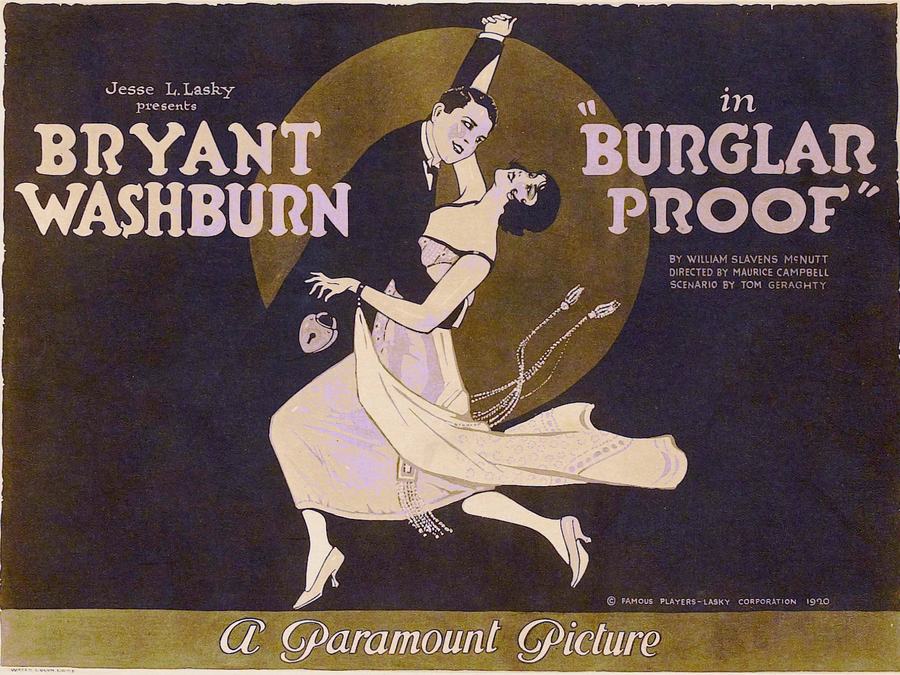
The flickering shadows and grand gestures of silent cinema often captured the moral dilemmas and societal anxieties of their time with an urgency that still resonates today. Among these cinematic echoes, the 1920 drama Burglar Proof stands as a compelling, if somewhat overlooked, testament to the era's fascination with wealth, ambition, and the treacherous currents of human emotion. Directed with a keen eye for character and consequence, this film delves into a narrative where prosperity promises liberation but often delivers a different kind of bondage, where love is tested by both poverty and the manipulative schemes of a jilted heart. It’s a story that, despite its century-old vintage, speaks to timeless themes of redemption, the corrupting influence of money, and the enduring power of genuine affection.
At the heart of Burglar Proof lies John Harlow, portrayed with a compelling blend of vulnerability and steely determination by Clarence Burton. His journey commences in the crucible of destitution, a harsh reality that costs him his beloved Jenny Larkin. This initial heartbreak, catalyzed by the grinding pressure of poverty, becomes the foundational trauma that irrevocably shapes his future. It’s a moment of profound clarity, a vow etched in the depths of his being: never again will he be beholden to the whims of an empty purse. This powerful, almost primal, motivation propels him from his familiar surroundings into the anonymous embrace of the city, a classic cinematic trope mirroring the migration of countless individuals seeking fortune in urban sprawls. His subsequent years are a testament to an unwavering commitment to financial accumulation, a relentless pursuit of security that transforms him from a hopeful romantic into a financially successful, yet perhaps emotionally insulated, individual.
This initial character arc is particularly resonant within the context of the early 20th century, a period marked by burgeoning industrialization and the allure of the American Dream. Films like Easy to Make Money often explored similar themes of upward mobility, but Burglar Proof distinguishes itself by immediately foregrounding the emotional cost of such ambition. John’s success is not merely a triumph; it’s a response to a deep-seated wound. The film subtly asks: at what price does one secure financial freedom? Does the pursuit of wealth inadvertently burglarize the soul of its capacity for genuine connection? Burton’s performance, relying on nuanced facial expressions and body language, conveys this internal conflict, hinting at the solitary burden of his hard-won prosperity.
The narrative takes a sharp turn when fate, with its often cruel sense of humor, orchestrates a reunion between John and Jenny (Lois Wilson) in the unlikely setting of a dance hall. Jenny, no longer the innocent sweetheart John once knew, is now a hostess, a profession that, in the social mores of the time, often carried a faint but distinct shadow of moral ambiguity. Her reappearance is not one of joyous reconciliation; instead, it is imbued with a palpable sense of bitterness and perhaps a desire for retribution. Wilson delivers a portrayal of Jenny that is both alluring and unsettling, her gestures conveying a woman hardened by circumstance and perhaps consumed by regret or resentment.
Jenny’s decision to “fleece” John, using her colleague Laura as an unwitting pawn, is the central dramatic engine of the film. This manipulative scheme positions her as a fascinating antagonist, not purely villainous but driven by a complex cocktail of emotions. Is it pure avarice? A desperate attempt to regain some agency in a life that has perhaps dealt her a difficult hand? Or a twisted form of revenge against the man she believes abandoned her to poverty? This moral ambiguity allows the audience to ponder the systemic pressures that might lead a character down such a path, much like the challenging moral landscapes explored in films such as The Evil Women Do or Syndens datter. Jenny’s actions serve as a stark contrast to John’s initial, more straightforward ambition, highlighting the divergent paths individuals can take when confronted with similar hardships.
Enter Laura, portrayed by Emily Chichester, a character who embodies purity and integrity in stark contrast to Jenny's machinations. Her innocence is crucial; she is not complicit in Jenny’s scheme, making the burgeoning romance between her and John feel genuine and earned. Chichester’s performance relies on conveying sincerity and a quiet strength, making Laura a compelling figure of moral rectitude. The developing relationship between John and Laura is the emotional anchor of the film, offering John a chance at a love untainted by his past trauma or his newfound wealth. It is a love that promises not just companionship but a deeper form of redemption, a return to the values that money alone cannot buy.

As John and Laura’s affection deepens, Jenny’s jealousy intensifies, morphing from a calculated scheme into a desperate, vindictive attempt to reclaim John. She concocts a lie, alleging an affair between Laura and Richard Crane, a fabrication designed to poison John’s perception of Laura and drive them apart. This moment showcases the destructive power of envy and the ease with which a jilted lover can weaponize deceit. John, still carrying the scars of his past and perhaps prone to suspicion due to his journey, initially falls prey to Jenny’s falsehoods. This emotional vulnerability makes him a relatable protagonist, demonstrating that even those who have achieved material success are not immune to emotional manipulation and the pain of betrayal.
The tension builds as John grapples with this supposed betrayal, his hard-won emotional stability threatening to crumble. However, the film delivers a masterstroke of plot resolution: the revelation that Richard Crane has just married Laura’s mother. This twist is not merely a convenient deus ex machina; it is a moment of profound irony that utterly dismantles Jenny’s malicious narrative. It exposes the absurdity of her lie and, more importantly, vindicates Laura’s character completely. This kind of dramatic unveiling, where truth emerges from the most unexpected corners, is a hallmark of effective silent film storytelling, often seen in narratives like The Final Close-Up or The Face in the Moonlight, where secrets and misdirection are ultimately brought to light.
With Jenny’s deceit exposed, the path clears for John and Laura. His proposal is not just an act of love but a symbolic gesture of his emotional healing and renewed trust. Laura’s acceptance, however, comes with a significant condition: that John relinquish his “spendthrift ways.” This is a crucial detail that elevates Burglar Proof beyond a simple romantic drama. It suggests that John, in his zealous pursuit of wealth, may have indeed become extravagant or perhaps obsessed with the trappings of his success. Laura’s condition is a gentle yet firm redirect, guiding him towards a more balanced, principled existence. It implies that true security and happiness lie not in the accumulation of riches for their own sake, but in a life lived with moderation and genuine values. This echoes the moral lessons often found in films centered on personal growth and ethical choices, such as The Redemption of White Hawk or The Pulse of Life.
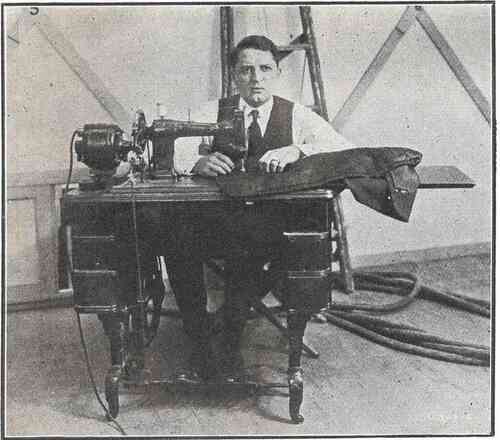
In silent cinema, the onus of storytelling falls heavily on the actors' ability to convey complex emotions through gesture, expression, and physicality. Clarence Burton as John Harlow navigates a challenging arc, transitioning from a desperate young man to a successful, yet vulnerable, figure. His portrayal of John's initial heartbreak and subsequent ambition is compelling, effectively communicating the internal shifts without a single spoken word. Lois Wilson, as Jenny Larkin, delivers a performance that is both captivating and unsettling. Her ability to project bitterness, manipulation, and underlying desperation makes Jenny a memorable character, a nuanced antagonist rather than a flat villain. Emily Chichester's Laura shines as the film's moral compass, her gentle demeanor and sincere expressions serving as a powerful counterpoint to Jenny’s deceit. The chemistry between Burton and Chichester, though silent, feels authentic, making their eventual union emotionally satisfying.
The direction, while not attributed to a single director in the provided information (the writers are William Slavens McNutt and Thomas J. Geraghty), effectively utilizes the visual language of silent film to advance the plot and deepen character understanding. The staging of scenes, the use of close-ups to emphasize emotional states, and the overall pacing contribute to a coherent and engaging narrative. The contrast between the opulent settings of John's newfound wealth and the more humble, yet genuine, environments associated with Laura is subtly underscored through set design and lighting. This visual storytelling is crucial in a medium reliant on imagery to convey intricate emotional landscapes. The film's aesthetic aligns with the period’s visual sensibilities, employing a dramatic flair that ensures the audience remains invested in the characters' fates.
Burglar Proof is more than just a romantic melodrama; it’s a profound commentary on several enduring themes. The most prominent is the complex relationship between wealth and happiness. John’s initial belief that money will solve all his problems is challenged by his encounter with Jenny and his eventual realization that true contentment comes from genuine connection and moral integrity. The film critiques the unchecked pursuit of material gain, suggesting that while poverty can be destructive, so too can an unbridled obsession with riches. This theme resonates strongly with other contemporary films like The Love That Lives, which often explored how societal pressures and financial circumstances shaped individual destinies.
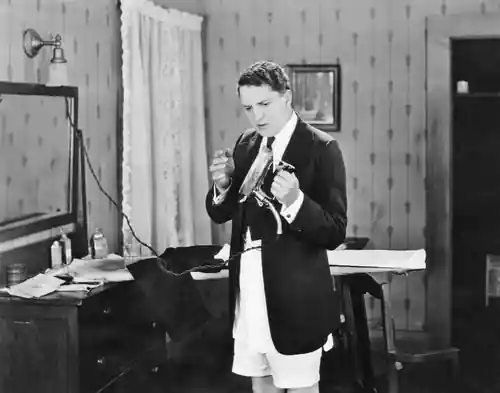
Deceit and honesty form another critical thematic pillar. Jenny’s manipulative actions serve as a stark contrast to Laura’s unwavering truthfulness. The film explores the corrosive effect of lies, not only on those who are deceived but also on the deceiver herself. Jenny’s inability to find happiness despite her attempts to control John’s fate underscores the futility of dishonesty. Ultimately, the narrative champions transparency and genuine affection as the true foundations for a meaningful life. This moral clarity, while perhaps seeming simplistic by modern standards, was a powerful message in an era grappling with rapid social change and evolving ethical frameworks.
Finally, the theme of redemption weaves through John’s entire arc. His journey is one of learning and growth, moving from a reactive pursuit of wealth born of trauma to a more mature understanding of what truly matters. Laura’s condition for marriage – the relinquishing of “spendthrift ways” – signifies John’s final step towards a balanced life, where love and prudence are valued above mere extravagance. This personal transformation offers a hopeful message, suggesting that individuals can overcome past wounds and misguided ambitions to find genuine fulfillment. It’s a narrative of moral recalibration, a quiet triumph of character over circumstance, much like the introspective journeys seen in films such as The Soul of a Child or To-Day.
In its totality, Burglar Proof offers a captivating glimpse into the silent film era’s narrative prowess. It’s a film that, despite its age, retains a surprising relevance, its exploration of ambition, love, and deceit continuing to resonate with contemporary audiences. The performances are compelling, the plot intricate enough to maintain engagement, and the thematic undercurrents provide ample food for thought. While it might not possess the grand scale of some epic silent features, its intimate focus on character and moral choice gives it a unique strength. For those interested in the social and emotional landscapes of early 20th-century America, or simply in a well-told story, Burglar Proof stands as a quietly powerful cinematic artifact, reminding us that the pursuit of happiness is often less about what we acquire and more about the values we choose to uphold. It reinforces the idea that true security is not just about being ‘burglar proof’ in a financial sense, but also in protecting the integrity of one’s heart and moral compass.
IMDb 6.3
1932
Community
Log in to comment.