DbcultAccessing Vault...
7.6/10
Senior Film Conservator
A definitive 7.6/10 rating for a film that redefined the boundaries of cult cinema. The Storm remains a cornerstone of transgressive art.
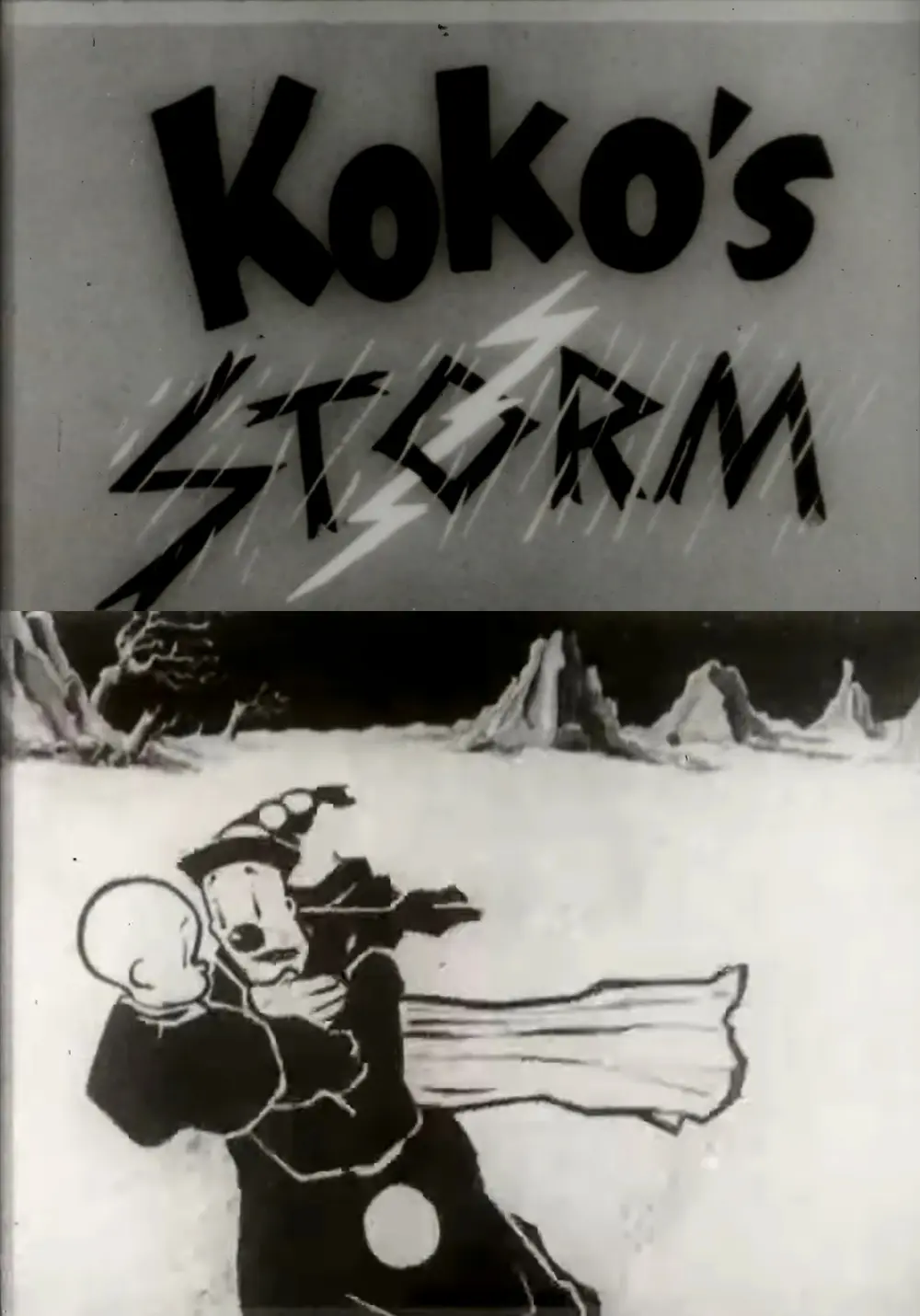
Step into the flickering, monochrome world of 1924, a time when the nascent art of animation was still finding its voice, often literally, in the silent era. It was a period of boundless experimentation, where pioneers like Max Fleischer were not merely telling stories but inventing the very grammar of a new visual language. Among his myriad contributions, the 'Out of the Inkwell' series, featuring the iconic Ko-Ko the Clown, stands as a testament to his inventive spirit. And within that innovative tapestry, a particular short film, simply titled The Storm (the-storm-1924), offers a fascinating glimpse into Fleischer’s ability to weave compelling drama from the simplest of premises, all while pushing the boundaries of what a drawn character could endure.
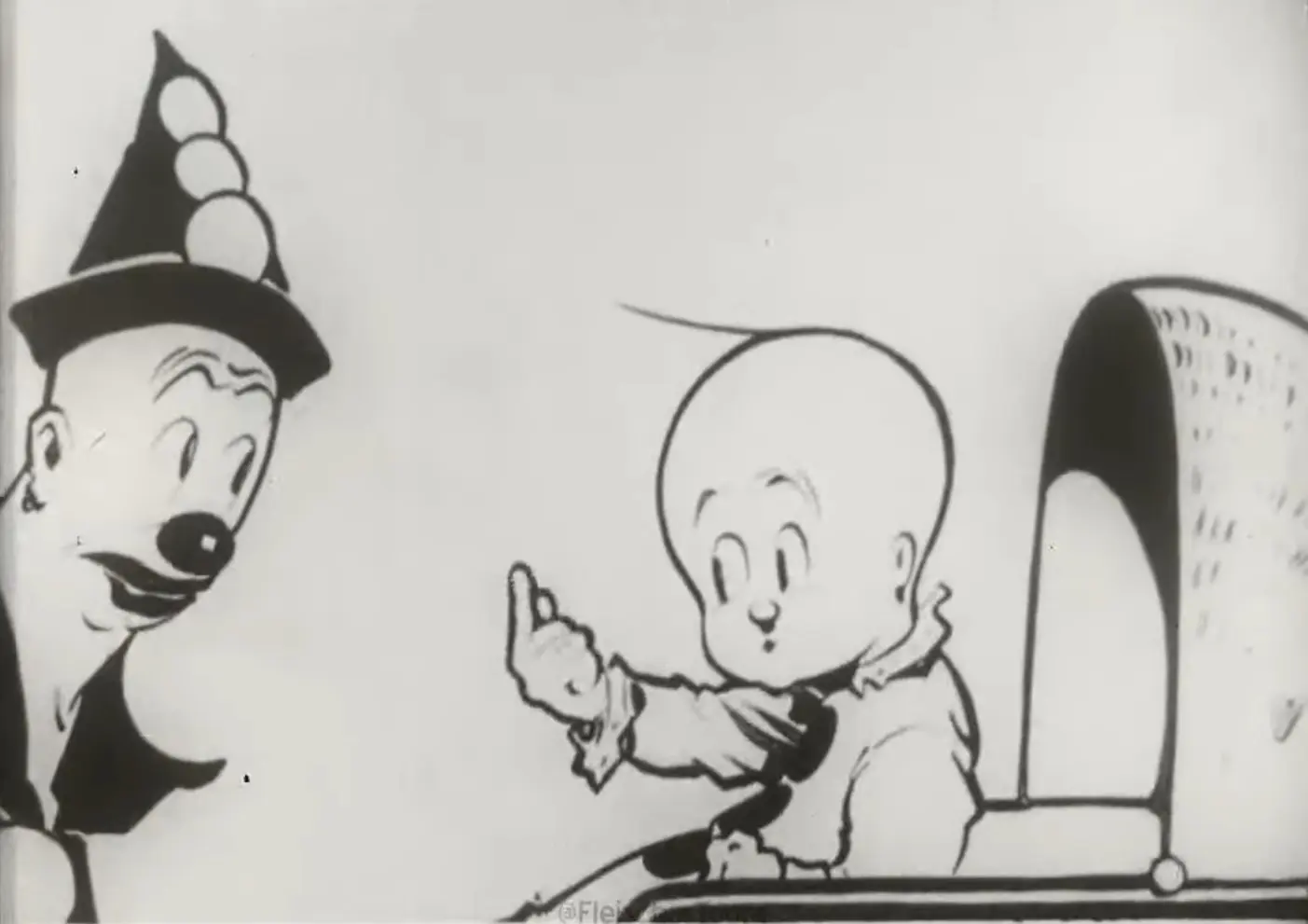
At its core, The Storm presents an elemental conflict: the whimsical, often mischievous Ko-Ko, a creature born of the animator's pen, pitted against the raw, unbridled power of nature. The inciting incident is disarmingly straightforward: Ko-Ko, in his usual animated antics, finds himself unexpectedly burdened with the care of a helpless infant. This seemingly innocuous setup quickly escalates into a harrowing struggle for survival when a hurricane descends with terrifying swiftness and ferocity. It’s a narrative stripped to its bare essentials, yet within this minimalist framework, Fleischer manages to evoke a surprising depth of emotion and a spectacle of animated chaos that remains compelling nearly a century later.
The genius of The Storm lies not just in its pioneering animation but in its audacious depiction of a natural disaster. Fleischer, through his ingenious use of rotoscoping and other nascent techniques, brings the hurricane to life with a visceral energy that transcends the limitations of the medium. Trees bend and snap with impossible force, structures crumble like sandcastles, and the very air seems to churn with invisible menace. The wind, an invisible antagonist, is rendered palpable through its effects: objects are flung about with reckless abandon, and Ko-Ko himself is tossed and buffeted like a ragdoll. It’s a testament to Fleischer’s artistry that, despite the lack of synchronized sound, the sheer visual dynamism conveys the terrifying roar and relentless assault of the tempest.
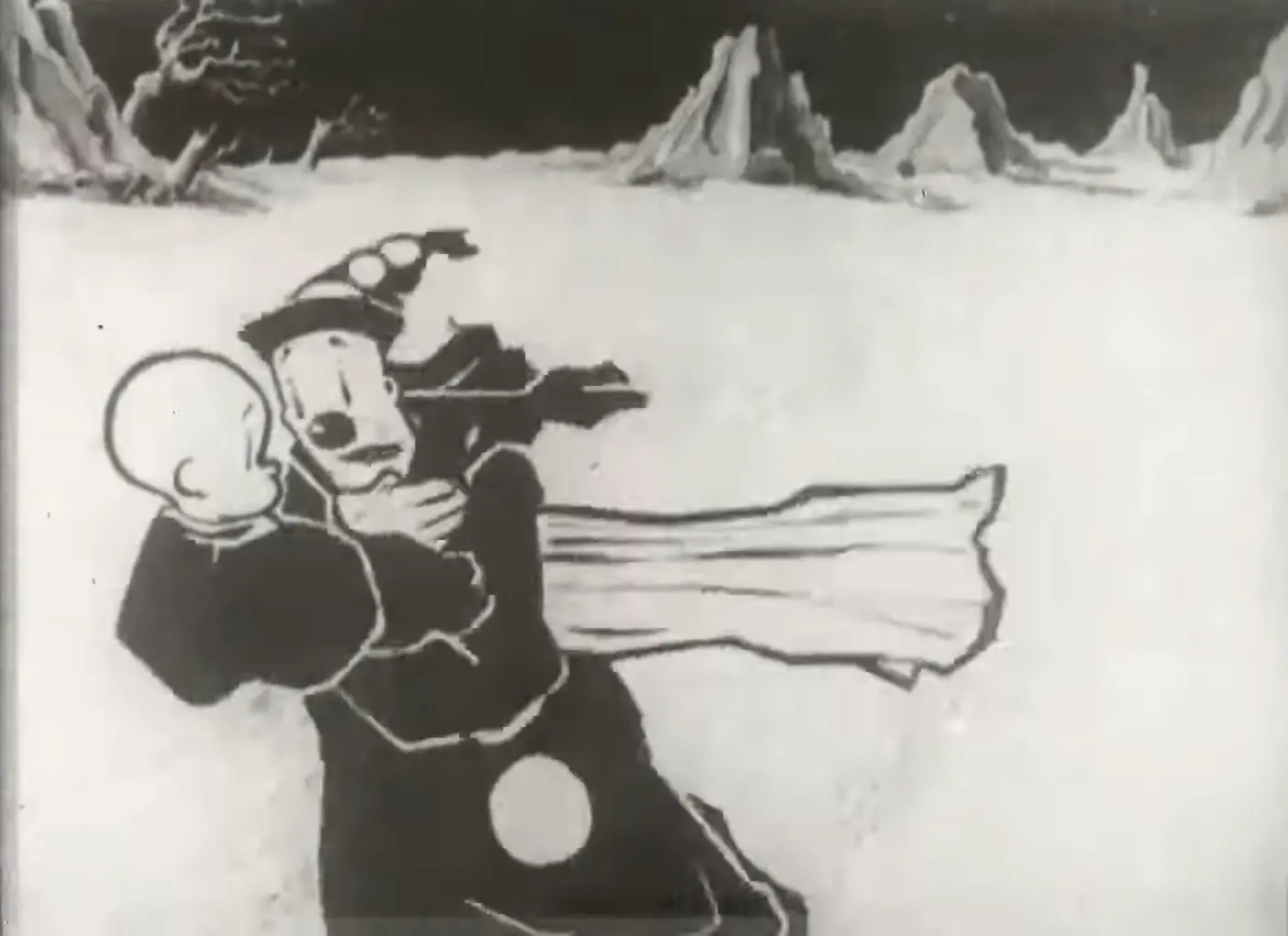
This visual storytelling is particularly effective in establishing the overwhelming scale of the threat. Unlike the more grounded, if exaggerated, physical comedy of a live-action contemporary like Charlie Chaplin in The Essanay-Chaplin Revue of 1916, where the humor often arises from human foibles and societal clashes, Ko-Ko's struggle is against an indifferent, titanic force. His rubbery form and animated resilience, usually sources of slapstick, are here repurposed to convey a desperate, almost existential, fight. The animation doesn't just show a storm; it immerses the viewer in its destructive power, making the audience feel the relentless pressure and the imminent danger. This early foray into depicting natural cataclysms in animation paved the way for countless future cinematic spectacles, demonstrating the medium's unique capacity to visualize the impossible.
Ko-Ko the Clown, usually a mischievous trickster or a playful participant in artistic creation, is cast in an unfamiliar role: protector. The addition of the baby introduces a layer of vulnerability and heightened stakes that elevates the short beyond mere animated hijinks. Ko-Ko's usual elasticity and ability to interact with the real world (a hallmark of the 'Out of the Inkwell' series) are put to the ultimate test. He contorts, stretches, and improvises with a frantic ingenuity, his every action driven by the imperative to shield the helpless infant from the storm's wrath. This isn't just about Ko-Ko's survival; it's about his unexpected capacity for self-sacrifice and unwavering guardianship.
The dynamic between the animated clown and the real-world baby (likely rotoscoped or carefully composited) is particularly poignant. It grounds the fantastical elements of Ko-Ko's world with a tangible sense of responsibility. In a way, it anticipates the later, more complex emotional arcs found in animated features, demonstrating that even in a silent, black-and-white cartoon, deep sentiment could be effectively conveyed. This emotional core differentiates The Storm from many of its contemporaries, which often prioritized pure gags or visual novelty. Fleischer understood that even a drawn character could evoke empathy, especially when faced with such a universal and terrifying threat.
While ostensibly a simple animated short, The Storm can be viewed through a thematic lens, exploring the age-old conflict between humanity (or, in this case, animated proxies) and the indifferent forces of nature. It’s a theme that resonates across various cinematic genres, from the rugged survival narratives of live-action films like Ruth of the Rockies, where human endurance is tested against harsh environments, to the more symbolic struggles in films like Half Breed, where individuals navigate formidable landscapes. Fleischer's animation distills this struggle to its purest form, using the visual language of the cartoon to exaggerate both the threat and the desperate measures taken to overcome it.
There's also a subtle commentary on vulnerability and resilience. The baby represents ultimate fragility, a stark contrast to the often-indestructible Ko-Ko. Yet, even Ko-Ko is shown to be susceptible to the storm's power, highlighting that even the most elastic and fantastical beings have their limits when confronted by true elemental force. The short becomes a miniature allegory for confronting overwhelming odds, finding strength in unexpected places, and the fundamental human (or, again, animated) drive to protect the innocent. This depth, achieved without a single spoken word or elaborate narrative, is a hallmark of Fleischer's understated brilliance.
Max Fleischer's studio was a crucible of innovation during the silent era. His contributions, particularly the invention of rotoscoping, revolutionized the animation process, allowing for more fluid and realistic movement. While The Storm might not explicitly showcase the full breadth of his rotoscoping prowess in every frame, the underlying philosophy of bringing lifelike motion and genuine character to animated figures is palpable. He was constantly experimenting with techniques to make his cartoons more dynamic, more expressive, and ultimately, more engaging for audiences.
The sheer ambition of depicting a full-blown hurricane in 1924, with its dynamic effects and continuous motion, cannot be overstated. It was a significant technical feat, requiring meticulous planning and execution. This level of technical daring can be paralleled with the atmospheric intensity sought in live-action films of the era, even those with supernatural or psychological elements, such as The Witching Hour or The Evil Eye (1920). While these films used dramatic lighting and set design to create suspense, Fleischer had to build his entire world from scratch, imbuing every line and shadow with the terror of the storm.
The impact of Fleischer's work, including shorts like The Storm, extends far beyond the silent era. His aesthetic, characterized by its slightly surreal edge, its mechanical precision, and its profound understanding of character, would go on to influence generations of animators. The 'Out of the Inkwell' series, with Ko-Ko as its ever-evolving star, laid crucial groundwork for the future of animated storytelling, demonstrating that cartoons could tackle more than just simple gags; they could evoke fear, inspire empathy, and tell powerful, dramatic narratives.
Revisiting The Storm today is a fascinating exercise in appreciating the foundational artistry of animation. It reminds us that long before the advent of elaborate soundscapes, vibrant color, or computer-generated imagery, the power of a well-drawn line and intelligently conceived motion could captivate and thrill. The film stands as a vibrant artifact of its time, showcasing Fleischer's unique vision and his studio's commitment to pushing the boundaries of the nascent medium. It’s a testament to the enduring appeal of simple yet profound storytelling, where the stakes are clear, the characters compelling, and the visual execution innovative.
The absence of dialogue, far from being a limitation, forces a heightened reliance on visual cues, character expressions, and dynamic action. This universal language of movement and emotion ensures that The Storm remains accessible and impactful, transcending cultural and linguistic barriers. It’s a pure cinematic experience, where the spectacle of the hurricane and the determination of Ko-Ko speak volumes without uttering a single syllable. For those interested in the evolution of animation and the silent film era, this short is not merely a historical curiosity but a vibrant, compelling piece of early cinematic art that continues to resonate with its raw energy and surprising emotional depth.
In an era where films like Colomba or God's Law and Man's explored human drama and morality through live actors, Fleischer demonstrated that a drawn clown and a baby could convey equally powerful narratives of survival and protection. It's a poignant reminder of animation's inherent ability to distill complex scenarios into universally understood visual poetry. The storm may have raged, but Ko-Ko, and Fleischer's vision, weathered it beautifully, leaving an indelible mark on cinematic history.
IMDb —
1924
Community
Log in to comment.