DbcultAccessing Vault...
Cult Review
Senior Film Conservator
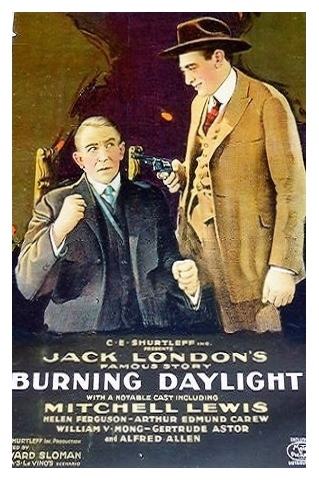
he 1920 iteration of Burning Daylight, directed with a rugged sensibility that mirrors its source material, stands as a fascinating artifact of early American cinema’s obsession with the masculine archetype. Adapted from the Jack London novel, the film serves as a bridge between the dying frontier and the burgeoning industrial cynicism of the Roaring Twenties. It is a cinematic meditation on the malleability of the human spirit when subjected to the extreme pressures of both environmental hardship and social decadence. Unlike the more sanitized versions of the North that would follow in later decades, this production captures a specific, grimy verisimilitude that feels plucked directly from the frost-bitten pages of London’s bibliography.
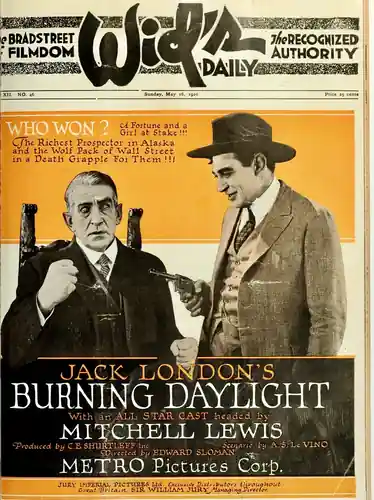
The film opens with an almost tactile sense of cold. Mitchell Lewis, portraying Elam Harnish—famously nicknamed 'Burning Daylight' for his habit of waking his comrades before the sun rises—commands the screen with a physicality that is both intimidating and strangely noble. The cinematography utilizes the stark contrasts of the Alaskan topography to emphasize Harnish's dominance over his surroundings. Here, the struggle is honest; it is man against nature, a theme explored with similar grit in The Weakness of Strength. Harnish is the quintessential 'Super-man' of London’s philosophy, a figure whose sheer will has carved a fortune out of the frozen earth. The early reels are a masterclass in silent storytelling, relying on expansive wide shots and the expressive, weathered faces of the miners to convey a world where a man’s word is his only currency.
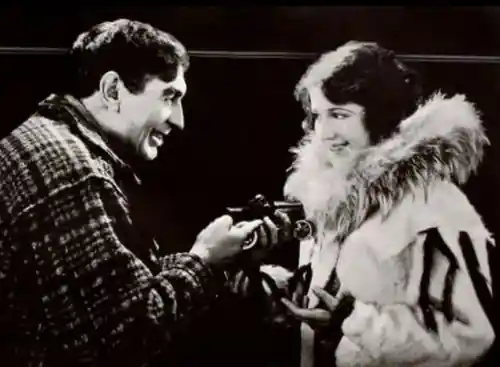
However, the narrative pivot occurs when Harnish decides to transition from the gold fields to the gold vaults of New York. This shift is not merely a change in scenery; it is a descent into a different kind of wilderness—one where the predators wear silk hats instead of furs. The film brilliantly juxtaposes the 'clean' violence of the North with the 'veiled' violence of the East. In the city, Harnish is a fish out of water, but a fish with a very large bankroll, making him the ultimate prize for the metropolitan sharks.
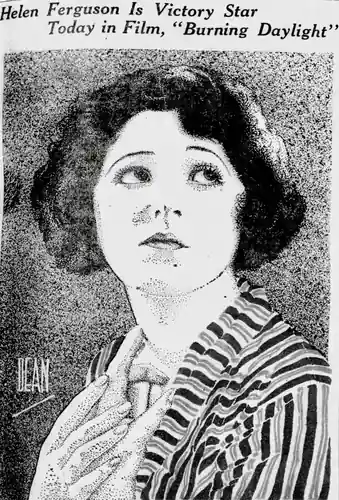
The introduction of the financier Nathaniel Curtis and his niece, Dede Mason (played with a subtle, calculating grace by Helen Ferguson), marks the beginning of the film’s psychological core. The 'fleece' is not a singular event but a slow, methodical erosion of Harnish's defenses. The stock deal sequence is particularly well-constructed, utilizing intertitles and frantic editing to simulate the dizzying, incomprehensible nature of the market to a man who understands value only in terms of physical weight. The niece is used as a lure, a trope that explores the intersection of romantic vulnerability and economic exploitation, a theme also touched upon in the social hierarchies of Social Ambition.
"In the Klondike, a wolf attacks your throat; in New York, he attacks your ledger."
This realization becomes the catalyst for Harnish’s transformation. The film takes great pains to show the softening of the hero—the way the city’s luxuries begin to atrophy his muscles and cloud his judgment. He becomes a 'civilized' man, which in London’s worldview, is often synonymous with becoming a victim. The performance by Newton Hall and the supporting cast provides a vivid tapestry of 1920s archetypes, from the oily stockbroker to the wide-eyed ingenue who may or may not have a heart of gold. The betrayal, when it inevitably comes, is handled with a dramatic flair that borders on the operatic, yet it never loses its grounded sense of tragedy.
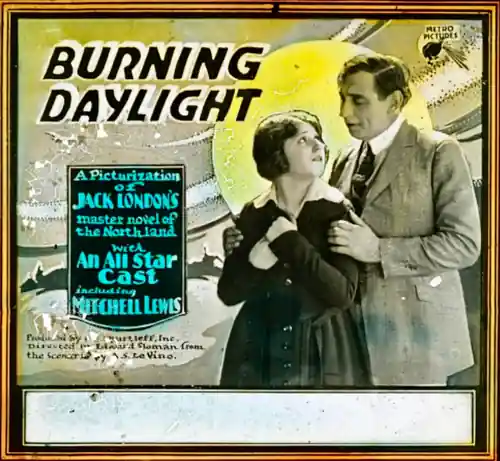
When looking at contemporary works of the era, such as The Sea Panther, one sees a recurring fascination with the 'untamed man' entering a refined society. However, Burning Daylight handles this with a more cynical edge. While films like The Man from Mexico might find humor in the displacement of their protagonists, this film finds a simmering rage. Harnish’s eventual retaliation—a scene involving a literal gun to the heads of the financiers—is a cathartic rejection of the 'rules' of the city. It is the moment where the Burning Daylight of the Yukon returns to reclaim his soul from the Elam Harnish of Wall Street.
The directorial choices here are fascinating. There is a specific use of lighting in the New York office scenes—harsh, high-contrast shadows that make the financiers look like ghouls—which stands in stark contrast to the naturalistic, albeit cold, lighting of the Alaskan sequences. This visual language reinforces the idea that the city is a place of artifice and deception. The inclusion of Gertrude Astor and Mitchell Lewis adds a layer of theatrical weight to the proceedings, ensuring that even the quieter moments of dialogue carry a sense of impending consequence.

Adapting London is always a precarious endeavor because so much of his power lies in internal monologue and the philosophical weight of his prose. Burning Daylight (1920) manages to externalize these themes through action and atmosphere. It avoids the melodramatic pitfalls of some of its contemporaries, such as A Wife on Trial, by maintaining a focus on the protagonist's internal struggle with his own success. Is Harnish a better man for having conquered the market, or was he a better man when he was struggling against a blizzard? The film leans heavily toward the latter, suggesting that wealth is a corruptive force that requires a primitive spirit to survive it.
Technically, for a film over a century old, the print’s survival and the clarity of the storytelling are remarkable. The pacing is deliberate, allowing the audience to feel the passage of time and the weight of Harnish’s boredom in his New York penthouse. This is not a fast-paced thriller; it is a character study of a man who realizes he has traded his mountain for a molehill of paper. Even in the romantic subplot, there is a sense of transactional weariness. The niece's role is complex—is she a willing participant in her uncle’s scheme, or a pawn herself? The film leaves enough ambiguity to keep the viewer engaged with her character's moral arc, reminiscent of the nuanced female leads in Diane of the Follies.
The climax of the film, where Harnish forces the return of his stolen millions, is a masterclass in tension. It serves as a reminder that for all the sophistication of the stock market, it rests upon a foundation of human greed that can be dismantled by raw force. It is a proto-noir sentiment, a rejection of the 'civilized' veneer that would become a staple of American cinema in the decades to follow. The resolution, which sees Harnish returning to a simpler life, is perhaps a bit idealistic, but it fits the Darwinian logic of the film: the organism has returned to its natural habitat where it can truly thrive.
In the broader context of 1920s cinema, Burning Daylight is a vital entry. It lacks the whimsicality of The Good for Nothing and the historical grandiosity of Lucrezia Borgia, opting instead for a gritty, masculine realism. It is a film that understands the cost of ambition and the fragility of the 'self' when it is removed from the environment that forged it. For fans of silent cinema, this is a essential viewing—not just for its historical value, but for its surprisingly modern take on the corruptive nature of unbridled capitalism.
Ultimately, Burning Daylight remains a testament to the enduring power of Jack London’s themes. It is a story of reclamation—not just of money, but of identity. The performances, particularly those of the central prospector and his manipulative urban counterparts, create a friction that drives the film forward with the relentless energy of a Yukon dog sled. It is a visceral, haunting, and deeply satisfying piece of early 20th-century art that continues to resonate in an era where the 'fleecing' of the common man has merely moved from the stock floor to the digital screen.
IMDb —
1924
Community
Log in to comment.