DbcultAccessing Vault...
Cult Review
Senior Film Conservator
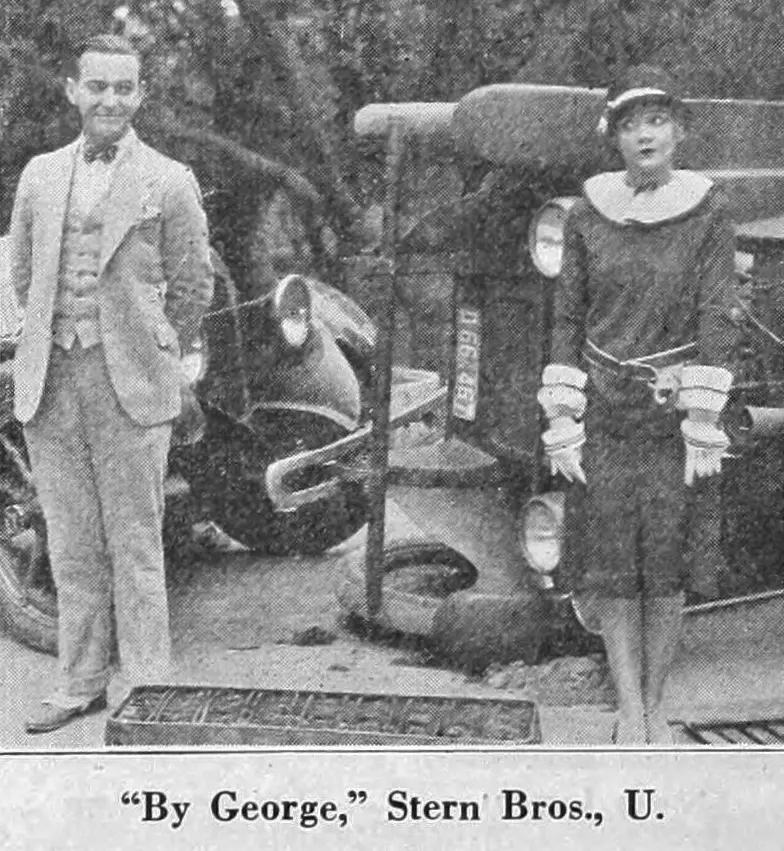
Is 'By George' worth watching today? Short answer: yes, but with significant caveats. This largely lost silent comedy, starring Syd Saylor, offers a fascinating, albeit fragmented, window into the formative years of cinematic humor, making it a valuable historical artifact more than a universally engaging mainstream experience.
This film is unequivocally for the dedicated cinephile, the silent film enthusiast, and anyone with a profound interest in the evolution of comedic timing and physical performance. It is decidedly not for those seeking modern narrative pacing, sophisticated dialogue, or high-definition spectacle. Expect a journey into the past, not a contemporary thrill ride.
This film works because it stands as a testament to the raw, unadulterated energy of early cinema, showcasing the foundational principles of physical comedy through a seasoned performer like Syd Saylor. It provides a rare opportunity to appreciate the roots of an art form.
This film fails because its obscurity means a complete, pristine viewing is a challenge, often leading to a fragmented experience that can alienate casual viewers. Its narrative, while likely robust for its era, might feel simplistic by today's standards.
You should watch it if you're a student of film history, a silent comedy aficionado, or simply curious about the craft of a performer working without the crutch of spoken dialogue. It's an educational experience, a historical document, and a surprisingly charming piece of early entertainment, provided you adjust your expectations accordingly.
Without a readily available print or a comprehensive plot synopsis, evaluating "By George" requires a degree of informed speculation, drawing on the conventions of its era and the known talents of its star, Syd Saylor. Saylor, a prolific character actor, often embodied a specific type: the well-meaning but slightly dim, perpetually flustered everyman caught in circumstances far beyond his control. This persona was his comedic bread and butter, a reliable source of gags and empathetic humor.
One can confidently infer that "By George" would have capitalized on this. Imagine Saylor's character, perhaps a fledgling entrepreneur or a simple clerk, finding himself in a situation that spirals wildly out of hand. A misplaced item, a mistaken identity, or a simple errand gone awry — these were the fertile grounds for silent comedy.
The film's opening might have established a sense of mundane normalcy, only for a single, seemingly innocuous event to shatter it, propelling Saylor's character into a cascade of increasingly absurd encounters. Perhaps he's chased through city streets, not by villains, but by an angry landlord or a determined dog, his lanky frame and expressive face conveying every ounce of his mounting panic and confusion.
The beauty of silent comedy, particularly with performers like Saylor, lies in the visual storytelling. Every gesture, every wide-eyed stare, every frantic dash conveyed emotion and narrative progression without a single spoken word. In "By George," we can envision a masterclass in this non-verbal communication, with Saylor's body language telling a story of escalating chaos and his character's desperate attempts to regain control.
The film's climax would undoubtedly have been a frantic, high-energy sequence, a hallmark of the era's comedies. Think of a grand chase scene, a literal or metaphorical house of cards collapsing around our hero, before a sudden, often arbitrary, resolution brings things back to a state of humorous equilibrium. It’s a formula that worked then, and still holds a certain charm for those attuned to its rhythm.
Syd Saylor, the sole credited actor for "By George," was a fixture in Hollywood, particularly during the silent and early sound eras. While not a household name like Chaplin or Keaton, Saylor carved out a respectable career as a reliable supporting player and, occasionally, a lead in short comedies. His strength lay in his relatability; he wasn't the suave hero or the sophisticated villain, but rather the guy next door, perpetually a step behind the world's machinations.
Saylor's comedic style was less about intricate gags and more about physical presence and an earnest, often bewildered, reaction to absurd situations. He possessed a rubbery face capable of conveying a spectrum of emotions, from wide-eyed innocence to exasperated frustration, all without dialogue. His lanky frame lent itself well to slapstick, making his falls and tumbles inherently funnier. He was a master of the double-take and the slow burn, building comedic tension through his character's gradual realization of his predicament.
In "By George," Saylor would have been the anchor. His performance would have needed to carry the entire narrative, relying on his expressive face and body to communicate the plot, the character's motivations, and the comedic beats. A moment where his character perhaps slips on a banana peel, not just once, but repeatedly, each time with a slightly different, more exasperated reaction, would be a classic Saylor-esque gag.
The direction of a silent comedy like "By George" would have been acutely focused on visual clarity and comedic timing. Directors of this era, operating without the luxury of synchronized sound, became masters of mise-en-scène and editing to convey story and emotion. Every prop, every set piece, and every actor's movement had to contribute directly to the narrative or the gag.
One could expect the cinematography to be functional yet effective, employing techniques common to the period. Wide shots would establish the chaotic environments Saylor often found himself in, allowing audiences to appreciate the full scope of a chase or a crowded street scene. Closer shots, perhaps a medium close-up on Saylor's face as he registers a new indignity, would highlight his expressive acting and draw the audience into his emotional state.
For example, consider a scene where Saylor's character is attempting to discreetly escape a situation. The director might employ a long shot, showing Saylor tiptoeing across a busy room, only to trip over a rug, sending objects (and himself) flying, all captured within a single, wide frame that emphasizes the sheer scale of his public humiliation. The camera, in this context, is a silent observer, allowing the physical comedy to unfold naturally before its lens.
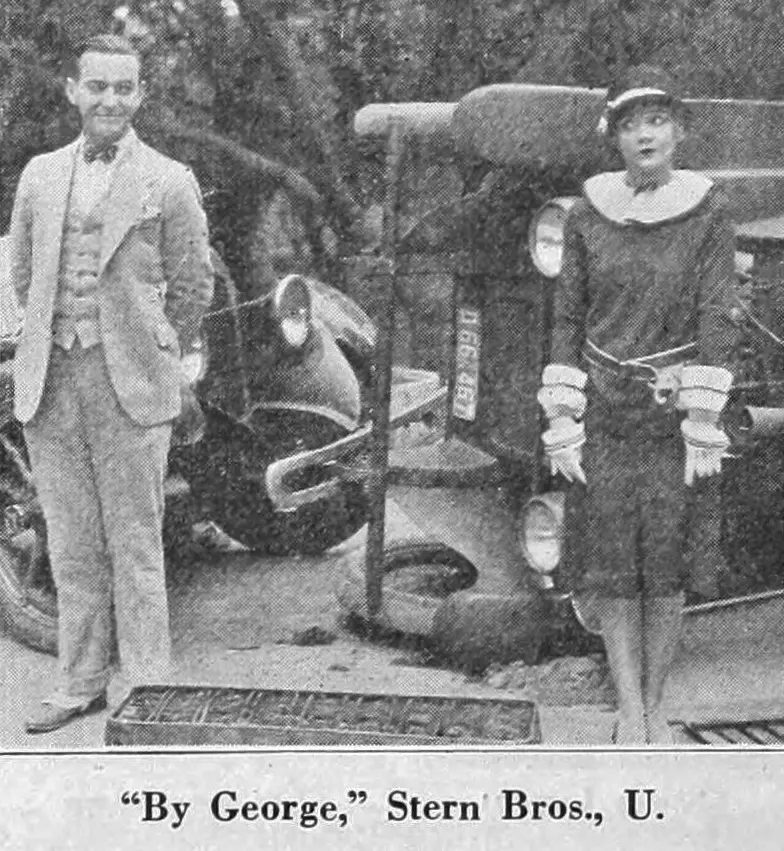
Editing would have been crucial for pacing the gags. Rapid cuts would intensify chase sequences or escalating arguments, while a slightly longer take might allow a particularly effective piece of physical comedy, like Saylor struggling to open a stubborn door, to play out and build its humor. The visual rhythm was everything, a carefully orchestrated dance of movement and reaction.
The pacing of silent comedies, including what we can infer about "By George," possessed a unique rhythm distinct from modern cinema. Gags often started small, building in intensity and absurdity. There was a deliberate escalation, a slow burn that would eventually erupt into frantic, high-energy sequences. This build-up allowed the audience to anticipate the humor, making the payoff even more satisfying.
The tone would have been lighthearted and buoyant, even when Saylor's character faced seemingly insurmountable odds. The underlying message of most silent comedies was one of resilience and the triumph of the human spirit, often through sheer dumb luck or accidental heroism. There's a pervasive innocence to the humor, even in its more chaotic moments.
Think of the relentless energy of a Mack Sennett short, or the intricate set pieces of a Buster Keaton film like A Gentleman of Leisure. While "By George" might not have reached those iconic heights, it would have shared a similar DNA: a commitment to visual gags, character-driven humor, and a pace that, once it got going, rarely let up. The film's tone would have been primarily farcical, relying on exaggeration and caricature to elicit laughter.
For the casual viewer, 'By George' is likely not an essential watch. Its value is primarily historical. However, for those with a genuine interest in silent cinema, it offers a rewarding experience.
It provides insight into the comedic techniques of its era. You can observe the building blocks of physical comedy. Syd Saylor's performance is a masterclass in non-verbal acting. The film's historical context makes it a fascinating artifact. It's a window into a bygone era of entertainment. Approach it with an open mind and appreciation for history. It works. But it’s flawed by its very nature of being a largely forgotten film.
The true challenge and, paradoxically, the unique appeal of a film like "By George" lies in its obscurity. For many, a silent film that isn't a universally recognized classic like El apóstol or a Chaplin vehicle might seem like an academic exercise rather than genuine entertainment. And in many ways, it is.
However, there's an undeniable magic in uncovering these forgotten gems. Each rediscovered frame, each restored sequence, offers a fresh perspective on the evolution of cinema. "By George" isn't just a film; it's a piece of a larger puzzle, a fragment of a lost artistic landscape. Its value isn't solely in its intrinsic comedic quality – which, by all accounts, would have been solid for its time – but in its contribution to our understanding of film history.
My unconventional observation is this: the true genius of these forgotten films often lies not in their individual brilliance, but in their collective mediocrity. It's the sheer volume of everyday, workmanlike productions like "By George" that created the fertile ground for the masterpieces to emerge. They were the training wheels, the proving grounds, the constant churn of experimentation that refined the craft. To dismiss them is to misunderstand the very process of artistic development.
This perspective demands a shift in how we approach cinema. We shouldn't always seek the 'best' or the 'most influential.' Sometimes, the most valuable insights come from the average, the typical, the films that simply *were*. "By George" represents this average, and in doing so, it becomes profoundly important.
"By George" is more than just a forgotten film; it's a whisper from a bygone era, a charming example of the kind of foundational entertainment that built the cinematic landscape we know today. While its specific narrative may be lost to time, the spirit of its star, Syd Saylor, and the conventions of silent comedy shine through, even in its absence.
It's a valuable historical document, a testament to the ingenuity of early filmmakers working without the luxury of sound, and a delightful, if niche, viewing experience for those willing to engage with its particular charms. It demands an appreciation for history over pure entertainment, and in that context, it delivers.
Don't expect a revelation, but do expect a fascinating journey. "By George" is a reminder that even the smallest, most obscure films hold lessons and laughter for those willing to look.
IMDb 7.2
1931
Community
Log in to comment.