DbcultAccessing Vault...
Cult Review
Senior Film Conservator
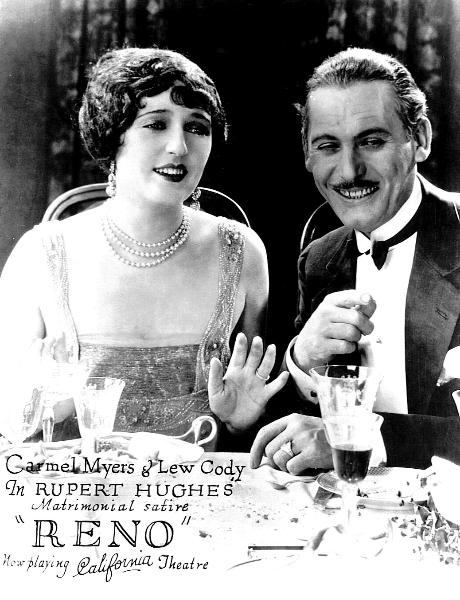
When Reno rolls onto the screen, the first thing that strikes a viewer is the stark contrast between its black‑letter backdrop and the vivid emotional palette of its characters. Rupert Hughes, the screenwriter, crafts a tale that feels simultaneously timeless and anchored to the post‑World‑I era’s shifting attitudes toward marriage, wealth, and autonomy. The film’s central figure, Roy Tappan (portrayed with a blend of swagger and vulnerability by Lew Cody), is a man whose relentless pursuit of financial security leads him into a cascade of ill‑fated decisions.
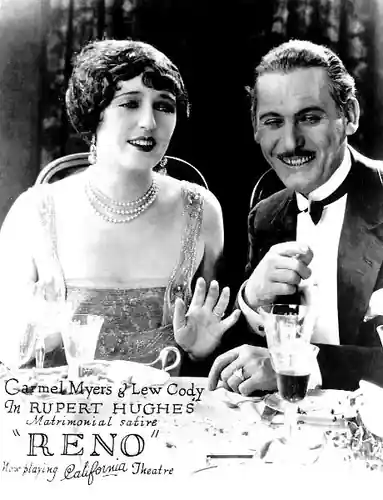
Roy’s swift divorce from Emily (the luminous Carmel Myers) sets the stage for a marriage of convenience with Dora Carson (Helene Chadwick). Both protagonists are convinced that the other hides a fortune, a misconception that fuels the film’s central tension. The audience watches as the couple’s initial optimism devolves into a stark reality: their bank accounts are as barren as the desert plains they later traverse. This motif of false wealth mirrors the Made in the Kitchen narrative, where characters chase mirages of affluence only to confront the harshness of their actual circumstances.

Emily’s subsequent marriage to Walter Heath (George Walsh) is a desperate attempt to reclaim stability. Yet the legal technicalities of her home state render the union null, an irony that underscores the film’s preoccupation with the fragility of social contracts. Walter’s earnestness is undercut by bureaucratic absurdity, a theme reminiscent of the convoluted marital entanglements in Your Wife and Mine. The audience feels the weight of a love that is legally invisible, a sentiment amplified by the film’s stark intertitles that punctuate each revelation.
Roy’s aunt, a matriarchal figure played by Adele Watson, offers a lifeline that comes with a morally dubious price: custody of Roy’s two children. This transaction reveals the era’s underlying commentary on the commodification of family. The aunt’s home, rendered in chiaroscuro lighting, becomes a visual metaphor for the shadows that loom over the characters’ choices. The children, innocent yet pivotal, serve as the narrative fulcrum upon which the drama pivots.

The pursuit leads Emily and Walter into Yellowstone National Park, a setting that transcends mere backdrop to become an active participant in the story. The park’s jurisdiction, oddly, legitimizes their marriage—a legal loophole that feels both contrived and poetically just. The expansive vistas, captured in sweeping cinematography, echo the emotional vastness of the characters’ inner turmoil. The park’s geothermal features, especially the ominous geysers, foreshadow the film’s climactic showdown.
The final confrontation between Roy and Walter is staged at the edge of a boiling geyser, a natural furnace that erupts with unforgiving force. The choreography of the fight is raw, unpolished, yet charged with an animalistic intensity that mirrors the primal power of the environment. As the geyser erupts, Roy is catapulted into the air, his body flailing like a marionette before crashing onto jagged rocks. The scene, shot in stark close‑up, captures the moment’s brutality without resorting to melodrama, a testament to the director’s restraint.
Carmel Myers delivers a performance that oscillates between dignified resignation and fierce determination. Her expressive eyes convey a depth that silent cinema often demands. Lew Cody’s Roy is a study in conflicted masculinity; his swagger is undercut by moments of palpable fear, especially in the film’s denouement. Helene Chadwick’s Dora provides a counterpoint—a woman who, despite her own misfortunes, exudes a quiet resilience. The supporting cast, including Victor Potel as a comedic foil and Hedda Hopper in a brief but memorable turn, enrich the tapestry without stealing focus.
Visually, Reno employs a muted grayscale palette punctuated by strategic splashes of color in its promotional materials—most notably the dark orange (#C2410C) and sea blue (#0E7490) that appear in the intertitles. The film’s editing is deliberately paced; scenes linger just long enough to let the audience absorb the emotional stakes. The use of natural lighting in the Yellowstone sequences adds authenticity, while the indoor scenes rely on chiaroscuro to highlight the characters’ internal conflicts.

At its core, Reno interrogates the societal expectations placed upon marriage in the 1920s. The notion that a union can be both a financial contract and a romantic bond is dissected with surgical precision. The film also probes the legal labyrinth that women, like Emily, had to navigate—a struggle mirrored in contemporary discussions about marital rights. Moreover, the stark contrast between human ambition and nature’s indifferent power invites viewers to contemplate the futility of trying to dominate forces beyond one’s control.
When placed alongside other silent dramas such as Mountain Madness and The Green‑Eyed Monster, Reno stands out for its integration of legal intrigue with natural spectacle. While Mountain Madness relies heavily on the peril of the environment, Reno uses the environment as a catalyst for human drama, thereby achieving a more layered narrative structure.
Though Reno may not enjoy the same name‑recognition as contemporaneous blockbusters, its influence persists in the way modern filmmakers treat marriage as a socio‑economic battleground. The film’s daring depiction of a legally invalid marriage gaining legitimacy through jurisdictional loopholes prefigures plot devices seen in later courtroom dramas. Moreover, the tragic climax—where nature itself becomes an executioner—has been echoed in countless action sequences across cinema history.
The craftsmanship of Reno is evident in its meticulous set design, the authenticity of its location shooting, and the nuanced performances that convey complex emotions without spoken dialogue. Rupert Hughes’ script balances melodrama with realism, never allowing the story to tip into caricature. The film’s pacing, while deliberate, never feels stagnant; each scene propels the narrative forward, whether through a heated argument, a quiet moment of introspection, or the thunderous roar of a geyser.
In sum, Reno is a masterclass in silent storytelling, a film that marries (pun intended) legal intrigue, emotional depth, and natural spectacle into a cohesive whole. Its relevance endures, inviting contemporary audiences to reflect on the precarious balance between personal ambition and the immutable forces that shape our destinies.

IMDb —
1921
Community
Log in to comment.