DbcultAccessing Vault...
Cult Review
Senior Film Conservator
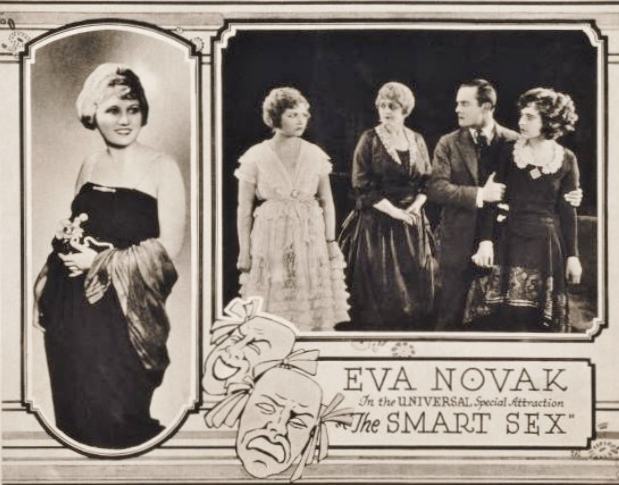
The first time we see Rose she is reflected, warped and aqueous, in the chrome of a dressing-room light, a fractured starlet already half-myth. The Smart Sex—a title that snaps with Jazz-Age sarcasm—never bothers to explain how its heroine’s ostracized showgirl ends up on a muddy back-road; it simply drops her there like a spangled bird with clipped wings, then watches her molt into something fierce. Director Emma Bell Clifton, armed with a script co-penned by serial queen Doris Schroeder, treats plot like a paper lantern: fragile, glowing, incidental. What matters is the shimmer of personalities brushing against each other, the static crackle of class friction, and—because this is 1924—the quiet dare of letting a woman solve her own catastrophe.
The goose arrives as both deus ex machina and comedic sidekick, a flapping metaphor for every outsider. Cinematographer Geoffrey Webb shoots the bird in iris-shot close-ups that would make Lon Chaney’s wolf envious: black bead eyes, preening wings, a comic strut that undercuts the melodrama without puncturing it. Rose’s impromptu barnyard act—part ballet, part burlesque—feels like something Chaplin might have dreamt had he ever worn sequins instead of a bowler. When the pair win the amateur cup, the medal is enormous, gaudy, and unmistakably hollow: a prop that foreshadows every glittering lie about to be told.
Enter Jim O’Neill as Jack Van Suydam, a silk-stocking youth whose restlessness is registered in a single dissolve: white flannels smeared with axle-grease after he changes a stranger’s tire simply for the novelty. Jack’s courtship strategy—buying Rose supper at a roadside diner that still has sawdust on the floor, then stashing her in a tenant farmhouse adjoining his father’s thousand acres—could scan as patriarchal puppetry. Yet Clifton frames it as a transaction both are willing to misread: he thinks he’s rescuing a damsel; she believes she’s accepting a staging post. Their first kiss is interrupted not by a jealous rival but by the bray of a tractor—agriculture itself cock-blocking romance. Jack’s decision to become a farmhand is shot in a brisk montage of calloused palms, sweat-darkened denim, and Evelyn McCoy’s unreadable half-smile. The film implies that love, if it is to survive the Depression that audiences can already sense coming, must be grounded in blisters.
Halfway through, the narrative pivots from pastoral idyll to whodunit, a gear shift that would derail a lesser film. Clifton handles it with the dexterity of a juggler transferring flaming torches: one moment we’re inhaling hay-dust, the next we’re in a drawing-room where chandeliers drip like frozen waterfalls. The missing jewels are not just MacGuffins; they are the family’s crystallized superiority, and their absence exposes every hairline fracture in the mansion’s gilded plaster. Suspicion slithers toward Rose because, well, of course the chorus girl did it—an assumption the screenplay savages by letting her sleuth out the culprit while wearing a borrowed evening cloak two sizes too big. The actual thief, a wan cousin with a gambling jones, is unmasked in a bravura sequence staged beneath a thunder-loud New Year’s Eve fireworks display: faces lit by gunpowder sparks, guilt flickering across visages in stroboscopic bursts.
Evelyn McCoy—too often relegated to second-bill westerns—gives Rose the brittle resilience of a champagne flute: transparent, yes, but try squeezing it and you’ll bleed. Watch her in the farmhouse kitchen, teaching the goose to bow: she bends from the waist, a parody of court etiquette, then snaps upright with a grin that dares the world to call her vulgar. The performance is built on micro-gestures—the way she polishes a teacup as if it might buy her credibility, the fractional pause before she accepts Jack’s proposal, as though testing the air for traps.
Jim O’Neill has the thankless task of embodying affluenza cured by manure. He pulls it off by never letting us forget the itch under the collar, the way privilege chafes. In one sublime throwaway shot he studies his own palm, baffled by the blister he’s proud of. That single image undercuts ten title cards of exposition.
The supporting cast pops like champagne corks: C. Norman Hammond as the dyspeptic patriarch who loathes chaos yet can’t resist a pretty ankle; Eva Novak as the viperous ex-chorus rival whose side-eye could pickle beets; Margaret Mann as the benevolent aunt who knits like a metronome, each clack of her needles sounding out society’s judgment.
Clifton’s visual palette borrows from German expressionism without the gloom: she tilts mirrors, fractures screens, lets moonlight pool like spilled milk across parquetry. In the theft sequence, the camera glides along a corridor lined with ancestral portraits whose eyes have been cut out—an eerie foreshadowing of the surveillance Rose endures. When she finally confronts the cousin, the two women are framed within a Chinese screen: Rose’s face visible, the cousin’s occluded by silk, morality literally translucent.
The goose, naturally, gets its own heroic low-angle shot, wings flapping against a stormy cyclorama that could be borrowed from a hellfire western. It’s absurd, hilarious, and weirdly moving—an animal à la Murnau’s canine philosophers, reminding humans that dignity is species-agnostic.
Some historians slot The Smart Sex beside other post-suffrage parables, yet it is cannier than most. Rose never waits for permission; she negotiates. Her body is currency, yes, but she spends it knowingly, investing in acreage, livestock, and eventually a wedding ring she designs herself—an octagonal setting because, as she scribbles on a note, “corners leave room for light.” Jack’s renunciation of wealth is temporary; the film knows it, Rose knows it, and still the marriage feels like a mutual merger rather than a surrender. Compare it to the self-flagellating heroines of earlier melodramas and the difference is stark: here the fallen woman rises, not through deathbed repentance but through strategic alliance and sheer chutzpah.
Surviving prints arrive with no original score, so every modern screening becomes a Rorschach test. I’ve seen it accompanied by solo accordion, by string quartet, by synthwave—each re-orchstration re-writes the emotional algebra. The film’s intertitles, sparse and sardonic, are written in the cadence of Dorothy Parker on a bender: “Love, like lipstick, needs re-application after meals.” When Rose finally mouths “I do” in the climactic ceremony, we don’t need to hear her; the tremor in her collarbone broadcasts volumes.
A century later, the manic-pixie dream girl industrial complex still peddles redemption through male gaze. Rose preempts that trope, weaponizes it, then tosses it back feathered and squawking. The goose—now stuffed in a museum in Poughkeepsie—has more agency than half today’s CGI sidekicks. Meanwhile, the film’s DNA resurfaces in everything from Silver Linings Playbook to Palm Springs, yet few contemporaries dare the tonal pirouette from barnyard slapstick to jewel-heist noir without a safety net of irony.
Physical media hunters will gnash teeth: only one 35 mm negative is known to exist, rescued from a flooded Texan basement in 1987, its magenta bloom nearly devoured by silverfish. A 4K scan circulated briefly on a now-defunct streaming service, but licensing limbo keeps it locked in a vault beside other orphaned eccentricities. Bootlegs surface on niche forums, watermarked with ghosting Cyrillic—iron curtain meets Jazz Age.
Yes, the plot wobbles; yes, the comic bits run long; yes, the social critique lands softer than a feather duvet. Yet The Smart Sex vibrates with the reckless pulse of an era that believed tomorrow might be brighter if only it danced fast enough. Watching it is like sipping bootleg gin from a cracked teacup: you taste the fracture, the fizz, the dare. And when the goose waddles after the newlyweds into sunrise, you realize the film’s true coup—love, like laughter, is anarchic; it honks at propriety, flaps at fate, and still waddles onward, absurdly, defiantly alive.
If you stumble across a rare screening, cancel your plans, bribe the projectionist, and bring a date who can handle subtitles and mild heartbreak. You’ll exit dizzy, maybe smitten, certainly convinced that 1924 understood 2024’s romantic chaos better than we care to admit.
IMDb —
1923
Community
Log in to comment.