DbcultAccessing Vault...
5.5/10
Senior Film Conservator
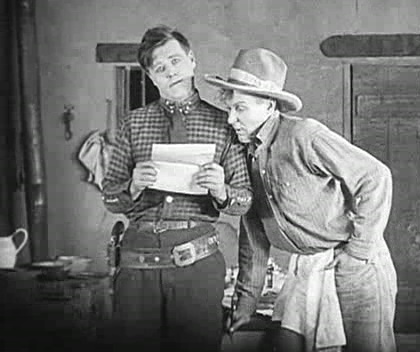
A definitive 5.5/10 rating for a film that redefined the boundaries of cult cinema. By Indian Post remains a cornerstone of transgressive art.
Step back into the nascent days of cinema, a period brimming with raw innovation and storytelling that often transcended the limitations of silence with sheer visual poetry. Among the myriad cinematic offerings of 1919, a year that saw the world grappling with the aftermath of a global war and the dawn of new cultural paradigms, emerges 'By Indian Post'. This silent Western, penned by the collaborative efforts of H. Tipton Steck and William Wallace Cook, isn't merely a relic; it’s a vibrant snapshot of early American filmmaking, demonstrating the enduring power of classic narratives even without spoken dialogue. It's a testament to an era when narrative clarity and emotional resonance were paramount, conveyed through exaggerated gestures, expressive intertitles, and the magnetic presence of performers like Jack Walters and Martha Mattox. While it may not possess the sprawling ambition of later epic Westerns, its charm lies in its focused, almost theatrical, portrayal of human drama against the rugged backdrop of the frontier.
The narrative core of 'By Indian Post', as simple as it appears on the surface, unravels with a delightful series of complications that are both humorous and genuinely dramatic. At its heart lies Jode McWilliams, portrayed with earnest conviction by Jack Walters, the foreman of the Circle O ranch. Jode is a man of the land, rugged and dependable, but his heart has been irrevocably captured by Peg, the spirited daughter of Pa Owens, the ranch's formidable proprietor. This is where the initial conflict ignites: Pa Owens, a figure of stern patriarchal authority, staunchly forbids the union. This familiar cinematic trope, the disapproving father, is given a fresh spin through the film's unique narrative device. Jode, determined to press his suit, enlists the unwitting aid of Stumpy, the ranch cook, in crafting a love letter – a tangible symbol of his unspoken affection. This seemingly innocuous act sets in motion a chain of events that cleverly propels the plot forward, demonstrating the writers' understanding of comedic timing and escalating tension.
The letter, intended as a private declaration of love, becomes an object of public ridicule when the other cowhands, in a display of frontier jocularity, discover it and nail it to a door. It's a moment that could easily be played for pure slapstick, but here, it underscores Jode’s vulnerability and the pervasive, often harsh, social dynamics of a close-knit ranch community. Yet, it is at this precise juncture that the film introduces its titular, and arguably most intriguing, element: Two Horns, a Native American character. In a stroke of narrative ingenuity, Two Horns purloins the letter, not, as one might expect from the prevailing stereotypes of the era, for malicious intent or as a mere plot device for cultural conflict, but to deliver it directly to Peg. This unexpected act of 'Indian Post' subverts the immediate expectation, transforming a potential antagonist or comedic foil into an unlikely Cupid, albeit one whose motivations remain largely unspoken, left to the audience's interpretation. This subtle twist is quite progressive for its time, lending an unexpected layer of agency to a character who might otherwise have been relegated to a more conventional, less pivotal role.
The subsequent pursuit of Two Horns by Jode and his posse is a classic Western set-piece, replete with galloping horses and the vast, open landscapes that defined the genre. However, the chase is not merely for capture; it’s a race against time and revelation. Their arrival at the Owens' house coincides with the truth already having been unveiled to Pa Owens, thanks to Two Horns' unconventional delivery service. This convergence of events sets the stage for the dramatic confrontation that forms the climax of the film. A physical showdown ensues, a raw display of frontier justice and patriarchal dominance, in which Jode, despite his valiant efforts, is ultimately defeated and imprisoned. The film does not shy away from showing the immediate consequences of his defiance, emphasizing the formidable will of Pa Owens and the strict social codes of the time. The raw emotion conveyed through the actors' expressions and body language, a hallmark of silent cinema, makes this scene particularly impactful, even without dialogue.
But the narrative, true to the conventions of romantic adventure, refuses to end on a note of despair. Jode’s loyal pal, Chub, orchestrates a daring rescue, a moment of camaraderie and defiance that injects renewed energy into the plot. The film culminates in a joyous, if somewhat hurried, resolution: the timely appearance of a helpful parson who unites Jode and Peg in holy matrimony. The final image of the newlyweds riding off into the sunset, away from the reluctant father and towards their hard-won happiness, is an iconic tableau, perfectly encapsulating the spirit of hope and new beginnings that often characterized these early Westerns. It’s a triumphant conclusion that celebrates love's victory over adversity, a theme that resonates universally, regardless of the era or cinematic style.
Exploring the performances in 'By Indian Post' offers a fascinating glimpse into the acting techniques prevalent in the silent era. Jack Walters, as Jode McWilliams, embodies the quintessential Western hero – stoic, determined, and ultimately, romantic. His expressions, though often broad, effectively convey his inner turmoil and unwavering resolve. Martha Mattox, portraying Peg, brings a vibrant energy to the screen, her character's defiance and affection clearly readable in her movements and gestures. The supporting cast, featuring familiar names like Hoot Gibson and Pete Morrison, along with Otto Meyer, Jim Moore, Jack Woods, Harley Chambers, Ed Jones, Edward Burns, Magda Lane, and Duke R. Lee, fills out the world of the Circle O with believable characters, each contributing to the film's authentic atmosphere. Hoot Gibson, in particular, a future Western star, likely brought a certain degree of authentic cowboy swagger to his role, even if it was a smaller one. These actors, under the direction inferred from the screenplays by Steck and Cook, had to rely entirely on pantomime, facial expressions, and physical comedy or drama to communicate the story, a skill that now feels like a lost art. Their ability to connect with an audience through purely visual means is a testament to their craft and the power of non-verbal storytelling.
When considering 'By Indian Post' within the broader context of 1919 cinema, it’s useful to draw comparisons. While it doesn't boast the dramatic intensity of a film like Brottmålsdomaren, a Swedish legal drama likely exploring the intricacies of justice, or the avant-garde experimentation one might find in a Russian film such as Zakovannaya filmoi (Chained by Film), 'By Indian Post' firmly establishes itself as a robust example of American genre filmmaking. It aligns more closely with the narrative straightforwardness and moral clarity seen in British dramas like It Is Never Too Late to Mend, which often focused on themes of redemption and social justice. The Western genre itself was still evolving, often serving as a canvas for tales of adventure, romance, and the clash between civilization and wilderness. Its portrayal of the frontier, while romanticized, offered audiences a glimpse into a distinctly American mythos.
The film’s engagement with the 'Indian' character, Two Horns, is particularly noteworthy for its era. While certainly not free from the prevailing cultural biases and stereotypes of the time, the character's pivotal role in facilitating the romance, rather than impeding it, offers a small departure from the more common portrayals of Native Americans as antagonists or exotic background figures. This is a subtle yet significant detail that distinguishes it from other contemporary films. One might compare it to the more generalized, often less nuanced, depictions of rural life and character in films like Our Friends the Hayseeds, which, while comedic, likely relied on broad archetypes. The relative agency granted to Two Horns, even in silence, hints at a burgeoning, albeit slow, shift in cinematic representation.
The thematic underpinnings of 'By Indian Post' resonate with timeless human experiences. At its core, it’s a story about the enduring power of love in the face of societal opposition and patriarchal control. This universal theme finds echoes in countless other cinematic romances, both silent and sound. For instance, the struggle against familial disapproval or societal constraints is a common thread in dramas like Caprice of the Mountains or even the more dramatic The Recoil. The film's lighthearted approach to these serious themes ensures it remains an enjoyable watch, balancing comedic moments with genuine romantic tension. The quest for happiness, often symbolized by the escape to a new life, is a powerful motif that transcends specific genres, making the final ride into the sunset a deeply satisfying conclusion.
Furthermore, the film subtly explores themes of community and loyalty. Jode's bond with his pal Chub, who orchestrates his daring escape, highlights the importance of camaraderie in the rugged frontier setting. This sense of brotherhood and mutual support is a recurring element in Westerns, often more pronounced than the romantic entanglements. It’s a stark contrast to the individualistic struggles often depicted in films focusing on personal ambition or despair, such as the contemplative Khleb or the more somber The Light at Dusk, which might delve into more existential crises. Here, the community, despite its initial teasing, ultimately serves as a backdrop for both conflict and support.
The craft of filmmaking in 1919, particularly in a genre as dynamic as the Western, relied heavily on visual storytelling. The writers, H. Tipton Steck and William Wallace Cook, understood that every shot, every intertitle, and every gesture had to be meticulously planned to convey meaning. The cinematography, though perhaps rudimentary by modern standards, effectively captures the expansive landscapes and the intimacy of human interaction. The use of natural light and practical sets would have been standard, lending an authentic feel to the ranch and wilderness scenes. This visual economy is a hallmark of early cinema, where the absence of sound forced filmmakers to become masters of visual narrative. One can imagine the impact of the chase scenes, the dramatic confrontations, and the tender moments of romance, all conveyed through the silent ballet of movement and expression. This approach is similar to the direct, often unadorned, storytelling found in films like The Hired Man, which focused on the practicalities and hardships of frontier life, or even the more dramatic tension of What Am I Bid?, where plot points were conveyed through visible actions rather than spoken words.
The enduring legacy of films like 'By Indian Post' lies in their ability to transport us to a different era of filmmaking and societal values. While some aspects, particularly the portrayal of Native American characters, must be viewed through a critical historical lens, the film’s central narrative of love, defiance, and eventual triumph remains universally appealing. It's a reminder that even in the absence of dialogue, complex emotions and compelling stories can be told with remarkable clarity and impact. The film contributes to the rich tapestry of early American Westerns, a genre that would go on to define much of Hollywood’s output for decades. Its place in the pantheon of silent cinema is perhaps not alongside the grand epics or the deeply psychological dramas, but rather as a charming, well-crafted example of popular entertainment that spoke directly to the hearts of its contemporary audience. It’s a piece of history, allowing us to appreciate the foundational elements upon which modern cinematic storytelling was built, a simple yet effective narrative that continues to entertain and inform. It stands as a testament to the ingenuity of its creators, from the writers H. Tipton Steck and William Wallace Cook to the ensemble cast, in crafting a story that, despite its age, still manages to deliver a satisfying cinematic experience.
For those interested in the evolution of romantic narratives, 'By Indian Post' offers an interesting parallel to films that explore the complexities of love and longing. One might consider it alongside the more overt romanticism of The Perfect Lover, or the societal pressures faced by characters in Less Than the Dust. Even the dramatic entanglements in a film like The Lure, while likely different in tone, share the common thread of human desire driving the plot. The distinctiveness of 'By Indian Post' comes from its Western setting and the unique plot device of the 'Indian postman,' which adds a layer of adventurous charm to the romantic core. It's a film that, like a well-preserved photograph, captures a moment in time, revealing both the artistic conventions and the cultural nuances of a bygone era. Its unpretentious storytelling and clear character arcs make it an accessible entry point for anyone curious about the silent Western, reminding us that sometimes, the simplest tales, told with sincerity and a dash of unexpected flair, are the most enduring. The vibrant energy of the cast, the dramatic tension, and the ultimate triumph of love ensure that 'By Indian Post', despite its age, continues to deliver its message with charm and effectiveness, like a perfectly delivered missive from the past.
In conclusion, 'By Indian Post' stands as a delightful example of early silent Western cinema, showcasing the ingenuity of filmmakers in crafting compelling narratives without the benefit of spoken dialogue. Its unique plot twist, engaging performances from actors like Jack Walters and Martha Mattox, and its exploration of universal themes of love and defiance make it more than just a historical artifact. It's a vibrant piece of cinematic heritage, offering insights into the evolution of storytelling and genre conventions. While its simple narrative might not hold the profound philosophical weight of a Danish film like Solen der dræbte (The Sun That Killed), or the intricate character studies found in Russian cinema like Miss Meri, its enduring charm lies in its straightforward, heartfelt delivery. It reminds us that sometimes, the most effective stories are those that capture the essence of human emotion and adventure, delivered with a touch of the unexpected, much like a fateful letter carried across the plains by an unlikely messenger. It’s a film that, even a century later, still delivers its message clear and true, cementing its place as a minor but memorable entry in the annals of cinematic history.
IMDb —
1936
Community
Log in to comment.