DbcultAccessing Vault...
Cult Review
Senior Film Conservator
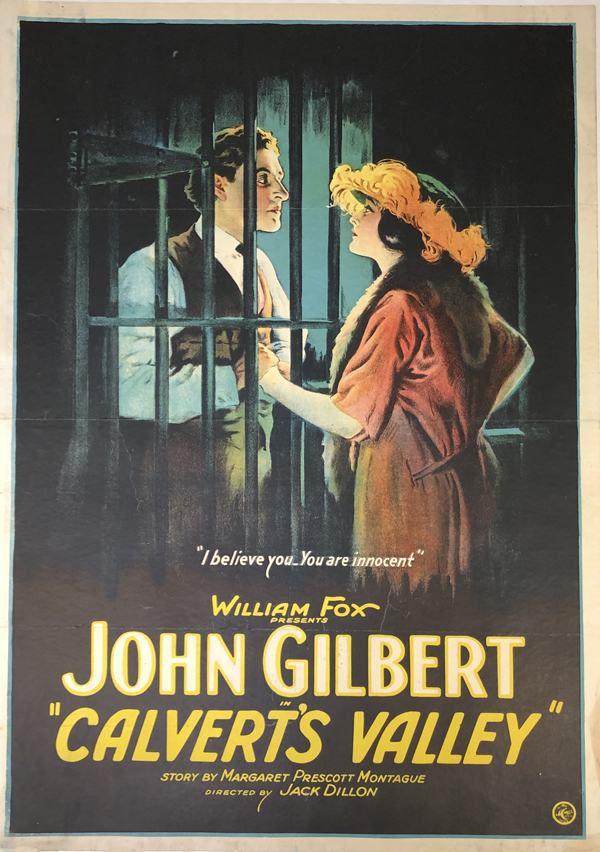
The first time I encountered Calvert's Valley I expected another quaint Appalachia postcard from the early twenties—lace collars, parasols, a moral tucked neatly into the final iris shot. What unspooled instead was a fever dream soaked in corn liquor and mountain mist, a film that gnaws at the collarbone of friendship until the bone splinters. Director Lule Warrenton—yes, one of those rare women calling the shots behind the camera in 1922—doesn’t merely stage a whodunit; she excavates the sedimentary layers of masculine shame, then holds the shards to the light so every facet cuts.
Warrenton’s camera adores verticality: cliffs jut like guillotine blades, staircases corkscrew into nowhere, chandeliers hang like Damoclean swords. When Page Emlyn (a ferociously vulnerable John Gilbert) ascends the Calvert staircase for the first time, the low-angle lens elongates him into a wavering question against the balustrade—already the film warns us that elevation precedes plummet. Compare this to the horizontal despair of I Want to Forget, where the protagonist drifts across city blocks like flotsam; here, geography is a moral force, a craggy judge that sentences without speech.
Sylvia Breamer’s Constance enters in a gown the color of dried blood—a premonition. Her breakup scene with Jim Calvert (Philo McCullough, all clenched jaw and brittle entitlement) plays out in a parlor where every object seems to lean away from the conflict. She places the engagement ring on a silver tray; Warrenton jump-cuts to its reflection in a teapot, distorting the circle into an oblong wound. No intertitle is needed—the image screams noose. Moments later, Jim will scale that cliffside path with the same ring in his waistcoat pocket, as though attempting to return the symbol to the earth itself.
The film’s boldest gambit is structural: it refuses to show the fatal plunge. We share Emlyn’s blackout, a canvas of negative space where motive, physics, and conscience dissolve into grainy nothing. In 1922 most thrillers still genuflected to the last-reel reveal; Warrenton and screenwriter Jules Furthman let the vacuum stand, trusting that terror lives not in what we see but in what we cannot verify. The trial sequence—shot in staggered close-ups worthy of The Stain—becomes a cubist portrait of rumor: jurors’ eyes superimposed over the cliff edge, the scratched oak rail morphing into craggy rock face. Memory itself is on the stand, and it pleads the fifth.
Cinephiles worship Gilbert for The Big Parade, but here he is raw mercury: trembling, liquescent, forever on the verge of imploding. Notice how he fingers the air when asked to describe the cliff’s edge—his hand sketches an absent shape, a phantom throat he might or might not have squeezed. The performance predicts James Stewart’s vertiginous panic in Vertigo by thirty-six years, yet Gilbert has no words to hide behind; every micro-expression is flayed by the camera’s merciless intimacy.
The picture belongs to that uncanny micro-genre—alongside Men Who Have Made Love to Me—that dissects male camaraderie until it festers. Jim Calvert’s identity is mortgaged to lineage, to land, to the very name carved on rusted entrance gates; Emlyn’s is tethered to intellect, the pen rather than the plough. When the former shatters, the latter evaporates. Their friendship was a currency without backing, a promissory note the mountain wind calls due.
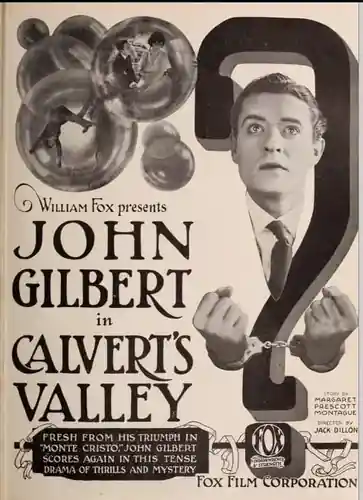
History has short-changed Lule Warrenton, relegating her to footnotes about Lon Chaney make-up tests. Yet watch how she choreographs altitude: dolly tracks laid on precipices, a wind machine rigged to lash Gilbert’s hair horizontally, the lens tilted so sky and abyss swap places. The effect is Gesamtkunstwerk of dread, predating the alpine terror of Zollenstein or the expressionist crags in Samson. She understood that landscapes aren’t backdrops—they’re co-conspirators.
Furthman, later the sly wordsmith behind Shanghai Express, keeps dialogue shards minimal and venomous. My favorite card appears after the verdict is read: "The mountain kept the truth like a miser clutches cold coins." One sentence indicts both the natural world and the human heart. Compare that laconic sting to the florid guilt-soaked cards in A Woman's Honor and you’ll see why modernist economy lands harder than Victorian embroidery.
Most surviving prints lack the original Vitaphone disc, so audiences today experience the film in cathedral hush—an accident that amplifies its existential chill. Every creak of a seat, every projector whir becomes the footfall of suspicion. I’ve sat through midnight screenings where viewers held their breath for minutes, terrified an exhale might convict the protagonist by sheer acoustic contagion. Try reproducing that communal hypnosis with Black and Tan Mix Up, a film that leans on ragtime exuberance to plaster over narrative fissures. Calvert's Valley needs no such crutch; its silence is a second screenplay.
Fast-forward to Out of the Past or The Night of the Hunter and you’ll spot Warrenton’s chromosomes: the use of a vertiginous drop as moral metaphor, the femme fatale who refuses to stay inside her narrative lane, the investigation that circles back to devour the investigator. Even the bourbon flask makes a lineage cameo in Double Indemnity. Yet few noir encyclopedias cite Calvert's Valley; cine-scholars prefer the safety of The Hound of the Baskervilles when mapping genre ancestry. Shameful omission.
The lone 35 mm negative—rescued from a flooded Asheville basement in 1987—bears water-stain halos that resemble lunar craters. Some purists demand digital cleansing; I side with the scars. Those chemical blossoms remind us the film itself survived an attempted murder. You can stream a 2K scan on several niche platforms, but nothing matches a 16 mm print rattling through an old carbon-arc projector, the image quivering as though it too stands trial.
Is Calvert's Valley a flawless relic? Hardly. Act III sags under evidentiary hair-splitting, and Herschel Mayall’s prosecuting attorney twirls his mustache with the subtlety of a runaway steam drill. Yet its cumulative effect is seismic: you exit the theater sensing your own memories have loose gravel underfoot, that any friendship might skid into the abyss once alcohol and ego trade places. Few silents dare that vertigo. Watch it beside The Narrow Path—another meditation on guilt and geography—and you’ll appreciate how 1922 anticipated the psychological thriller decades before Hitchcock dared open Psycho with a woman’s automobile drifting toward swampy doom.
Grade: A- for artistic audacity, B+ for narrative cohesion, and A+ for lingering trauma. See it, then spend the night checking your own pulse against the sound of wind outside your window.
IMDb 5.4
1935
Community
Log in to comment.