DbcultAccessing Vault...
Cult Review
Senior Film Conservator
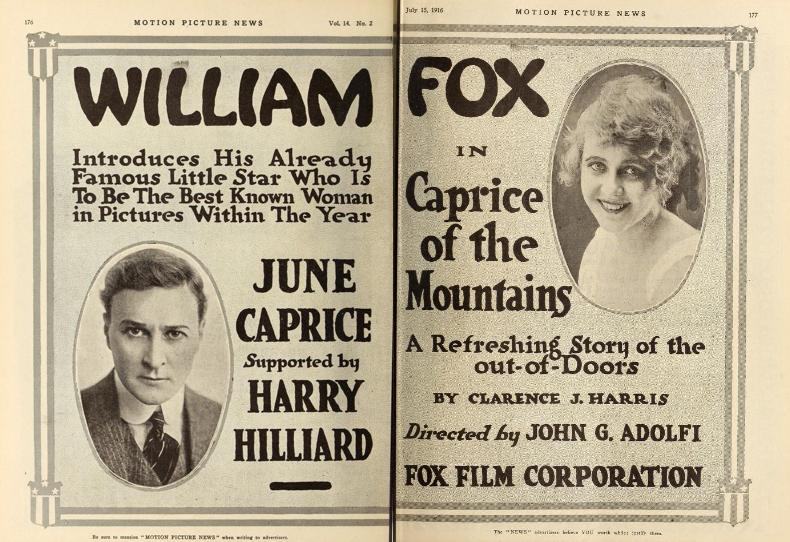
Stepping back into the annals of cinematic history, we encounter a gem that, despite its age, resonates with themes perpetually relevant: Caprice of the Mountains. This film, a product of an era often dismissed as primitive, deftly navigates the intricate tapestry of human relationships, societal expectations, and the perennial struggle between personal desire and imposed duty. It’s a narrative that, at its core, examines the profound consequences of a chance encounter and the subsequent societal pressures that can irrevocably alter the course of two lives.
The premise is deceptively simple, yet its implications ripple with complexity. We are introduced to Jack Edmunds, portrayed with a certain rakish charm by Richard Hale, a man accustomed to the gilded cage of urban privilege. His sojourn to a serene mountain town, ostensibly for leisure, serves as the catalyst for the entire drama. It’s here that he crosses paths with Caprice Talbert, brought to life by the luminous Zena Keefe, a local girl embodying the untainted spirit of her rustic surroundings. The initial spark, a mere invitation to his apartment, is innocent enough in its intent, yet in the conservative moral landscape of the time, it carries an weight far heavier than either protagonist could anticipate.
The ensuing 'shotgun wedding' orchestrated by Caprice's stern, protective father (Robert Vivian) is a pivotal moment, a stark reminder of the era's rigid social codes and the potent influence of familial honor. This forced union, devoid of genuine romantic inclination, sets the stage for a compelling exploration of resentment, adaptation, and the yearning for authenticity. The film, under the direction and narrative guidance of Clarence J. Harris, doesn't shy away from depicting the immediate friction. Jack, feeling unjustly cornered, harbors a palpable resentment, his urban sensibilities bruised by what he perceives as a provincial ambush. His new bride, Caprice, finds herself thrust into a world utterly alien to her, the sprawling, cacophonous city serving as a gilded cage rather than a promised land. This dichotomy between rural simplicity and urban complexity is a well-trodden path in cinema, but Caprice of the Mountains imbues it with a particular poignancy.
In the silent era, the burden of conveying intricate emotions rested squarely on the shoulders of the performers. Zena Keefe, as Caprice, excels in portraying a character caught between worlds. Her expressions, her body language, convey the innocence of her mountain upbringing, the confusion of her forced marriage, and the profound homesickness that plagues her in the city. One can almost feel her spirit wilting amidst the towering buildings and bustling crowds, a stark contrast to the open vistas she once called home. This struggle for belonging is reminiscent of other characters flung into unfamiliar circumstances, perhaps even evoking the fish-out-of-water charm seen in films like The Girl from Outback, though with a much heavier emotional undertone here.
Richard Hale's portrayal of Jack Edmunds is equally nuanced. He isn't merely a villain; he's a man of his time, navigating the expectations of his class while grappling with a situation he didn't choose. His initial resentment slowly gives way to a more complex internal conflict, hinting at a potential for growth that keeps the audience invested. The supporting cast, including Tom Burrough, Genevieve Reynolds, and Albert Gran, contribute to the rich tapestry of this cinematic world, each adding layers to the societal backdrop against which Jack and Caprice's drama unfolds.
The central conflict of Caprice of the Mountains is not merely a marital dispute; it's a philosophical inquiry into the very nature of happiness and belonging. Caprice's yearning for her mountain home transcends mere nostalgia; it represents a fundamental incompatibility with the artificiality of urban life. The film subtly argues for the intrinsic value of one's roots, the spiritual nourishment derived from a familiar environment. This thematic exploration of man's relationship with his environment finds echoes in films like The Primitive Call, which often juxtapose the 'civilized' world with the raw, untamed wilderness.
The 'shotgun wedding' itself is a potent symbol of societal constraint. It highlights a period when individual agency, especially for women, was often secondary to maintaining social order and familial reputation. This involuntary commitment forces both characters to confront their desires against the backdrop of their obligations. Jack's resentment is a cry for his lost freedom, while Caprice's longing for home is a quest for her lost self. The film, therefore, becomes a poignant commentary on the pressures exerted by social norms, a theme explored with different nuances in dramas such as Social Quicksands, where characters often find themselves trapped by the very society they inhabit.
Clarence J. Harris, both writer and an influential creative force behind this production, demonstrates a keen understanding of character psychology and narrative pacing, even within the constraints of silent cinema. The film's progression from the idyllic mountains to the bustling city is handled with a visual eloquence that belies the absence of spoken dialogue. The cinematography, though perhaps rudimentary by today's standards, effectively contrasts the expansive, natural beauty of the mountains with the claustrophobic, man-made grandeur of the city. Harris masterfully uses these visual cues to underscore the emotional states of his protagonists.
The narrative arc, while seemingly straightforward, is imbued with layers of subtext. The tension between Jack and Caprice isn't always overt; it's often conveyed through lingering glances, averted gazes, and the palpable discomfort that permeates their shared spaces. This subtle approach to character development is a testament to Harris's storytelling prowess, allowing the audience to infer deeper meanings from seemingly simple interactions. It's a method that requires a discerning eye from the viewer, rewarding those who invest in the emotional landscape of the film.
Beyond its immediate plot, Caprice of the Mountains offers a fascinating window into the social mores of the early 20th century. The swift resolution of a perceived impropriety through forced marriage speaks volumes about the value placed on reputation and honor, particularly in rural communities. The film doesn't necessarily endorse this practice but presents it as an undeniable reality of the time. This societal pressure, the idea that a single innocent act could lead to such drastic life changes, highlights a historical context that feels both distant and, in some ways, disturbingly familiar.
The portrayal of the city as a place of both opportunity and alienation is another enduring theme. For Jack, it's his natural habitat, a place of power and comfort. For Caprice, it's an oppressive labyrinth, a place where her spirit cannot breathe. This stark contrast served as a common trope in early cinema, often used to explore the anxieties of modernization and urbanization. Films like The Summer Girl or even Lion of Venice, though perhaps different in genre, often toyed with characters navigating new, overwhelming environments.
The film's exploration of gender roles is also noteworthy. Caprice, despite her distress, is not entirely passive. Her longing for home is an act of quiet rebellion, a refusal to conform to a life that stifles her. Jack, too, is constrained by his own societal expectations, his playboy image clashing with the unexpected responsibilities thrust upon him. The dynamic between them is a microcosm of broader societal tensions, reflecting the changing landscape of relationships and individual freedoms in a rapidly evolving world.
While Caprice of the Mountains might not possess the sweeping epic scale of some of its contemporaries, its strength lies in its intimate portrayal of personal struggle. It’s a film that asks profound questions: Can love blossom from obligation? Can a person truly thrive in an environment that fundamentally clashes with their nature? And what does it mean to find 'home' when your entire world has been uprooted?
The film’s resolution, or lack thereof in the provided plot summary, invites contemplation. Does Caprice eventually find peace in the city, or does Jack come to understand her profound need for the mountains? The beauty of such narratives, especially from the silent era, often lies in their capacity to leave certain emotional ambiguities, allowing the audience to project their own hopes and fears onto the characters. This open-endedness, a characteristic shared by many early narrative films, ensures that the story continues to resonate long after the credits roll.
In conclusion, Caprice of the Mountains stands as a compelling testament to the power of early cinema to explore complex human emotions and societal dilemmas. It’s a reminder that even without spoken dialogue, a well-crafted story, brought to life by dedicated performers like Zena Keefe and Richard Hale under the thoughtful guidance of writers like Clarence J. Harris, can transcend time and continue to provoke thought and empathy. For those interested in the evolution of storytelling on screen, and the timeless conflicts that define the human condition, this film offers a rich and rewarding experience, a quiet yet powerful voice from a bygone era.
IMDb —
1920
Community
Log in to comment.