DbcultAccessing Vault...
Cult Review
Senior Film Conservator
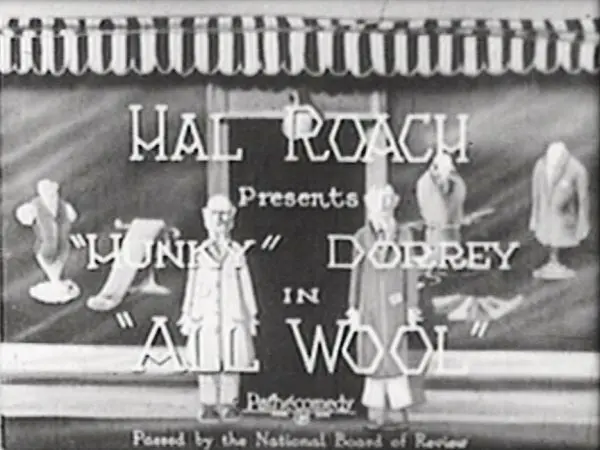
Is All Wool worth your time in the age of high-definition digital cinema? Short answer: Yes, provided you have an appetite for the raw, unrefined energy of early 20th-century physical comedy.
This film is specifically for those who find joy in the 'wrong man for the job' trope and appreciate the historical evolution of the slapstick genre. It is certainly not for viewers who require a complex narrative arc or those who find the repetitive nature of silent-era gags tiresome. It is a relic, but one that still pulses with a certain kinetic desperation.
1) This film works because it fully commits to the physical absurdity of its lead actors, using their bulky frames as a comedic weapon against the delicate environment of a tailor shop.
2) This film fails because it occasionally loses its internal rhythm, stretching a single joke—the misapplication of plumbing tools—until the comedic tension begins to fray.
3) You should watch it if you want to see a foundational example of how Hal Roach’s studio utilized character actors like Charlie Hall and George Rowe to build a world of perpetual frustration.
All Wool is a solid example of 1920s slapstick that remains effective due to its clear premise. It succeeds because of the physical contrast between its leads and their environment. While the plot is thin, the execution of the central gag—plumbers acting as tailors—is handled with high energy. It offers a fascinating glimpse into the working-class humor of the era.
There is a specific, almost visceral thrill in watching 'Tonnage' Martin Wolfkeil handle a pair of shears. Wolfkeil, whose nickname was no marketing accident, brings a level of physical imposition that makes every movement in the small tailor shop feel like a potential disaster. In one standout scene, he attempts to take a customer's measurements not with a soft tape, but with the rigid, uncompromising posture of a man checking the diameter of a boiler pipe. This isn't just a gag; it's a character study in professional muscle memory.
The direction doesn't aim for the poetic heights of Manhattan or the experimental flair of Looney Lens: Pas de deux. Instead, it stays grounded in the proscenium-style framing common to the era. This choice actually benefits the film. By keeping the camera static, the director allows the chaos within the frame to feel more contained and, paradoxically, more explosive. When Richard Daniels starts treating a sewing machine like a malfunctioning water pump, the lack of camera movement forces the audience to focus entirely on his frantic, misguided labor.
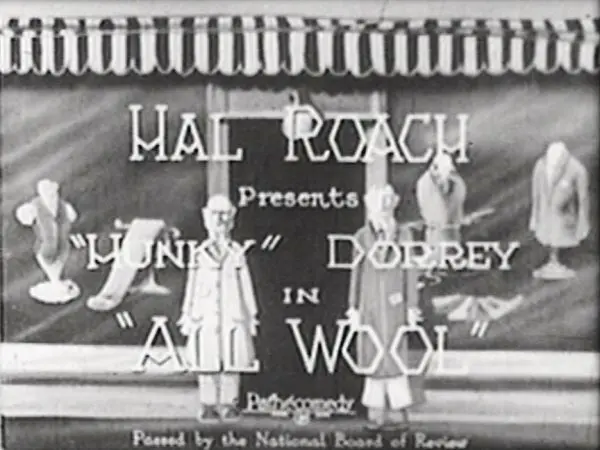
The presence of Charlie Hall is, as always, a blessing. Hall was the ultimate foil of the silent era, a man whose face was a canvas for slowly mounting exasperation. In All Wool, he serves as the necessary friction to the leads' incompetence. Without a 'straight man' to react to the destruction of the suits, the humor would exist in a vacuum. Hall ensures that every ruined piece of fabric has a social consequence.
Katherine Grant and George Rowe fill out the ensemble with a competence that was the hallmark of the Hal Roach lot. Grant, in particular, provides a necessary touch of elegance that makes the plumbers' presence feel even more intrusive. The film thrives on these social layers. It’s not just about the wrong tools; it’s about the wrong class of men in a space that demands a specific type of grace. This thematic undercurrent is more interesting than the film’s surface-level slapstick might suggest. It echoes the identity-swapping themes found in The Masquerader, though with far less sophistication and much more physical wreckage.
Visually, All Wool is utilitarian. The lighting is flat, designed to ensure that every gesture is visible from the back of a 1923 nickelodeon. However, there is a surprising amount of detail in the set design. The tailor shop is cluttered with rolls of fabric that eventually become the medium for the plumbers' destruction. There is a specific moment where a bolt of wool is accidentally unspooled and tangled around a customer, resembling the very pipes our protagonists are used to fixing. It is a clever visual metaphor that bridges their two worlds.
The pacing is relentless. Unlike the more contemplative Still Waters, All Wool understands that its premise has a shelf life. It moves from the initial setup to the total destruction of the shop in under twenty minutes. This brevity is its greatest strength. It doesn't overstay its welcome. It delivers its punchline and exits before the audience can question the logic of why two plumbers were hired to run a tailor shop in the first place.
Pros:
Cons:
What is most surprising about All Wool is how it inadvertently comments on the rigidity of professional identity. The plumbers aren't just bad tailors; they are incapable of seeing the world through any lens other than plumbing. When they look at a customer's arm, they see a joint. When they look at a sewing machine, they see a pump. It’s a strangely profound observation of how our labor shapes our perception of reality. It works. But it’s flawed. The film doesn't explore this deeply, but the subtext is there for anyone willing to look past the flying fabric.
"The comedy of All Wool lies in the violent collision of two incompatible worlds: the heavy-duty and the hand-stitched."
All Wool is not a lost masterpiece, but it is a highly functional piece of entertainment. It serves its purpose with a blue-collar work ethic that mirrors its protagonists. While it lacks the emotional depth of something like Amour et carburateur, it makes up for it with sheer, unadulterated energy. It is a loud, messy, and ultimately charming relic of an era when a man’s size was his best comedic asset. If you have twenty minutes to spare, let these plumbers ruin a few suits. You won't regret the experience, even if you won't remember the plot by tomorrow morning.
IMDb —
1917
Community
Log in to comment.