DbcultAccessing Vault...
Cult Review
Senior Film Conservator
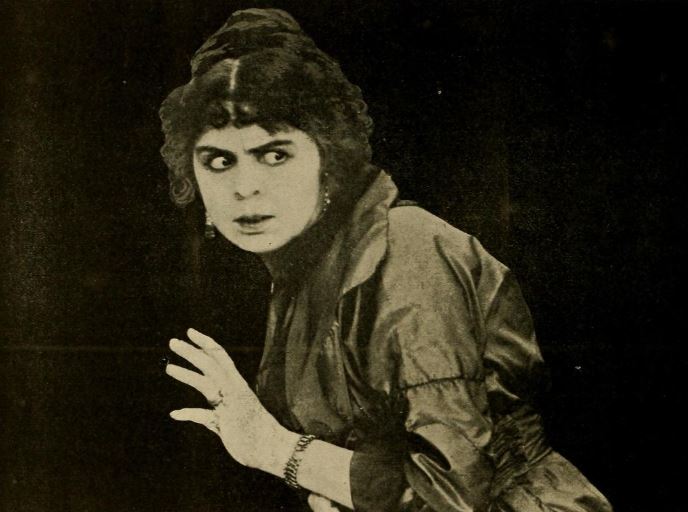
A wedding march never sounded so much like a funeral dirge. In the curt, caustic 14 minutes of The Price of Crime, Dot Farley—actress, scenarist, proto-auteur—compresses an entire marriage into a matchstick flare: bright, brief, leaving only soot and the acrid whiff of burnt vows. Released stateside in March 1914, this Lubin one-reeler vanished for a century, misfiled under “domestic melodrama” in a Pennsylvania warehouse until a frost-damaged negative was exhumed and 2K-scanned by the University of South Carolina’s Moving Image Research Collections. The pixels still hiss like a kettle about to scream.
Farley’s scenario, deceptively simple, is a scalpel slipped between the ribs of Edwardian respectability. Dorothea Vale—played by Wanna Browne with the fragile hauteur of a Sargent portrait—chooses the velvet swagger of Jack Conway (Peter Poirer) over the earnest stammer of Henry Livingston (Alvin Wyckoff). The rejected suitor lingers at the edge of frames like an unexorcised ghost, clutching a glove as though it were a still-beating heart. Cut to domestic upholstery: mother-in-law (Dot Farley herself, under a wattled mask of crepe and disdain) parked in an armchair throne, her eyes twin periscopes scanning for faults in the new bride’s tapestry of obedience.
Then the slow corrosion. Conway, boredom draped across his starched collar, gravitates toward any skirt that swishes in contrapuntal rhythm. Farley’s intertitles—white letters on black, no musical cushion—land like slaps: “Another conquest,” “Home late again,” “A wife’s tears are cheap perfume.” Each card lasts exactly long enough for your pulse to sync with Dorothea’s accelerating despair.
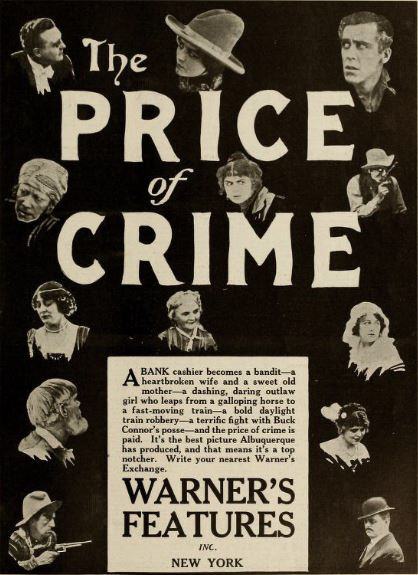
The camera, nailed in place yet spiritually mobile, watches Conway’s hand brush a chorus girl’s waist in a cabaret so dim it might be Hades’ anteroom. A jump-cut to Dorothea alone, lamp-glow pooling on her cheekbones like liquid gilt, tells you everything about economies of affection: his spendthrift lust, her bankrupt heart.
What astounds is how Farley anticipates the grammar of noir a decade before Under the Gaslight codified chiaroscuro venality. The marital flat is photographed by Alvin Wyckoff (pulling double duty as cuckolded fiancé) in shallow depth: rear wall smothered by funereal ferns, foreground littered with Conway’s discarded gloves—each finger pointing accusation. When Dorothea finally buys a pocket revolver from a pawnbroker who might be Satan’s cashier, the transaction occurs in a single take, camera held at hip level so the muzzle yawns directly at us. We are co-conspirators, jury, and future culprits.
Critics bred on the stunt-comedy bacchanalia of Tillie’s Punctured Romance or the biblical pageantry of Joseph and His Coat of Many Colors often dismiss one-reel domestic yarns as mere “flickers for flappers.” Yet Farley’s mise-en-abyme of betrayal feels closer to Hardy’s Tess in its punitive moral calculus: a woman’s yearning punished by public ignominy, private violence, and finally the law itself. The final courtroom epilogue—clipped, almost callous—delivers a verdict that lands like a lead coin in the gut: “Guilty. Five years.” No plea for clemency, no swelling violins, just the clang of iron and a close-up on Dorothea’s eyes, suddenly vacant as winter windows.
Performance hierarchies invert expectations. Poirer’s Conway is less mustache-twirling cad than entropy in a top-hat: charm fraying into lassitude, the arc of a man bored by the absence of resistance. Browne’s Dorothea begins with the tremulous glow of a valentine, ends as a daguerreotype left too near the fire—image blistering, silver flaking, identity warped. And Farley the elder, wordless yet omnipresent, supplies the film’s sardonic Greek chorus: each rap of her cane an indictment of patriarchal real-estate where women are temporary tenants.
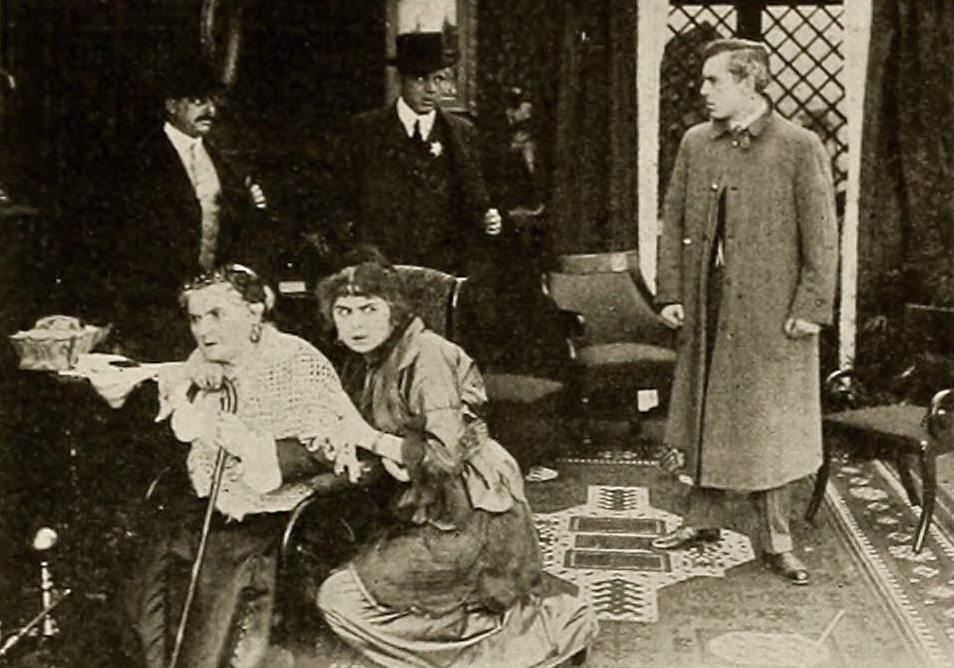
Technically, the print sports the vinegar scars of century-old neglect—tramline scratches, emulsion blooms that resemble bruised peonies—but the 2K scan stabilizes jitter without airbrushing authenticity. Tinting follows archival notes: amber for interiors, viridian for exteriors, a sickly lavender for the cabaret. Underlaid with a new score by Mont Alto (piano, violin, and a discreet accordion), the film now breathes with the wheeze of a century waking from chloroform.
Comparative contextualization illuminates its radical edge. Where The Great Leap: Until Death Do Us Part aestheticizes marital suicide as transcendent leap, Price insists on the banality of bloodsport. Against Arizona’s open-skied redemption arcs, Farley’s universe offers no mesas of absolution, only the claustrophobic corridors of rented rooms. Even East Lynne, that mother of all Victorian remorse sagas, ultimately softens its erring heroine with deathbed reconciliation; Farley refuses such sentimental narcotics.
The film’s true legacy lies in how it prefigures the feminist crime thrillers of the ’40s—think Phantom Lady or The Seventh Veil—where women weaponize the very invisibility society thrusts upon them. Dorothea’s revolver is not phallic compensation but a ballot cast in hot lead against a rigged electorate of male appetite.
Yet modern viewers may flinch at the punitive coda. Five years’ penal servitude for a crime of passion—especially when Conway’s philandering is rendered with such smug impunity—feels like jurisprudential mansplaining. One wants to reach through the screen, past the flicker of nitrate, and slip a 21st-century public-defender brief into Dorothea’s manacled hands. Still, Farley’s refusal to grant a last-reel pardon is what grants the film its abrasive integrity. Justice, like marriage, is another marketplace where women overpay.
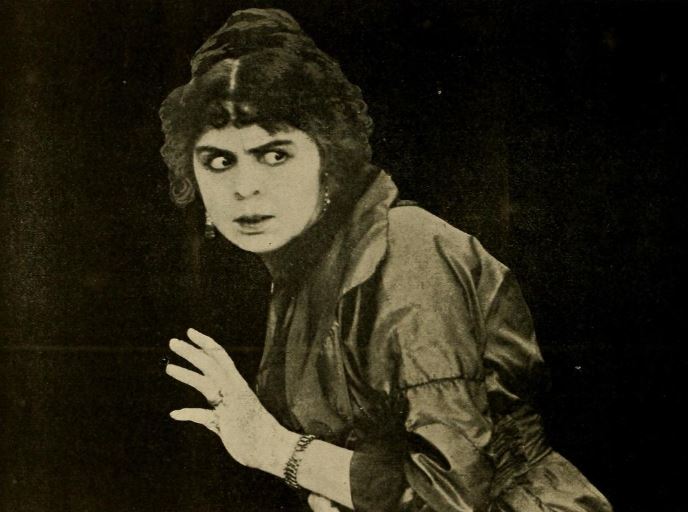
Marketing archaeology reveals Price opened on a split bill with a rodeo short at the Strand, Philadelphia, advertised merely as “A Powerful Moral Drama!” No mention of the female authorial hand, no hint of the subversive sexual politics simmering within. It played twice daily, disappeared into the churn of wartime newsreels, and was forgotten before the Lusitania sank. Now, restored and streaming via Kanopy and Kino’s “Pioneers: First Women Filmmakers” box, it demands re-evaluation—not as curio, but as prototype.
So, is it a masterpiece? The term feels elephantine for such a brittle bauble. Better to call it a shard—jagged, reflective, capable of slicing complacency. Watch it twice: first for narrative shock, second for the micro-acting semaphore of eyes, shoulders, gloves. On repeat viewing, notice how Browne’s left hand spasms when Conway’s perfume lingers on his lapel—a twitch no intertitle announces, yet it speaks entire dissertations on trust’s erosion.
Final arithmetic: 14 minutes, 237 shots, one irrevocable crime. The price may be measured in years behind iron bars, but the accrued interest—our collective gasp—is compounded daily. See it, argue with it, carry its sulfurous after-image into your next relationship negotiation. And if you hear a cane tapping parquet in the hush before sleep, remember: Dot Farley warned you the mortgage on female obedience always comes due.
IMDb 4.4
1915
Community
Log in to comment.