DbcultAccessing Vault...
8/10
Senior Film Conservator

A definitive 8/10 rating for a film that redefined the boundaries of cult cinema. Captain Alvarez remains a cornerstone of transgressive art.
Step into a bygone era, where the silver screen flickered with grand narratives of love, betrayal, and revolution. Today, we journey back to the tumultuous early 20th century to revisit a cinematic gem that, despite its silent nature, speaks volumes about human spirit and political upheaval: Captain Alvarez. This isn't merely a film; it's a vibrant tapestry woven with the threads of Argentine history, albeit through a romanticized lens, offering a compelling glimpse into the silent film era's capacity for epic storytelling. As an art critic and avid cinephile, I find myself drawn to the audacious ambition of features like this, particularly how they navigate complex historical backdrops with the visual language of their time.
The narrative plunges us headfirst into the fervent political climate of the Argentine Republic, a nation simmering with dissent under the iron fist of the tyrant Rosas. Our initial protagonist, Robert Wainwright, portrayed with earnest intensity by William Desmond Taylor, arrives on these shores with the prosaic objective of overseeing his father's business ventures. Little does he know that destiny, or perhaps the potent allure of revolution, has far grander plans for him. His world, structured by commerce and stability, is destined to collide with the unpredictable currents of civil unrest. This immediate immersion into a volatile setting sets a powerful tone, reminiscent of other foreign adventurers finding themselves embroiled in local conflicts, though perhaps less overtly militaristic than the protagonists in something like Soldiers of Fortune, where the focus is often on mercenary endeavors. Here, the transformation is more personal, more ideologically driven.
Wainwright's transformation begins, as so many epic tales do, with love. Stopping at the opulent home of Don Arana, the foreign minister to Rosas – a man whose political allegiance is seemingly unwavering but whose heart secretly beats for freedom – Wainwright encounters Bonita, Arana's niece. Myrtle Gonzalez imbues Bonita with a captivating blend of beauty and fervent conviction. She is not merely a damsel in distress; she is a catalyst, a muse, and a revolutionary in her own right. Bonita's ardent support for the rebel cause becomes the irresistible force that pulls Wainwright from his detached neutrality into the very heart of the burgeoning insurrection. It’s a classic narrative device, certainly, but one executed here with a potent emotional resonance, highlighting how personal connections can ignite profound political awakenings.
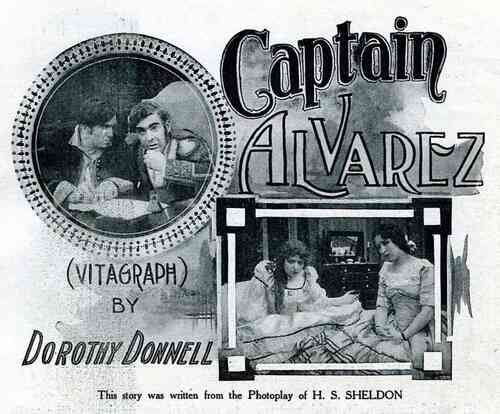
With his heart now pledged to Bonita and his spirit to the rebels, Wainwright endeavors to make contact with General Urguiza, the charismatic leader of the opposition. This mission, fraught with peril, becomes the first true test of his nascent commitment. However, the path of revolution is never smooth, and standing squarely in Wainwright's way is Tirzo, Rosas's cunning and insidious spy, portrayed with a sinister charm by George Holt. Tirzo is not just an antagonist to the rebels; he is also a rival for Bonita's affections, adding a deeply personal and dangerous layer to his villainy. His interception of Wainwright’s messenger is not merely a political maneuver but a calculated strike born of jealousy and ambition. Tirzo's subsequent "suggestion" that Wainwright leave the country is a thinly veiled threat, a chilling demonstration of his manipulative prowess, setting the stage for a simmering rivalry that will define much of the film's dramatic tension.
True to his new resolve, Wainwright feigns compliance, arranging passage on a northbound vessel. But this is merely a brilliant stratagem. Once the ship clears port, he executes a daring escape, a testament to his burgeoning resourcefulness and commitment. His return to Don Arana's home, shrouded in secrecy, to confide his plan to Bonita, marks a pivotal moment. It is here that Bonita bestows upon him two gifts that redefine his very identity: Mephisto, a magnificent horse that becomes his loyal companion, and a new name, Alvarez. This symbolic rebirth, from Robert Wainwright to Captain Alvarez, is more than a simple alias; it signifies a complete immersion into his revolutionary persona. He sheds the skin of the foreign businessman and dons the mantle of a national hero. This transformation is akin to the thematic explorations of identity found in films like Der Andere, though here, the change is driven by a heroic purpose rather than psychological duality.
Captain Alvarez, astride Mephisto, quickly distinguishes himself on the battlefield, his daring exploits earning him the fearsome reputation as the "scourge of the Federals." His leadership and courage do not go unnoticed, and General Urguiza entrusts him with a mission of paramount importance: to liaise with Don Arana, whose secret sympathies for the rebels are now to be leveraged, and together, orchestrate the audacious capture of a convoy carrying a staggering million in currency, vital funds dispatched to the Federal forces. This heist sequence, a classic element of adventure cinema, promises high stakes and intricate planning. However, just as Alvarez and Arana are finalizing their meticulously laid plans, Tirzo's omnipresent shadow falls once more. The house is surrounded by Federal troops, a direct consequence of Tirzo's relentless machinations, leading to Alvarez's capture. The visual language of silent film, particularly in scenes of pursuit and capture, often relied on dramatic framing and rapid intercutting to convey urgency, a technique that would have been employed effectively here.
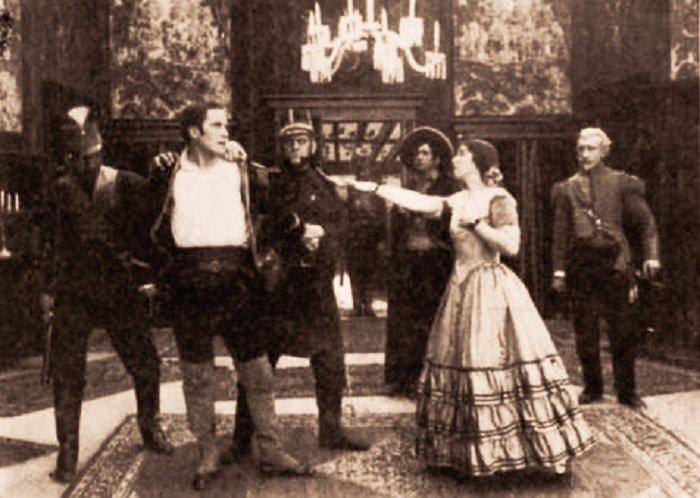
Alvarez's imprisonment sets in motion a harrowing sequence of events for Bonita. Tirzo, seizing the moment, presents her with a cruel ultimatum: marry him, and Alvarez’s life will be spared. It’s a moment of profound moral dilemma, a classic trope of melodrama, where love and sacrifice are pitted against each other. Bonita, on the brink of consenting to this abhorrent bargain to save the man she loves, is miraculously spared by news of Alvarez’s incredible escape. This eleventh-hour reprieve injects a thrilling burst of hope into the narrative, underscoring Alvarez's uncanny ability to defy impossible odds. His subsequent return to Bonita's home, driven by fear for her safety and a desperate need to reassure her, cements their bond and sets the stage for a midnight rendezvous, a romantic promise amidst the chaos of war.
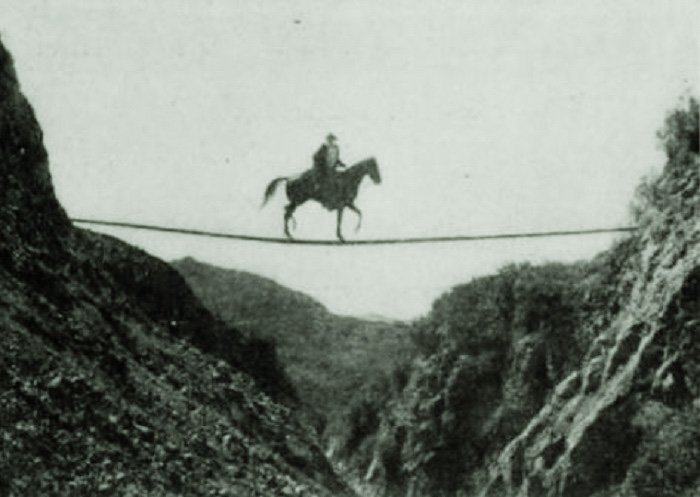
The film then accelerates towards its thrilling climax. Alvarez, ever the master strategist, returns to his command and successfully executes the audacious capture of the million-currency convoy. His mission accomplished, he rides towards his midnight appointment, the prize secured and his heart set on reunion. But the path to true love in a revolutionary landscape is fraught with danger. He overhears Tirzo, ever the predatory schemer, plotting with a band of gypsies to kidnap Bonita. This revelation sets off a furious race against time. Alvarez, arriving at Don Arana's house first, lays a trap for Tirzo. The ensuing confrontation is raw and visceral, culminating in Alvarez's righteous victory as he slays the duplicitous spy. Tirzo's body, carried off by the gypsies, becomes an unwitting tool of fate. Intercepted by Federals who recognize their fallen comrade, the gypsies inadvertently lead the troops back to Don Arana's house, and Alvarez is captured once more, condemned to face the firing squad at sunrise. This cyclical pattern of capture and escape, often seen in adventure serials of the era, maintains a relentless pace, keeping the audience on the edge of their seats, much like the serialized narratives that captivated audiences during the time of His Majesty, the Scarecrow of Oz, which, while fantastical, also relied on episodic tension.
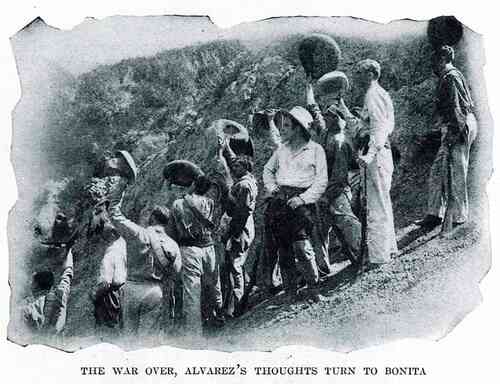
The dawn approaches, seemingly sealing Captain Alvarez’s tragic fate. Yet, the broader political tide is turning. In a parallel narrative thread, the Federal forces are decisively defeated, and Rosas, the architect of tyranny, flees for his life. This grand historical shift provides the backdrop for Alvarez's final, ingenious act of defiance. By a clever trick, he induces his guards to flee, creating a window of opportunity just as the victorious rebel forces arrive, heralded by the triumphant blare of trumpets (imagined, of course, in the silent era, but powerfully conveyed through visual cues and the audience's emotional anticipation). All ends happily, a glorious tableau emblematic of the birth of a new republic, forged in the crucible of revolution and cemented by the heroism of individuals like Captain Alvarez. It’s a powerful, uplifting conclusion, encapsulating the dreams and aspirations of a nation.
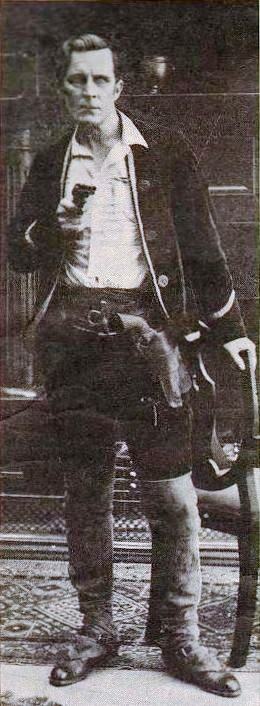
In the realm of silent cinema, the burden of conveying emotion, intent, and personality rests almost entirely on the shoulders of the actors. They are the conduits through which the narrative flows, their every gesture, glance, and posture a carefully choreographed piece of communication. William Desmond Taylor, as Robert Wainwright/Captain Alvarez, delivers a performance that transcends the often-maligned theatricality of the era. His initial portrayal of Wainwright is one of understated refinement, a man of business accustomed to order. The transformation into Captain Alvarez is not merely marked by a change of costume but by a palpable shift in his physical presence. He becomes more assertive, his movements more decisive, his gaze imbued with a steely resolve. Taylor masterfully uses his physicality to illustrate Wainwright’s journey from detached observer to committed revolutionary, conveying a profound inner change through external expression.
Myrtle Gonzalez, as Bonita, is equally compelling. She avoids the pitfalls of being a passive love interest, instead presenting a woman of fierce spirit and unwavering conviction. Her expressions of love for Wainwright are tender, but her commitment to the rebel cause is fiery. This duality makes her character incredibly engaging, demonstrating that women in silent films could be powerful agents of change, not just romantic foils. Her scenes of distress, particularly when confronted by Tirzo's demands, are handled with a poignant vulnerability that elicits genuine empathy, yet she retains an underlying strength that prevents her from ever appearing truly helpless. Her emotional range is crucial in driving the romantic and moral stakes of the story.
And then there is George Holt's Tirzo, a villain who manages to be both loathsome and captivating. Holt understands the assignment: to embody pure, unadulterated malevolence, yet with a veneer of deceptive charm. His sneering smiles, his furtive glances, and his predatory movements paint a vivid picture of a man driven by selfish desires and a lust for power. He is the perfect foil to Alvarez, representing the corrupt and tyrannical forces that the hero must overcome. The effectiveness of a hero is often measured by the quality of his antagonist, and Tirzo provides ample threat and personal animosity to elevate Alvarez's heroic stature.
While Captain Alvarez is undoubtedly an adventure-romance on the surface, beneath its thrilling escapades lie profound thematic currents. The most evident is the struggle between tyranny and freedom. Rosas, though unseen for much of the film, looms as the oppressive force, a symbol of the old order that must be dismantled. The rebels, led by Urguiza and embodied by Alvarez, represent the yearning for self-determination and a new, democratic future. This struggle is not abstract; it’s deeply personal, affecting every character's choices and sacrifices.
The transformation of identity is another cornerstone theme. Robert Wainwright's metamorphosis into Captain Alvarez is more than a plot device; it's an exploration of how circumstances and conviction can forge a new self. He sheds his past, not out of escape, but out of a profound commitment to a cause greater than himself. This act of renaming and redefinition is a powerful symbol of rebellion itself—a rejection of one's given place in a corrupt society in favor of an identity forged in the fires of revolution. It’s a narrative arc that speaks to the universal human desire for purpose and belonging, especially in times of great societal flux.
Love as a revolutionary force is also central. Bonita's love for Wainwright is not merely a romantic subplot; it is the genesis of his political awakening. Her passion for freedom inspires his own, making their personal bond inextricably linked to the broader struggle. This intertwining of the personal and the political elevates the romance beyond mere sentimentality, giving it weight and significance. It suggests that the most profound revolutions often begin with a spark of human connection, a shared vision that transcends individual desires.
Finally, the film touches upon the nature of heroism. Alvarez is not born a hero; he becomes one through his actions, his daring, and his unwavering commitment in the face of overwhelming odds. His repeated escapes, his strategic brilliance, and his ultimate sacrifice (or willingness to sacrifice) define him as a figure worthy of adulation. He embodies the ideal of the individual who, when pushed to the brink, rises to meet the challenge, becoming a symbol of hope for an entire nation. This classic portrayal of heroism, while perhaps less nuanced than modern characterizations, was profoundly effective in inspiring and entertaining audiences of the silent era.
As a product of the silent era, Captain Alvarez exemplifies the unique challenges and triumphs of early filmmaking. Without spoken dialogue, filmmakers relied heavily on visual composition, exaggerated acting, and intertitles to propel the narrative and convey emotion. The director, William Desmond Taylor (who also played Wainwright, a remarkable feat of dual responsibility), would have meticulously choreographed every scene, ensuring that the actors' body language and facial expressions were clear and impactful. This required a level of physical storytelling that is often lost in modern cinema, where dialogue can carry much of the exposition.
The screenwriters, Marguerite Bertsch, Paul Gilmore, and H.S. Sheldon, faced the formidable task of crafting a complex plot with multiple twists and turns, all while adhering to the limitations of intertitles. These textual inserts had to be concise, informative, and emotionally resonant, guiding the audience through the story without overwhelming them. The success of Captain Alvarez is a testament to their skill in balancing exposition with visual narrative, allowing the images to speak for themselves while providing just enough textual context to maintain clarity. One can imagine the dramatic music that would have accompanied such a film, guiding the audience's emotional response and amplifying the tension or triumph on screen, much like the scores of other grand historical narratives of the time.
The film’s portrayal of the Argentine revolution, while undoubtedly romanticized for dramatic effect, taps into a universal fascination with historical upheavals and the struggle for national identity. It offers a glimpse into how such narratives were consumed and understood by audiences of the time, providing both entertainment and a simplified, heroic interpretation of complex political events. Comparing it to another historical film like Les amours de la reine Élisabeth, one sees a similar approach to dramatizing historical figures, focusing on their most impactful and emotionally resonant moments rather than striving for absolute historical accuracy. This was a common and effective technique for engaging broad audiences in the early days of cinema.
In conclusion, Captain Alvarez stands as a compelling example of silent cinema’s enduring power. It is a film that, despite its age, still resonates with themes of love, loyalty, sacrifice, and the eternal fight against oppression. The performances are robust, the plot is intricate and engaging, and the underlying message of hope and freedom is universally appealing. It's a reminder that even without spoken words, cinema can transport us to different worlds, introduce us to unforgettable characters, and inspire us with stories of courage and conviction.
For those interested in the evolution of narrative film, the art of silent acting, or simply a thrilling historical romance, Captain Alvarez offers a rich and rewarding viewing experience. It’s more than just a historical artifact; it’s a vibrant piece of storytelling that continues to captivate, a testament to the timeless appeal of a truly epic adventure. Its legacy lies not just in its historical context, but in its ability to connect with audiences through the universal language of human emotion and dramatic spectacle. This film, alongside others of its era like An Odyssey of the North, showcases the boundless creativity of early filmmakers in crafting compelling narratives that left an indelible mark on the burgeoning art form.

IMDb 6.3
1930
Community
Log in to comment.