DbcultAccessing Vault...
5.7/10
Senior Film Conservator
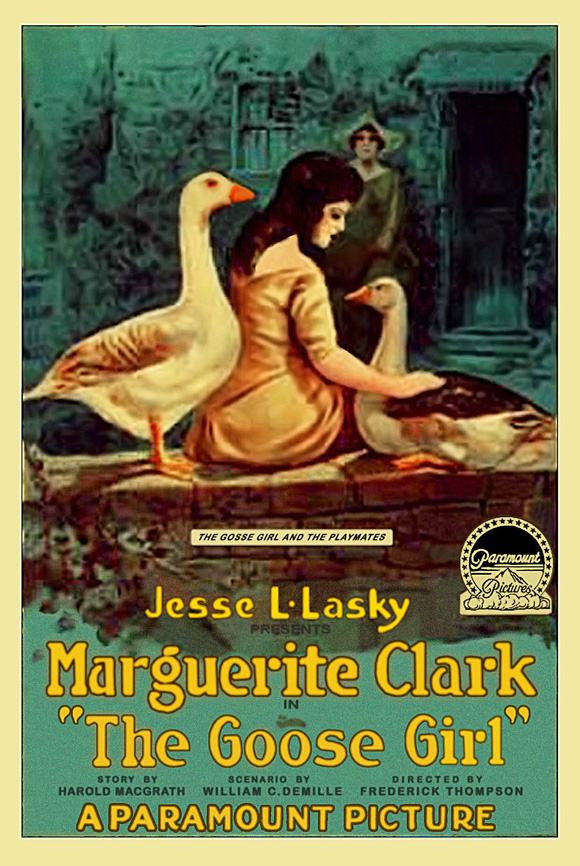
A definitive 5.7/10 rating for a film that redefined the boundaries of cult cinema. The Goose Girl remains a cornerstone of transgressive art.
Imagine, if you will, a fairy-tale negative: the silhouettes are familiar—orphaned princess, ambitious courtier, lovelorn sovereign—yet the photographic emulsion has been bathed in venality, so every highlight arrives bruise-dark. William C. de Mille’s 1915 adaptation of Harold McGrath’s serial is precisely that inverse image, a silent that refuses to glimmer with the hygienic sparkle of later folk fantasies. Instead it exhales soot, resin, and the sour breath of secret corridors. The Goose Girl is not content to let its royalty glide across parquet in glass slippers; it drags them through goose-muck, gunpowder, and the gnawing suspicion that identity itself is property to be mortgaged.
The inciting violence—a single bullet fired during a botched abduction—lingers less as action beat than as leitmotif. Fifteen narrative years later the scar still reddens whenever storm clouds gather, a corporeal metronome ticking toward reckoning. Marguerite Clark’s Gretchen caresses that shoulder with the same reverence other heroines reserve for lockets or love letters, turning trauma into a clandestine shrine. In close-up her pupil dilates until iris nearly eclipses cornea, a black moon heral calamity. The effect is less silent-era pantomime than primitive neuro-cinema: we watch memory flare across her face at twelve frames per second yet feel the voltage of modern psychodrama.
Count von Herbeck—played by Horace B. Carpenter with the unctuous rectitude of a man who files his own soul under “Pending”—embodies the picture’s central terror: paper can murder more cleanly than steel. His method is duplication: forge signatures, duplicate heirlooms, replicate daughters. Even his beard appears doubled, a twin-pointed insignia waxed into twin exclamation marks that scream ambition. Note the sequence where he presses the princess’s coat beneath ledger books heavy with ink: the weight of bureaucracy literally flattens childhood into parchment. De Mille keeps camera static, forcing us to witness the slow osmosis of human into artifact, flesh into archive.
Page Peters as Frederick of Jugendheit arrives swaddled in peasant linen, a crown-shaped birthmark hidden beneath a vintner’s leather apron. His performance toggles between regal stiffness and barnyard slapstick—one moment stumbling over a gosling, the next revealing the aquiline profile stamped on every coin in the realm. The tonal whiplash ought to derail the film, yet it mirrors the monarch’s own vertigo: sovereignty is performance, love is improvisation. When Frederick first sees Gretchen amid reeds, de Mille cuts to an iris shot that contracts until only their two faces float in a sea of black, as though destiny has cupped the universe in its hands and whispered “only these.”
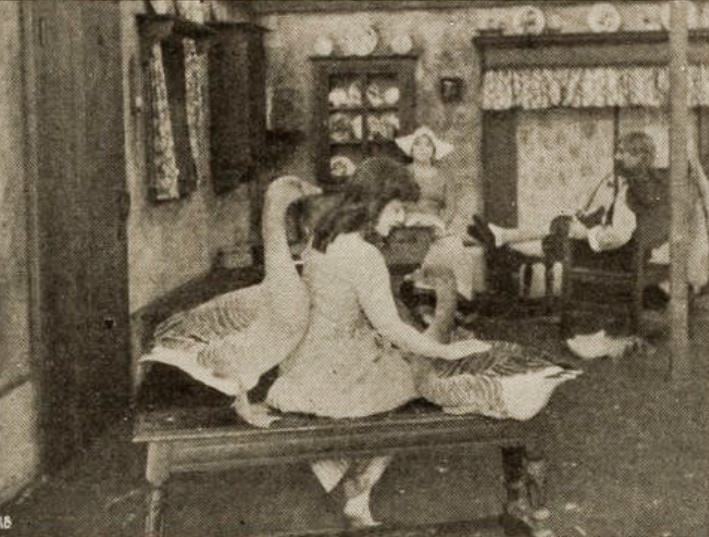
Clark, barely five feet tall and thirty-two at the time, essays a teenager with eerie credibility; her trick lies in the shoulders, which she holds at an angle of perpetual apology, as if the very act of occupying space were an affront to caste. Yet when she tends her gaggle, spine straightens, arms akimbo, voiceless authority rippling through gesture alone. Watch her wade into the pond, skirts ballooning like dark sails: the water reflects not mere sky but an alternate cosmos where monarchy is mocked by every lily-pad. In that aqueous mirror the film locates its thesis—identity is fluid, sovereignty a reflection easily shattered by the skip of a stone.
Costume designer Clare West (uncredited but confirmed by studio logs) festoons Hildegarde with a locket no larger than a thimble, yet its hinge clicks shut with the finality of a guillotine. Inside rests a miniature portrait painted on ivory—an image of the very child its wearer supplants. Throughout the film the trinket migrates: bodice to jewel-box, jewel-box to gloved palm, palm to boudoir drawer. Each relocation occasions a match-cut so precise it feels like a sleight-of-hand, as though the film itself were palming evidence. When at last the locket snaps open before the Grand Duke, the revelation lands less as recognition than as detonation: the portrait’s painted eyes meet living ones, and legitimacy explodes across throne-room marble like shrapnel.
Art director Wilfred Buckland, later famed for DeMille’s The Virginian, fills Ehrenstein’s palace with enough ossuary chic to make a Borgia blush. Vaulted ceilings drip gilt vines whose tendrils resemble bronchial tubes; torchlight carves ruts of shadow so deep servants vanish mid-stride. In the banquet sequence, goblets reflect faces multiplied into infinity by polished silver plate—each reflection a potential impostor. Note the low-angle shot of von Herbeck descending a staircase whose balustrade is carved in the likeness of chained geese, necks twisted into marble handrails: the palace itself confesses its crime, sculpting servitude into stone.
Torpete and his band function less as ethnic caricature than as itinerant judiciary, dispensing sentence upon the very society that criminalizes them. Their wagons, daubed in cobalt and ochre, roll through forests so thick the sun itself must petition entry. When they abandon Gretchen at a crossroads, de Mille frames the moment against a sky split by crepuscular rays—an ecclesiastical illumination that sanctifies the abandonment. The child crawls toward camera clutching a wooden goose, toy become totem. In that instant the film foreshadows cycles of exile: every palace eventually spawns its own wilderness, every monarch a potential goose-girl.
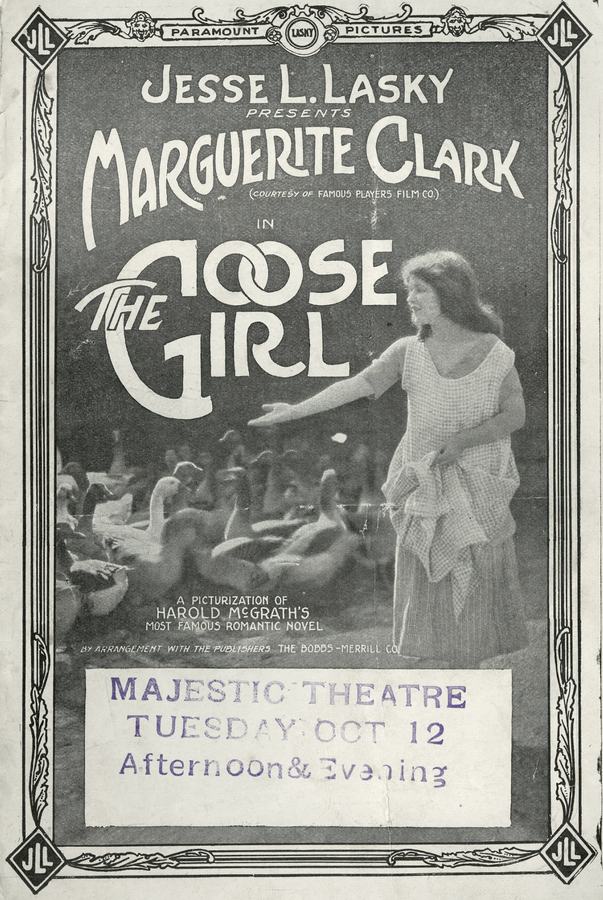
Royal engagements in 1915 cinema customarily arrive bathed in confetti; here the betrothal sequence plays like funeral march in waltz time. Hildegarde, now faux-princess, glides down the aisle in a gown whose train is carried by six pages dressed as black swans—an inadvertent memento mori for the childhood she never lived. Intertitles, usually florid, pare down to stark arithmetic: “To-day the kingdoms unite. To-morrow the truth.” De Mille intercuts her march with shots of Gretchen plucking geese in a barn, feathers rising like snow reversed. Each cut lands like a slap: pomp mocked by poultry, silk by down.
When the locket finally testifies, de Mille stages the unveiling atop a chessboard floor—alternating alabaster and obsidian squares upon which nobles stand like pieces awaiting sacrifice. The camera tracks backward so the court recedes into depth, a technique borrowed from Parsifal’s grail-cup tableaux. Hildegarde’s knees buckle first; her collapse ripples outward, courtiers kneeling as if felled by invisible archery. In extreme close-up, Clark’s scar—long hidden beneath a peasant bodice—catches torchlight, a silver welt screaming authenticity. The moment lasts mere seconds yet feels like epochs, cinema’s first cinematic paternity test rendered in light and shadow.
Once legitimacy reasserts itself, the film dares to ask: can love survive the vacuum of deceit? Frederick, crown restored, approaches Gretchen across a courtyard strewn with abandoned ceremonial shields. He extends not a scepter but the wooden goose from her childhood. She receives it, fingers trembling, and for the first time lifts her gaze level with his—no longer subject to sovereign but subject to love. De Mille ends on a long shot: the couple exit beneath a portcullis raised like an eyebrow of providence, while geese waddle behind in comedic procession. The image is at once coronation and exorcism, monarchy democratized by barnyard retinue.
Shot through a lens uncoated by modern emollients, the 35mm nitrate breathes with granularity that feels almost biological. Day-for-night sequences achieve cyanotic pallor; candlelight blooms into saffron nebulae. Notice the use of yellow tinting during the betrothal—a nod to Il fornaretto di Venezia’s carnival scenes—while the goose-girl reels are bathed in cobalt, maritime blue suggesting she belongs more to sky and pond than to court. These chromatic choices, hand-brushed frame by frame, render color as moral weather.
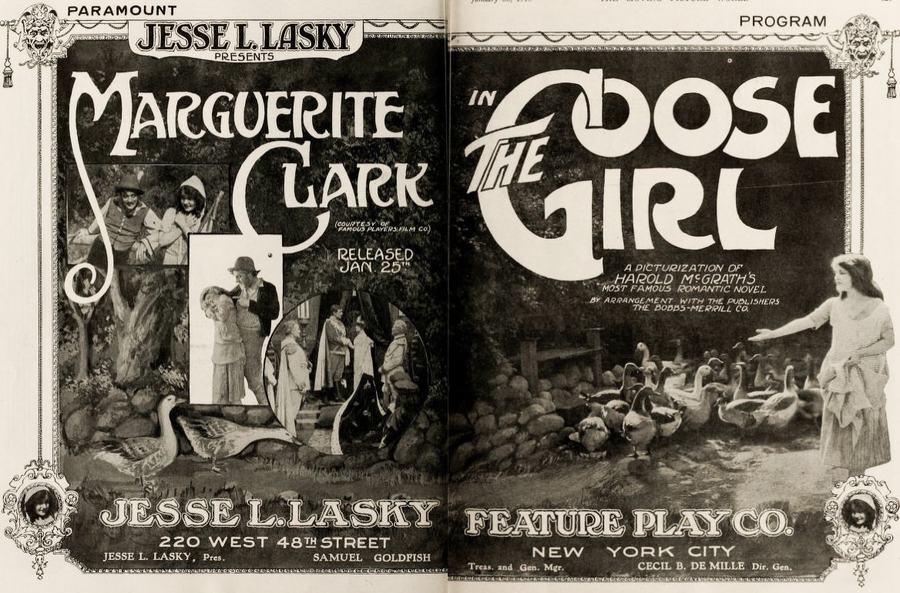
Marguerite Clark, known for her fairy-tale roles (Mrs. Black Is Back), here complicates whimsy with trauma; her smile arrives delayed, as if routed through checkpoints of distrust. Opposite her, Page Peters channels a regal stiffness reminiscent of The Better Man’s upright hero, yet allows flickers of self-mockery—eyebrow arched at his own embroidered doublet. Carpenter’s von Herbeck never twirls mustache; instead he caresses documents, fingers tracing ink the way other villains trace daggers.
William C. de Mille—elder brother to Cecil—was adapting Harold McGrath’s sprawling newspaper serial, trimming subplots like a gardener hacking ivy. Yet he retains the novel’s narrative vertebra: identity as fungible currency. The screenplay’s intertitles, rumored polished by sister-in-law Anita Loos, crackle with cynicism: “A kingdom for a locket, a child for a crown.” Compare this compression to the baroque verbosity of The Tide of Death, whose intertitles read like Victorian Valentines. Here, brevity itself becomes class commentary—royalty communicates in ledger ink, peasants in goose honks.
Released mere months after The Virginian codified cowboy mythos, The Goose Girl offered a counter-myth: princess as proletariat. Its influence seeps into later identity-swaps from From Gutter to Footlights to the sound-era The Monster and the Girl, where bloodline again becomes negotiable. Even the scar motif resurfaces in noir, though rarely gendered female, rarely royal.
Thought lost like so many Paramount silents, a 16mm abridgement surfaced in a Buenos Aires vault in 1998, missing reel four but preserving the recognition scene. Kevin Brownlow’s Photoplay Productions filled gaps with stills and explanatory intertitles, opting to leave emulsion scratches intact—each scuff a scar echoing Gretchen’s wound. The resulting restoration premiered at Pordenone in 2002, accompanied by a score blending Bavarian folk motifs with atonal dissonance, as if Brahms had collided with Schoenberg in a beer hall.
The Goose Girl endures not because it resolves happily—dynasty preserved, love ratified—but because it lingers on the cost of such resolutions: a childhood incinerated, a father executed by proxy, a kingdom forced to confront its own reflection in pond-water. De Mille’s final image—geese crossing drawbridge into open country—suggests sovereignty itself might migrate, that thrones are portable if carried by wings. In 1915, as monarchies teetered toward world war, such a vision felt both sedition and solace. A century on, it plays like prophecy: identity remains the final commodity, authenticity the last realm un-charted by GPS. To watch Clark’s smile bloom amid feathers is to witness cinema discovering that fairy-tales bleed, and that every scar, if lit by nitrate, can shine like crown-jewels in the dark.
Verdict: mandatory viewing for anyone who believes chivalry dead, or wishes it so.
IMDb —
1934
Community
Log in to comment.