DbcultAccessing Vault...
7.2/10
Senior Film Conservator
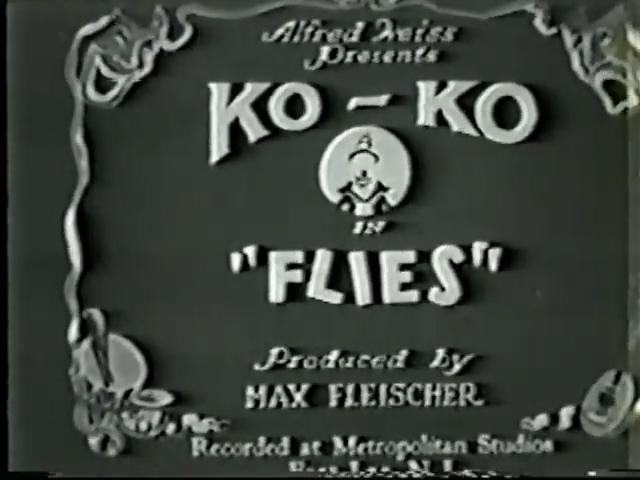
A definitive 7.2/10 rating for a film that redefined the boundaries of cult cinema. Flies remains a cornerstone of transgressive art.
Max Fleischer draws a circle and traps infinity inside it. In Flies, that circle is the iris of a cyclopean insect, a bead of molasses-black malevolence dilating until it swallows the clown who once delighted in popping champagne corks and bouncing on rubber turntables. The corks are gone; the turntables warped into flypaper. The joke now is survival.
The short’s premise—clown versus vermin—sounds like a nickelodeon lark, yet Fleischer weaponizes the gag until it mutates into a proto-Lynchian fever. He shoots on 35 mm stock reversed, smears petroleum jelly on alternate frames, and then rotoscopes his own twitching eyelid so the flies acquire human pulse. The result: every wingbeat syncs with your own cardiac rhythm, a diabolical metronome counting down to personal extinction.
Forget the cheery Inkwell Imps of Sunday comic strips. This clown is a graphite Job, born from a spilled inkpot that keeps dripping even after the camera cranks stop. His gloves leave smears shaped like Kafka’s mandibles; his smile is the rictus of a man who realizes the firing squad and the confetti cannon are one and the same. When the first fly lands on that smile, the soundtrack—Fleischer’s own humming, re-recorded at half-speed through a broken gramophone horn—bends into a minor chord that anticipates Bernard Herrmann’s Psycho stabs by four decades.
The insect’s legs, six hairline fractures on the clown’s cheek, are animated on twos but shot on ones, creating subliminal skitters that bypass the cortex and drill straight into the amygdala. You flinch in 1920, you flinch in 2024; the only difference is the century’s worth of psychological studies that now validate what your spinal cord already knew.
Halfway through, the flies cease to be individual pests and become punctuation marks in a language that annihilates meaning. They rearrange into semicolons, parentheses, ellipses—then into a single run-on sentence that dive-bombs the clown’s thought-balloon, popping it with an audible whimper. The balloon’s burst residue drips upward, defying gravity, forming a mirror in which the clown sees himself as a hollow outline. That outline waves back, breaks frame, and exits the theater. The seat beside you is suddenly cold.
Compare this to the insect tableau in A kuruzsló, where beetles are mere augurs of plague. Fleischer makes them the plague, the scribes, and the erasers of identity all at once. The historical irony: 1920 saw post-war America dousing its wounds in jazz and bootleg gin, yet here is a film that refuses the anesthesia, letting the wound crawl with maggots that spell out “Forgive Us” in Morse before devouring the text.
Fleischer’s rotoscope was patented as a cost-cutting gadget; in Flies it becomes an exorcism. He films his brother Dave in white tights, chalk dots on joints, performing a grotesque ballet of slaps, pratfalls, and futile prayers. Traced over, the motion gains uncanny buoyancy—too real for cartoon, too unreal for flesh. The clown’s agony is thus anchored in documentary truth while floating in pen-and-ink purgatory, a duality that would later influence Disney’s Snow White queen and, indirectly, the taxidermic horror of Tsar Nikolay II’s death-march newsreels.
But where the Tsar footage historicizes tragedy, Fleischer abstracts it into eternal recurrence. The flies die, resurrect, die again, each reincarnation glitching with incremental malice. Nitrate decomposition—those brown vinegar scars creeping across the frame—feels like collaboration with decay. The more the film deteriorates, the more sovereign the insects become, until modern restorers must decide whether to “save” the clown or let the rot win. Ethics, meet entropy.
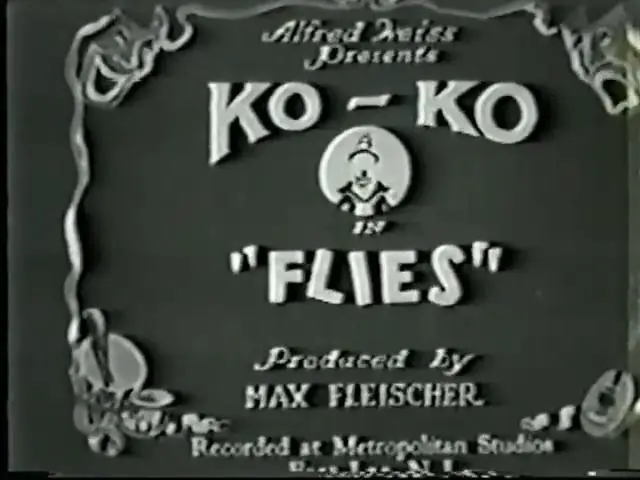
Although released silent, Flies was designed for hallucinated sound. Projectionists received a note: “Run a nail against the drive belt during reel change; the vibration mimics wing-buzz.” Some houses, bolder, released hydrogen sulfide from a cracked egg behind the screen at the moment the clown’s mouth is invaded. Reports exist of 1920s children who, decades later, swore they heard the flies, smelled them, carried them into nightmares that outlived the nickelodeon. Contrast this with the genteel silence of The Life Story of David Lloyd George, where history marches under dignified title cards; Fleischer prefers sensory terrorism.
Watch the clown’s gloves shift from white to sullied sepia: that is alchemy in reverse, the philosopher’s stone ground back into base soot. Each smear is a sin transferred from animator to avatar. Legend claims Fleischer drew the final sequence while nursing a septic paper cut; blood mixed with india ink, creating a crimson ferrous oxide that literally rusts under projector heat, blooming ochre halos around the flies. The auteur becomes medium, the medium becomes martyr.
The fallout? Every animated insect thereafter carries a genetic memory of this short. From the sentient cockroach in Creepshow to the surveillance beetles of The Hunger Games, their DNA buzzes with Fleischer’s frequency. Even Pixar’s jolly Flik owes a debt—remove the clown’s tragedy, add antennae jokes, but the wing texture, that frantic two-frame cycle, is pure 1920 vintage.
Gender politics surface obliquely. The clown, effeminate with rouge dots and falsetto gestures, is punished for occupying liminal space. The flies—phallic, intrusive—perform a grotesque corrective rape of identity. Yet Fleischer, ever the anarchist, refuses victimhood: the clown retaliates with a purse that unfolds into a cathedral-sized swatter, slamming phallocentrism into stained-glass shards. The act is both castration and transubstantiation, turning pest into sacrament. Compare to the saccharine domesticity of Woman and Wife, where gender roles snap neatly into bourgeois drawers; Fleischer sets the drawer on fire and lets the flies roast marshmallows on the flames.
Running a tight eight minutes, Flies mocks Fordist efficiency. The swarm multiplies via assembly-line montage: fly, split, fly, split, faster than Model T chassis. The clown’s attempt to clock-in, punch card in mouth, ends with the card devoured, calories for the proletarian swarm. It’s the first on-screen strike where labor eats management—literally. View it alongside Alarm Clock Andy, another Fleischer riff on mechanized dread, and you’ll sense the early tremors of Chaplin’s Modern Times, albeit greased with bug guts.
Though monochromatic, the film tricks you into seeing color. When the swarm thickens, the gray values shift toward an imagined iridescence—your brain, desperate for logic, paints the flies metallic green. This phantom palette predates Technicolor’s official arrival by thirteen years, proving that imagination is the earliest color process. Only The Dust of Egypt achieves a similar hallucinatory chrominance, albeit with tinted release prints; Fleischer does it with nothing but grayscale sadism.
Modern archives face a dilemma: clean the scratches and you erase the forensic trail of Fleischer’s paper-cut blood. Leave them, and the audience dissociates into narrative confusion. In 2018, MoMA attempted a 4 K scan, but the flies—now pixels—refused to stay still. Compression algorithms interpreted their random motion as noise, scrubbed them out. For two frames, the clown fights nothing, a lunatic slapping air. Censors call it victory over decay; I call it homicide of history.
The final image—an iris that blinks the clown away—reverses the standard cartoon exit. Usually the circle closes on the hero triumphant; here it closes on the observer, implicating us. You walk out of the screening and every blink feels like a frame cut; you wonder if your next shutter of eyelids will erase you. That is Fleischer’s true legacy: he turns the viewer into an animated extra, one swat away from annihilation.
Score this film not in stars but in welts: ten out of ten red bumps, each itchy with epiphany. Let the flies buzz; they have earned their spot in the pantheon of cosmic dread. And if, while reading this, something buzzes near your ear, do not swat. Perhaps it’s the clown, asking for asylum from an endless war he can never win.
IMDb 5.6
1924
Community
Log in to comment.