DbcultAccessing Vault...
Cult Review
Senior Film Conservator
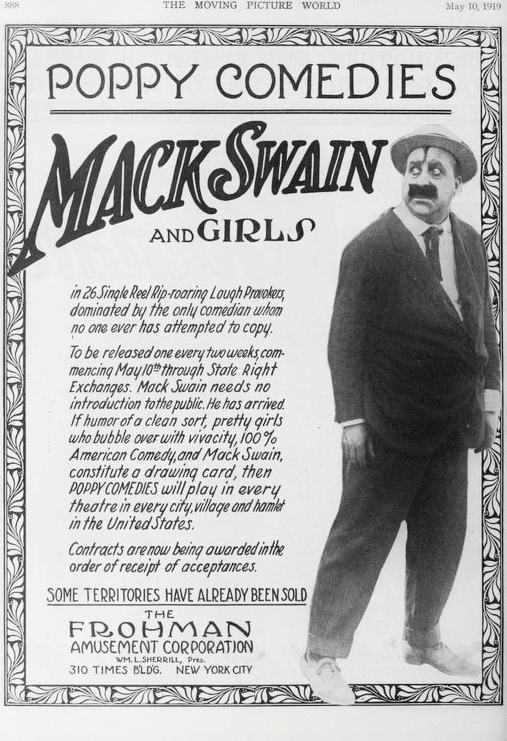
The silent era was not merely a precursor to modern cinema; it was a distinct, vibrant language of visual hyperbole. Within this lexicon, Ambrose's Predicament stands as a towering example of the 'Ambrose' cycle, showcasing Mack Swain’s uncanny ability to transform his massive physicality into a vessel for delicate, albeit chaotic, social commentary. Unlike the refined pathos of Chaplin or the stoic geometry of Keaton, Swain’s work—particularly here—operates on a frequency of pure, unadulterated energy that borders on the surreal.
To understand the 'predicament' in question, one must first appreciate the rigid social structures of 1916 that the film so gleefully dismantles. Ambrose is a character defined by his desire to belong to a class that his own clumsiness perpetually denies him. In this specific outing, the catalyst is almost irrelevant—a misplaced glance, a misunderstood gesture—but the fallout is spectacular. The film utilizes the limited spatial dimensions of the set to create a pressure cooker environment. Much like the tension found in His Last False Step, the stakes feel disproportionately high, lending the slapstick a sense of existential dread that elevates it beyond mere pratfalls.
Swain’s performance is a marvel of micro-expressions and macro-movements. His iconic mustache, a character in its own right, twitches with a rhythmic precision that signals the impending doom of his character’s dignity. When he moves, the very frame seems to vibrate with the potential for destruction. This is a stark contrast to the more nuanced, character-driven narratives of the time, such as The Rise of Susan, which sought to ground its protagonists in a more recognizable reality. Ambrose, conversely, exists in a world where physics are subservient to the joke.
The cinematography in Ambrose's Predicament is deceptively simple. The camera remains mostly static, acting as a proscenium arch through which the mayhem flows. However, the editing—the true heartbeat of Keystone—is sharp and unforgiving. The cuts are timed to maximize the impact of every collision and every double-take. This rhythmic editing creates a visual staccato that mirrors the frantic heartbeat of its protagonist. It shares a certain DNA with the kinetic pacing of Jazz Monkey, where the absurdity is fueled by the relentless forward motion of the plot.
One cannot overlook the lighting, which, while primitive by today's standards, creates a high-contrast world that emphasizes the grotesque features of the cast. The shadows are deep, and the highlights are blown out, creating a dreamlike atmosphere where Ambrose’s struggle feels like a Sisyphean task. This visual style is far removed from the atmospheric gloom of Mod lyset, yet it achieves a similar level of intensity through its commitment to its own internal logic.
Critics often dismiss early slapstick as low-brow entertainment, but there is an inherent philosophy at play in Swain’s work. Ambrose represents the eternal 'outsider'—the man who tries to follow the rules only to find that the rules were never meant for him. His predicament is the predicament of the common man in an increasingly industrialized and bureaucratic world. Every time he falls, he is not just hitting the ground; he is hitting the limits of his own agency. This thematic resonance is what makes the film more than just a relic. It possesses a visceral honesty that is sometimes lacking in more 'prestige' silent films like Gems of Foscarina.
Furthermore, the supporting cast provides a necessary foil to Swain’s eccentricity. Their straight-faced reactions to his escalating madness ground the film, providing a baseline of 'normalcy' that makes his deviations all the more hilarious. This dynamic is a staple of the genre, yet here it feels particularly sharp. The interactions are less about dialogue—obviously—and more about the geometry of the bodies in space. It is a dance of avoidance and collision, a silent ballet of the absurd that rivals the complexity of Nan of Music Mountain in its own specialized way.
Looking back at Ambrose's Predicament from a century's distance, one is struck by its durability. While the cultural context has shifted, the fundamental humor of a man losing control of his environment remains universal. The film doesn't rely on topical references; it relies on the timeless comedy of errors. It occupies a unique space in film history, bridging the gap between the primitive 'actualities' of the 1890s and the sophisticated features of the 1920s. It lacks the procedural intrigue of Detective Brown or the grit of The Jaguar's Claws, but it possesses a purity of purpose that is undeniably compelling.
In the broader filmography of Mack Swain, this entry is vital. It captures him at the peak of his physical prowess, before he would go on to provide the perfect counterbalance to Chaplin in *The Gold Rush*. Here, he is the undisputed star, the sun around which all the other characters orbit in a state of perpetual agitation. The film is a reminder that comedy, at its best, is a form of disruption—a way to poke holes in the facade of societal order and reveal the messy, hilarious truth underneath.
Ultimately, Ambrose's Predicament is a testament to the power of the visual gag. It is a film that demands to be watched not just with the eyes, but with the gut. It is loud without making a sound, and it is deep without ever taking itself seriously. For those willing to look past the grain and the flicker, there is a masterclass in performance waiting to be discovered—a reminder that sometimes, the greatest art is found in the middle of a beautiful, chaotic mess.
IMDb 6.6
1934
Community
Log in to comment.