DbcultAccessing Vault...
Cult Review
Senior Film Conservator
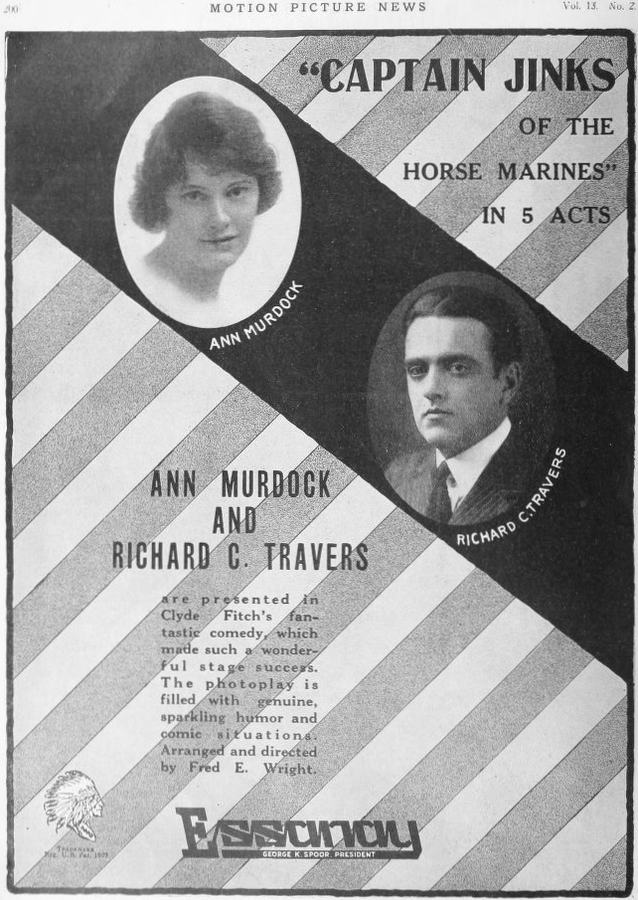
In the annals of early cinema, where narratives often walked a delicate tightrope between theatrical grandiosity and nascent cinematic realism, Captain Jinks of the Horse Marines emerges as a charming, if somewhat earnest, artifact. This film, a testament to the storytelling sensibilities of its era, offers a delightful confection of romance, mistaken identity, and the timeless triumph of genuine affection over superficial machinations. Directed with a keen eye for character-driven comedy, it navigates the intricate dance of hearts with a quaint elegance that belies its simple premise.
The narrative commences not with a declaration of love, but with the rather more prosaic ambition of political campaigning. Robert Carrolton Jinks, portrayed with a spirited blend of bravado and underlying innocence by Bruce Kent, finds himself swept up in the fervor of a presidential campaign for General Grant. His involvement takes the form of a marching club, an ostensibly serious endeavor that quickly devolves into a spectacle of fantastic costumes and boisterous antics. It is within this milieu of playful chaos that Jinks is bestowed with his memorable moniker: 'Captain Jinks of the Horse Marines.' The initial scenes, one imagines, brim with an infectious energy, capturing the spirit of civic engagement tinged with a healthy dose of playful absurdity. This establishment of Jinks as a man of action, albeit one prone to whimsical impulses, sets the stage for the romantic imbroglio that is soon to unfold.
The catalyst for the film's central romance arrives in the form of a ubiquitous bill poster, announcing the imminent arrival of Madame Trentoni, a celebrated opera singer. This moment marks a pivotal shift from political satire to romantic comedy. Jinks, ever the impulsive showman, conceives of a prank: he and his two friends, still clad in their elaborate marching uniforms and accompanied by a brass band, will meet the esteemed diva at the docks. This jest, however, takes a more serious turn when Jinks, in a moment of audacious bravado, wagers a formidable $1,000 that he can successfully woo Madame Trentoni. This bet, an emblem of youthful folly and male posturing, ironically becomes the very crucible in which genuine affection is forged. The initial encounter is fraught with comedic mishaps—a delayed boat, an impatient band, and a bribery attempt by reporters eager to secure their exclusive interview. It is a testament to the film's charming construction that these chaotic elements converge to create the perfect storm for Jinks and Trentoni's fated meeting.
The actual meeting, when it finally occurs after Jinks's own delay due to a scuffle with the bandmaster, is immediate and impactful. Jinks, despite his initial cynical wager, is instantly captivated by Madame Trentoni, played with a captivating blend of grace and strength by Laura Frankenfield. Her portrayal likely imbues Trentoni with an allure that makes Jinks's instantaneous infatuation entirely believable. However, their burgeoning connection is immediately jeopardized by Jinks's impetuous nature. Witnessing Trentoni's struggles with a customs inspector, Jinks, in a misguided attempt at chivalry, attempts to resolve the situation with a hefty roll of bills. This act, intended as a shortcut to efficiency, is swiftly interpreted as attempted bribery, leading to his immediate arrest. This early dramatic turn, while seemingly a setback, serves to deepen the narrative stakes, moving beyond a simple romantic pursuit to one shadowed by legal peril. One might draw a parallel here to the comedic misadventures found in films like Crooky, where well-intentioned but ill-conceived plans often lead to humorous, albeit serious, complications for the protagonists. The charm lies in the protagonist's resilience and the escalating absurdity of their predicaments.
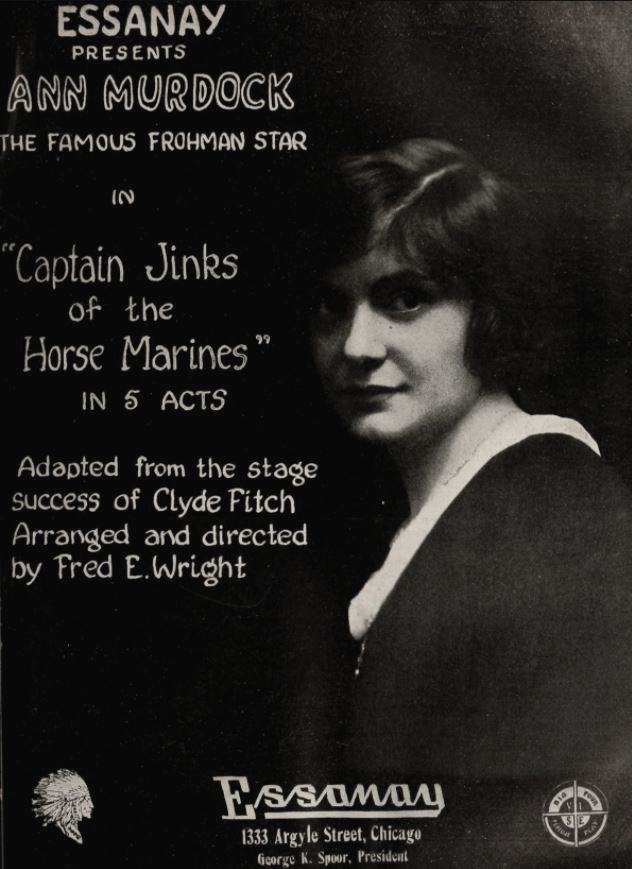
Jinks's release on bail allows him to pursue Trentoni, who, it turns out, is as smitten with him as he is with her. Their courtship, unfolding under the watchful eye of her foster father, progresses with a rapidity that speaks to the immediate, undeniable chemistry between them. This whirlwind romance, however, is constantly threatened by the lingering shadow of Jinks's initial bet. He attempts to call off the wager, recognizing its insulting nature to his beloved, but his friends, impervious to his newfound sincerity, refuse. His reluctant agreement to pay the bet, formalized by an 'I.O.U. $1,000 for the bet regarding Madame Trentoni,' becomes a ticking time bomb, a tangible piece of evidence that will later be weaponized against him.
The portrayal of Jinks's friends, whose names are not explicitly detailed in the plot summary but who are crucial antagonists, likely highlights the darker side of camaraderie and envy. Charles J. Stine and Edmund Cobb, potentially in these roles, would have needed to balance comedic villainy with genuine malice to effectively drive the plot. Their attempts to woo Trentoni themselves, and her subsequent rejection, fuel their petty desire for revenge against Jinks. This betrayal, a classic trope in romantic comedies, hinges on the manipulation of truth. They convince Trentoni's foster father that Jinks's intentions are mercenary, solely focused on her wealth, using the incriminating 'I.O.U.' as irrefutable proof. This moment of dramatic irony, where a document meant to settle a foolish bet is twisted into evidence of a heartless scheme, is particularly poignant. The foster father's ensuing rage and Trentoni's heartbroken refusal to see Jinks plunge the narrative into its deepest emotional valley.
Jinks's subsequent struggle to understand and rectify the misunderstanding forms the emotional core of the film's climax. His persistent attempts to gain an audience with Trentoni, despite her resolute refusal, underscore the depth of his love and his determination to clear his name. The eventual confrontation, where he finally explains the true circumstances of the 'I.O.U.,' is a moment of profound relief and emotional catharsis. Trentoni's immediate embrace signifies the triumph of trust and genuine affection over insidious gossip and betrayal. This scene, no doubt, would have been a powerful display of Laura Frankenfield's acting prowess, conveying both her prior heartbreak and her renewed faith.
However, the narrative is not yet done with its twists. Just as the lovers reconcile, a detective enters, intent on arresting Jinks for his forgotten court appearance regarding the bribery charge. This sudden reintroduction of the legal subplot, at the very peak of their emotional reunion, adds a layer of delightful comedic tension. Trentoni's quick thinking, her plea to the detective about a lovers' tiff, and her promise of Jinks's appearance in court the next day, not only saves him from immediate incarceration but also solidifies her role as a resourceful and loyal partner. This resolution, where both the romantic and legal entanglements are neatly tied up, allows for a satisfying and heartwarming conclusion. The final embrace, free from all shadows of doubt and legal peril, is a classic cinematic flourish, signaling a happily ever after. The way the plot weaves together the threads of romance, comedy, and legal drama, culminating in a swift and clever resolution, is reminiscent of the brisk pacing and witty resolutions often found in films like Sally in a Hurry, where characters frequently navigate escalating comedic chaos to reach a joyous conclusion.
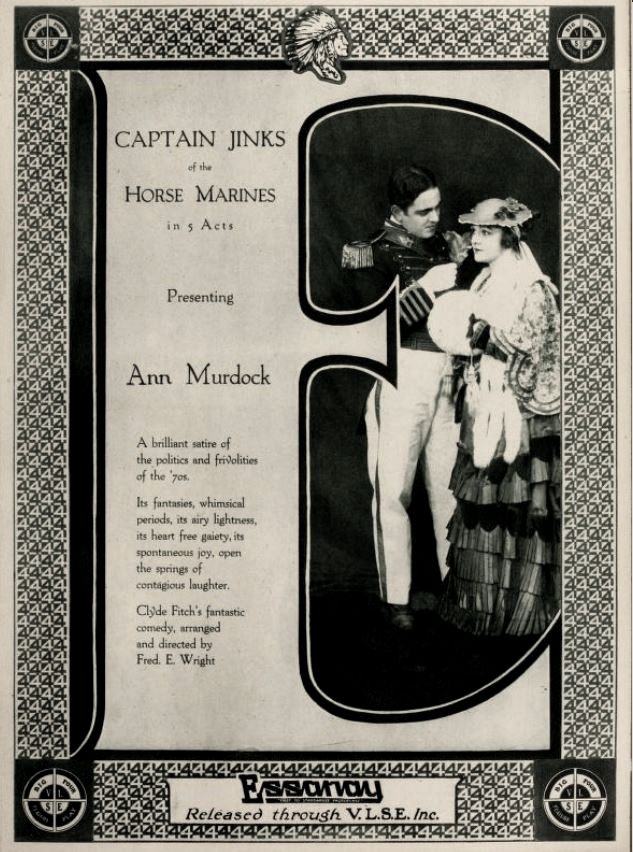
The success of Captain Jinks of the Horse Marines undoubtedly rests on the shoulders of its cast. Bruce Kent as Jinks must embody a character who is at once a charming rogue, a foolish gambler, and a genuinely loving suitor. His journey from impulsive wagerer to devoted lover is the central arc, requiring a performance that balances comedic timing with sincere emotional depth. Laura Frankenfield, as Madame Trentoni, is the film's gravitational center. Her ability to convey both the professional grace of an opera singer and the vulnerability of a woman falling in love, only to be betrayed and then reconciled, would have been crucial. Her performance, especially in the moments of heartbreak and eventual forgiveness, would have anchored the film's emotional resonance. The supporting cast, including Charles J. Stine, Edmund Cobb, Jon Junior, Richard Travers, Anna Murdock, Ernest Maupain, and Camille D'Arcy, are instrumental in populating this world and providing the necessary foils and catalysts for the main couple's journey. Their collective efforts would have created a vibrant tapestry of characters, from the loyal to the duplicitous, each contributing to the rich texture of the narrative.
The screenplay, adapted from Clyde Fitch's work, exhibits a keen understanding of theatrical pacing and dialogue, translated effectively to the silent screen. Fitch was renowned for his witty and sophisticated plays, and it's evident that the film adaptation retained much of this inherent charm. The progression of the plot, with its escalating misunderstandings and timely interventions, speaks to a well-structured narrative design. The use of intertitles, while not explicitly detailed in the plot, would have been vital in conveying the nuanced dialogue and internal thoughts that drive the character's motivations, particularly in explaining the complex misunderstanding surrounding the 'I.O.U.' The direction, though uncredited in the provided details, would have focused on clear storytelling, expressive acting, and effective staging to ensure the audience grasped the emotional beats without the aid of spoken words. The visual humor inherent in the marching club's costumes and antics, contrasted with the elegance of Trentoni's world, would have provided rich visual texture. This blend of theatricality and nascent cinematic technique makes the film a fascinating study in the evolution of storytelling mediums.
At its heart, Captain Jinks of the Horse Marines explores several enduring themes. Love, initially born from a cynical wager, evolves into a profound and genuine connection, demonstrating that even the most dubious beginnings can lead to authentic affection. The theme of honor and reputation is central, particularly with Jinks's desperate attempts to clear his name and Trentoni's foster father's concern for his daughter's welfare. Betrayal, instigated by Jinks's envious friends, serves as the primary conflict, highlighting the destructive power of jealousy and miscommunication. The film also lightly touches upon societal expectations and the clash between different worlds – the boisterous, somewhat uncouth world of Jinks's marching club versus the refined, artistic sphere of Madame Trentoni. Yet, it ultimately argues for the transcendence of genuine human connection over social divides or initial impressions.
The film's enduring appeal lies in its straightforward yet engaging storytelling. It offers a glimpse into the comedic sensibilities of the early 20th century, where melodramatic situations were often resolved with wit and heartfelt emotion. While it might not possess the groundbreaking technical innovations of some of its contemporaries, its charm resides in its delightful characters and its unwavering belief in the power of love to overcome obstacles. It stands as a testament to the universal appeal of a good romantic comedy, a genre that continues to resonate with audiences across generations. The journey of Jinks and Trentoni, from a foolish bet to a loving embrace, reminds us that sometimes, the most unexpected paths lead to the most cherished destinations. Much like other lighthearted but impactful romantic narratives of its time, such as The Galloper, it relies on a dynamic protagonist and a compelling love interest to carry the audience through a series of engaging twists and turns, proving that a well-told story, regardless of its vintage, can always find an audience.
In conclusion, Captain Jinks of the Horse Marines is more than just a historical curiosity; it is a vibrant, engaging piece of early cinematic art that successfully blends comedic capers with genuine romance. Its narrative, though seemingly simple, is rich with character development, thematic depth, and a relentless forward momentum that keeps the audience invested in the fate of its endearing protagonists. It serves as a delightful reminder of the foundational elements that continue to define successful romantic comedies, proving that even over a century later, the antics of a 'Horse Marine' and the charm of an opera diva can still captivate and entertain.
IMDb 6.9
1923
Community
Log in to comment.