DbcultAccessing Vault...
Cult Review
Senior Film Conservator
Honestly, only if you have a thing for vintage cinema that smells like old celluloid and intense stares. If you like your movies fast-paced with snappy dialogue, steer clear. This one is for the folks who want to see how drama looked before everyone started talking in soundbites.
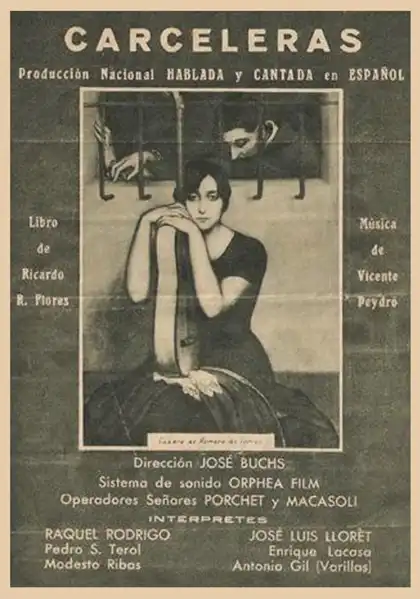
The whole movie feels like it is trapped in that Cordoban farmhouse. There is this heavy, thick air to the scenes that makes you feel a little claustrophobic, which I guess is the point. Soledad is at the center of it all, and man, the way these men look at her—it is almost exhausting just watching them.
There is a moment right before the big fallout where the silence just hangs there. You know something bad is coming, but the movie refuses to rush it. It just lets the tension sit in the room like a bad smell.
When the boyfriend finally snaps, it is not some big, choreographed action sequence. It is ugly and quick. It reminded me a bit of the raw, unpolished energy you find in El hombre malo, where the stakes feel personal rather than just plot-driven.
The acting is definitely from a different era. People don't just speak; they project. Every emotion is worn on the sleeve, and every look is a declaration of war. It is not subtle, but it works for this kind of story.
I kept thinking about how these kinds of stories feel like echoes of The Love Thief, just stripped of the polish and dropped into a rural landscape. It is messy, sure. But it feels like real people having a really bad day, even if that day ends in a tragedy that feels a bit over-the-top by today's standards. 🥀
The camera work is pretty static. It is mostly just watching the actors pace around, waiting for the explosion. There is not much fancy stuff going on here, just a lot of faces filled with regret and rage. Sometimes, that is enough.
Is it a masterpiece? No. Is it worth checking out if you are curious about older Spanish dramas? Yeah, maybe on a rainy Sunday afternoon. Just don't expect a happy ending. 🏚️
Year
1932
IMDb Rating
—

Editorial
Deciphering the legacy of transgressive cult cinema.
Community
Log in to comment.