DbcultAccessing Vault...
7.3/10
Senior Film Conservator
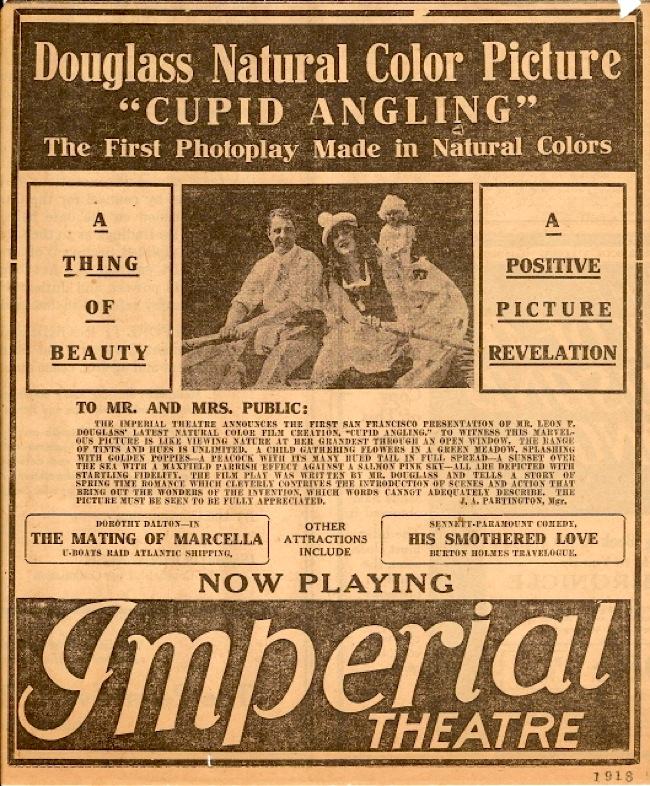
A definitive 7.3/10 rating for a film that redefined the boundaries of cult cinema. Cupid Angling remains a cornerstone of transgressive art.
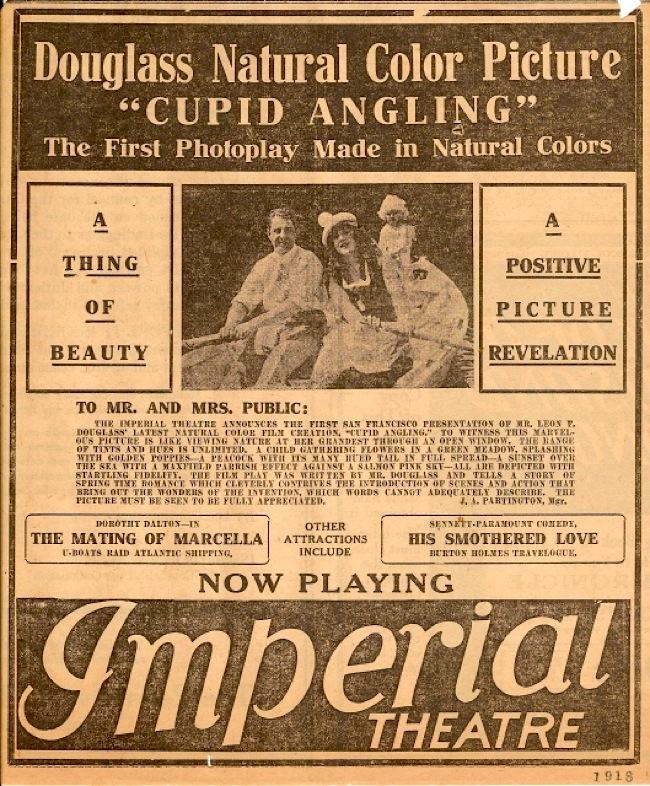
In an era brimming with cinematic experimentation and the burgeoning language of the silent screen, Leon F. Douglass’s 'Cupid Angling' emerges as a particularly enchanting artifact, a film that transcends its seemingly simple premise to offer a nuanced commentary on love, ambition, and societal expectations. It's a testament to the enduring power of narrative when executed with vision and a keen understanding of human nature, even without spoken dialogue. The film, starring the inimitable Ruth Roland and the earnest Albert Morrison, invites us into a world where the pursuit of a prize fish becomes an eloquent metaphor for the intricate dance of courtship, a subtle ballet of strategy and sincerity.
Roland, as Elara Vance, delivers a performance that is nothing short of captivating. Her character is a refreshing departure from many of the more demure heroines prevalent in silent cinema. Elara is not merely spirited; she is a force of nature, possessing an independence of thought and action that feels remarkably modern even today. Her initial encounters with Arthur Penhaligon, played with a commendable blend of aloofness and underlying warmth by Morrison, establish a dynamic that is both familiar and uniquely rendered. Arthur, a man of privilege, is initially blinded by the superficial allure of status, represented by the haughty Miss Gwendolyn Sterling. It is Elara's unvarnished authenticity, her profound connection to the natural world of the lakeside, and her genuine skill that gradually pries open his eyes.
The brilliance of 'Cupid Angling' lies in its central metaphor. The angling competition is far more than a mere plot device; it is the very crucible in which Elara’s character is forged and Arthur’s perceptions are reshaped. Douglass, with a subtle yet firm directorial hand, ensures that every cast of the line, every patient wait, every triumphant catch, reverberates with symbolic meaning. Elara’s approach to fishing – patient, knowledgeable, respectful of the environment – stands in stark contrast to the more ostentatious, often clumsy, efforts of her rivals. This dichotomy extends seamlessly to her romantic pursuit. She does not overtly chase Arthur; instead, she cultivates an environment where her true self can shine, baiting him not with artifice but with genuine shared passion and capability.
The film’s cinematography, though perhaps constrained by the technological limitations of its time, is nonetheless evocative. The lakeside setting is not just a backdrop; it is a character in itself. The shimmering water, the rustling reeds, the expansive sky – all contribute to a sense of natural beauty that underscores Elara’s character and provides a stark contrast to the more rigid, artificial settings of societal gatherings. One can almost feel the crisp air, smell the damp earth, and hear the gentle lapping of the waves, a testament to the visual storytelling prowess that compensates for the absence of sound. The camera often lingers on Elara’s expressions, capturing the nuanced interplay of determination, vulnerability, and quiet triumph that Roland so expertly conveys without a single spoken word.
Ruth Roland, a star known for her athletic prowess and adventurous spirit, finds a perfect vehicle in Elara Vance. Her physical grace, evident in the scenes where she expertly handles her fishing gear, is matched by her emotional dexterity. She imbues Elara with a palpable intelligence and a quiet strength that resonates deeply. Unlike some of her contemporaries who might have leaned into overt melodrama, Roland’s performance is remarkably restrained, allowing the audience to infer her inner world through subtle gestures and piercing gazes. Her interactions with Albert Morrison are particularly noteworthy. Morrison, as Arthur, initially projects an air of detached superiority, but through Roland’s subtle influence, we witness a gradual thawing, a transformation from societal expectations to genuine affection. It’s a beautifully choreographed dance of emotional awakening, played out across the silent screen through the sheer power of their expressions and physicality. This nuanced portrayal of character development sets 'Cupid Angling' apart from many simpler romantic narratives of the era.
Consider, for instance, the pivotal storm sequence. This scene, a classic device in silent cinema for heightening drama and revealing character, is handled with particular finesse here. As the tempest rages, threatening Arthur, it is Elara’s quick thinking and bravery, her innate understanding of the water and her environment, that saves him. This is not a damsel in distress scenario; rather, it is a powerful inversion of tropes, where the heroine proves herself to be the protector, the capable individual who rises to the occasion. The visual storytelling during this sequence is compelling, utilizing dramatic lighting and swift cuts to convey the peril, while Roland’s determined expressions anchor the emotional core of the scene. This moment serves as the undeniable turning point, where Arthur sees beyond Elara’s social standing and recognizes her true worth, her genuine spirit, and her profound courage. It’s a moment that resonates with the raw power seen in films like The Secret of the Storm Country, where natural forces often mirror internal turmoil and character transformation.
'Cupid Angling' is rich with thematic depth. At its heart, it’s a story about authenticity versus artifice. Elara, with her practical attire and genuine love for the outdoors, stands in stark contrast to Miss Sterling, whose elaborate gowns and manipulative tactics represent the superficiality of high society. The film subtly critiques the rigid social structures of the time, suggesting that true nobility lies not in birthright or wealth, but in character, skill, and integrity. This theme is explored with a light touch, never becoming preachy, but always present, adding layers of meaning to the seemingly straightforward romantic plot. The conflict between the natural world and the constructed world of human society is a recurring motif, with the lakeside serving as a sanctuary of truth and genuine connection.
The film also touches upon evolving gender roles. Elara is not content to wait for a suitor; she actively pursues her desires, both in the competition and in love. Her agency is a powerful statement, challenging traditional notions of female passivity. While the film ultimately concludes with a conventional romantic pairing, the journey to that conclusion is anything but. Elara’s methods are unconventional, her spirit unyielding, and her victory is as much a personal triumph of self-assertion as it is a romantic one. This resonates with the spirited heroines found in other early films, like those battling societal constraints in The Three of Us or facing down adversity in The Colleen Bawn.
Leon F. Douglass, often celebrated for his pioneering work in sound recording and early cinema technology, demonstrates a keen narrative sensibility as a writer and, implicitly, as a driving force behind the film’s direction. His script, which forms the backbone of the visual storytelling, is remarkably efficient in conveying complex emotions and motivations through action and visual cues. The pacing is deliberate, allowing moments of quiet contemplation to breathe, punctuated by bursts of dramatic action or comedic relief. The film avoids unnecessary exposition, trusting its audience to interpret the unspoken language of the screen. This economy of storytelling is a hallmark of effective silent cinema, allowing the performances and visual compositions to carry the weight of the narrative. Douglass’s understanding of how to build tension and release it, how to craft sympathetic characters, and how to utilize the environment as an extension of the plot, marks 'Cupid Angling' as a well-conceived and expertly executed production for its time.
The narrative structure, while adhering to a classic three-act arc, manages to feel fresh due to its specific setting and the unique character of Elara. The initial setup introduces the stakes – the competition, the societal pressures, and the romantic entanglements. The rising action builds through Elara’s clever maneuvers and Gwendolyn’s increasingly desperate attempts at sabotage, creating a palpable sense of anticipation. The climax, with the storm and the subsequent rescue, is both visually spectacular and emotionally resonant, serving as the dramatic peak. Finally, the resolution brings a satisfying conclusion, not just for the competition but for the hearts involved. It's a journey that, while predictable in its ultimate romantic outcome, is filled with delightful surprises and genuine character development along the way. This kind of robust plotting is a characteristic shared with other strong narratives of the era, such as Pierre of the Plains, which also relied on strong character arcs and environmental challenges.
'Cupid Angling' may not be as widely remembered as some of the gargantuan epics of the silent era, but its charm and intelligence ensure its place as a significant, if understated, contribution to early cinema. It’s a film that speaks to the timeless human desire for connection, for finding love that transcends superficialities, and for the courage to be one’s authentic self. For modern viewers, it offers a fascinating glimpse into the social mores and cinematic techniques of a bygone era, while still delivering a genuinely engaging and heartwarming story. The performances by Roland and Morrison stand the test of time, their silent emoting conveying a depth of feeling that requires no dialogue.
The film's enduring appeal also lies in its optimistic outlook. Despite the challenges Elara faces, there is an unwavering belief in the power of sincerity and skill to overcome obstacles. It’s a message that resonates universally, making 'Cupid Angling' more than just a historical curiosity. It’s a narrative that continues to entertain and inspire, proving that a well-told story, regardless of its technological vintage, possesses an inherent power to move and delight. When considering the breadth of silent film, from the intense drama of The Mysteries of Souls to the lightheartedness of Sleepy Sam, the Sleuth, 'Cupid Angling' carves out its own distinct niche, marrying romantic comedy with a deeper exploration of character and societal critique. It’s a delightful catch, indeed, for any cinephile willing to cast their line into the rich waters of silent film history.
The meticulous attention to detail in the set design, particularly the rustic charm of the lakeside cabins and the contrasting elegance of the social gatherings, further enriches the visual experience. These elements, combined with the subtle use of intertitles for dialogue and exposition, create a coherent and immersive world. The film’s costume design, too, plays a crucial role in defining character, with Elara’s practical, yet feminine, attire emphasizing her connection to nature and her independent spirit, while Gwendolyn’s elaborate frocks underscore her superficiality. Every visual choice, from the framing of a shot to the placement of a prop, feels intentional, contributing to the overall narrative and thematic coherence. This level of craft is commendable and speaks to the dedication of the filmmakers, a quality often found in the more thoughtful productions of the period.
Ultimately, 'Cupid Angling' serves as a vibrant reminder of the ingenuity and artistic merit present in early cinema. It’s a film that, through its clever premise, compelling performances, and thoughtful execution, manages to tell a story that is both specific to its time and universally resonant. Ruth Roland’s Elara Vance remains an iconic figure of female empowerment and authentic charm, making this film a valuable piece of cinematic heritage that continues to reward repeat viewings. It's a film that, much like a perfectly executed cast, lands its message squarely and delightfully, leaving a lasting impression on the heart and mind.

IMDb 5.9
1926
Community
Log in to comment.