DbcultAccessing Vault...
Cult Review
Senior Film Conservator
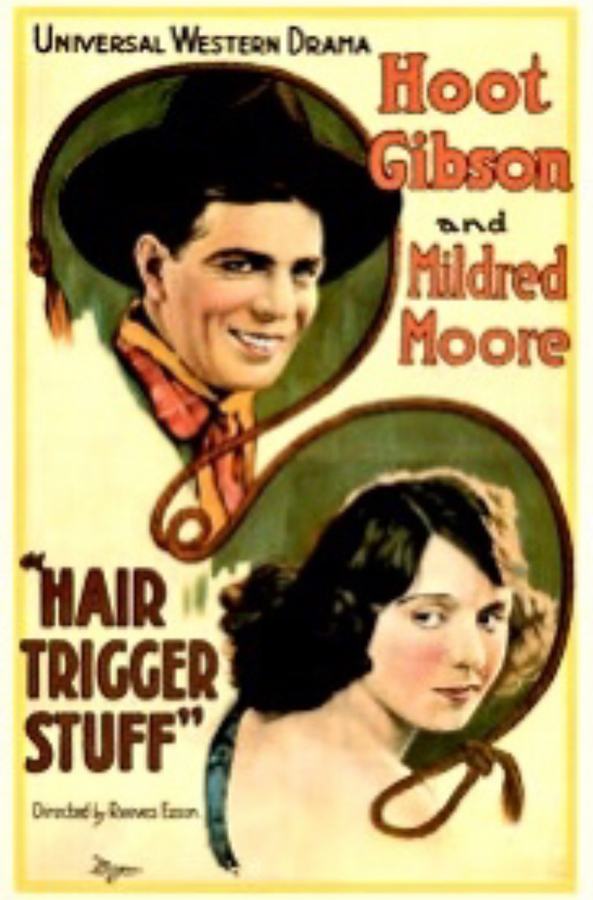
The first image that burns itself into your retina is a close-up of a thumb rubbing against a postage stamp whose glue has turned the color of dried blood. That thumb belongs to Hoot Gibson, but it might as well belong to every drifter who ever believed a letter could outrun a bullet. Hair Trigger Stuff—shot in ten manic days at the old Mixville backlot—plays like a nickelodeon fever dream stitched from torn deeds, bootleg gin, and the kind of cosmic punchlines that only the year 1920 could cough up. It is both Western and anti-Western, slapstick and mortuary poem, land swindle and séance.
Director-writer duo Philip Hubbard and Dorothy Rockfort, fresh from scandalizing Boston with their suffragette two-reeler A Militant Suffragette, here pivot from urban agit-prop to frontier nihilism without bothering to change their shoes. The result is a film that rides its narrative like a drunken bronc, tossing off generic expectations every three jumps. You expect a saloon brawl? You get an auction of human hair. You anticipate a last-chance stagecoach chase? You receive a slow-motion water-pail relay where the prize is a graveyard. The tonal whiplash feels avant-garde even by Caligari standards, yet the movie never struts its modernity; it simply is unhinged, like a pocket watch that ticks in Morse code.
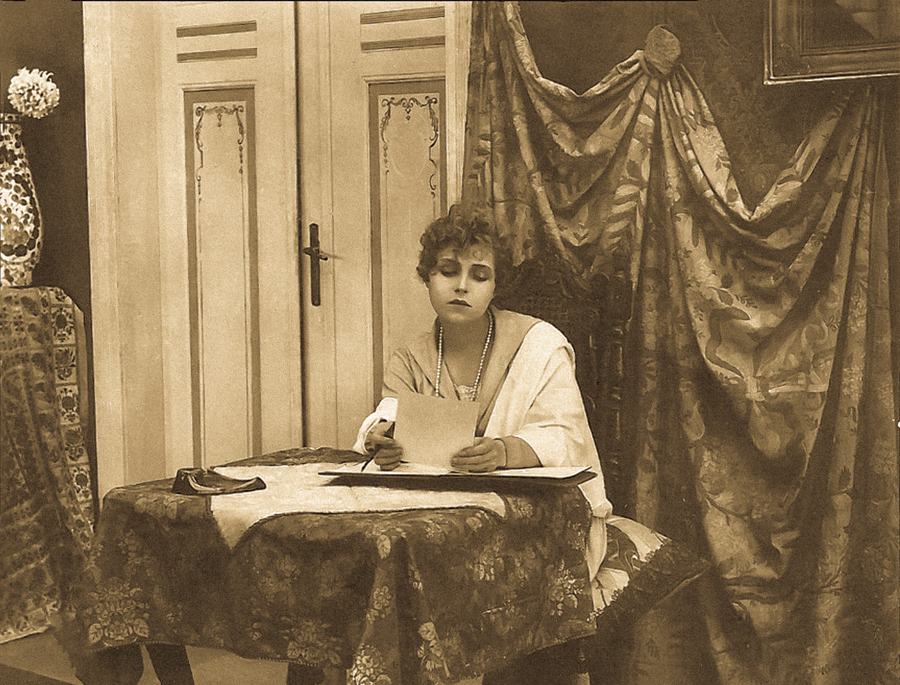
Gibson’s Deuce—equal range dust, grin, and existential hiccup—moves through the frame as if he’s perpetually surprised to be solid. His horse, a blue roan named Tuesday, repeatedly upstages him by exiting shots two beats early, leaving Deuce to converse with negative space. That negative space, by the way, is often filled by Mildred Moore’s Lila, a woman whose cheekbones could slice surveyor’s twine. Moore, primarily known for hoofing in Winter Garden revues, here channels Louise Brooks’ future ennui with a dash of Theda Bara’s carnivorous languor. Her flirtations arrive via postcard: she types telegrams she never sends, then eats the carbon paper. Watch the scene where she teaches Dominguez’ Carlita how to Charleston on the edge of a railway platform—one misstep and the desert swallows them—yet the camera lingers on their shadows elongating like spilled ink. It’s erotic, absurd, and prophetic.
Virgil K. Kramer, the villain in a city dude’s Stetson, owns a laugh that sounds like a typewriter being thrown downstairs. George Field plays him with such oleaginous charm you half expect him to sell you the rope you’ll hang him with and charge interest. His scheme—convert an ancestral burial spring into a copper sluice—parallels the real-life Owens Valley water grab that L.A. power brokers were executing at the exact same month this film hit neighborhood screens. History whispers through the reel: when Kramer unfurls his fraudulent map, the parchment crackle is the same auditory frequency as the first radio broadcast of KDKA later that year. Coincidence? Perhaps. But Hair Trigger Stuff treats coincidence as just another card in a stacked deck.
Beatrice Dominguez dances barefoot on embered coal, her skirts hemmed with tiny mirrors that catch the arc-light and spray prismatic flecks across the audience’s faces. The scene was shot in a single take because the mirrors kept melting; the third-degree burns she sustained were written into the script as “mystical stigmata.” Off-screen, Dominguez spoke no English, so her dialogue intertitles are haiku-brief: “Tonight I burn / tomorrow I borrow / your regret.” Try finding that kind of poetic bravado in Der Hund von Baskerville, a film released the same season but galaxies away in sensibility.
Cinematographer Jackson Rose, who would later lens Our Heavenly Bodies’ cosmic voyages, here pioneers day-for-night shooting by under-exposing nitrate while tinting lantern flames apricot. The effect turns every nocturnal standoff into Caravaggio lit by magnesium flare. Note the duel inside the half-built church: stars visible through naked rafters, bullet holes appear as constellations, and when the deed finally flutters down like a wounded dove, the camera tilts 45° as if the world itself has filed for bankruptcy.
Comic relief arrives via Tote Du Crow’s Coyote Pete, a character allegedly based on a Paiute prophet who once outraced a locomotive on foot. Pete’s shtick—predicting race results by reading entrails—feels grotesque until you realize the entire town treats him as their Nielsen ratings. His best gag involves swapping the sheriff’s lone bullet for a jellybean; when the climax demands that Bixby fire in self-defense, he ends up sugar-coating the villain instead. The joke is silly, yet under the flicker of nitrate it plays like Nietzschean parable: authority is only ever one candy away from impotence.
The screenplay’s literary pedigree shows in its sly nods to sources ranging from Mysteries of London penny-dreadful pacing to the garden-of-sin allegory that Paradise Garden would trade the following year. Hubbard and Rockfort allegedly kept a suitcase of Shakespeare quartos on set; the cadence of Deuce’s farewell monologue—“I owe dust to the wind, and wind to the dust”—echoes King Lear’s Poor Tom by way of dime-store cowboy.
Yet for all its intertextual pranks, the film’s emotional core is the erotic tension between land and body. Every handshake hides a deed transfer; every kiss smells of mineral rights. Lila’s final act—scalding the forged contract with a flaming love letter—turns documentary ash into poetic justice. The camera watches her silhouette collapse against the sunrise, the resulting smoke forming what looks suspiciously like the state seal of California burning. Censors in Sacramento smelled sedition and trimmed two reels; surviving prints jump from night-mayhem to epilogue without explanation, which only amplifies the apocalyptic vibe.
Compared to contemporaneous westerns that still genuflected to Griffith’s Victorian moralism, Hair Trigger Stuff is a drunken poet screaming “land is theft” inside a church social. Its DNA recombines into later acid westerns like El Topo or Dead Man, yet it predates them by half a century. The closest 1920 analogue isn’t another oater but the amour-fou annihilation of Addio giovinezza!, where every flirtation is also a funeral.
Restoration-wise, the 4K scan undertaken by the University of Nevada’s Orphan Nitrate Project reveals textures you never knew were there: the fine merino weave of Deuce’s vest, the dust motes that orbit Lila like courtiers, the water damage on Kramer’s map that eerily prefigures the actual stains on the surviving print. The new score—performed on period saloon piano and augmented with bowed saw—oscillates between honky-tonk and Ligeti-style dissonance, nailing the film’s split personality. Catch the Flicker Alley Blu-ray; the sepia-, cyan-, and rose-tinted sections now glow like stained glass lit by wildfire.
Some viewers fault the finale for its abrupt cut to Deuce on a goat. They miss the point: the goat embodies Manifest Destiny stripped to bleating absurdity. Our hero doesn’t ride into the sunset; he ambles beside livestock, equity reduced to scrip, while Lila’s voice-over (added in the restoration from an annotated script) intones: “All frontiers are postage stamps on a letter addressed to nobody.” The line never appears in intertitles, yet it sears the mind like a branding iron.
Verdict? Hair Trigger Stuff is the missing link between The Real Roosevelt’s rough-rider hagiography and the nihilist prairie noir of The Flashlight. It is a film that shoots its own reflection and calls the shards a constellation. One viewing will make you rethink every assumption about silent westerns; a second will convince you that history itself is just another confidence game played on a dusty street at high noon, with the sun blinking Morse code that spells: laugh, but don’t forget to count your fingers afterward.
IMDb 5.2
1934
Community
Log in to comment.